
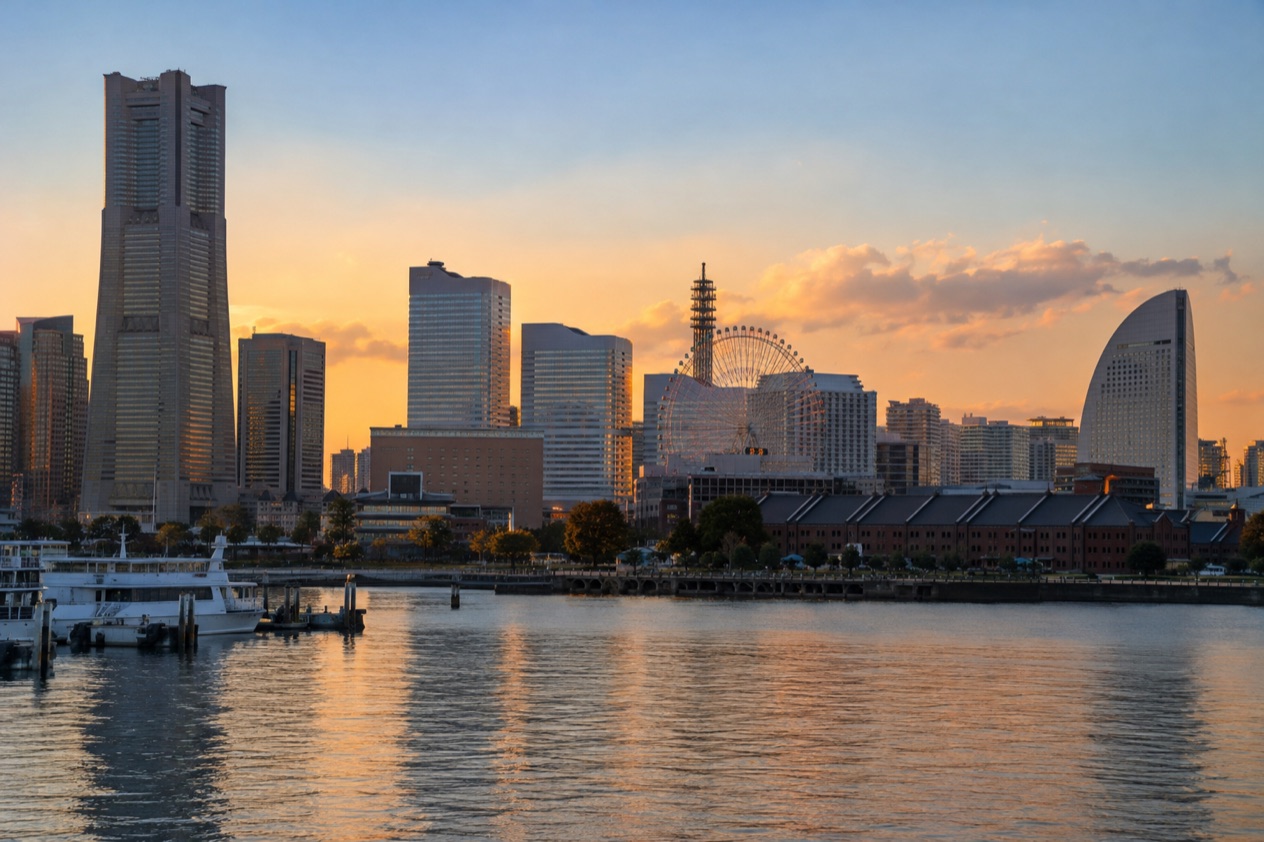
In November, small girls in kimono and boys in hakama shuffle across shrine courtyards with bags of long red-and-white candy, while their parents photograph them for the Shichi-go-san blessing. Down at the harbor, the air smells of steamed buns and roasted chestnuts, and the lights of the Minato Mirai skyline start to matter as the afternoons shorten. Yokohama in November is a city of waterfront walks, Chinatown lunches and indoor museums, made for travelers who like a cool, clear-headed month on the bay.
What is the weather like in Yokohama in November?
November in Yokohama is cool and noticeably drier than October, with comfortable afternoons for walking and nights that call for a real coat.
| Month | Average high (°F) | Average low (°F) | Precipitation (in) | Days with 1 mm or more of precipitation | Hours of sunshine | Daylight on the 15th |
|---|---|---|---|---|---|---|
| October | 71.6 | 60.3 | 9.46 | 10.7 | 137 | 11 h 21 min |
| November | 62.8 | 50.2 | 4.24 | 7.7 | 151 | 10 h 20 min |
| December | 54.5 | 41.4 | 2.61 | 5.5 | 178 | 9 h 47 min |
What this means in practice is layers. A sweater under a light coat handles a day spent outdoors along the harbor, and a scarf earns its place once the evening light fades over the bay. The warm, sticky feeling of early autumn is gone, and the city feels crisp rather than chilly, which suits long stretches on foot between the waterfront and the older neighborhoods.
Rain still visits, but it comes in fewer spells than in October, and a folding umbrella in a bag is enough for most of them. Gray days make the glass towers of Minato Mirai look a little steely, and they send you toward museums, department stores and the warm noodle shops of Chinatown. Sunny days are brighter than the month’s cool air suggests, with a low, clear light that picks out the ships and the red brick of the old warehouses.
Daylight is clearly shrinking, so the lit-up evening skyline becomes part of the plan rather than an afterthought. Waterfront views that were still in daylight at dinner a month earlier now turn to lamps and reflections on the water, which is one of the reasons the harbor feels so good in this season.
What to do in Yokohama in November
The calendar’s gentlest tradition is Shichi-go-san, the mid-November rite in which families bring children of three, five and seven to a shrine to give thanks and ask for good health. You see it at the city’s shrines on weekends, with the children’s bright kimono and their chitose-ame candy, and it is a lovely thing to glimpse from the edge of a courtyard. Keep a respectful distance and let the families have their photographs.
Autumn color comes late to Yokohama. The maples in town usually turn around mid-December, so November is the weeks before the leaves, a time of green and gold edges rather than a full blaze. If red maples are your goal, the season is only beginning elsewhere in Japan at this point, and Yokohama’s pleasures are mostly the harbor, the food and the cool air.
Yokohama is a city on the western shore of Tokyo Bay and the second largest city in Japan, and its port has been open to foreign ships since June 2, 1859. That harbor history is what you walk through in most of the neighborhoods below.
Minato Mirai and the waterfront
Minato Mirai 21 is the glass-and-steel district built on reclaimed harbor land, with construction beginning in 1983. Its landmarks include the Landmark Tower, the Ferris wheel of Cosmo World and the curving boardwalks along the water. In November the cool air makes the promenade pleasant, and the low light is good for photographs of the bay with the bridges in the distance.
The CupNoodles Museum in Yokohama is the best-known stop here for visitors, with its hands-on exhibits about instant noodles. It belongs to the family of two such museums in Japan, the other being in Osaka Ikeda. It is an indoor stop that works on a gray day, and it fits well between a morning on the waterfront and an afternoon in the old districts.
Nearby, the red brick warehouses by the harbor have been turned into shops, cafés and event space, and Yamashita Park runs along the water beside them. Walk the park toward the end of the afternoon, when the ships’ lights come on and the bay turns from silver to dark blue.
Chinatown and the food of the port
Yokohama Chinatown is the largest Chinatown in Japan, larger than those of Kobe and Nagasaki. Its streets are lined with gates painted in red and gold, and restaurants and food stalls line the lanes. November’s cool air is the right weather for what the place does best: steamed pork buns, pot-sticker dumplings, sesame balls, bowls of hot noodles and sweet mango pudding.
Eat as you wander, a bun here and a skewer there, and then sit down for a proper meal of regional Chinese dishes in one of the restaurant halls. The lanterns glow brighter as daylight shortens, so an early evening visit gives you the warm colors without any special effort.
Gardens, shrines and the hillside districts
Away from the harbor, Yokohama has hillside neighborhoods with Western-style houses from the port’s early foreign settlement, along with traditional gardens and shrines. In November the trees are only starting to turn, but the slower season suits garden paths, tea houses and the quiet corners of a shrine precinct.
Shopping streets like Motomachi, near Chinatown, add a different mood, with bakeries, boutiques and cafés that fit a cool afternoon. On a wet day these streets and the nearby covered arcades are a comfortable alternative to the open waterfront.
For food in the season, think warm and savory: ramen in its Yokohama style, hot pots in the evening, roasted sweet potatoes and chestnuts from street vendors, and tea or coffee at harborside cafés. The cooler air changes what you want to eat, and the city’s mix of Japanese and Chinese cooking suits it well.
A two-day itinerary for Yokohama in November
Day 1 belongs to Minato Mirai and the harbor. Take a JR train from central Tokyo to Yokohama Station, a trip of about an hour, and start with the glass towers and the boardwalk while the air is crisp and the light is clear. Spend late morning at the CupNoodles Museum, which also works as shelter if clouds roll in.
Lunch can be a casual noodle or rice bowl in one of the waterfront food halls, followed by a stroll through the red brick warehouses and along Yamashita Park. As the afternoon ends and the light fades, the Ferris wheel and the towers light up, and dinner by the water feels like part of the day rather than a separate one. If rain arrives, move to the shopping floors of the Landmark Tower and stay under cover until it passes.
Day 2 turns to the older Yokohama. Begin in the hillside neighborhoods with their Western-style houses and gardens, spending the late morning among trees that are only starting to turn. Shichi-go-san families may be at a shrine around mid-month, so keep your eye out for kimono.
Come down to Chinatown for a long lunch of dumplings, buns and noodles, then browse Motomachi’s shops and cafés in the afternoon. Finish the evening on the waterfront at Osanbashi Pier, where the curving wooden deck looks out over the bay and the lights of the skyline. If the weather turns, Chinatown’s restaurant halls and the covered shopping streets give you a full indoor afternoon.
Is Yokohama busy in November?
Not because of leaves, since Yokohama’s maples usually turn around mid-December, well after this month ends. The city does not depend on a single blooming or foliage season, so the month has the pace of an ordinary working port, with weekends livening up Chinatown, the harbor and the shrines.
In Japan as a whole, autumn color builds from mid-November into early December, so travelers heading for maple scenery pass through the region on a wider trip rather than staying put. Yokohama works as a harbor stop on that kind of route, or as the base for a trip that does not center on foliage at all.
Weekends bring families to the shrines for Shichi-go-san and visitors to Chinatown’s lanes, so those spots feel livelier than on weekdays. The waterfront stays open and airy, with room along the promenades even on a sunny afternoon, and the museums and shopping halls give you somewhere to go when the sky turns gray.
What to pack for Yokohama in November
Dress for cool days and cold evenings, and pack for a lot of walking along the harbor and through the neighborhoods.
- A light coat or jacket, for the cool air on the waterfront.
- A sweater or fleece to layer underneath, for evenings by the bay.
- A folding umbrella, since rain comes in some spells during the month.
- Comfortable walking shoes for the harbor promenades and the hillside streets.
- A scarf, useful as the daylight fades and the air cools.
- A small bag for snacks, because Chinatown invites eating as you walk.
Good to know before you go
Daylight is shrinking through November, so plan the outdoor stops of the harbor for the brighter part of the day and keep evenings for the lit skyline and for dinner. The month brings fewer rainy days than October, but a gray spell is possible, and having a museum or a covered shopping street in mind keeps the day flexible. The big New Year closures of restaurants and attractions come later, in the winter holidays, and do not touch November.
Yokohama in November vs October and December
Moving the trip four weeks earlier brings warmer air, more rain and longer daylight, so October suits travelers who want to be outside in a light layer and do not mind showers. The harbor is still pleasant, but the cooler, clearer mood of November is missing, and so is the cool-weather appetite for Chinatown’s hot dishes.
The maples in Yokohama usually turn around mid-December, so December is the choice for anyone who wants autumn color within the city itself, and the winter evenings make the lit skyline even more of a draw.
Travelers who want a mild, brisk month with fewer showers and leaves still a few weeks away should stay with November. Those who care most about leaves in town should shift to December, and those who want the warmest walks should move to October.
Is November a good time to visit Yokohama?
Yes, for travelers who like cool, clear days, harbor walks and food that suits cold air. It suits couples, food lovers and anyone building a trip around museums, shopping streets and the waterfront. It is a poorer choice for those who need summer warmth or who want the city’s maples at their color, since those arrive in December.
On arrival, head first to the waterfront at Minato Mirai while the light is still good, then save Chinatown for the evening when the lanterns glow and the food stalls are in full swing. Keep a museum stop in your pocket in case the sky turns gray. What marks November here is the pairing of a crisp harbor and steaming food, with kimono-clad children at the shrines and a skyline that lights up a little earlier each week.
Sources
- Japan Meteorological Agency (JMA), Normal values 1991-2020, monthly (https://www.data.jma.go.jp/stats/etrn/view/nml_sfc_ym.php?prec_no=46&block_no=47670), station Yokohama, elevation 39 m, checked October 11, 2026
- Computed from the date and the latitude of the place (sunrise equation, solar elevation -0.833 degrees), October 11, 2026
- Japan Meteorological Agency, maple color-change dates 2025-2026 with difference from the 1991-2020 normal (https://www.data.jma.go.jp/sakura/data/phn_014.html), checked October 11, 2026
- Japan Meteorological Agency, kaede2020.pdf (https://www.data.jma.go.jp/sakura/data/kaede2020.pdf), checked October 11, 2026
- Japan National Tourism Organization, winter in Japan (https://www.japan.travel/en/guide/winter-guide/), checked October 11, 2026
- Japan National Tourism Organization, autumn in Japan (https://www.japan.travel/en/guide/autumn-guide/), checked October 11, 2026
- Japan National Tourism Organization, spring in Japan (https://www.japan.travel/en/guide/spring-guide/), checked October 11, 2026
- Japan National Tourism Organization, summer in Japan (https://www.japan.travel/en/guide/summer-guide/), checked October 11, 2026
- Wikivoyage, Yokohama (https://en.wikivoyage.org/wiki/Yokohama), checked October 11, 2026
- Japan National Tourism Organization, Yokohama (https://www.japan.travel/en/destinations/kanto/kanagawa/yokohama-and-around/), checked October 11, 2026
- Wikipedia, Yokohama (https://en.wikipedia.org/wiki/Yokohama), checked October 11, 2026
- Wikipedia, CupNoodles Museum (https://en.wikipedia.org/wiki/CupNoodles_Museum), checked October 11, 2026
- Wikipedia, Minato Mirai 21 (https://en.wikipedia.org/wiki/Minato_Mirai_21), checked October 11, 2026