
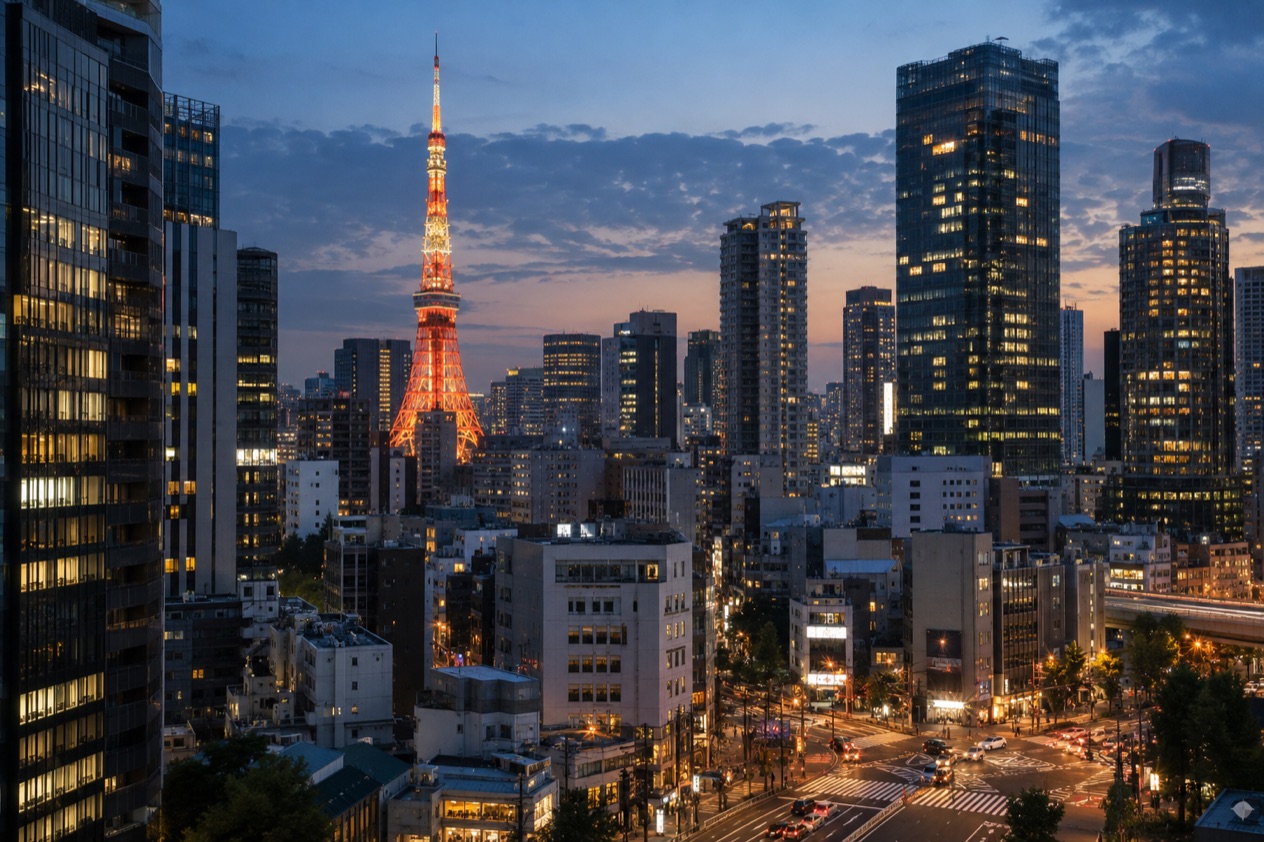
A morning in Shinjuku starts in the tall glass canyon of Nishi-Shinjuku, where office workers cross wide plazas under the towers of the Tokyo Metropolitan Government Building. By night the energy moves east, to the signs and side streets of Kabukicho, while the lawns of Shinjuku Gyo-en wait on the other side of the district. Choosing where to sleep means choosing which of these Shinjukus you want outside your door.
What is the best area to stay in Shinjuku?
For a first visit, the streets around Shinjuku Station are the simplest choice, because the station is the busiest in the world and everything else in the ward fans out from it. Sightseers who like skyline views and tidy plazas will be happiest in Nishi-Shinjuku, on the west side.
Travelers who want nightlife, late dinners and neon head for the east side near Kabukicho. Anyone who prefers green space over lights looks toward Shinjuku Gyo-en.
Budget travelers have the widest choice of lodging types in the busy station districts, from business hotels to capsule hotels and small guesthouses. Families tend to want a base with room to spread out and a calmer feel at night, which points to the west side or the edge of the park. The mood changes sharply between sides of the station, so a few minutes of walking can put you in a different world.
Shinjuku is one of the 23 special wards of Tokyo and is known as the metropolis’ second center. That role shapes every choice here. You are never staying in a sleepy corner, you are staying in a working, living district of the city, and the question is only which part of it matches your trip.
The west side is the business and government side, with high-rise buildings and wide open spaces. The park lies beyond the station area and gives the ward a very different texture, with lawns and garden styles rather than storefronts.
Over 300,000 people live in Shinjuku, including nearly 30,000 foreign residents. That mix shows in the neighborhoods, where everyday shops, small eateries and apartment blocks sit beside the big landmarks. Staying in one of these residential edges gives a sense of daily life that the station core cannot, though it also means a longer walk to the main hub.
A good way to decide is to picture your evenings. If you want to step out of the lobby and into a street full of lit signs and restaurants, stay east. If you would rather return to a high floor with a view over the city and a plaza underfoot, stay west. If you want a stroll under trees before breakfast, stay near the park. Each choice puts a different Shinjuku around you.
The best areas to stay in Shinjuku
Around Shinjuku Station
The station area is the center of everything, a place where an estimated 3.64 million passengers pass through each day. Staying here means the trains are right at hand and the district’s department stores, food halls and restaurants are all within reach on foot. It suits first-time visitors, travelers who plan to move around Tokyo a lot, and anyone who likes being in the middle of the action.
The lodging here runs from business hotels, with compact, tidy rooms and a practical feel, to larger hotels with restaurants and lounges, and a scattering of capsule hotels and guesthouses. The station itself is large and has many exits, so it pays to learn which side your hotel faces, east or west, before you arrive with luggage. A hotel on the east side feels like the entertainment district, while one on the west side feels like the business district.
Nishi-Shinjuku, the west side
Nishi-Shinjuku is where the Tokyo Metropolitan Government Building stands, housing the administrative center of the Tokyo Metropolitan Government. The streets are wide, the buildings are tall, and the scene is more office and plaza than market and alley. It suits travelers who like skyline views, a polished feel and a base that stays orderly after the offices empty.
Lodging here leans toward large high-rise hotels and business hotels, often with upper-floor rooms that look across the city. Couples, solo business travelers and families who want a spacious room tend to enjoy the west side.
| Site | Open |
|---|---|
| Tokyo Metropolitan Government Center, North Observatory | Daily 09:30 to 23:00, closed second and fourth Mondays of each month. Last entry 30 minutes before closing. |
| Tokyo Metropolitan Government Center, South Observatory | Daily 09:30 to 17:30, until 23:00 on days the North Observatory is closed, closed first and third Tuesdays of each month. Last entry 30 minutes before closing. |
Because the two observatories alternate their closing days and evening hours, a stay in Nishi-Shinjuku gives you the freedom to pick whichever one is open on the day you want to go. Nothing else in the district asks for a plan quite like this, so it is a pleasant, low-effort outing from your door.
The east side and Kabukicho
The east side of Shinjuku includes Kabukicho, Tokyo’s largest red-light district, and the streets around it are given over to bars, izakaya (casual pubs serving small plates), late restaurants, karaoke and signs on every wall. Even if you never step into a bar, the area has a lively late-night feel. It suits travelers who want nightlife, food in many forms and a hotel that sits in the thick of it.
Lodging here is dense and varied: business hotels, capsule hotels, small guesthouses and some larger hotels, many in narrow buildings tucked among the shops. Light sleepers and families with young children may prefer to look elsewhere in the ward, since a room facing the street can mean a room facing the neon. Choose the side of the building carefully, and consider an upper floor.
Near Shinjuku Gyo-en
Shinjuku Gyo-en National Garden is a large park of 58.3 hectares that blends Japanese traditional, English landscape and French formal gardens. It suits couples, travelers on a longer stay, and anyone who wants a breath of space.
Lodging near the park is mostly smaller hotels, apartment-style rooms and business hotels on side streets with a more residential feel. It is a good match for people who like to settle in, cook a simple meal or head out for a quiet coffee. The trade-off is that you give up the instant access of the station area and walk a little more for your trains.
Shinjuku areas compared
| Area | Best for | Feel | Getting around |
|---|---|---|---|
| Around Shinjuku Station | First visit, rail travelers | The busiest station in the world, department stores and restaurants | Shinjuku Station |
| Nishi-Shinjuku | Sightseeing, business travelers, families | Government and office towers, wide plazas | Near the Tokyo Metropolitan Government Building |
| East side and Kabukicho | Nightlife, food | Tokyo’s largest red-light district, bars and late restaurants | On foot from Shinjuku Station |
| Near Shinjuku Gyo-en | Longer stays, couples | Large garden with Japanese, English and French styles | Beside the park |
The main trade-off is between being near the station and having room to breathe. Staying beside the busiest station in the world makes every departure easy, but it also puts you in the busiest part of the ward, with everything that implies for noise and movement. Staying near the park or on a side street gives you a calmer base at the cost of a longer trip to the trains.
The other trade-off is old against new. The east side, with its dense lanes and neon, feels like the older, more tangled Shinjuku. The west side, with its towers and plazas, feels like the newer one, planned and orderly. Neither is better, they are simply two ways of seeing the same ward. Pick the one that matches the evenings you are imagining.
If you are unsure, the station area is the middle path. It sits between the east and the west and lets you try both without committing to either. From there you can walk into Kabukicho one night and out to the towers or the park the next, then decide on a different base if you come back to Tokyo.
How to choose your hotel in Shinjuku
Start with the kind of lodging that fits your trip. A business hotel is the plain, practical option, with a compact room, a private bath and a straightforward stay, and Shinjuku has many of them.
A larger hotel adds restaurants, lounges and views, especially on the west side. A capsule hotel gives you a small sleeping pod and shared facilities for a short stay, and a guesthouse offers a simple room and a friendlier, shared feel.
A ryokan, the traditional Japanese inn, is a different experience, with tatami floors, futon bedding and often a communal bath, and meals served in the room or dining area. In a ward as urban as Shinjuku, the traditional inn is the rarer find, so treat it as a special choice rather than the default. If you want that feel, look for a hotel that offers a Japanese-style room, and remember that shoes come off at the entrance.
Think about your location before your lodging type. A hotel close to the station saves effort on arrival and departure, and lets you step out into a district full of restaurants and shops.
A hotel farther away, near the park or on a residential street, trades that immediacy for space. The airport you fly into matters too, since the nearest airports to Tokyo are Haneda Airport (officially Tokyo International Airport) and Narita Airport, Japan’s largest international airport.
Families will want to weigh the room size, the bath and how the street feels at night. A larger hotel on the west side usually offers more room, while a small guesthouse on the east side may mean a tighter fit and a livelier street below. Look at the layout of the building, the floor of the room and which direction it faces, and ask for a room away from the busiest street if that matters.
Travelers with limited mobility should think about the station. Shinjuku Station is very large, with many exits and levels, so a hotel that sits a short step from your arrival exit is worth looking for. A hotel in Nishi-Shinjuku, with its wide plazas, may suit travelers who prefer open space, while the dense lanes of the east side can be tighter underfoot.
Finally, think about what you will do. If your days will be spent across Tokyo, a base at the station area makes the most sense. If you plan to linger in the ward, with a walk in the garden, a visit to the observatories and a night in Kabukicho, any of the four areas works, and the choice comes down to the mood you want when you close your door at night.
Good to know before you go
Tokyo is served by two airports, Haneda Airport and Narita Airport, and either one can be your way into Shinjuku. Once you are in the ward, Shinjuku Station is the hub that connects you to the rest of the city, and the districts described here are all in Shinjuku, one of the 23 special wards of Tokyo. A hotel’s own description of its location, which side of the station and which exit, is worth reading closely before you choose.
Sources
- Wikipedia, Shinjuku (https://en.wikipedia.org/wiki/Shinjuku), checked October 11, 2026
- Wikivoyage, Tokyo/Shinjuku (https://en.wikivoyage.org/wiki/Tokyo/Shinjuku), checked October 11, 2026
- Japan National Tourism Organization, Tokyo (https://www.japan.travel/en/destinations/kanto/tokyo/), checked October 11, 2026
To plan your stay
- Best Time to Visit Tokyo: Cherry Blossoms, Autumn Leaves, Weather by Month and Festivals
- Things to Do in Tokyo: Temples, Towers, Markets and Day Trips
- Tokyo from the airport: Narita and Haneda, the Skyliner, Local Trains and Taxis
- Know Before You Go to Tokyo: Entry, Money, Getting Around and Local Etiquette