
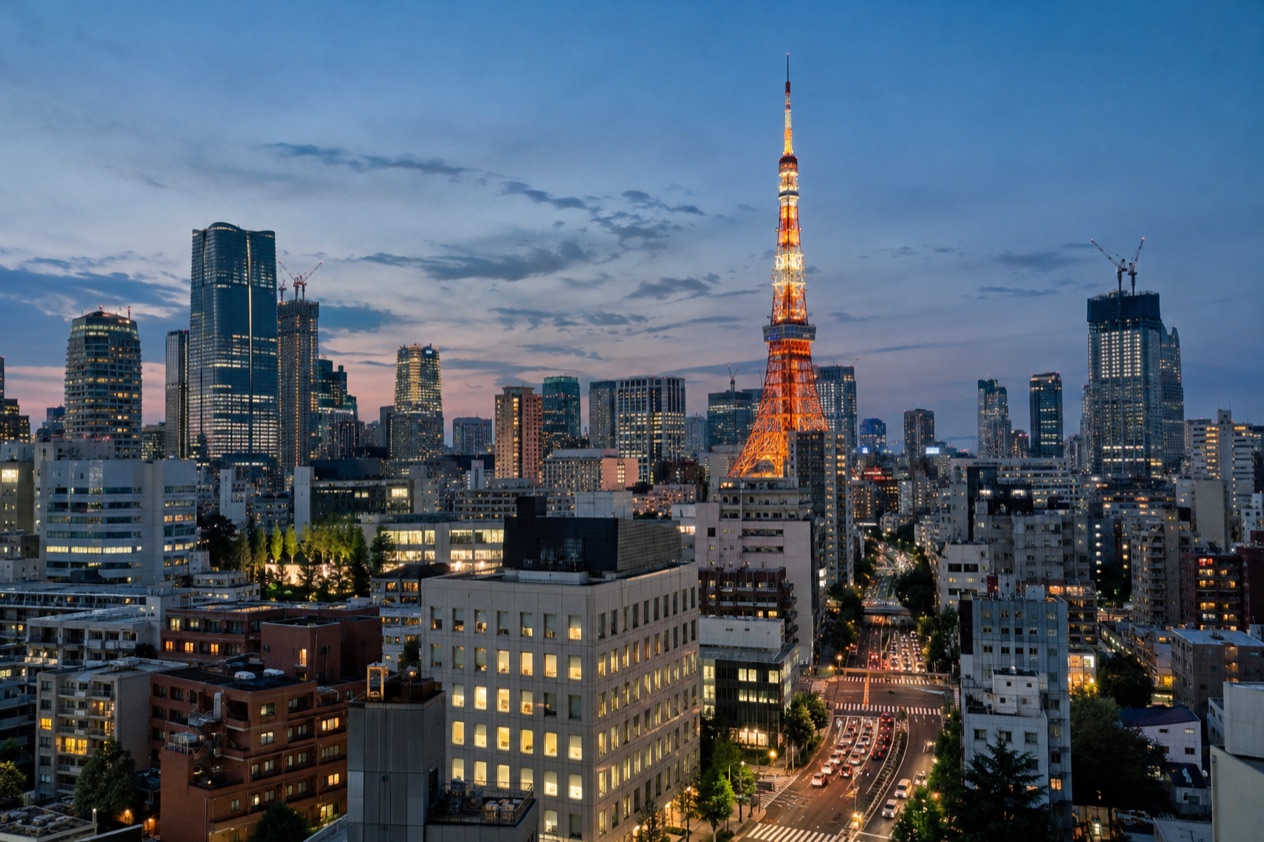
In the morning, visitors file into the glass halls of The National Art Center, Tokyo, and the museum cafés fill with people planning their day. By night the same district turns to neon, with groups spilling out of bars and travelers from abroad mixing with Tokyo residents. Roppongi is a district of art, towers and late evenings, and choosing where to sleep means deciding how much of that evening you want outside your window.
What is the best area to stay in Roppongi?
Around Roppongi Station, the Hibiya and Oedo lines suit travelers who want to stay near the district’s nightlife and Roppongi Hills. If your plans center on the art museums and you want a calmer base, Nogizaka Station is the one to look at.
Roppongi-itchome and Akasaka suit travelers who care more about a polished, business-district setting than about the nightlife. For late nights out, stay as near the station as you can.
Roppongi is an expensive section of Tokyo’s Minato ward, and that shapes the whole choice. Nobody comes here for a bargain corner of the city, so if budget is the first concern, think of Roppongi as a place to visit for an evening or an afternoon at the museums rather than as the base for the whole trip.
The subway makes that easy. A hotel elsewhere on the Hibiya or Oedo Line can still provide a direct rail connection to Roppongi Station.
The areas differ mostly in what surrounds the front door. Around Roppongi Station you step out into a district noted for its night life, with bars and restaurants open late and a steady flow of people.
Roppongi-itchome, on the Namboku Line, belongs to a different stretch of the same neighborhood. Nogizaka sits on the Chiyoda Line and is tied to the museum side of Roppongi. Akasaka, next door, holds the Tokyo Midtown complex, which includes the first Tokyo Ritz-Carlton Hotel.
Families and travelers who prefer early nights have a straightforward rule of thumb. The closer the hotel is to Roppongi Station itself, the more of the evening noise you share. A hotel that puts a short subway ride between your bed and the bars lets you choose when to join the crowd and when to skip it. Because several lines serve the district, you can pick an area by mood and still reach everything.
Travelers coming from other parts of Tokyo also have options. Shibuya is joined to Roppongi and Akasaka by a train ride, and the Oedo Line links Roppongi with Shinjuku and Yoyogi.
If you are splitting your stay between neighborhoods, these links mean a night in Roppongi does not lock you out of the rest of the city.
Roppongi also rewards a slower approach to the day. Mornings can belong to the Mori Art Museum and The National Art Center, afternoons to wandering the Hills and Midtown complexes, and evenings to whatever the street offers. A hotel placed near the center of that arc saves you from crossing the city twice. Pick the area that fits the part of the day you care about most, and let the subway handle the rest.
The best areas to stay in Roppongi
Around Roppongi Station
This is the heart of the district and the area people picture when they say Roppongi. The station is served by the Tokyo Metro Hibiya Line and the Toei Oedo Line, which puts you on two routes through the city. Around it stand the high-rise complex of Roppongi Hills, completed in 2003, and the bars and restaurants that give the district its reputation for night life.
It suits travelers who want to be in the middle of things, first-time visitors who value an easy line back to the hotel after dinner, and anyone planning a late evening. Rooms here tend toward city hotels and towers rather than rural-style inns, and the setting is urban from the first step outside. The Hibiya Line runs from south-west Tokyo to the north-east, via Ebisu, Ginza, Akihabara and Ueno, so a single line carries you to several well-known districts.
A useful tip is to look at where the hotel sits relative to the main crossing. A room facing the bar streets will feel different from one tucked on a side street, even when the two addresses sound alike. Anyone sensitive to late-evening noise should say so when choosing a room.
Roppongi-itchome
Roppongi-itchome Station is served by the Tokyo Metro Namboku Line, a separate route from the two lines at Roppongi Station. The name tells you where you are, since itchome means first block, and the area reads as a corner of the same Roppongi neighborhood with its own subway stop. A hotel here gives you a different line from the main station and a different starting point in the morning.
It suits travelers who want to be inside the Roppongi district without stepping out onto its busiest streets. Business visitors and people who plan to leave the district by subway each day often like having a line of their own.
As a tip, check which station a hotel’s own directions use. Some properties near the boundary of two stations name both, and knowing which line you will use most helps you pick well. If your plans lean on the Namboku Line, this area is the natural fit for that route.
Nogizaka
Nogizaka Station is served by the Tokyo Metro Chiyoda Line. It is the stop to think about if your days revolve around art, because The National Art Center, Tokyo, belongs to the Roppongi district and the Mori Art Museum is part of the same cultural circuit. Staying here ties your mornings to the galleries rather than to the bar streets.
This area suits couples, solo travelers and museum lovers who want a station to themselves on a third line. The Chiyoda Line gives you a route that the other Roppongi stations do not share. If you are coming back late, you will still be within reach of the district’s night life, but you choose when to head there.
A good tip is to plan your museum days first and your evenings second. From Nogizaka, you can walk to the galleries during the day and continue toward central Roppongi for dinner. That keeps the quieter pace of your stay under your control.
Akasaka and Tokyo Midtown
Akasaka is the neighboring district, and its landmark is the Tokyo Midtown project, completed in 2006. The complex includes the first Tokyo Ritz-Carlton Hotel, so the area is the one to consider if you want a large, polished hotel inside a modern development. Roppongi and Akasaka can be reached from Shibuya Station in about 10 minutes by train.
It suits travelers who like to stay in a designed complex with restaurants, shops and a hotel under one roof, and those who want Roppongi’s museums and night life nearby without sleeping in the thick of them. Akasaka is a separate district, so a stay here gives you a sense of being next to Roppongi rather than inside it.
As a tip, remember that Akasaka is its own neighborhood with its own feel. A room near Midtown is close to the district, and the subway covers the rest.
Roppongi areas compared
| Area | Best for | Feel | Getting around |
|---|---|---|---|
| Around Roppongi Station | First visit, nightlife | Noted for its night life, with Roppongi Hills nearby | Tokyo Metro Hibiya Line and Toei Oedo Line |
| Roppongi-itchome | A base with its own line | A separate corner of the Roppongi neighborhood | Tokyo Metro Namboku Line |
| Nogizaka | Museums and art | Tied to the National Art Center side of the district | Tokyo Metro Chiyoda Line |
| Akasaka and Tokyo Midtown | A hotel inside a large complex | Neighboring district with the Tokyo Midtown project | Roppongi and Akasaka can be reached from Shibuya Station by train in about 10 minutes |
The main trade-off is between the station and the side streets. Around Roppongi Station you have two lines, the high-rise of Roppongi Hills and the bars within a few steps, and you accept the noise of a district known for its evenings. Choosing Nogizaka or Roppongi-itchome gives you a different line and a different pace, at the cost of having to take the subway for dinner.
The other trade-off is between the new towers and the surrounding neighborhoods. Roppongi Hills and Tokyo Midtown are large developments, finished in 2003 and 2006, and they give the district a modern skyline. Staying inside or beside them means a stay shaped by shops, restaurants and galleries. Staying in the surrounding blocks lets you see how the district looks away from the complexes.
If you want the most direct subway links, the station area wins, because the Hibiya Line crosses the city and the Oedo Line reaches Shinjuku and Yoyogi. If you want to arrive from Shibuya, any of the areas works, since Roppongi and Akasaka can be reached from there by train, and some visitors even walk east along Roppongi-dori. Until about 21:00, a Toei bus also runs the same road.
Think of the four areas as four ways of entering the same neighborhood. The station area puts you where the evening happens, Roppongi-itchome and Nogizaka give you a line of your own, and Akasaka places you inside a development with a hotel built into it.
The neighborhoods are close to one another, but their stations sit on different subway lines. The right pick depends on whether your trip leans toward night life, art or a polished setting.
How to choose your hotel in Roppongi
Start with the station, because in Roppongi the line you use shapes your whole stay. Around Roppongi Station you have the Hibiya Line and the Oedo Line, at Roppongi-itchome the Namboku Line, and at Nogizaka the Chiyoda Line. Pick the line that matches the places you plan to visit, then look at hotels within reach of that stop.
The kind of lodging follows the district. Roppongi is an expensive section of Minato ward, and its large complexes hold full-service city hotels, including the Ritz-Carlton at Tokyo Midtown in neighboring Akasaka.
Travelers who want a Japanese-style stay, such as a ryokan with tatami rooms and an onsen bath, would look beyond the district. Roppongi is built around towers, museums and night life, and that is the kind of setting its hotels share.
Think about the hours you will keep. Roppongi Hills is open daily until 03:00 the next day, which tells you how late the district stays awake. If you plan to be out until the early hours, a hotel close to the station saves you a long ride home. If you expect early mornings at the museums, a room away from the bar streets lets you sleep.
| Site | Open |
|---|---|
| Roppongi Hills | Daily, 07:00 to 03:00 the next day |
Families and travelers with limited mobility should look closely at how a hotel connects to its station. The Hibiya Line, the Oedo Line, the Namboku Line and the Chiyoda Line each serve a different stop, so the useful question is how you get from the front door to the platform. A hotel inside a complex such as Tokyo Midtown keeps shops and restaurants under one roof, which can matter on days when you want fewer transfers.
For arrivals, think about the airport you will use. Haneda Airport, officially Tokyo International Airport, and Narita Airport, Japan’s largest international airport, are the nearest airports to Tokyo. Which one you land at may help decide where you stay, since your first ride into the city begins there. Once you are in the city, the subway lines in the district take over.
If your plans reach beyond Roppongi, consider a hotel on the line you will use most. From Roppongi Station, the Oedo Line is the way to come from Shinjuku or Yoyogi, and from Shibuya you can reach the district by train or walk east along Roppongi-dori.
Matching your hotel to your daily route saves time and keeps the trip simple. A hotel in Roppongi is a base for the district, and the subway lines make it a base for the rest of the city too.
Finally, decide what you want the neighborhood to give you. If it is galleries, look at Nogizaka and the museum side, where the Mori Art Museum and The National Art Center, Tokyo, are part of the district. If it is a lively evening, choose the station area. If it is a large, polished hotel with restaurants nearby, look at Akasaka. The district rewards a choice made by mood.
Good to know before you go
Haneda Airport and Narita Airport are the nearest airports to Tokyo. Once you are in the district, Roppongi Station, Roppongi-itchome Station and Nogizaka Station each give you a different route through the city. Tokyo is the capital of Japan and sits on Tokyo Bay, so the subway is your main thread through the neighborhood and beyond.
Sources
- Wikipedia, Roppongi (https://en.wikipedia.org/wiki/Roppongi), checked October 11, 2026
- Wikivoyage, Tokyo/Roppongi (https://en.wikivoyage.org/wiki/Tokyo/Roppongi), checked October 11, 2026
- Japan National Tourism Organization, Tokyo (https://www.japan.travel/en/destinations/kanto/tokyo/), checked October 11, 2026
To plan your stay
- Best Time to Visit Tokyo: Cherry Blossoms, Autumn Leaves, Weather by Month and Festivals
- Things to Do in Tokyo: Temples, Towers, Markets and Day Trips
- Tokyo from the airport: Narita and Haneda, the Skyliner, Local Trains and Taxis
- Know Before You Go to Tokyo: Entry, Money, Getting Around and Local Etiquette