
Halfway through the trip, you slide a door open in a Hakone inn, step out of your slippers onto the tatami and sit down to a dinner brought dish by dish, with steam from the hot spring still rising off your skin. The route runs from Tokyo through the hot-spring country of Hakone to Kyoto, and it is built for a first visit to Japan.
Is 7 Days enough for Japan?
A week is enough for a first look at Japan if you accept that it is a sampler: one giant city, one mountain resort with hot springs, and one old capital. That is the whole shape of this route, and it works because each stop feels completely different from the one before. You come away with a clear picture of how the country moves, eats and relaxes, even though you leave most of it unseen.
Tokyo gets the first three days because it rewards slow wandering. It is the capital of Japan and the most populous metropolitan area in the world, spread around Tokyo Bay in the Kanto region on Honshu. Its districts have such different characters that a single day in each barely repeats itself. Ginza is polished and upscale, Nihonbashi sits beside it, and Roppongi and Akasaka offer a different evening mood again.
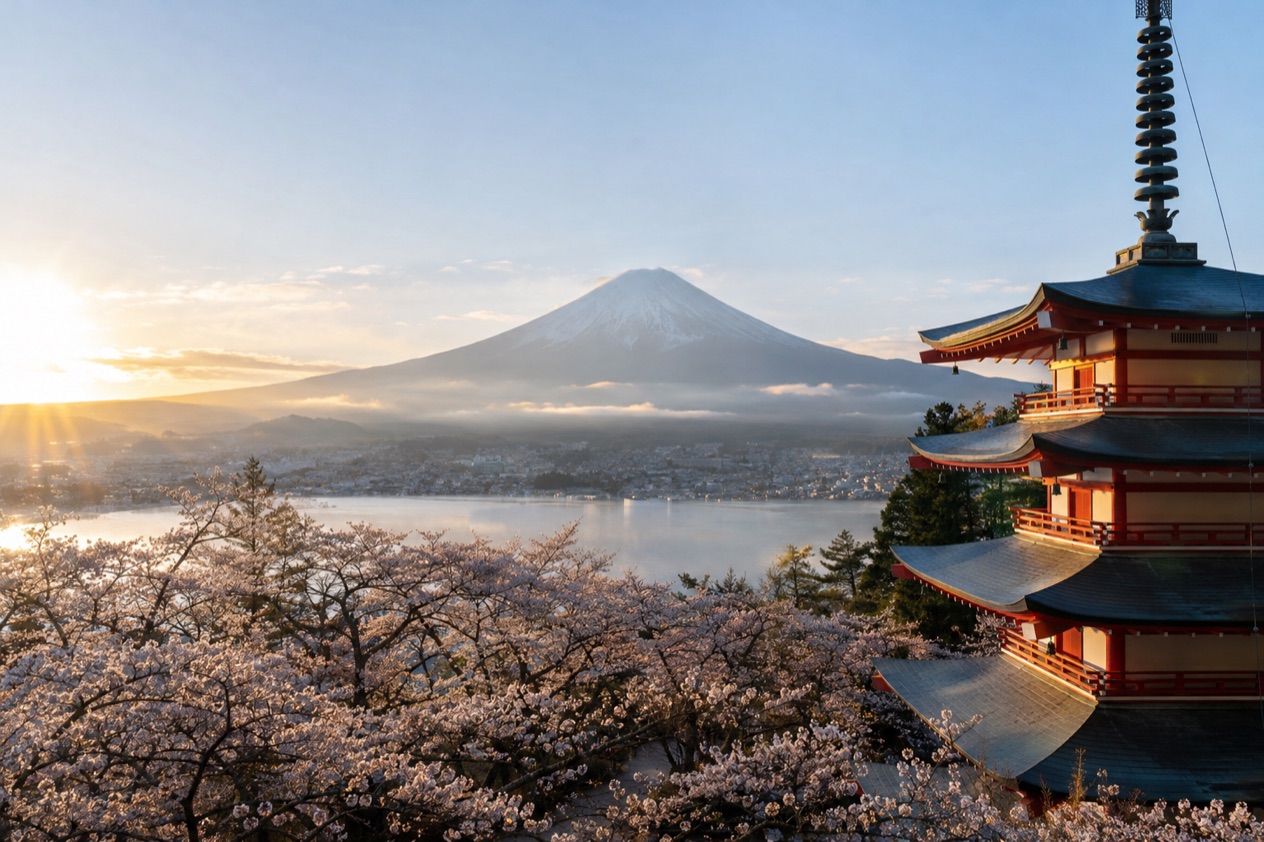
Hakone comes next as a change of pace. It lies in the western part of Kanagawa Prefecture, inside the Fuji-Hakone-Izu National Park, and it is known worldwide for its natural hot springs and for views of Mount Fuji. Two days here let you ride the local rail, ropeway and cruise network, soak, and eat slowly. After the pace of Tokyo, that rest is part of the plan and not a gap in it.
Kyoto closes the trip. Its cultural heritage has developed over 1,200 years, and it served as Japan’s capital and the emperor’s residence for more than a thousand of them. You get a first taste of temples, wooden townhouses called machiya and the districts where geisha live and work. You will not see all of it in two days, and nobody does.
What the route leaves out is large. Osaka and its rail operators, Nara, Hiroshima, the northern island of Hokkaido, the ski resorts and the southern islands are all for another trip. If you want a deeper look at one place instead of three, you can keep the Tokyo days and stretch Kyoto, or the reverse. Seven days also gives little slack for a late arrival, so treat the first day as a soft landing.
The route suits first-timers, couples and friends who like to mix city energy with a night in a traditional inn. It also suits anyone who would rather change bases only twice than every night. Two moves, three bases, and a clear line from east to west is about as simple a structure as a week in Japan can have.
The itinerary stage by stage
Days 1 to 3: Tokyo
Day 1 is for arriving and for walking. Ginza is the natural place to get your bearings: an upscale downtown area of high-end restaurants and luxury shops, where even a window-shopping stroll feels like an event. Neighboring Nihonbashi adds a more business-minded side of old Tokyo. Stay somewhere central and let the first evening be a simple dinner and an early night.
Day 2 moves to Roppongi and Akasaka, two Tokyo districts where the evening is the main attraction. Roppongi can be reached from Shibuya Station in about 10 minutes by train, which makes it a good way to string two very different neighborhoods into one day. Plan a museum or a garden by day, then let the dining and nightlife of the area set the tone after dark.
Day 3 is deliberately open. Tokyo is served by Japan Railways (JR) trains, Tokyo Metro lines and Toei Subway lines, among others, so you can follow your own curiosity: a temple morning, a department-store food hall, a ramen counter, an izakaya (a casual pub serving small plates) for the last night. Then pack, because the next stage begins with a change of base.
Days 4 and 5: Hakone
Hakone is the part of the week where you slow down on purpose. Spend the first day riding the local network, which the Hakone Freepass covers with unlimited rides on eight kinds of transport, including the Hakone Tozan Train, the Hakone Ropeway and the Hakone Sightseeing Cruise. Hakone-Yumoto is known for its many restaurants and gift shops, and it makes a pleasant place to pick up small souvenirs and a lunch of local noodles or sweets.
Sleep in a ryokan, the traditional inn where the evening unfolds around a hot-spring bath, a multi-course dinner and a futon laid out on tatami. Shoes come off at the entrance, slippers are worn indoors, and the slippers come off again on tatami and in the bathroom, where a separate pair of toilet slippers is often provided. It is a small ritual that quickly becomes second nature.
On day 5 you can choose between more soaking and another loop through the art museums, hot springs and activity facilities. The Hako Ticket Plus pass combines the Digital Hakone Freepass with unlimited use of applicable museums, hot springs and activities, and it is valid for 2 days or 3 days. Hold the mountain views in mind when you plan your day, since Mount Fuji is part of what Hakone is known for.
Days 6 and 7: Kyoto
Kyoto Station is served by the Tokaido Shinkansen line, and the station building is a destination on its own, with a full floor of ramen restaurants, an Isetan department store, a theater and a Granvia hotel. Drop your bags, then head into the city. Day 6 belongs to central Kyoto, where Nijo Castle was built in 1603 by Tokugawa Ieyasu, the first shogun of the Edo period.
Between sights, look for the machiya townhouses with their latticed wooden fronts, and for the hanamachi districts where geisha live and work. The traditions of the city include the Gion Matsuri festival, a reminder that Kyoto is as much a living place as a collection of monuments. A bowl of tofu, a pickle shop, a matcha sweet: the food here rewards small stops.
Day 7 is a final morning in the city, a last walk through a neighborhood you liked, and then your departure. Keep that day light, with one favorite spot revisited rather than a new list of sights, and you will leave Japan with an unhurried last memory instead of a rushed one.
Getting between stops
| Leg | How |
|---|---|
| Tokyo to Hakone | By rail |
| Around Hakone | Hakone Tozan Train, Hakone Ropeway and Hakone Sightseeing Cruise, among eight transport modes covered by the Hakone Freepass |
| Hakone to Kyoto | By rail, to Kyoto Station, which is served by the Tokaido Shinkansen line |
| Within Tokyo | JR trains, Tokyo Metro lines and Toei Subway lines |
The whole route is built around rail, and that suits Japan. Public transport, including the shinkansen and regional trains, is extremely punctual, to the point that one could set one’s watch by it, so the connections between a morning check-out and an afternoon arrival are the least stressful part of the week.
Not all trains are the same, and a few words help at the ticket gate. Local trains stop at every station, which makes them ideal for short distances. Rapid trains skip smaller stations and need no supplement. Express trains serve fewer stops, and a supplement may be applied. Reading the sign on the platform for the type of train is a habit worth building early.
An IC card smooths the small trips inside each city. These cards work on trains, buses and boats, and also at vending machines, convenience stores and some taxis. Most regions have their own card with a different name and mascot, but they can be used throughout Japan, so one card carries you from Tokyo to Kyoto. In Osaka, if you add it later, you will meet JR, Hankyu, Hanshin and Keihan lines.
Buses and boats also play a role, especially in Hakone, where the sightseeing cruise is one of the pass modes. Flights matter mostly at the two ends of the trip, as you arrive in Japan and when you leave it.
Driving is a different matter, and this route does not need it. Traffic moves on the left, road signs are hard to read without Japanese, highway tolls can be very high and city traffic is often very congested. For a week that touches three busy places, the train is the natural thread.
What to book before your 7 Days in Japan
Three things deserve a decision before you leave: the passes, the IC card and the lodging. The passes matter most in Hakone. The Hakone Freepass bundles unlimited rides on eight kinds of transport, and the Hako Ticket Plus adds applicable art museums, hot springs and activity facilities for 2 days or 3 days. Decide which one fits your two days before you arrive, because your whole Hakone plan hangs on it.
The IC card is the second item. It takes care of subways, local trains, buses and small purchases across all three stops, and it saves you from decoding fare maps at every station. You can pick one up on arrival, and it works throughout Japan even if it carries a regional name.
Lodging is the third, and the choice of a ryokan in Hakone deserves the most thought. It is the one night where the inn is the experience itself: the bath, the dinner and the tatami room are the point of the stop.
In Tokyo and Kyoto, what counts is the base. Choose a place close to the rail lines you will actually use, whether that is Kyoto Station with its restaurants and department store, or a central Tokyo area such as Ginza.
Everything else can stay loose. Leave Day 3 in Tokyo and the afternoon of Day 7 in Kyoto open, so that a place you love can stretch and a place you do not can be skipped without a fuss.
Adapting the route
With fewer days, drop Roppongi and Akasaka and give Tokyo two days, keeping Hakone as a single night with a ryokan. With more time, the clearest addition is a third day in Kyoto, because the city holds more than one weekend can show. Nara and Osaka are other directions to add later if you extend the trip and keep rail as your thread.
Season changes the mood more than the route. These are Tokyo’s own figures, and the mountains and the old capital will feel different from them.
| Tokyo month | Average high (°F) | Average low (°F) | Rain days | Precipitation (in) |
|---|---|---|---|---|
| January | 49.6 | 34.2 | 4.5 | 2.35 |
| April | 66.9 | 49.6 | 9.5 | 5.26 |
| July | 85.8 | 72.3 | 10.5 | 6.15 |
| October | 71.6 | 58.6 | 10.5 | 9.24 |
January is cold and the driest of the four, with some snow or sleet on a few days, so it suits hot springs especially well. April is mild and a little wetter.
July is hot and humid, and a day outside feels heavy, so plan indoor stops such as museums and department stores for the middle of the day. October brings the most rain of the four, and a flexible schedule lets you swap a day outdoors for one under a roof.
For families, keep the moves to a minimum and let children enjoy the train rides themselves. The Hakone Tozan Train, the ropeway and the sightseeing cruise give variety to a day without a long list of sights. In Kyoto, pick one or two places rather than a full list, and use the ramen floor at Kyoto Station as a straightforward meal.
For a slower trip, cut Roppongi and keep each stop to its simplest form: one district a day, one meal you look forward to, and one hour with nothing planned. The trains are punctual, but a trip does not have to be.
Good to know before you go
Shoes come off at the entrance of homes, ryokan and some other buildings, and indoor slippers take their place, so wear shoes that are easy to slip off. Smoking while walking in the street is prohibited and can bring a fine, and designated outdoor smoking areas are limited, so smokers should look for the nearest zone. Small purchases at vending machines and convenience stores can be paid with an IC card.
| Fee | Amount | Who pays |
|---|---|---|
| IC card deposit (most cards) | 500 yen | Buyer of the card, at the time of purchase |
Sources
- U.S. Department of State, Japan travel information, travel and transportation (https://travel.state.gov/content/travel/en/international-travel/International-Travel-Country-Information-Pages/Japan.html), checked October 11, 2026
- Japan National Tourism Organization, trains and buses (https://www.japan.travel/en/guide/how-to-travel-by-train-and-bus-in-japan/), checked October 11, 2026
- Japan National Tourism Organization, traveling by rail (https://www.japan.travel/en/guide/traveling-by-rail/), checked October 11, 2026
- Japan National Tourism Organization, manners, etiquette, shoes, bowing, chopsticks, public behavior (https://www.japan.travel/en/guide/understanding-and-mastering-japanese-manners-and-etiquette/), checked October 11, 2026
- Japan National Tourism Organization, getting around Japan: trains, subways, buses, taxis (https://www.japan.travel/en/plan/getting-around/), checked October 11, 2026
- Japan National Tourism Organization, IC cards, Suica, Pasmo, ICOCA, how to use (https://www.japan.travel/en/plan/ic-card/), checked October 11, 2026
- Japan National Tourism Organization, Tokyo (https://www.japan.travel/en/destinations/kanto/tokyo/), checked October 11, 2026
- Japan National Tourism Organization, Hakone (https://www.japan.travel/en/destinations/kanto/kanagawa/hakone-and-around/), checked October 11, 2026
- Hakone Tourist Information (https://www.hakonenavi.jp/international/en/), checked October 11, 2026
- Japan National Tourism Organization, Kyoto (https://www.japan.travel/en/destinations/kansai/kyoto/), checked October 11, 2026
- Japan Meteorological Agency (JMA), Normal values 1991-2020, monthly (https://www.data.jma.go.jp/stats/etrn/view/nml_sfc_ym.php?prec_no=44&block_no=47662), station Tokyo, elevation 25 m, checked October 11, 2026
- Plan de the (duree choisie by the redaction)
To plan your stay
- Best Time to Visit Tokyo: Cherry Blossoms, Autumn Leaves, Weather by Month and Festivals
- Where to Stay in Tokyo: Shinjuku, Shibuya, Asakusa, Ginza and Roppongi
- Tokyo from the airport: Narita and Haneda, the Skyliner, Local Trains and Taxis
- Know Before You Go to Tokyo: Entry, Money, Getting Around and Local Etiquette