
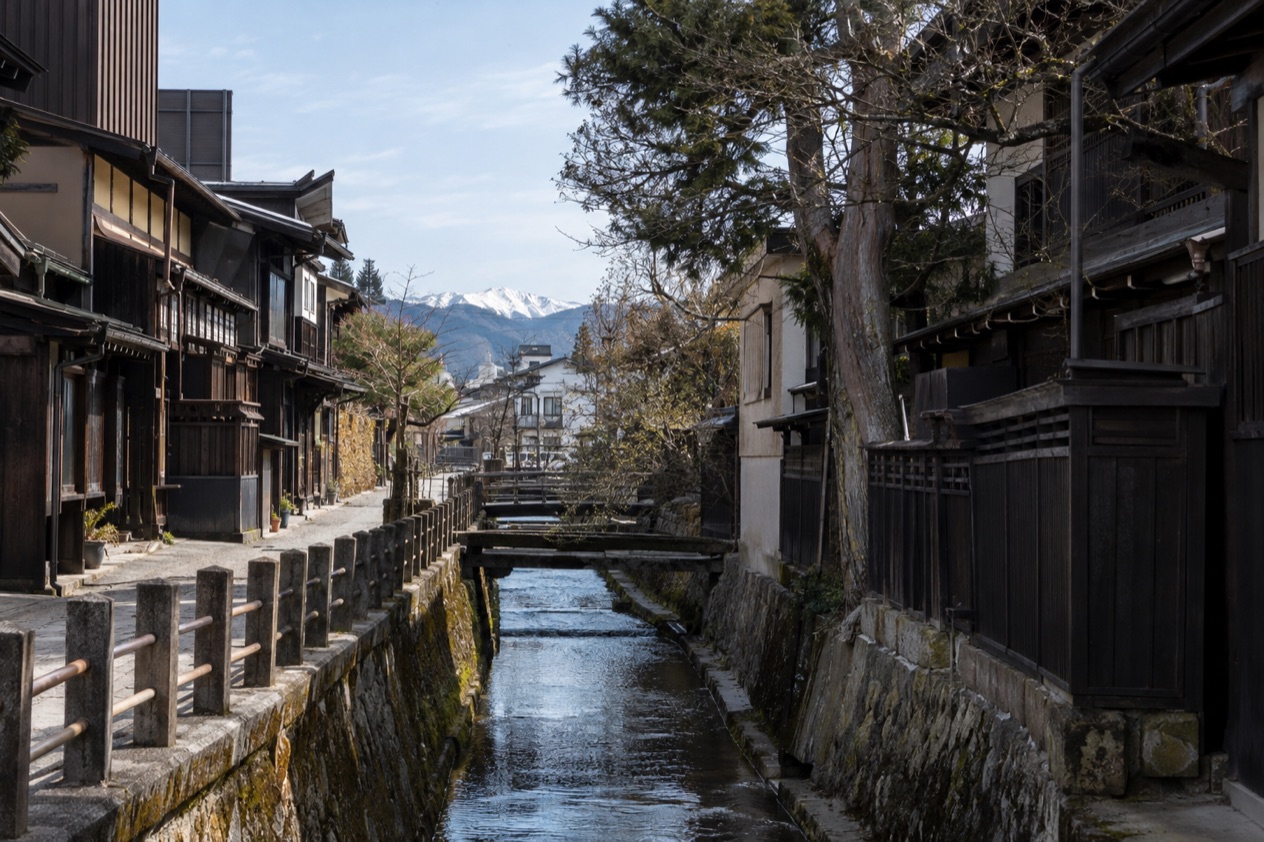
Morning in Takayama begins early beside the Miyagawa river, where stalls set out pickles, apples and handmade crafts while the mountain air still holds some chill. By evening the old wooden streets have dimmed and the lanterns come on, and a guest in a tatami room is waiting for dinner to arrive on lacquered trays. The city in the Japanese Alps asks you to choose between the practical comfort of the station side and the older rhythm of the Edo-style quarter, and that choice shapes how each day feels.
What is the best area to stay in Takayama?
For a first visit, the old town quarter with its well-preserved Edo-style streets is the best base, since it is the Takayama that gave the city its nickname, Little Kyoto of Hida. Travelers who arrive by train and leave by train, or who want to head out to other mountain towns the next morning, tend to prefer the area around Takayama Station. Anyone who loves markets and the river will want a room near the Miyagawa side of town.
By kind of trip, the picture is fairly simple. Sightseeing and photography lean toward the old town, where the lanes of sake breweries, wooden merchant houses and small museums sit close together. A budget stay usually points to business hotels and guesthouses, which cluster around the station.
Families often value the extra floor space of a larger hotel or a Japanese-style room where everyone sleeps on futons laid over tatami. Couples looking for a special night will find that a ryokan, with its private bath and kaiseki dinner, is the heart of a stay here.
Nightlife deserves an honest word. Takayama is a small mountain city, and its evenings revolve around dinner rather than clubs.
Izakaya (casual pubs serving small plates and sake) and little restaurants serving Hida-style cooking fill the hours after dark, and a late night usually means a second round of sake, not a dance floor. If an evening drink matters to you, sleeping in the town center keeps the walk back to your bed from becoming part of the plan.
What separates the areas is mostly mood. The station side feels like a working city, with transport, convenience stores and a steady flow of people coming and going. The old town feels slower, with wood-fronted buildings and the sound of sandals on stone. The market and riverside zone sits between the two, giving you bridges, willows and the clatter of a morning market before most tour groups have finished breakfast.
Season changes the answer a little. Cherry blossoms come from the middle to the end of April, about three weeks later than in Nagoya, so spring brings pink along the river and a good reason to sleep near the water.
Winter is a different story, because Takayama receives heavy snowfall, with an annual average of 201 inches in the city. A room in the old town then turns into a snow-globe base, and a warm bath at the end of the day becomes the main event.
Festival days change things too. The Takayama Festivals, counted among the three largest Shinto festivals in Japan, are two distinct celebrations, and the decorated yatai floats that parade through the streets are kept at the Takayama Yatai Kaikan, the Festival Float Exhibition Hall. If a festival is your reason for coming, choose your area by where you want to be when the floats appear, which is the heart of the old quarter.
The best areas to stay in Takayama
Around Takayama Station
The station area is where Takayama meets the rest of Japan. Takayama Station sits on the JR Takayama Line, and the streets around it hold the kind of lodging that suits people on the move: business hotels with compact, tidy rooms, simple guesthouses and some larger hotels. Mornings here feel practical, with commuters, backpacks and travelers checking timetables over coffee.
It suits first-time visitors who arrive late, travelers who plan to continue by rail the next day, and anyone who likes to have transport at their door. It also suits people on a tighter budget, since business hotels and guesthouses are a natural fit here. The trade-off is atmosphere. You are in a modern part of town, and the Edo-style streets lie a little further into your day, not outside your window.
One tip worth keeping in your pocket: Takayama Station does not accept IC cards, so local line tickets must be bought in cash. Keep some yen on you for the ticket machine, because the tap-and-go habit that works in Tokyo or Osaka will not work at this station.
The old town quarter
This is the part of Takayama people picture when they plan a trip: the well-preserved quarter of Edo-style streets, with dark timber facades, latticed windows and eaves that nearly touch across the lane. Lodging here tends toward small inns, guesthouses in converted merchant buildings, boutique stays with tatami rooms, and a handful of ryokan. Evenings are lantern-lit and slow, and after the day visitors leave, the streets belong to the people sleeping there.
It suits couples, photographers and travelers who want the atmosphere of the town to be part of the stay, not only a day’s outing. Light sleepers should remember that old timber buildings carry sound, and rooms may be simpler than in a modern hotel. In return you get a front-row seat for the mood of the city, from sake breweries to the sounds of a morning sweeping the street.
A good tip for this area is to treat your lodging as part of the sightseeing. Ask for a Japanese-style room if one is on offer, and plan an unhurried evening in the lanes before dinner. Since this is where the festival floats pass, staying here during the Takayama Festivals puts you closest to the procession.
The Miyagawa river and morning market
Along the Miyagawa river, the day starts with the morning market. The Miyagawa Morning Market operates from 07:00 (08:00 in winter months) to mid-morning, and the stalls offer fresh vegetables, pickles, local sweets and crafts. Lodging here ranges from small hotels to guesthouses and family-run inns, and the river and its bridges give the area a character of its own.
This is the area for people who like to wake up with the town and have breakfast from a stall or a nearby café. It suits couples, solo travelers and food lovers, as well as anyone who wants a base between the station and the old streets. In spring the cherry blossoms can brighten the riverside from the middle to the end of April.
Winter changes the schedule, since the market opens an hour later in the cold months. Plan a slower start, a hot drink and an extra layer. If you are the sort of traveler who enjoys the town best before the crowds, this riverside side of Takayama rewards you with the first hours of the day.
Ryokan and heritage stays
A ryokan is less an area than a way of sleeping, and in Takayama it fits naturally. Ryokan, traditional Japanese inns, are believed to have emerged in Japan in the 8th century, and they typically feature tatami floors, futons, private baths (sometimes outdoor), yukata, a kaiseki dinner and a traditional Japanese breakfast. A night in one turns the evening into the main sight of the day.
Staff explain the customs to guests, including removing shoes indoors, bathing in the onsen and wearing the yukata, so nobody needs to arrive knowing the routine. Heritage Stays go a step further: visitors can take part in activities such as tea ceremony, calligraphy and wearing traditional Japanese clothing. Reservations for Heritage Stays are required and can often be made through the property’s website or by phone.
Takayama areas compared
| Area | Best for | Feel | Nearby |
|---|---|---|---|
| Around Takayama Station | Rail travelers, budget stays, late arrivals | Practical, modern, a place of arrivals and departures | Takayama Station on the JR Takayama Line |
| Old town quarter | First visit, couples, festivals, photography | Edo-style streets, wood and lantern light | Well-preserved Edo-style streets, Takayama Yatai Kaikan |
| Miyagawa river and morning market | Early risers, food lovers, spring blossoms | Riverside, bridges, market stalls | Miyagawa Morning Market |
| Ryokan and heritage stays | Special nights, cultural activities | Tatami, futons, kaiseki dinner, baths | Tea ceremony, calligraphy, traditional clothing |
The main trade-off is between being near the station and being inside the atmosphere. The station area gives you transport, easy arrival and the simplest lodging for a short stay, while the old town gives you the setting that makes people fall for Takayama. Neither choice is wrong, and the decision depends on whether your trip is mostly about moving on or mostly about staying put.
A second trade-off is old against new. Newer hotels tend to give you modern rooms and predictable comfort, while older buildings give you timber, tatami and sound. If you sleep lightly, a modern room will feel kinder. If you want the feeling of a town that kept its old streets, an older inn is part of the point.
The riverside fits between the two. It has the energy of the morning market and the beauty of the water, and it keeps you close to both the old streets and the station side. Many travelers who cannot decide between the other two areas find this middle ground answers both wishes, and it is a good place to begin if you are still undecided.
Weather can tilt the choice. With heavy snowfall in the city through the winter, a base near the station keeps your arrival and departure simpler, while a base in the old town turns snow into scenery. In spring and autumn, when you want to be out among the lanes and the river, the old town and riverside bring you closest to what you came to see.
Think also about how you want your evenings to end. A late return from dinner suits a hotel near the center. A long, slow night suits a ryokan, where dinner is served to you and the bath comes after. If your plan is to eat out at an izakaya and wander, pick the old town or riverside and let the town be your living room.
How to choose your hotel in Takayama
Choose the kind of lodging first and the area second. A hotel in the Western sense gives you a bed, a private bathroom and a predictable routine.
A business hotel is a simple, compact version of the same idea and suits people who mostly want a place to sleep. A ryokan is an experience in itself, with tatami floors, futons, yukata, a kaiseki dinner and a traditional Japanese breakfast. A guesthouse is a smaller, more personal option, often run by a family.
A capsule hotel is another form of lodging in Japan, with a small sleeping pod and shared facilities. It suits solo travelers who want a place to sleep and little else, though it is not a family option. If you want space for a group, a Japanese-style room in a ryokan or a guesthouse often lets everyone sleep on futons in one room.
If you are drawn to a ryokan, think about what you want from the night. Private baths, sometimes outdoor, make it a place to relax after a day of walking. Staff explain the customs, such as removing shoes indoors and wearing the yukata, so first-timers can relax. Dinner at a ryokan is part of the stay, so plan to be there for it and let the evening unfold slowly.
Families should think about space and rhythm. A room with tatami and futons gives children room to sprawl, and a meal brought to the table removes the question of where to eat after a full day.
Business hotels can work for short stays but may feel tight with luggage. If anyone in your group has trouble with stairs or low seating, ask the property about its rooms, since older buildings may have steps and floors designed for sitting.
Mobility matters in a town of old streets and small lodgings. Many older buildings have thresholds, narrow corridors and stairs. Modern hotels near the station tend to be the straightforward choice for travelers who need level access, and a direct conversation with the property will tell you more than any general description.
Think about the season in your choice too. Winter brings heavy snow, so a hot bath and a warm room become part of the reason to stay.
In April, the cherry blossoms can arrive from the middle to the end of the month, and a base near the river gives you the best of it. If a festival is your plan, choose the old town. Whatever you pick, a stay at a Heritage Stay property has its own rule: reservations are required and can often be made through the property’s website or by phone.
Finally, match your lodging to your plans for the next day. If you want the Miyagawa Morning Market, a base near the river puts it close to your breakfast. If you plan to visit the Hikaru Museum, the schedule below will help you fit it into the day.
| Site | Open |
|---|---|
| Hikaru Museum | Late February to mid-December, Thursday through Tuesday, 10:00 to 17:00, last admission 16:00 |
| Miyagawa Morning Market | From 07:00 (08:00 in winter months) to mid-morning |
Good to know before you go
Takayama is a city in Gifu Prefecture, in the heart of the Japanese Alps, and its station sits on the JR Takayama Line. At that station, IC cards are not accepted, so local line tickets must be bought in cash. Carry yen for the ticket machine and for market stalls, and expect the town to run on a slower, cash-friendly rhythm in its older lanes.
Sources
- Wikipedia, Takayama, Gifu (https://en.wikipedia.org/wiki/Takayama,_Gifu), checked October 11, 2026
- Wikivoyage, Takayama (https://en.wikivoyage.org/wiki/Takayama), checked October 11, 2026
- Japan National Tourism Organization, ryokan stays, what is included, etiquette (https://www.japan.travel/en/guide/japanese-ryokan/), checked October 11, 2026
- Japan National Tourism Organization, heritage stays (https://www.japan.travel/en/heritage-stays/), checked October 11, 2026
- Japan National Tourism Organization, wellness and onsen (https://www.japan.travel/en/guide/wellness-travel-in-japan/), checked October 11, 2026
To plan your stay
- Best Time to Visit Takayama: Cherry Blossoms, Autumn Color, Snow and Festivals
- Things to Do in Takayama: Old Town Streets, Morning Markets, Hida Beef and Festival Floats
- Takayama from Nagoya: The Hida Limited Express, Ways to Go and a Day in the Old Town
- Takayama in January: Snow, Weather, Old Town Food and a Two-Day Plan