
In September the ski slopes of Niseko are meadows and forest, and the air smells of cut grass, wet earth and the first woodsmoke of the season. Steam rises from outdoor hot spring pools, and the farm stands of southwestern Hokkaido are heaped with potatoes, corn and squash. This is Niseko in the weeks between summer and snow, a good moment for walking, bathing and eating.
What is the weather like in Niseko in September?
September in Niseko is cool and fairly damp, a month when summer has clearly ended and winter is still a long way off.
| Month | Average high (°F) | Average low (°F) | Precipitation (in) | Days with 1 mm or more of precipitation | Hours of sunshine | Daylight on the 15th |
|---|---|---|---|---|---|---|
| August | 77.7 | 62.1 | 6.03 | 9.9 | 150 | 13 h 59 min |
| September | 71.1 | 52.3 | 5.25 | 11.9 | 149 | 12 h 34 min |
| October | 59.0 | 40.1 | 5.05 | 14.3 | 128 | 11 h 08 min |
Afternoons are comfortable for walking in a long-sleeved shirt, and evenings call for a sweater or a fleece once the sun is down. Because nights turn properly cool, a hot bath after dinner feels like part of the day’s plan rather than a treat. Humidity stays high, so damp air hangs around the forests and rice and potato fields.
Rain arrives on a good share of the days, often enough that a waterproof shell belongs in the daypack every morning. A wet day does not cancel anything: it changes the plan toward a museum, a café, a long lunch or a soak. Snow is a rarity in September, a stray flake at most on the high ground.
The light is already shortening. Sunshine totals are close to those of August, but the days end much earlier, so dinner is eaten in the dark and the stars come out over the villages. Dusk is the time when the mountain air turns crisp and the lights of the resort villages switch on.
What to do in Niseko in September
Niseko is known around the world for winter snow, and Niseko United is described as one mountain with four resorts: Annupuri, Niseko Village, Grand Hirafu and Hanazono. In September the same slopes wear a different face. The skiers are gone, the grass is high on the runs, and the activity moves to the trails, the farms and the hot springs.
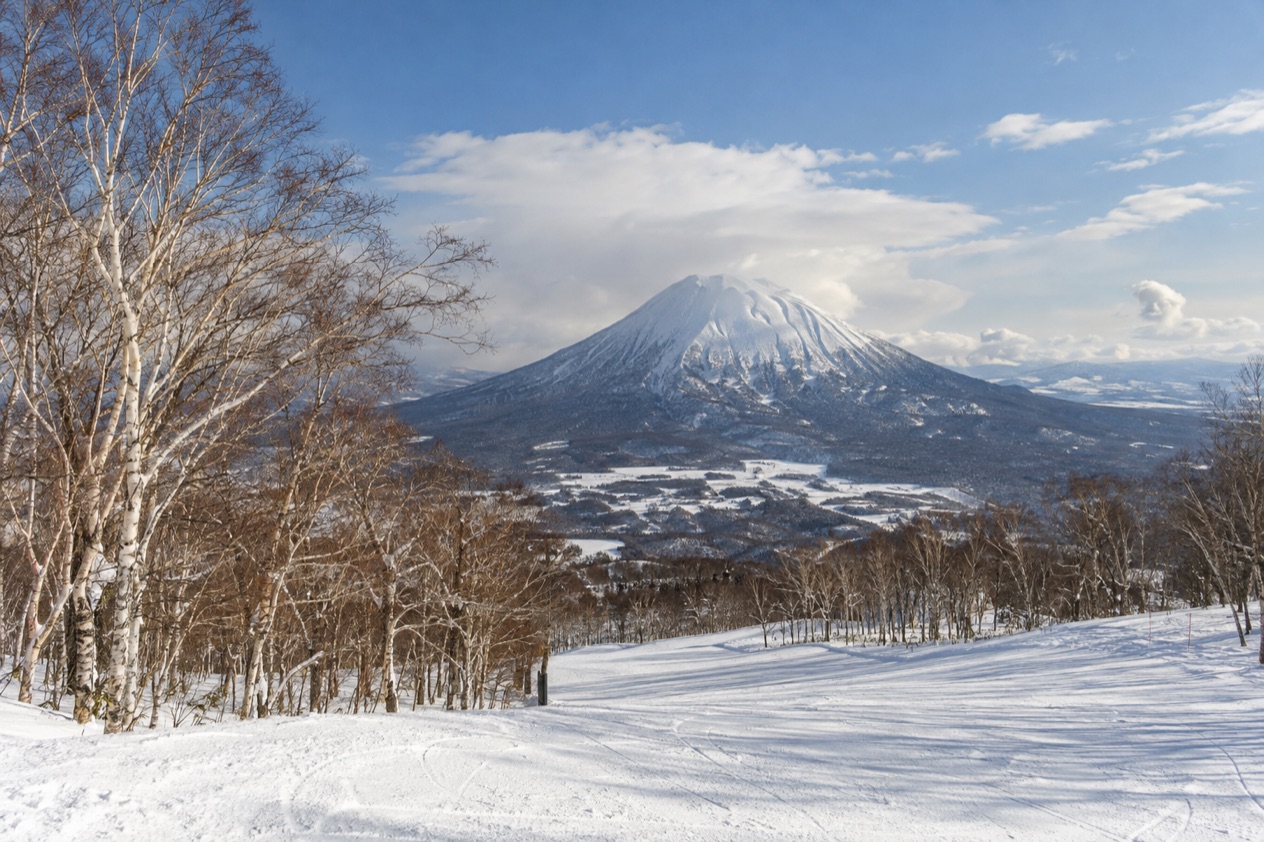
Annupuri forms the eastern part of the volcanic group, and its green flanks are one of the first things you notice when you drive in.
Walking and the green mountains
The volcanic peaks of the Niseko group are the reason people come, and in September they are covered in forest and grassy ridges rather than snow. Walking here means moving through birch and conifer woods, with views over farmland and the surrounding hills. The cool air and the lack of summer heat make long days outdoors pleasant.
Each of the four resort areas is a base for walks around its own slopes, and the villages sit close to the mountain rather than apart from it. A rain jacket and sturdy shoes matter more than any special gear. When clouds sit on the summits, the forest paths near the villages are an alternative to the higher ground.
Onsen and the evening bath
Hot springs are the great pleasure of a cool September in the mountains. Hokkaido’s onsen, whether in a ryokan (a traditional inn) or a public bathhouse, are best enjoyed in the evening, when the air turns cold and the steam hangs thick over the pool. Bathing follows its own rhythm: you wash first, then soak, and shoes and towels have their own places.
An outdoor bath under a sky already filling with stars is one of the quiet rituals of the season. A soak after a rainy day on the trails takes the chill out of your bones, and travelers plan the whole day backward from the bath.
Hokkaido harvest on the table
Southwestern Hokkaido is farm country, and early autumn is a season for what comes out of the ground. Potatoes, sweet corn, pumpkin and onions appear at roadside stands and on restaurant plates, often simply grilled or steamed with Hokkaido butter. Dairy is a point of pride, so soft-serve ice cream and fresh cheese show up in every village.
Soup curry, a Hokkaido invention of a spiced, brothy curry loaded with big pieces of vegetables, suits a damp, chilly day perfectly. Izakaya (casual pubs) serve grilled seafood and skewers, and the cooler evenings make a warming bowl of ramen or a hot pot a natural choice. A glass of Hokkaido beer or local sake goes well with all of it.
The villages at a slower pace
Grand Hirafu, Hanazono, Niseko Village and Annupuri are each their own cluster of lodges, cafés and restaurants, and the town of Kutchan is a place to see ordinary local life. In September they are in their green season, a different mood from the winter rush.
Shopping for local produce, browsing small galleries and sitting over a long lunch are all part of the rhythm. For anyone who wants to compare, the summer version of Niseko gives you a clear sense of how much of this landscape is hidden beneath winter snow.
A two-day itinerary for Niseko in September
Day 1 begins in Grand Hirafu, the busiest cluster of lodges and restaurants. Start with a bakery breakfast and a walk through the village and the forest at its edge, wearing layers because the morning air is cool. Lunch is a bowl of soup curry or a plate of grilled Hokkaido vegetables in one of the village cafés.
In the afternoon, head for the Annupuri side of the mountain for a walk through the green slopes and woods, with a rain jacket in the bag. Then settle in for an early onsen soak, because the days are already getting shorter. Dinner is at an izakaya, with skewers, seafood and a cold beer or warm sake.
Day 2 moves to Niseko Village and Hanazono. Spend the morning on a farm stand circuit for corn, potatoes and dairy, then take a long lunch at a café with a view of the mountain. If rain sets in, use the day for galleries, a bakery crawl and a second long bath. The evening ends with a hot pot or ramen, which suits a cool September night.
Is Niseko busy in September?
September falls between the summer season and the winter ski season, which is when Niseko is most famous, especially among foreign visitors. The atmosphere of the villages is therefore that of a resort between seasons, with the winter crowds not yet arrived.
The reputation of Niseko rests on powder snow, and the whole business of lift passes and live lift status reports belongs to the winter months. In September, the mountain’s attraction is the landscape itself, the trails, the hot springs and the farm food, rather than a crowd of skiers.
Nature is changing too. The first weeks of the month still feel like late summer, while the end of September starts to feel like autumn, with chillier nights and shorter days. The pace of the villages follows the weather, with long lunches, early baths and quiet evenings.
What to pack for Niseko in September
The mix of cool nights, frequent rain and outdoor days calls for layers rather than any single heavy item. Pack for walking in the forest and soaking at night.
- A waterproof jacket, because rain falls on a large share of days.
- A fleece or sweater for evenings, when the air turns properly cool.
- Sturdy walking shoes for forest paths and wet grass.
- A light long-sleeved shirt for afternoons outdoors.
- A small daypack with a cover, to keep camera and layers dry.
- A warm hat for chilly late-September nights.
Good to know before you go
Niseko lies in southwestern Hokkaido, about a three-hour drive from both Sapporo and New Chitose International Airport, so plan a full travel day on arrival. Rain is common and the days are shortening, so leave room in each day for an indoor plan. Niseko United provides live lift and weather status reports for every resort on its website, a handy way to see conditions on the mountain.
The Japan National Tourism Organization has a Safe Travel Information page with tips and government information for travelers, and the Japan Meteorological Agency issues Emergency Warnings for natural phenomena of extraordinary magnitude. Both are worth knowing about before any trip to the mountains.
Niseko in September vs August and October
Moving the trip four weeks earlier brings a warmer Niseko, with longer days and a drier month. August evenings are mild enough that the chill of September is a clear change, and the daylight lasts well past dinnertime. If you want long summer days outdoors, August is the month to pick.
The days are noticeably shorter, and the mood is that of autumn turning toward winter. The season of green slopes is over, and the light is lower and the evenings come early.
September sits between the two. Travelers who want warm walking weather should shift earlier, and those who want the nearest taste of winter should shift later. Anyone who likes cool air, hot baths and harvest food, without the cold of October, will find September the right middle.
Is September a good time to visit Niseko?
Yes, for travelers who want cool mountain air, hot springs and Hokkaido harvest food rather than skiing. Walkers, bathers and anyone who likes a slow trip will enjoy it. Those who want skiing, a warm beach holiday or guaranteed dry weather should choose another month.
On arrival, settle into your village, walk through the forest at its edge and take your first soak in the evening. Keep a rain plan ready for each day, such as a café, a gallery or a long bath. Put the first outdoor day on the days that look clearest on the weather report. What is special about September in Niseko is the sight of a famous winter mountain in its green clothes, with steam rising from the onsen and a plate of grilled Hokkaido corn at the end of the day.
Sources
- Japan Meteorological Agency (JMA), Normal values 1991-2020, monthly (https://www.data.jma.go.jp/stats/etrn/view/nml_sfc_ym.php?prec_no=16&block_no=47433), station Kutchan, elevation 176 m, checked October 11, 2026
- Computed from the date and the latitude of the place (sunrise equation, solar elevation -0.833 degrees), October 11, 2026
- Japan Meteorological Agency, Emergency Warnings (https://www.jma.go.jp/jma/en/Emergency_Warning/ew_index.html), checked October 11, 2026
- Japan National Tourism Organization, safety information (https://www.japan.travel/en/japan-safe-travel-information/), checked October 11, 2026
- Japan National Tourism Organization, weather and seasons in Japan (https://www.japan.travel/en/plan/weather/), checked October 11, 2026
- Japan National Tourism Organization, summer in Japan (https://www.japan.travel/en/guide/summer-guide/), checked October 11, 2026
- Wikipedia, Climate of Japan (https://en.wikipedia.org/wiki/Climate_of_Japan), checked October 11, 2026
- Japan Meteorological Agency, maple color-change dates 2025-2026 with difference from the 1991-2020 normal (https://www.data.jma.go.jp/sakura/data/phn_014.html), checked October 11, 2026
- Japan Meteorological Agency, kaede2020.pdf (https://www.data.jma.go.jp/sakura/data/kaede2020.pdf), checked October 11, 2026
- Japan National Tourism Organization, autumn in Japan (https://www.japan.travel/en/guide/autumn-guide/), checked October 11, 2026
- Japan National Tourism Organization, spring in Japan (https://www.japan.travel/en/guide/spring-guide/), checked October 11, 2026
- Japan National Tourism Organization, Niseko (https://www.japan.travel/en/destinations/hokkaido/hokkaido/niseko-and-nearby-ski-resorts/), checked October 11, 2026
- Niseko United, winter (https://www.niseko.ne.jp/en/winter/), checked October 11, 2026
- Wikipedia, Niseko (https://en.wikipedia.org/wiki/Niseko), checked October 11, 2026
- Wikivoyage, Niseko (https://en.wikivoyage.org/wiki/Niseko), checked October 11, 2026