
In August, Nagoya hums with cicadas from morning on, and the air outside feels thick enough to lean on. Shaved ice, cold barley tea and iced coffee turn into small daily rituals, and people slip from one air-conditioned arcade to the next. It is a month of hot, humid days in a big Honshu city, and the pleasures come from moving at the pace the weather sets.
What is the weather like in Nagoya in August?
August in Nagoya is hot, sunny and sticky, the hottest stretch of the summer, with fewer rainy days than July and more sunshine.
| Month | Average high (°F) | Average low (°F) | Precipitation (in) | Days with 1 mm or more of precipitation | Hours of sunshine | Daylight on the 15th |
|---|---|---|---|---|---|---|
| July | 88.5 | 74.3 | 8.32 | 12.0 | 166 | 14 h 19 min |
| August | 91.8 | 76.5 | 5.49 | 8.5 | 201 | 13 h 31 min |
| September | 84.4 | 69.8 | 9.12 | 10.5 | 160 | 12 h 27 min |
Afternoons reach the low 90s, and nights barely let go, so there is no cool window to count on. Humidity stays high all month, which is why the heat feels heavier than the thermometer says. The islands of Honshu and Kyushu are known for very humid, hot and sultry summers, and Nagoya fits that description well.
Rain is less frequent than in July or September, yet it still falls on a handful of days, and a shower can arrive on top of the humidity. A compact umbrella earns its place in the bag, and so does a change of shirt if you are walking a lot. Light, breathable fabrics dry fastest.
Daylight is generous, a little over thirteen hours in mid-month, so evenings stay light well past dinner time. That gives you a long day for sightseeing, even if the middle of it is better spent indoors. Plenty of sunshine also means sunscreen and a hat belong in the daypack.
What to do in Nagoya in August
The month belongs to Obon, the Buddhist custom of honoring the spirits of ancestors, when people return to their family places and visit and clean graves. It lasts three days, and the rhythm of the city shifts around it, with many residents traveling home. For a visitor, it is a reminder that summer in Japan is about family, remembrance and food as much as heat.
August is also the season of hanabi, the Japanese word for fireworks, and of summer festivals with dancing, lanterns and food stalls. Elsewhere in the country, the Awa Dance Festival fills Tokushima on Shikoku from August 12 to 15, and the Nebuta festival lights up Aomori in the first week of the month. Nagoya makes a base for following that summer mood in its own streets, in cooler indoor spaces and in the evenings.
Nagoya Castle and Atsuta Shrine
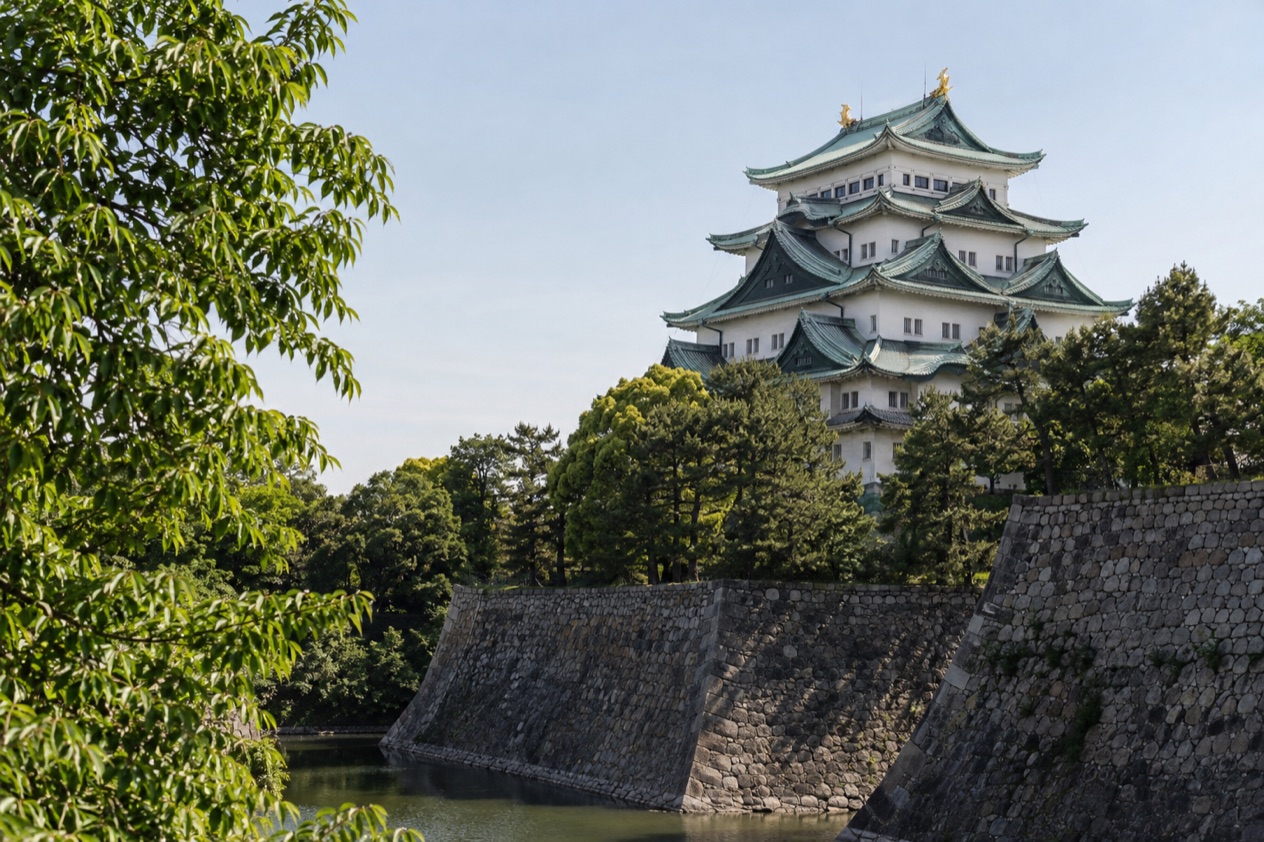
In August the sun is strong, so the grounds suit a stroll with a hat and a cold drink in hand. Shaded benches and the cooler corners of the castle buildings help you pace yourself.
Atsuta Shrine is another landmark the city is known for, with a wooded setting that feels noticeably cooler under the trees than the streets outside. Moving slowly beneath the canopy, listening to the cicadas, is one of the better ways to spend a hot summer morning. Pair the shrine with a bowl of local noodles or a plate of eel nearby once the heat builds.
Higashiyama Zoo, the Aquarium and indoor options
Higashiyama Zoo and Botanical Gardens and the Port of Nagoya Public Aquarium are both among the landmarks the city is known for. The aquarium is the kind of place to head for when the afternoon heat peaks, since you spend most of the time inside among the tanks. The zoo and its gardens ask for more walking in the open air, so a hot day calls for water, shade breaks and a slower pace.
The NAGOYA Sightseeing Pass covers major attractions including Nagoya Castle, the Chubu Electric Power MIRAI TOWER, the Port of Nagoya Aquarium and Higashiyama Zoo and Botanical Gardens, which makes it relevant if you plan to visit several of them. The tower adds a high view over the city that is pleasant at the end of a long summer day.
Eating through a Nagoya summer
Nagoya has its own food culture, and August suits cold noodles, grilled eel over rice, kakigori (shaved ice with syrup) and plenty of chilled drinks. Miso-based dishes, fried chicken wings and the rich flavors of the region sit well in air-conditioned restaurants once the sun drops. Izakaya, the casual pubs where small plates arrive with cold beer, come into their own on warm evenings.
Department-store food halls and underground shopping streets give you cool, air-conditioned places to browse and snack. In urban areas shops are generally open from 10:00 a.m. to 8:00 p.m. every day, so a late afternoon spent indoors fits the city’s rhythm.
If you want a break from the heat altogether, the climbing season at Mount Fuji runs from early July to about the first week of September, and it ends on September 10th. That outing sits outside Nagoya, so treat it as its own trip rather than a casual add-on.
A two-day itinerary for Nagoya in August
Day 1 starts early, before the heat settles in, at Atsuta Shrine, where the trees give the morning some relief. Move on to Nagoya Castle while the day is still manageable, and take your time in the grounds with water in hand. By midday, retreat indoors for lunch, ideally something cold such as noodles or a set meal in an air-conditioned restaurant.
In the afternoon, go to the Port of Nagoya Public Aquarium, which keeps you out of the strongest sun. As the light softens, with daylight lasting a little over thirteen hours, head toward the Chubu Electric Power MIRAI TOWER for a view of the city. Finish with dinner at an izakaya, with local dishes and a cold drink.
Day 2 begins at Higashiyama Zoo and Botanical Gardens, again early, so the walking comes before the hottest hours. Take breaks in shaded areas and keep drinking water. Lunch can be a bowl of eel or a plate of noodles somewhere cool.
The afternoon is for indoor browsing in a department store or an underground shopping street, with a kakigori to cool down. If the weather turns wet, the aquarium and the shopping halls are your fallback, and you can swap the order of the days. In the evening, look for a summer festival or fireworks display in the area, and end the night over a last round of small plates.
Is Nagoya busy in August?
August is Obon season in Japan, so the rhythm of the city changes more than it simply fills up.
Obon lasts three days, and during it people return to ancestral family places to visit and clean graves. That means many residents leave the big city for their hometowns, and the pace in some neighborhoods can feel different from the rest of the year. Public holidays also follow their own rules, such as the next working day becoming a holiday when a national holiday falls on a Sunday.
In rural areas shops often close earlier, sometimes as early as 6:00 p.m., while in urban areas they are generally open from 10:00 a.m. to 8:00 p.m. every day. Nagoya, as Japan’s fourth-largest city, keeps its shops and restaurants running through the month. Summer festivals elsewhere in the country, such as Awa Odori, attract large numbers of visitors, which is a reason some travelers head out of Nagoya for a day or two.
What to pack for Nagoya in August
Pack for heat and humidity, with a few things for the occasional shower.
- Lightweight, breathable shirts, since the air stays humid even at night.
- A compact umbrella for showers that can appear on any day.
- A hat and sunscreen for the sunny stretches at the castle and the zoo.
- A refillable bottle, for walking the grounds in strong heat.
- Comfortable shoes for long days across shrine and castle grounds.
- A small towel or handkerchief for the sticky afternoons.
Good to know before you go
August in Nagoya is hot and humid, and the rain that does fall can come in a sudden shower. The Japan Meteorological Agency runs an Emergency Warning System for catastrophes linked to natural phenomena of extraordinary magnitude, and the Japan National Tourism Organization keeps a Japan Safe Travel Information page with safety tips and government information for travelers.
Plan the heaviest walking for the morning and keep the afternoon for indoor stops. Obon changes the mood of the city for a few days, so a flexible plan helps.
Nagoya in August vs July and September
Going four weeks earlier means July, with a longer day and more rainy days, as the rainy stretch of early summer lingers. The heat is already strong, but the sky is grayer and the air is wetter. The Mount Fuji climbing season is also open, and early summer festivals are in full swing.
Going four weeks later puts you in September, when the afternoons ease a little and the nights cool, though rain returns on more days. Daylight is shorter, and the Mount Fuji climbing season closes on September 10th. The edge comes off the heat, which suits long walks better.
If you want the most sunshine and are comfortable with heat, August works. If the heat worries you, September is the gentler choice, and anyone who wants to catch the climbing season or the earlier festivals should lean toward July.
Is August a good time to visit Nagoya?
Yes, for travelers who handle heat and humidity well and like summer festivals, fireworks and long evenings. It suits people who enjoy indoor attractions such as the aquarium and tower, shaded shrine grounds and cold noodles, and who are happy to plan around the afternoon.
Anyone who struggles with sticky heat, or wants long outdoor walks without effort, should pick a later month. On arrival, start with the shaded places, Atsuta Shrine and the castle grounds, and keep the indoor options for the hours when the sun is strongest.
What is special about August here is the combination of Obon, summer festivals and fireworks with sunny days and generous daylight. Nagoya in this month is a city of cicadas, cold drinks and evenings that stay light long enough to enjoy them.
Sources
- Japan Meteorological Agency (JMA), Normal values 1991-2020, monthly (https://www.data.jma.go.jp/stats/etrn/view/nml_sfc_ym.php?prec_no=51&block_no=47636), station Nagoya, elevation 51 m, checked October 11, 2026
- Computed from the date and the latitude of the place (sunrise equation, solar elevation -0.833 degrees), October 11, 2026
- Japan National Tourism Organization, shop and attraction hours, national holidays (https://www.japan.travel/en/plan/business-hours-and-holidays/), checked October 11, 2026
- Wikipedia, Obon (https://en.wikipedia.org/wiki/Obon), checked October 11, 2026
- Wikipedia, Public holidays in Japan (https://en.wikipedia.org/wiki/Public_holidays_in_Japan), checked October 11, 2026
- Japan National Tourism Organization, summer in Japan (https://www.japan.travel/en/guide/summer-guide/), checked October 11, 2026
- Japan National Tourism Organization, festivals and events (https://www.japan.travel/en/see-and-do/festivals-and-events/), checked October 11, 2026
- Wikipedia, Hanabi (https://en.wikipedia.org/wiki/Hanabi), checked October 11, 2026
- Japan Meteorological Agency, Emergency Warnings (https://www.jma.go.jp/jma/en/Emergency_Warning/ew_index.html), checked October 11, 2026
- Japan National Tourism Organization, safety information (https://www.japan.travel/en/japan-safe-travel-information/), checked October 11, 2026
- Japan National Tourism Organization, weather and seasons in Japan (https://www.japan.travel/en/plan/weather/), checked October 11, 2026
- Wikipedia, Awa Odori (https://en.wikipedia.org/wiki/Awa_Odori), checked October 11, 2026
- Wikipedia, Climate of Japan (https://en.wikipedia.org/wiki/Climate_of_Japan), checked October 11, 2026
- Japan National Tourism Organization, Mount Fuji guide (https://www.japan.travel/en/fuji-guide/), checked October 11, 2026
- Official website for Mt. Fuji climbing, about the climb (https://www.fujisan-climb.jp/en/about/), checked October 11, 2026
- Wikipedia, Nebuta (https://en.wikipedia.org/wiki/Nebuta), checked October 11, 2026
- Wikivoyage, Nagoya (https://en.wikivoyage.org/wiki/Nagoya), checked October 11, 2026
- Visit Nagoya, the Nagoya city guide (https://www.nagoya-info.jp/en/), checked October 11, 2026
- Wikipedia, Nagoya (https://en.wikipedia.org/wiki/Nagoya), checked October 11, 2026
To plan your stay
- Things to Do in Nagoya: Castle, Atsuta Shrine, Nagoya-meshi and Day Trips
- Where to Stay in Nagoya: Nagoya Station, Sakae, Osu and the Castle Area
- Nagoya from Tokyo: Shinkansen Services, Local Trains, Centrair Airport and a Day in the City
- Know Before You Go to Nagoya: Entry, Money, Getting Around and Local Etiquette