
On a clear day the cone of Mount Fuji appears over the water of Lake Kawaguchi as if someone had hung it there for the occasion, and people stop on the shore with their phones raised and their coffee going cold. Then the clouds slide in, the mountain disappears for an hour, and everyone goes back to the bowl of hearty noodles they were eating.
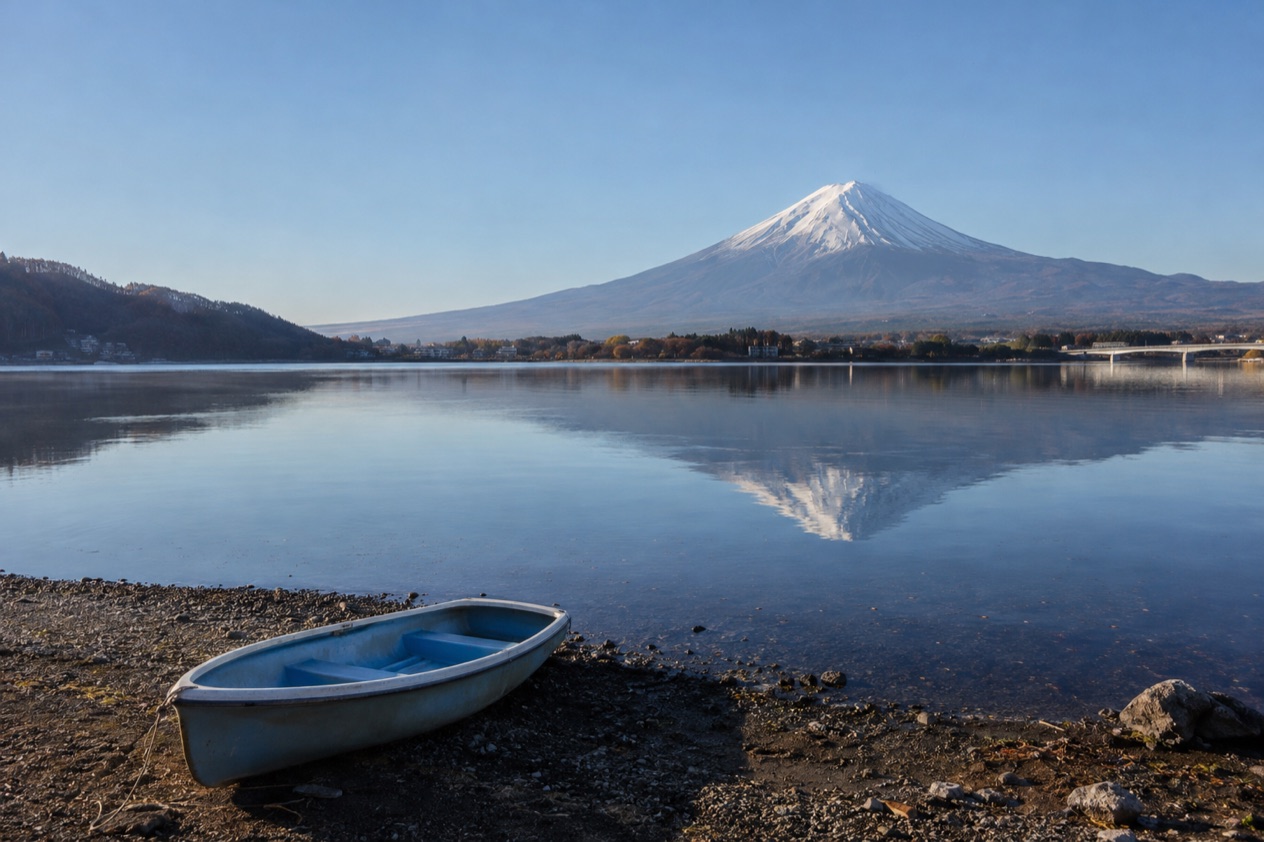
What are the best things to do in Mount Fuji and Lake Kawaguchi?
The best things to do here revolve around the mountain itself: looking at it, walking on it during the climbing season, and eating and soaking well in the towns at its base.
- Climb Mount Fuji along the Yoshida Trail during the official season, from early July to early September, when the huts and facilities are open.
- Walk or cycle the shore of Lake Kawaguchi, where the mountain changes with every bend of the water.
- Climb the steps to the five-story pagoda at Arakurayama Sengen Park for the postcard view of Fuji framed by the pagoda and the town below.
- Ride the roller coasters at Fuji-Q Highland, an amusement park that operates year-round.
- Eat hoto, the thick miso noodle stew of Yamanashi, in a pot that arrives bubbling at your table.
- Soak in an onsen (hot spring bath) with a view of the mountain, as many lakeside inns invite you to do.
- Visit the other lakes of the Fuji Five Lakes area, each with its own mood and its own angle on the peak.
- Browse small museums, from kimono art to music boxes, on days when the summit hides in cloud.
A good stay mixes both kinds of days: one for the mountain and the outdoors, one for the slow pleasures of the lakeshore. Mount Fuji is Japan’s highest mountain and a UNESCO World Heritage site, listed in 2013 as a sacred place and a source of artistic inspiration. That second part matters when you are standing at the water’s edge, because the view in front of you is the one painters and printmakers have been repeating for centuries.
The mountain lies about 62 miles southwest of Tokyo and straddles the border between Shizuoka and Yamanashi prefectures. Lake Kawaguchi and the other four lakes sit on the Yamanashi side, which is why this area has become the place where people come to look at the peak rather than climb it.
Sights and landmarks in Mount Fuji and Lake Kawaguchi
The great landmark is the mountain, and the rest of the sights are ways of seeing it: a pagoda, a shrine, a lakeshore, a museum garden. Fuji has been worshipped for as long as people have lived beneath it, and the forested approaches and old shrines in the Fujiyoshida area still carry that feeling. Around the lakes, newer attractions sit comfortably next to the older, spiritual ones.
Arakurayama Sengen Park and its pagoda
Arakurayama Sengen Park, at 3353 Arakura in Fujiyoshida, Yamanashi Prefecture, was installed in October 1959. It is known for a red pagoda set on a hillside, with a long stairway climbing to a viewing platform. From there you look across the roofs of Fujiyoshida to the mountain, and in spring the cherry trees add pink to the frame.
The park has become one of the most photographed corners of the region, and you can see why when the sky cooperates. Bring patience for the clouds, since Fuji often keeps people waiting, and plan to stay long enough to watch the light change on the slopes. The steps are part of the experience, so wear shoes you are comfortable walking in.
The shrines and the Yoshida side of the mountain
Fujiyoshida is the town where the Yoshida Trail begins its story. Pilgrims once gathered here in white robes before heading up the mountain, and the shrines in the cedar woods still honor Fuji as a deity. The Sengen shrines of the region are dedicated to the spirit of the mountain, and walking beneath their old trees gives a different sense of Fuji from the lakeside view.
Stone lanterns, moss and the sound of water make these grounds a good counterpart to a day by the lake.
Museums and indoor stops around Lake Kawaguchi
When Fuji hides, the lakeshore has gentler indoor options. The Itchiku Kubota Art Museum shows kimono dyed and painted as continuous landscapes, with the mountain a recurring subject, and its garden is part of the visit. Kawaguchiko Music Forest is a European-style complex of music boxes, mechanical instruments and rose gardens, which makes a cheerful contrast with the shrines.
Both are the kind of stop you add when the sky turns gray rather than plan a day around. The Kachi Kachi Ropeway, which lifts you above the lake for a wide view, and several small galleries and craft shops along the shore fill out a rainy afternoon.
The mountain, seen from the ground
Even if you never climb, you can stand beneath Fuji at several of its hiking trail starting points and see how the landscape changes from forest to bare volcanic slope. The Yoshida Trail is a hiking trail on the mountain, and the stations along it give the climb its rhythm. Seeing the signage, the huts and the mountain stations in the off-season is a reminder that Fuji is a working mountain as well as a picture.
Outside the climbing season, the trails above the stations are closed in winter, and climbing from October to May is discouraged because of cold weather and several high-profile deaths. So in this part of the year you admire the summit from below, and let the lakes and forests do the work.
Outdoor things to do in Mount Fuji and Lake Kawaguchi
The outdoors here means lakes, forests and a mountain, and the plan depends on whether you want to climb, to stroll or simply to sit and look. The Fuji Five Lakes area sits about 3,300 feet above sea level, which gives the whole region its upland, cooler-than-the-city air. Cycling, boating, hiking and photography all share the same landscape.
Climbing Mount Fuji
The official climbing season runs from early July to early September, with exact dates varying slightly by year and trail, and the most popular period is July and August, when the huts and facilities are operating and the weather is warmest. The Yoshida Trail has on-the-day nature guided tours, and the official website for Mt. Fuji climbing is the place to check current information, as hikers are strongly advised to do before setting out.
Outside the season, climbing is extremely dangerous because first-aid centers and mountain huts close, cell phone service is lost and the weather turns severe. In winter the Yoshida, Subashiri and Gotemba trails are closed from the 5th station to the summit, and the Fujinomiya Trail from the 6th station. The summit rim trail, Ohachimeguri, is closed from July 1st to 10th for those on the Yoshida and Subashiri trails.
Many hikers climb through the night so they can watch the sunrise from the summit, a tradition the Japanese call goraiko. The season has already ended for the year, so for now the mountain is something to plan for next summer.
Around Lake Kawaguchi on foot, by bike or by boat
The lakeshore invites a slow day. You can walk stretches of the promenade, rent a bicycle to circle part of the water, or take a sightseeing boat shaped like a swan or a pirate ship. Each way of moving gives a different relationship with the mountain, which slides from one side of the view to the other as you go.
Parks on the shore are planted with seasonal flowers, and in early summer the lavender draws visitors to the northern side of the lake. Cherry blossoms in spring and red maples in autumn frame the mountain differently, so the same walk changes character from one season to the next.
The other four lakes and the forest
Fuji Five Lakes (Fuji-goko) is the name of the area at the base of the mountain in Yamanashi Prefecture, and Kawaguchi is only one of the five. Saiko, Shojiko, Motosuko and Yamanakako each have their own personality. Motosuko is known as the view that appears on the Japanese banknote, Yamanakako is the largest of the group and has a long lakefront, while Saiko and Shojiko are smaller and wilder.
Around Saiko you can find a reconstructed village of thatched farmhouses, called Iyashi no Sato Nenba, and lava caves such as Narusawa Ice Cave and Fugaku Wind Cave, both formed by Fuji’s past eruptions. The forest of Aokigahara covers part of the area and is often visited on guided nature walks. Together they turn the region into a loop of lakes, caves and woods that can fill several days.
Day trips from Mount Fuji and Lake Kawaguchi
Most day trips from the lakes stay close to the mountain or head toward Tokyo, which sits about 62 miles northeast of the peak’s direction of view in the minds of travelers. The options below cover the other lakes, the amusement park, the Fujiyoshida area and the wider national park that surrounds the mountain.
Fuji-Q Highland
Fuji-Q Highland opened on March 2, 1968, and it operates year-round, so it works as a plan in any season. The park is known for its roller coasters, which race with Fuji looming overhead, and for a haunted hospital attraction that has a following of its own. Families with younger children head to Thomas Land, built around the cartoon train.
It suits thrill-seekers and teenagers in particular, though there are gentler rides too. Wear comfortable shoes, expect to spend most of a day there, and keep an eye on the sky, because the mountain may come out in the middle of your wait for a ride.
Fujiyoshida and its pagoda
A day in Fujiyoshida combines Arakurayama Sengen Park with the town’s shrines and the streets of old pilgrim lodges. The town sits at the foot of the Yoshida Trail, so it carries a climbing atmosphere even when no one is on the mountain. The view from the pagoda is the highlight, and the lanes below invite a wander between small cafes and shops.
It suits photographers, history lovers and anyone who wants something between a lake day and a mountain day. Put the climb up the stairs first, while your legs are fresh, and leave the cafes for afterward.
Tokyo
Mount Fuji can be seen from Tokyo on clear days, and the capital sits about 62 miles from the peak, so some travelers pair the two on the same trip, using the lakes as a break from the city. The contrast is the draw: after the neon and crowds of Tokyo, the lakes offer open sky and fresh air.
If you are coming from Tokyo for a night or two, plan the lakeside part around the views and the baths rather than a long list of stops. Seeing Fuji is partly a matter of luck, so build in a spare day if you can.
Fuji-Hakone-Izu National Park
Mount Fuji lies within Fuji-Hakone-Izu National Park, which also takes in Hakone and the Izu Peninsula. Hakone is known for its hot springs, art museums and views of the mountain across its lake, and it makes a different kind of trip from the Five Lakes. Izu offers coastlines and more hot springs.
Together these areas let you see Fuji from several sides in a longer trip. Each has its own personality, so the choice depends on whether you prefer a lakeside, a mountain resort or a coast.
What to eat in Mount Fuji and Lake Kawaguchi
The dish to eat here is hoto, a stew of wide flat wheat noodles, pumpkin, mushrooms and vegetables simmered in a miso broth in a cast iron pot. It belongs to Yamanashi Prefecture, and the thick, chewy noodles are nothing like the delicate strands you find in city ramen shops. It is a meal made for cool, high-altitude days, when the steam off the pot fogs your glasses.
Noodles of the Fuji region
Besides hoto, Fujiyoshida is known for yoshida udon, noodles with a firm, almost stubborn bite, served in a soy and miso broth with cabbage and a spicy paste. Soba shops, ramen counters and small family restaurants fill out the choices, and many around the lakes serve their noodles with a view.
A bowl of noodles is the usual stop for lunch after a morning walk around the water. Order a side of pickles or tempura vegetables, and take your time, because the noodles stay hot in their pots well after they arrive.
Lake fish, game and mountain vegetables
Inns and restaurants on the lakes often serve freshwater fish such as trout or smelt, grilled over charcoal with a sprinkle of salt. Mountain vegetables, mushrooms and river fish appear in the multi-course dinners that ryokan, traditional inns, serve in the evening. The style is kaiseki, a series of small seasonal dishes arranged with care.
Dinner at a ryokan is part of the stay, often served in your room or in a dining room, and you wear a yukata, a light cotton robe, to the meal. Expect a procession of small plates, rice and miso soup at the end, and a dessert of local fruit.
Wine, fruit and sweets of Yamanashi
Yamanashi is the center of Japanese wine country, known for the Koshu grape, and it is also known for peaches and grapes. Wineries around the prefecture pour local bottles, and you can find wine and fruit in shops by the lake. The wines are light and made to go with the delicate flavors of Japanese food.
For something sweet, try shingen mochi, a rice cake dusted with soybean flour and served with dark syrup, or fruit sold at roadside stands. Matcha ice cream, mountain-spring water and coffee shops with Fuji views make the lakeshore a pleasant place to graze.
Things to do in Mount Fuji and Lake Kawaguchi at night
Evenings around Lake Kawaguchi are about warm water, long dinners and a dark sky, not about clubs or late bars. The lakeside is not a nightlife destination in the way Tokyo is, and the pleasures are mostly in your inn and its surroundings. For visitors, the highlight of the night is a soak in the bath.
Onsen and the ryokan evening
A night at a ryokan on the lake follows a pattern. You arrive, change into a yukata, bathe in the hot spring, then sit down to the multi-course dinner. Some inns have open-air baths from which you can see the mountain, and others have private baths for families or couples.
Afterward, futons are laid out on the tatami floor of your room, and the day ends early. It is a very different rhythm from a city hotel, and travelers say it is the part of the trip they remember best.
Izakaya, lakeside walks and the stars
In the town around the lake station, you can find izakaya, casual pubs serving small plates, grilled skewers and local drinks. They are the place to try Yamanashi wine or a glass of sake alongside a plate of fried chicken or grilled fish. Many are small, with counters and a few tables.
After dinner, a walk along the shore can bring a wide sky, and on a clear night you may see stars that the cities of the Kanto region hide. Fuji itself becomes a dark shape against the sky. A night walk is a chance rather than a promise, as clouds may well cover the view.
Night on the mountain
Some climbers hike through the night to reach the summit for sunrise, and the huts on the trail offer a place to rest during the official season. Climbing outside that season is extremely dangerous because huts and first-aid centers close and phone service is lost. For everyone else, the night plan is simple: take your time at dinner, soak, and go to bed early so you can look at the mountain in the morning light.
Things to do in Mount Fuji and Lake Kawaguchi with kids
Children enjoy this area most through Fuji-Q Highland, the boats on the lake and the lava caves, with the mountain as a backdrop. The lakeshore gives them room to run, and the sights are varied enough to hold their interest across several days.
Fuji-Q Highland with children
The amusement park operates year-round and includes Thomas Land, a section built around the children’s train characters, with rides for younger kids. The big roller coasters are for older children and teenagers, who will want to compare notes afterward.
Plan the day around what your children enjoy rather than trying to do everything. Bring layers for the changing weather at a high elevation, and keep snacks handy for the lines.
Boats, ropeways and caves
The sightseeing boats on Lake Kawaguchi, shaped like swans or pirate ships, are an obvious hit with young children. The Kachi Kachi Ropeway, named after a folk tale, lifts you up for a wide view of the lake and the mountain. Children also tend to enjoy the lava caves near Saiko, where the rock formations feel like another world.
Take a flashlight or a jacket for the caves, and wear shoes with grip. Let children set the pace, since the lakeside offers plenty of places to stop and look at ducks, swans and the mountain.
What to keep in mind
The Fuji Five Lakes area sits about 3,300 feet above sea level, so it is cooler than the lowlands, and a layer is useful even on a bright day. Distances between attractions are large enough to need planning, so build rest time into the day. Climbing the mountain itself is serious, and the season runs only in summer, so younger children are best kept to the lakeside and the park.
Museum visits and ryokan baths can be the calm part of the day for children who need a break from rides and boats.
Good to know before you go
Mount Fuji straddles the border of Shizuoka and Yamanashi prefectures, and the lakes and Fujiyoshida lie on the Yamanashi side. For anyone planning to climb, the official website for Mt. Fuji climbing provides information to help every climber go up and return safely.
The rest of the area, the lakes, the park, the museums and the onsen, works at any time of the year, and Fuji-Q Highland operates year-round. Bring a light jacket for the cool air at the lakes, and be ready for the mountain to hide behind cloud on the day you most want to see it.
Sources
- Japan National Tourism Organization, Mount Fuji guide (https://www.japan.travel/en/fuji-guide/), checked October 11, 2026
- Official website for Mt. Fuji climbing, about the climb (https://www.fujisan-climb.jp/en/about/), checked October 11, 2026
- Official website for Mt. Fuji climbing, information (https://www.fujisan-climb.jp/en/info/), checked October 11, 2026
- Wikipedia, Mount Fuji (https://en.wikipedia.org/wiki/Mount_Fuji), checked October 11, 2026
- Wikivoyage, Mount Fuji (https://en.wikivoyage.org/wiki/Mount_Fuji), checked October 11, 2026
- Wikipedia, Arakurayama Sengen Park (https://en.wikipedia.org/wiki/Arakurayama_Sengen_Park), checked October 11, 2026
- Wikipedia, Fuji Five Lakes (https://en.wikipedia.org/wiki/Fuji_Five_Lakes), checked October 11, 2026
- Wikipedia, Fuji-Q Highland (https://en.wikipedia.org/wiki/Fuji-Q_Highland), checked October 11, 2026
To plan your stay
- Best Time to Visit Mount Fuji and Lake Kawaguchi: Weather, Seasons, Autumn Leaves and Snow
- Where to Stay in Mount Fuji and Lake Kawaguchi: Lakeshore Hotels, Fujiyoshida, Mountain Lodges and Ryokan
- Mount Fuji and Lake Kawaguchi from Tokyo: Fuji Excursion, the Fujikyuko Line and Climbing Season
- Mount Fuji and Lake Kawaguchi in January: Winter Weather, New Year Traditions and What to Do