
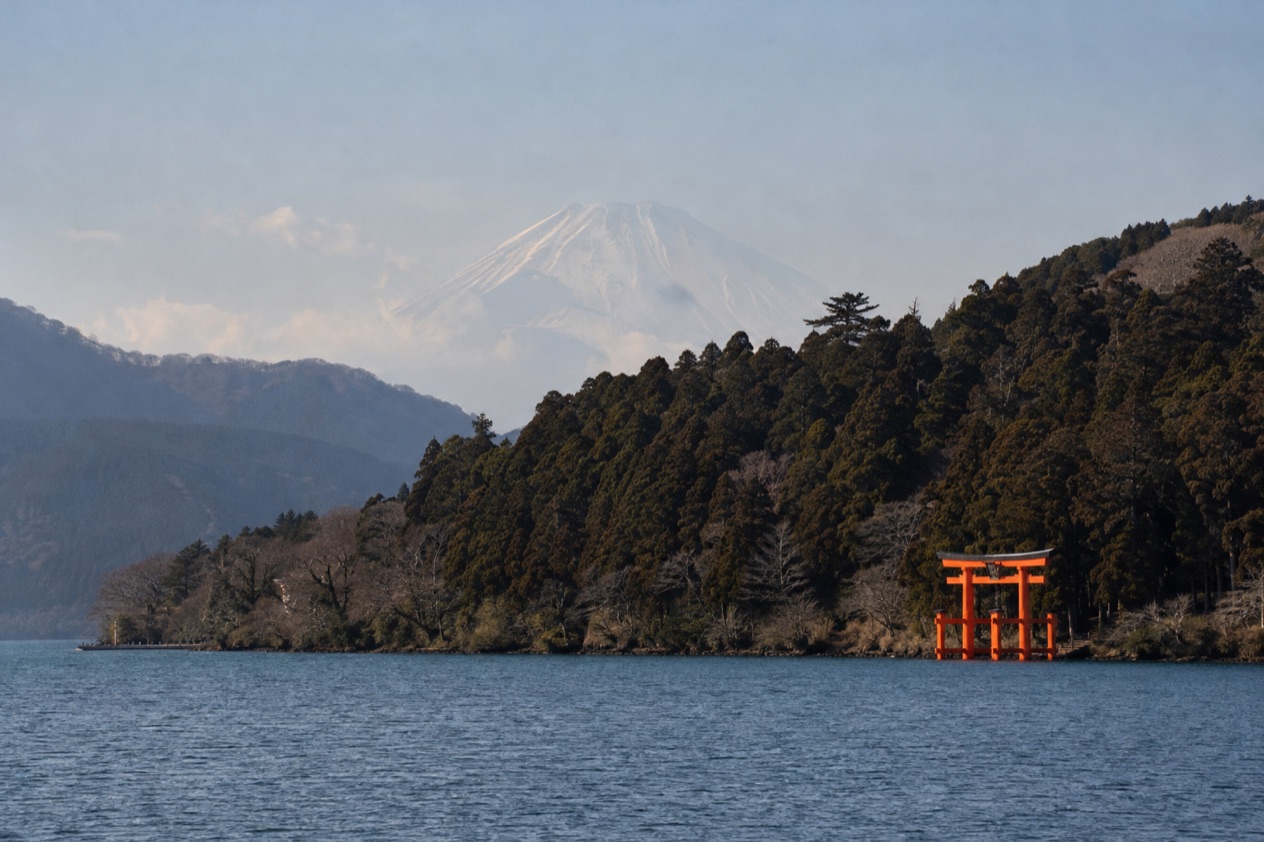
Steam drifts off the hillsides above Hakone-Yumoto while the red mountain train winds up the valley, and by the time the lake comes into view the air smells faintly of sulfur and wet cedar. Out on the water, sightseeing ships cross in front of the forested shore.
Higher in the hills around Sengokuhara, the afternoon belongs to sculpture gardens and gallery cafés. Hakone is one mountain area with several very different bases, and the choice of where to sleep shapes everything you see and eat.
What is the best area to stay in Hakone?
For a first visit, Hakone-Yumoto is the base that fits most trips, Lake Ashi suits anyone who wants the water and the views of Mount Fuji outside the window, and Sengokuhara suits travelers who came for art and a slower stay in the hills. Each of the three has a different rhythm, and each puts you at a different point on the loop of trains, cable cars, ropeway and ships that links the area.
Hakone-Yumoto is where the mountain railway begins, and it is known for its many restaurants and gift shops. It works for a first visit because you arrive, step out of the station and are already in a town with places to eat, souvenirs to browse and a river valley around you. The trade-off is that you start at the foot of the mountain, so the lake and the high viewpoints sit further up the line.
Lake Ashi is the place for sightseeing. The lake offers views of Mount Fuji, and sightseeing ships cross it, so a stay on its shore puts the postcard scene at your doorstep. Mornings and evenings on the shore feel different from the daytime loop, because the cruise and the ropeway are where the day-trippers go and you simply sleep nearer to them.
Sengokuhara is filled with art museums, which makes it the answer for travelers who plan their days around galleries and open-air sculpture. It is also a base for people who would rather linger over a long soak and a long dinner than chase every attraction. Families with children will find the lake and its ships a more obvious draw, while couples and solo travelers often prefer the gallery hills.
Where a stay differs most is in how it ends the day. In Hakone-Yumoto you finish among restaurants and shop windows. On the lake you finish with the water going dark and the ships tied up.
In Sengokuhara you finish in a hot spring bath after a day among museums, and dinner is likely to be at your inn. The area is a spa destination first, so in all three places the hot springs tend to be part of the lodging itself.
One more thing shapes the decision. Hakone is a mountainous area, with trains, cable cars, a ropeway and ships all connecting its parts. Staying near the line you will use most, rather than near the place that looks nicest on a map, saves a lot of small friction over a two- or three-night trip.
The best areas to stay in Hakone
Hakone-Yumoto: the gateway town
Hakone-Yumoto is the town where most visitors first set foot in Hakone, and it is known for its many restaurants and gift shops. The streets near the station fill with shops selling local sweets and wooden crafts, and the river runs through the valley below the hills. Lodging here ranges from traditional inns with hot spring baths to straightforward hotels, which gives you a wider choice of styles than you will find higher up.
From Shinjuku Station in Tokyo, the Odakyu Line runs to Hakone-Yumoto, and the trip takes about 1 hour and 30 minutes. The Romancecar limited express also runs between Shinjuku and Hakone-Yumoto.
From Tokyo Station you can ride the JR Tokaido Shinkansen to Odawara Station and transfer to the Hakone Tozan Railway, which takes about 55 minutes in total. Hakone-Yumoto is the stop where the Hakone Tozan Railway starts, so the rest of the area opens up from there.
This base suits first-timers, travelers carrying luggage straight from Tokyo, and anyone who likes to stroll to dinner and browse shops in the evening. Its limit is distance: the lake, the ropeway and the art museums are all further up the mountain, so each day begins with a ride. Pick it if you want choice at dinner and a simple arrival rather than a lakeside view.
Lake Ashi: views of Mount Fuji and the water
Lake Ashi, known in Japanese as Lake Ashinoko, formed when Mount Hakone erupted for the last time 3000 years ago. Today it sits at the center of Fuji-Hakone-Izu National Park, and the lake offers views of Mount Fuji. Sightseeing ships cross it, and the Royal II has been newly renovated. Staying here means you wake to the water rather than the town.
Lodging on the shore tends toward resort-style hotels and inns with lake-facing rooms and baths. The attraction is the setting more than the nightlife, so evenings are for a long dinner, a soak and a walk along the water. The lake is also the hub for the ropeway and ships that link Hakone’s sights, which puts you close to the places most people spend a day reaching.
Lake Ashi suits couples, photographers, and anyone who dreamed of Fuji from a window. It is the base for cruise lovers too. A practical tip: during scheduled maintenance, a replacement bus service operates on sections of the Hakone Ropeway, so a plan that crosses the mountain by ropeway can change, and a base on the lake gives you room to adjust.
Sengokuhara: art museums in the hills
Sengokuhara is filled with art museums, and it is the base for people who care more about galleries than about checklists. The hills here feel more spread out than the town or the lake shore, and the pleasure is in wandering between a museum, a café and the sculptures in the open air. Japan’s first open-air museum is among the sights of Hakone, and the art-minded plan their stay around it.
Lodging in this part of Hakone leans toward inns and hotels that put the bath and the dinner at the center of the evening, and some feel more like retreats than like bases for sightseeing. Evenings are for the hot spring, a meal and an early night. If you want a place with a lot of shops and restaurants to wander, the gateway town is a better fit.
It suits couples, solo travelers and art lovers who want the stay itself to be the experience. It is also a good match for those who have already seen the main sights and come back for the baths. The limit is that you depend more on transport to reach the lake and the stations, so it helps to know your plan before you commit to this base.
Hakone areas compared
| Area | Best for | Feel | Getting around |
|---|---|---|---|
| Hakone-Yumoto | First visit, arrival from Tokyo | Many restaurants and gift shops | Odakyu Line and Hakone Tozan Railway |
| Lake Ashi | Views of Mount Fuji, ships on the lake | Lakeside setting in the national park | Hakone Sightseeing Cruise and Hakone Ropeway |
| Sengokuhara | Art museums, slow stays | Hills with galleries and sculpture | Hakone Tozan Bus and other designated buses |
The main trade-off is between convenience of arrival and the pleasure of the setting. Near the station in Hakone-Yumoto you have shops, restaurants and the train at your door, and the lodging is less tied to a view. Up at the lake or in the hills you give up some of that choice and gain an evening that belongs to the landscape.
The second trade-off is between the old rhythm of the spa town and the newer rhythm of the museums. Hakone has long been a spa town, and its hot springs sit within view of Mount Fuji. Sengokuhara adds a layer of art on top of that. If your idea of Hakone is a bath and a dinner served in your room, any of the three areas can give you that, and the choice becomes a question of what you want to see between baths.
A third trade-off concerns moving around. The Hakone loop connects the towns, the lake and the viewpoints, so staying in one place and traveling out each day is a workable pattern. Still, the less you want to carry luggage between lodgings, the more it makes sense to pick one base and stay put. Two nights in a single area often feel richer than one night each in two places.
Finally, think about when you want to be out and when you want to be in. A town gives you the option of stepping out for a late bite. A lakeside or hillside inn nudges you to stay in, to bathe and rest. Neither is better. It depends on whether you see Hakone as a place to cover or a place to slow down in.
How to choose your hotel in Hakone
A ryokan is the lodging most travelers have in mind for Hakone, and the choice between a ryokan and a hotel is the first one to make. Ryokan, traditional Japanese inns, typically feature tatami floors, futons, private baths (sometimes outdoor), yukata, a kaiseki dinner and a traditional Japanese breakfast. Hotels in Hakone offer the familiar comforts of a bed and a private room, often with a bath of their own or access to a shared hot spring.
Staying in a ryokan is as much about habits as about the room. Staff explain Japanese customs to guests, including removing shoes indoors, bathing in the onsen and wearing the yukata, so you do not need to arrive knowing them all.
Dinner is a set meal and part of the stay, so arrival timing matters. Visitors at a traditional ryokan in Hakone should plan to arrive at least a day after landing in Tokyo, to avoid missing dinner or being locked out at curfew time.
Hot springs are the reason many people come, and Hakone has 17 types of hot springs. Lodging with its own spring means you can bathe without going anywhere, which suits a long evening. Some inns have outdoor baths looking onto trees, and that is worth looking for if you want the full experience. If a place without its own spring appeals to you for other reasons, the area has public hot springs as well.
For a taste of tradition with extra activities, the Heritage Stays program offers cultural activities such as tea ceremony, calligraphy and wearing traditional Japanese clothing. Reservations for Heritage Stays are required, and can often be made through the property’s website or by phone. Check whether any property in your chosen area is part of it if that kind of stay appeals to you.
Think about how you will move around. The Hakone Freepass offers unlimited rides on eight different transportation means in Hakone, including the Hakone Tozan Train, Hakone Ropeway and Hakone Sightseeing Cruise.
A lodging close to a stop on those lines makes the pass more useful, since you step on and off without a detour. The Hakone Freepass “Hako Ticket” Plus adds unlimited use of applicable art museums, hot springs and activity facilities, and is valid for 2 days or 3 days.
Families and travelers who need to limit walking should look at where the lodging sits relative to the line they will use. Hakone is mountainous, and stairs, slopes and transfers are part of the landscape. A hotel beside the lake or beside the station lets you start and end the day close to the transport, while an inn deeper in the hills trades that for atmosphere.
Last, match the lodging to your plan. If the plan is museums, a base in Sengokuhara lets you step out and in again. If it is the lake and the ships, a shore hotel saves the commute. If it is a day or two of arriving, bathing and eating well, a ryokan in any of the three areas will serve, and the area then matters less than the inn.
Good to know before you go
Hakone is a mountainous area west of Tokyo, and it is extremely popular among tourists for its proximity to Tokyo and its good views of Mount Fuji. The Hakone Free Pass can be bought at Shinjuku Station, Odawara Station and other stations along the Odakyu Odawara Line and Hakone Tozan Line. The Hakone Freepass “Hako Ticket” Plus with Odakyu Line ticket includes a return trip on the Odakyu Line between the departure station and Odawara Station.
Sources
- Japan National Tourism Organization, Hakone (https://www.japan.travel/en/destinations/kanto/kanagawa/hakone-and-around/), checked October 11, 2026
- Hakone Tourist Information (https://www.hakonenavi.jp/international/en/), checked October 11, 2026
- Wikipedia, Hakone, Kanagawa (https://en.wikipedia.org/wiki/Hakone,_Kanagawa), checked October 11, 2026
- Wikivoyage, Hakone (https://en.wikivoyage.org/wiki/Hakone), checked October 11, 2026
- Japan National Tourism Organization, ryokan stays, what is included, etiquette (https://www.japan.travel/en/guide/japanese-ryokan/), checked October 11, 2026
- Japan National Tourism Organization, heritage stays (https://www.japan.travel/en/heritage-stays/), checked October 11, 2026
- Japan National Tourism Organization, wellness and onsen (https://www.japan.travel/en/guide/wellness-travel-in-japan/), checked October 11, 2026
To plan your stay
- Best Time to Visit Hakone: Autumn Leaves, Rainy Season, Weather by Month and Festivals
- Things to Do in Hakone: Lake Ashi, Owakudani, Open-Air Museum and Hot Springs
- Hakone from Tokyo: Romancecar, Shinkansen, Local Trains and the Hakone Freepass
- Know Before You Go to Hakone: Getting There, the Freepass, Weather and Etiquette