
The Odakyu train slides out of Shinjuku while the city is still waking up, and the towers thin into suburbs, then into wooded hills where the rails start to curve. Somewhere past the last commuter towns the air changes, and the first passengers with daypacks begin to talk about onsen and black eggs. Hakone sits west of Tokyo in Fuji-Hakone-Izu National Park, and getting there is part of the outing: a ride on a limited express, a change at Odawara, a little mountain railway at the end.
How do you get to Hakone from Tokyo?
You go by train, and the most direct line is the Odakyu Line from Shinjuku Station to Hakone-Yumoto, the town where the mountain begins. The Odawara Line is the main line of the private operator Odakyu Electric Railway, running from Shinjuku through the southwest suburbs to Odawara in Kanagawa Prefecture. From Odawara, limited express and local trains carry on to Hakone-Yumoto over the Hakone Tozan Line, so travelers never leave their seat between the capital and the foot of the mountains.
The other way starts at Tokyo Station. You ride the JR Tokaido Shinkansen to Odawara, then change to the Hakone Tozan Railway for the last stretch to Hakone-Yumoto. Both routes arrive at the same place, so the choice comes down to where you are staying in Tokyo, how much you want a reserved seat and a window, and whether you are carrying a Hakone Freepass.
What decides is mostly your starting point and your appetite for comfort. Shinjuku makes the Odakyu Line natural to board, and its Romancecar limited express is a train in its own right, with bento meals sold on board.
Tokyo Station puts you on the Shinkansen platforms, with a change at Odawara. Once you reach Hakone-Yumoto, the town gives you your first taste of the area, with its many restaurants and gift shops, before the Tozan Line, buses, cable car, ropeway and lake cruise take you higher.
One more thing shapes the day: the Hakone Freepass. It bundles the local transport you will use once you arrive, and it can be bought to start from Shinjuku or from Odawara. If you plan to ride the mountain railway, the cable car, the ropeway and the boat on Lake Ashi in one outing, you will want to look at it before you buy individual tickets.
Ways to get to Hakone from Tokyo
The Romancecar limited express from Shinjuku
The Romancecar is the Odakyu limited express that runs between Shinjuku Station and Hakone-Yumoto Station on the Hakone Tozan Line. It is a tokkyu, a limited express, so it needs a limited express ticket on top of your regular fare.
One-way, the adult supplement from Shinjuku to Hakone-Yumoto is 1,200 yen, and the child supplement is 600 yen. Children aged 6 to 11 pay half the adult fares, and a child under 6 who does not take a seat, for instance on an adult’s lap, needs neither ticket.
Bento meals are sold on board, which suits a morning departure: you settle into your seat, open a box, and watch the suburbs go by. A weekends-only service called Super Hakone runs without intermediate stops. Some Romancecar trainsets can be split, and combined Hakone and Enoshima services separate or join at Sagami-Ono Station, so it is worth listening to the announcements for your car.
Rapid Express and local trains on the Odawara Line
The ordinary way along the same railway needs no extra charge. Rapid Express trains on the Odawara Line carry no supplement and run to Odawara and Fujisawa, skipping the smaller stations. Local trains stop everywhere. Most of them end at Hon-Atsugi, while others continue to Odawara and keep going over the Hakone Tozan Line, so you may have to change at Odawara depending on the train you board.
This option suits travelers who like to watch the stations go by, who prefer not to pay for a reserved seat, or who simply arrive at Shinjuku when the next train is not a Romancecar. Japanese trains have a reputation for being on time, so connections at Odawara are easy to picture on paper.
The Tokaido Shinkansen from Tokyo Station
From Tokyo Station you board the JR Tokaido Shinkansen for Odawara, then change to the Hakone Tozan Railway for Hakone-Yumoto. It is a journey in two parts: the bullet train first, then a smaller mountain line. It suits anyone already staying near Tokyo Station, or arriving there from elsewhere on the Shinkansen network.
At Odawara you step off a long, sleek train and onto a short one with the look of a local line. The change itself is part of the pleasure for people who like rail travel, and it puts you in the same Hakone-Yumoto station as the Odakyu trains.
The Hakone Freepass
The Hakone Freepass is not a way to reach Hakone so much as a way to move around once you are there. It gives unlimited rides on the Hakone Tozan Line, the Hakone Tozan Bus in designated areas, the Hakone Tozan Cable Car, the Hakone Ropeway, the Hakone Sightseeing Cruise, the Odakyu Highway Bus in designated areas, the Tokai Bus in designated areas and the Kanko Shisetsu-Meguri Bus. Child fares apply to children aged 6 to 11.
| Freepass departing from | Validity | Adult | Child |
|---|---|---|---|
| Shinjuku | 2 days | 7,100 yen | 1,600 yen |
| Shinjuku | 3 days | 7,500 yen | 1,850 yen |
| Odawara (Hakone area only) | 2 days | 6,000 yen | 1,500 yen |
| Odawara (Hakone area only) | 3 days | 6,400 yen | 1,750 yen |
A Romancecar seat from Shinjuku to Hakone-Yumoto costs an additional 1,200 yen for adults and 600 yen for children when you hold the Freepass, and the combination of that one-way ticket with a 2-day Freepass comes to 8,300 yen for adults. From Odawara the Romancecar reserved seat to Hakone-Yumoto is a smaller extra, 200 yen for adults and 100 yen for children. There is also a Hako Ticket Plus version, which adds unlimited visits to participating hot springs, art museums and activity facilities, with discounts at around 70 tourist spots.
Options compared
| Option | Time each way | Best for | What to know |
|---|---|---|---|
| Romancecar from Shinjuku | About 80 minutes to Hakone-Yumoto | Travelers who want a seat of their own and a bento on board | Needs a limited express ticket on top of the regular fare |
| Odakyu Rapid Express or Local from Shinjuku | About 1 hour and 30 minutes to Hakone-Yumoto | Travelers who want no supplement | Rapid Express runs to Odawara, and a change there may be needed for Hakone-Yumoto |
| Tokaido Shinkansen from Tokyo Station, then Hakone Tozan Railway | About 55 minutes in total | Travelers starting at Tokyo Station | Change at Odawara |
The three routes end in the same place, so the real question is what you want from the ride. The Romancecar turns the trip into a small event, with a reserved seat and a bento if you like.
The Rapid Express and the local trains are the plain option, and they leave the supplement in your pocket for the cable car or a bowl of noodles in Hakone-Yumoto.
If you are carrying the Freepass, the choice interacts with it. The Freepass departing from Shinjuku is the one built around the Odakyu Line, and the Hako Ticket Plus with Odakyu Line ticket includes one return trip on that line between the departure station and Odawara Station. The Odawara version covers the Hakone area only. That difference is worth a moment of thought before you line at the ticket machine.
Making a day of it
A day in Hakone tends to follow the logic of the transport: you arrive at Hakone-Yumoto, climb by mountain railway, then by cable car and ropeway, and come down to the lake. At Hakone-Yumoto you can browse the restaurants and gift shops before leaving the lowland behind. Then the Tozan Line begins its climb, and the town turns into forest and ravine.
Owakudani and the black eggs
Owakudani is the volcanic valley where you taste the black eggs said to prolong life. They are boiled in the hot springs and take their color from the water, and eating one is a ritual for visitors. The ropeway is one of the means of transport covered by the Freepass, so this stop fits naturally into a Freepass day.
The setting is raw volcanic landscape inside Fuji-Hakone-Izu National Park, a reminder that Hakone sits on an active volcano. Bring a layer even if Tokyo felt warm, since the mountains have their own weather.
Lake Ashi, the cruise and the Fuji views
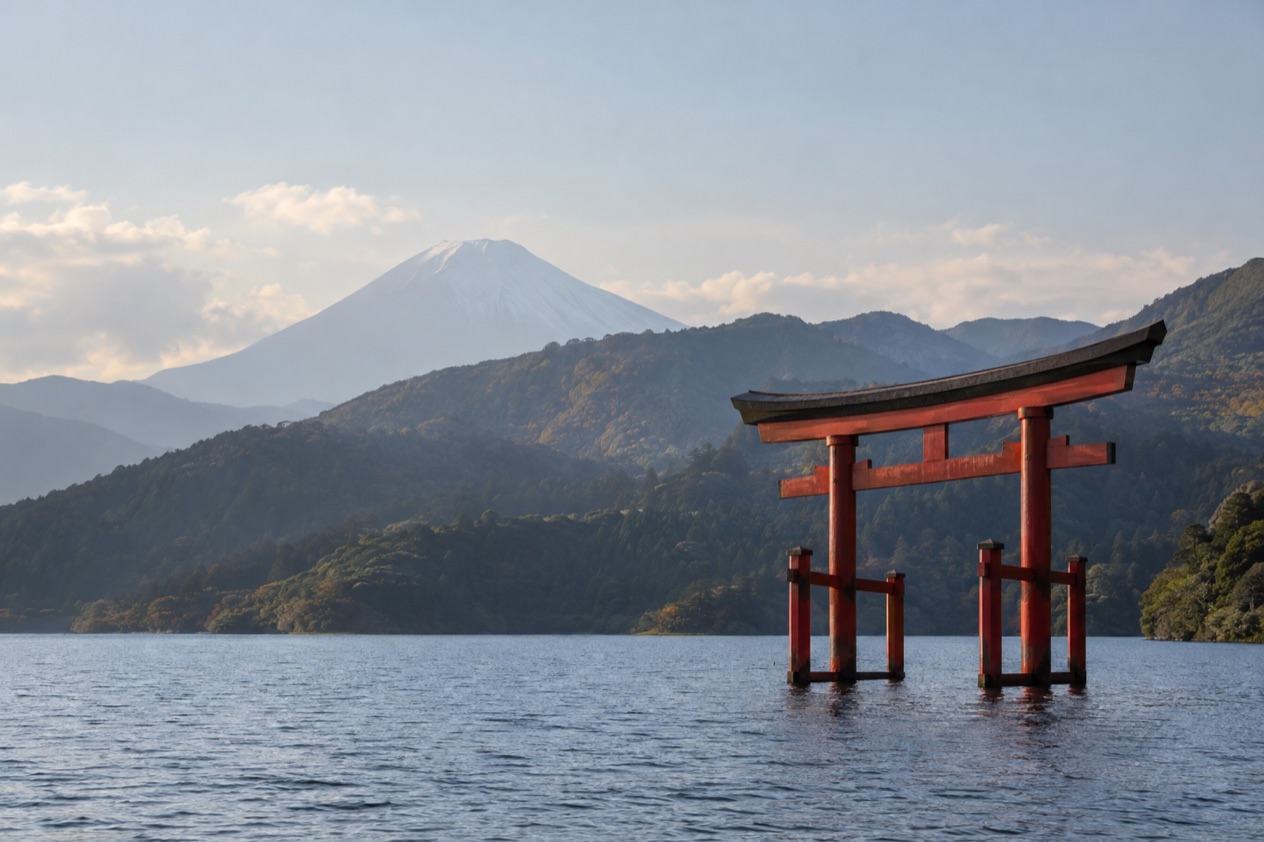
Lake Ashi, at the center of the national park, offers views of Mount Fuji, and the Hakone Sightseeing Cruise is one of the eight means of transport the Freepass covers. A boat on the lake gives the day a break from trains and cable cars. Whether Fuji shows itself depends on the weather, so treat it as a chance and not a promise.
Art, hot springs and the mountain
Sengokuhara is filled with art museums, and Hakone also has Japan’s first open-air museum, where sculptures stand in the garden. If you want a soak, Hakone is renowned for its natural hot springs, and the Hako Ticket gives unlimited visits to participating hot springs and activity facilities within the pass’s validity.
Mt. Komagatake has its own cable car, and its last departure is worth knowing before you plan the afternoon.
| Site | Last departure |
|---|---|
| Mt. Komagatake cable car | 16:50 |
If you are spending the night at a traditional ryokan, plan to arrive at least one day after landing in Tokyo, so you do not miss dinner or find the door locked at curfew time. A single day suits the loop above, while two or three days, the lengths of the Freepass, leave room for a slower walk between museums, a second soak and a dinner that is not rushed.
Good to know before you go
Prices on this route are in yen, and the Freepass amounts already given cover the local rides once you are in the mountains. Hakone is wet in some months, and September is the wettest, so a light rain jacket belongs in the daypack when you travel in the fall. The mountain climate is cooler than Tokyo’s, which is another reason to carry a layer on the Owakudani and Lake Ashi loop.
Sources
- Odakyu Electric Railway, Hakone Freepass (https://www.odakyu.jp/english/passes/hakone/), checked October 11, 2026
- Odakyu Electric Railway, Romancecar (https://www.odakyu.jp/english/romancecar/), checked October 11, 2026
- Hakone Tourist Information, Hakone Freepass (https://www.hakonenavi.jp/international/en/freepass/), checked October 11, 2026
- Wikipedia, Odakyu Odawara Line (https://en.wikipedia.org/wiki/Odakyu_Odawara_Line), checked October 11, 2026
- Wikipedia, Romancecar (https://en.wikipedia.org/wiki/Romancecar), checked October 11, 2026
- Japan National Tourism Organization, Hakone (https://www.japan.travel/en/destinations/kanto/kanagawa/hakone-and-around/), checked October 11, 2026
- Wikipedia, Hakone, Kanagawa (https://en.wikipedia.org/wiki/Hakone,_Kanagawa), checked October 11, 2026
- Wikivoyage, Hakone (https://en.wikivoyage.org/wiki/Hakone), checked October 11, 2026
- Japan National Tourism Organization, trains and buses (https://www.japan.travel/en/guide/how-to-travel-by-train-and-bus-in-japan/), checked October 11, 2026
- Japan National Tourism Organization, traveling by rail (https://www.japan.travel/en/guide/traveling-by-rail/), checked October 11, 2026
- Japan National Tourism Organization, getting around Japan: trains, subways, buses, taxis (https://www.japan.travel/en/plan/getting-around/), checked October 11, 2026
To plan your stay
- Best Time to Visit Hakone: Autumn Leaves, Rainy Season, Weather by Month and Festivals
- Things to Do in Hakone: Lake Ashi, Owakudani, Open-Air Museum and Hot Springs
- Where to Stay in Hakone: Hakone-Yumoto, Lake Ashi, Sengokuhara and Ryokan Stays
- Know Before You Go to Hakone: Getting There, the Freepass, Weather and Etiquette