
After a day among the steaming hot spring towns of the Hakone hills, the evening has its own rhythm: slippers left at the door, a cotton yukata in place of street clothes, a long soak, and then a dinner that arrives in small dishes, one after another. That rhythm is the reason travelers look for a ryokan here instead of a standard hotel. In Hakone, a ryokan is a traditional inn built around the bath, the meal and the tatami room, and choosing one comes down to what you want from each of the three.
Which ryokan are in Hakone?
The ryokan of Hakone are traditional Japanese inns in a hot spring area, the kind of place where a night includes a bath fed by a natural spring, a room floored with tatami and a formal dinner served at the inn itself. Ryokan are found throughout Japan, from prestigious ones in Nara and Kyoto to mountain villages and onsen towns in Nagano and contemporary ones in Tokyo. They gather most naturally where hot springs flow, and that is what puts Hakone on a ryokan list.
Ryokan are an old idea. Japan’s tourism board believes the first emerged in the 8th century, and the country counts among its inns some of the oldest hotels in the world. Nishiyama Onsen Keiunkan in Yamanashi Prefecture dates to 705 A.D., and Hoshi Ryokan, founded in 718 A.D., is known as the second oldest. A stay in Hakone belongs to that long tradition, even when the building itself is modern.
Tatami rooms and futon beds
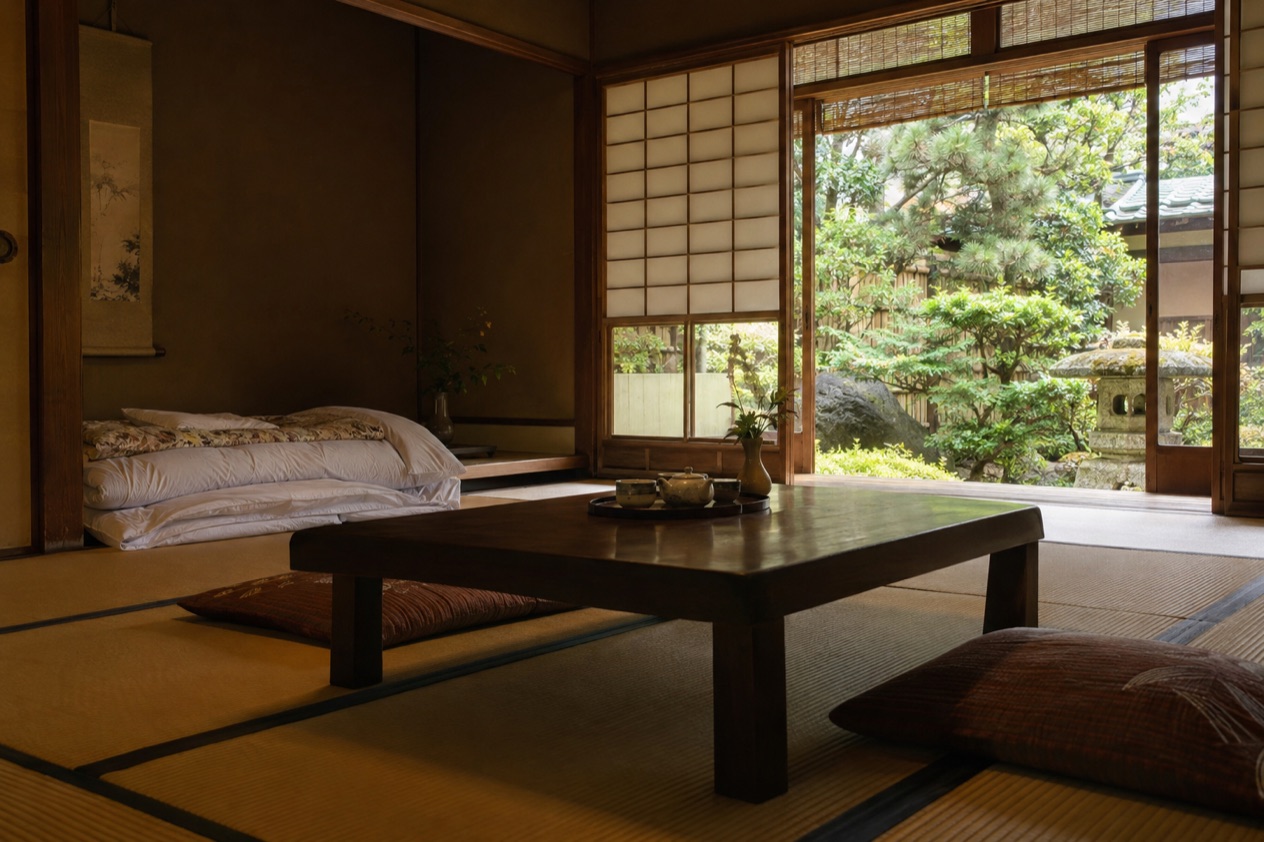
A ryokan guest room has a tatami floor, the woven straw mats that give the room its grassy scent, and sliding doors instead of the hinged kind. There is no bed frame. Bedding is a futon spread out on the tatami, and it is typically laid out for you while you are at dinner or in the bath.
The room works as a living room by day and a bedroom by night. A low table and floor seating stand where the futon will go, which is why shoes come off at the entrance and why slippers or bare feet are the rule on the mats. If you have never slept this close to the floor, the change is part of what the stay is about.
The bath and the yukata
Almost all ryokan have common bathing areas called ofuro, usually separated by gender, and where a hot spring is nearby the water comes from it. Some ryokan also have private baths, and some of those are outdoors. Ryokan staff explain the customs of bathing in the onsen when you arrive, so you do not have to arrive knowing them.
The ryokan provides a yukata, a light cotton robe, to wear around the inn, and possibly geta, wooden sandals that guests can borrow for strolls outside. Guests are invited to walk the gardens in geta or zori sandals and a yukata, which makes the walk to the bath or the garden a small ritual of its own.
Dinner, breakfast and the garden
A ryokan stay generally includes a formal multi-course kaiseki dinner and a traditional Japanese breakfast the next morning. Kaiseki is built on seasonal and regional specialties, so what arrives on the table depends on the time of year and the area. Meals are served either in a common room or in your own room, depending on the ryokan.
Most ryokan also have a Japanese garden and an onsen. A garden may hold stone arrangements, water features, carefully placed plants and shrubs, and sometimes a tea house. Because it is the view from the room and the place for the after-dinner stroll, the garden is worth weighing as much as the bath when you compare inns.
Which areas are best?
The best areas for a ryokan are the ones built around natural hot springs, because that is where traditional ryokan are most commonly found and where the bath water is spring water rather than heated tap water. Beppu Onsen is one such area, and Hakone belongs in the same family of onsen destinations. If the bath is the point of your stay, choose the hot spring area first and the individual inn second.
Cities work differently. Ryokan are hard to find in Tokyo, where many cost far more than modern hotels and hostels, and the ones that exist there are contemporary in style. Kyoto and Nara have prestigious ryokan in a more classical mold. Hot spring areas are where the form feels at home.
Choosing between an onsen area and a city
A city ryokan gives you the tatami room, the futon and the breakfast, set inside an urban trip. An onsen-area ryokan gives you all of that plus a bath tied to the place and a garden with room to walk. For a night that is the main event of the day instead of a place to sleep, the hot spring area is the stronger fit.
Mountain villages and onsen towns, like those in Nagano, show the same pattern: the inn is the reason for the stop. Hakone fits that picture, with ryokan scattered through a hot spring region where a night at the inn can be the day’s destination rather than its end point.
What to look for within a hot spring area
Once you have chosen the area, the useful questions are about the inn. Does it have a garden you can stroll in your yukata? Are the baths common, private, or both, and is any bath outdoors? Are dinner and breakfast served in a common room or in your room? Each answer changes the feel of the night, so the best inn is the one whose answers match what you picture.
Ryokan range from upscale establishments to more modest inns, and the same set of elements runs through all of them: tatami, futon, bath, yukata, kaiseki. Reading a listing for those five things tells you more than its star count. When two inns look alike on paper, the garden and the meal arrangement are often what separates them.
A stay in a quiet-by-design format
Because the dinner, the bath and the garden are all inside the inn, a ryokan night asks you to arrive and stay in. Plan the day so you reach the inn in time for the evening, and let the sightseeing happen before. The inn is the evening’s program, from the first cup of tea in the room to the futon laid out afterward.
That is why the area matters less than the inn itself once you are inside it. Still, a hot spring area gives you the spring-fed bath that makes the form complete, which is the reason to pick one over a city ryokan.
What should you know before you book?
Before you book a ryokan, know that the price is quoted per person per room and typically includes dinner and breakfast, so the number you see covers more than a bed. The average cost of a ryokan stay is around 15,000 yen per night, with higher prices at upscale establishments. Read a listing as the price of an evening and a morning, not just a room.
| Part of the stay | What it is |
|---|---|
| Room | Tatami floor and sliding doors |
| Bedding | Futon spread on the tatami |
| Bath | Common ofuro, usually separated by gender, with spring water where a hot spring is near |
| Clothing | Yukata, and possibly geta to borrow |
| Dinner | Formal multi-course kaiseki |
| Breakfast | Traditional Japanese breakfast |
Meals and meal times
Most ryokan offer dinner and breakfast, often included in the room price. Some ryokan offer meal-free stays, although the culinary experience is one of the reasons to come, and skipping it changes what the night is. If you are weighing the two, think of the kaiseki dinner as the center of the evening.
Ryokan stress that guests should be punctual for their meals, and most ask you to confirm the time you want to eat. The kitchen prepares dishes in sequence for that moment, which is why a late arrival at the table is a bigger deal than at a restaurant. Settle the time when you check in, then plan your bath around it.
Customs the staff will explain
Ryokan staff explain Japanese customs to guests, including removing shoes indoors, bathing in the onsen and wearing the yukata. Shoes come off at the entrance, slippers carry you through the halls, and the tatami is walked on in socks or bare feet.
The bath has its own habits, and the staff will walk you through them at arrival. The yukata is the garment for the inn and its gardens, and a ryokan that provides it expects you to use it. Treat the first few minutes at the front desk as the orientation to everything that follows.
Reading a listing with the whole night in mind
When you compare Hakone ryokan, line up the same details: whether dinner is served in the room or a common room, whether the baths are shared or private, whether any bath is outdoors, and whether the garden is open to guests. These are the parts of a night that the price is buying, and they differ more between inns than the rooms do.
A stay with meals included is priced for the whole evening, which is why it can look high next to a hotel room. Set against a dinner of seasonal dishes, a spring-fed bath and a futon laid out for you, the comparison changes. That is the right way to weigh a ryokan against a hotel.
Good to know before you go
Ryokan prices are in yen and quoted per person, so work out the total for your party before you compare an inn with a hotel. Because dinner and breakfast usually sit inside the price, there is little to add at the inn beyond what you choose to buy in the garden or on a stroll. Keep your evening free for the bath and the table, and let the day’s sightseeing end before the meal begins.
Sources
- Japan National Tourism Organization, ryokan stays, what is included, etiquette (https://www.japan.travel/en/guide/japanese-ryokan/), checked October 11, 2026
- Wikipedia, Ryokan (https://en.wikipedia.org/wiki/Ryokan), checked October 11, 2026
To plan your stay
- Best Time to Visit Hakone: Autumn Leaves, Rainy Season, Weather by Month and Festivals
- Where to Stay in Hakone: Hakone-Yumoto, Lake Ashi, Sengokuhara and Ryokan Stays
- Hakone from Tokyo: Romancecar, Shinkansen, Local Trains and the Hakone Freepass
- Know Before You Go to Hakone: Getting There, the Freepass, Weather and Etiquette