
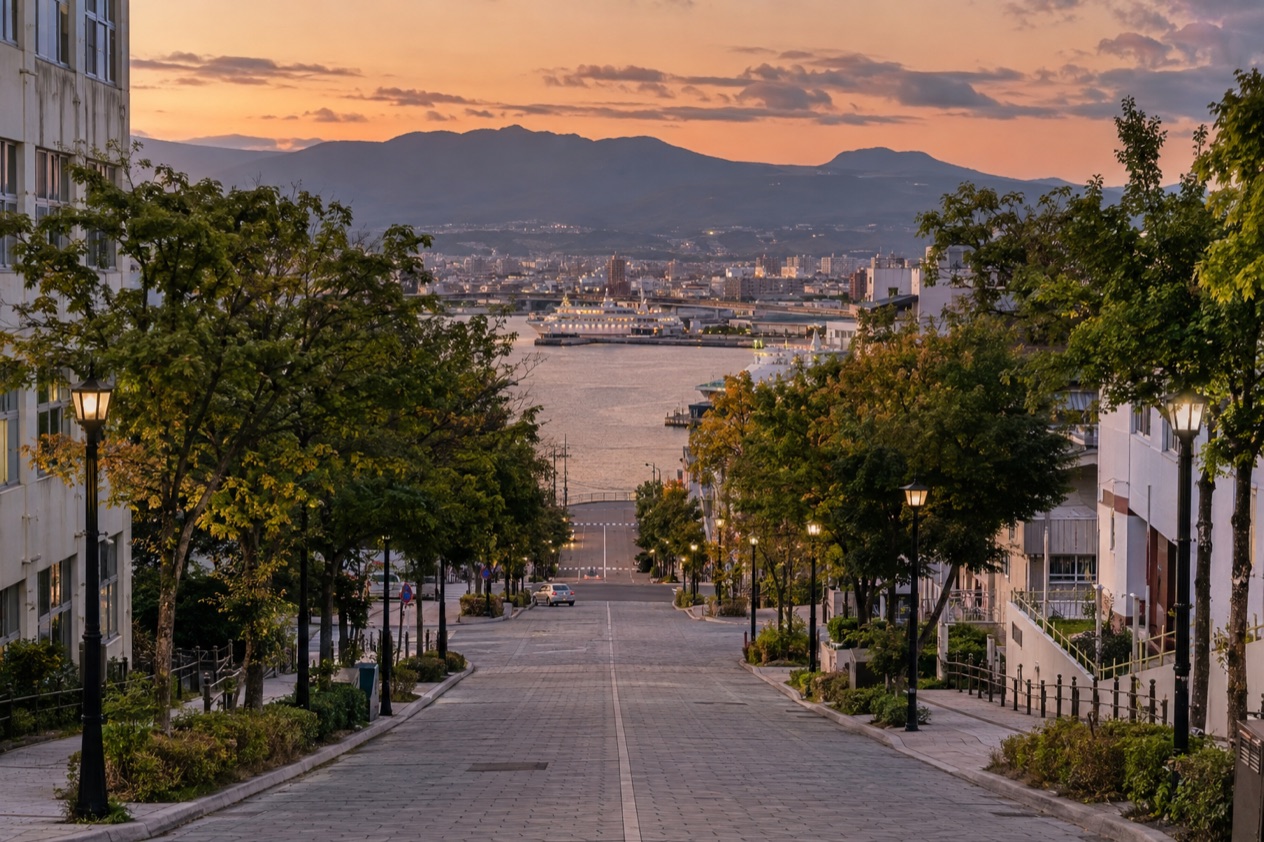
Hakodate wakes to ship horns and the smell of grilled squid drifting from the market stalls near the station, while the hillside streets of Motomachi tilt toward a harbor full of masts and cranes. Bell towers and steeples stand among the houses, a reminder that this is a port that looked outward long before most of Japan did. It suits travelers who like to wander slowly, eat seafood at every meal and finish the day looking down on the lights of the bay.
What are the best things to do in Hakodate?
The best things to do in Hakodate are to walk the star-shaped grounds of Goryokaku, look over the city from Mount Hakodate, eat your way through the seafood stalls and browse the old foreign quarter on the slopes of Motomachi. Around them sit a handful of smaller pleasures, from hot springs to lakeside walks, that fill out a stay of several days.
The city is compact in spirit, with its sights spread between the harbor, the hillside and the station area, so each outing tends to have its own character. Some are about history, some about food, some simply about the view, and they combine into a trip that never feels repetitive.
- Goryokaku, the star fort whose five-pointed outline is a landmark of the city, and the park that fills its grounds.
- Mount Hakodate, where the city narrows to a thin strip of land between two bodies of water and the lights spread below you.
- The Kanemori Red Brick Warehouses, once working storehouses and now a waterfront of shops and restaurants.
- Motomachi, the hillside quarter of churches, sloping lanes and old Western-style buildings that recall the port’s early days.
- The morning market and its seafood bowls, squid and crab, the clearest taste of the region.
- Yunokawa Onsen, a hot spring district where a soak ends a day of walking.
- A day out to Onuma, the lakes and volcano scenery that many travelers pair with Hakodate.
- The Hakodate Christmas Fantasy festival, with its giant tree floating on the sea, for anyone visiting in December.
Hakodate is the third largest city in Hokkaido, yet it keeps the feel of a harbor town where the sea shapes the menu, the skyline and the way people spend an evening. That mix of port life and history is what the rest of the page unpacks, starting with the places you can see.
Sights and landmarks in Hakodate
The sights of Hakodate come from its past as a port that opened to the outside world, which explains why a star fort, red-brick warehouses and hillside churches share one small city. Hakodate was the first Japanese city whose port opened to foreign trade, in 1854, and the traces of that moment are still easy to read in its streets.
Goryokaku, the star fort
Goryokaku is a star fort, and its five-pointed shape was no decoration. The points allowed more gun emplacements along the walls and reduced blind spots, a design borrowed from European military engineering. Today the earthen ramparts and moat are the main attraction, and walking along them you feel the geometry even without seeing it from above.
A tower stands beside the grounds, and from its observation deck the star finally becomes clear, with the green walls tracing sharp points against the surrounding streets. Inside the fort, a reconstructed administrative building and open lawns give the place a calm, parklike air. It suits anyone who likes history, photography or simply strolling beside water and old stone.
The Red Brick Warehouses on the bay
Along the waterfront stand the Kanemori Red Brick Warehouses, old commercial storehouses now filled with shops, cafés and restaurants. Their brick walls and iron details look out over the harbor, and the cluster is where much of the evening life of the bay gathers. Souvenir shops sell local sweets, glassware and seafood products, and there are halls where you can browse for gifts or sit down for a meal.
In December this is also the setting for the Hakodate Christmas Fantasy, held annually from December 1 to 25, when a giant Christmas tree floats on the sea beside the warehouses. Outside the festival the area is still worth a slow walk, with the masts and the water as a backdrop.
Motomachi and its hillside lanes
Motomachi is the old foreign quarter, a district of sloping lanes where churches of different faiths stand within sight of each other. The Orthodox church with its green copper domes, the Catholic church and the Anglican chapel give the hillside a distinctly international profile. Western-style buildings with wooden verandas and pastel facades stand among traditional houses.
The lanes are best explored on foot, wandering without a fixed plan, pausing at small cafés and glancing back down the slopes where the harbor opens between the rooftops. Several of the lanes run straight toward the water, which gives photographs of the bay a frame of stone and tile.
Smaller sights worth a stop
A few smaller places reward a detour. Former consulate buildings recall the days when foreign diplomats lived on the hill. Down at sea level, small shrines tucked among the streets add a Japanese note to the Western flavor above.
Outdoor things to do in Hakodate
Outdoors in Hakodate means a mountain with a city view, a fort park to walk around, and waterfront streets where the sea is always close. The city is a port at the southern tip of Hokkaido, and its geography gives it open views that few Japanese cities can match.
Mount Hakodate and the view over the bay
Mount Hakodate rises above the city, and from the top you see how the town sits on a narrow neck of land with water on both sides. The harbor curves on one side, the open sea on the other, and the grid of streets runs between them. The view is the reason visitors make the trip, and the lights of the city make it one of the signature scenes of Hokkaido.
A ropeway carries visitors up the slope, and there are also walking routes for those who prefer to climb. At the summit an observation area gives space to stand and look, with the island’s coastline stretching out toward the horizon. Bring a jacket, since hilltops tend to feel cooler than the streets below.
Goryokaku Park and its moat
Apart from its history, Goryokaku works as a city park, with wide lawns, old trees and a moat that reflects the sky. Cherry trees line parts of the grounds, which makes the park a gathering place for picnics and strolls when they flower. Walking the full ring of the moat gives you a sense of the star shape at ground level, point by point.
Families, joggers and couples share the paths, and the open space is a pleasant change after the tighter streets of the harbor district. Benches along the water give you somewhere to stop, and the tower beside the park offers the aerial view.
The waterfront and the morning market
Near the station, the morning market spreads through a network of lanes and stalls where vendors call out their catch. Crabs sit in tanks, squid swim in basins and trays of sea urchin and salmon roe glisten under the lights. Even if you do not buy anything, walking through is a lively lesson in what the surrounding sea provides.
From the market, a stroll along the waterfront takes you toward the piers and the warehouse district. Ferries and fishing boats come and go, gulls wheel overhead, and the Tsugaru Strait, which separates Hakodate from Honshu, lies beyond the harbor mouth. The walk is a good way to feel the port character that defines the city.
Yunokawa Onsen
Yunokawa is the hot spring district of Hakodate, a place of ryokan and bathhouses where the day can end in a soak. Onsen bathing follows its own customs, with a rinse before entering the shared bath, and many inns pair the bath with a seafood dinner. It suits travelers who want to balance sightseeing with something slower and warmer.
Day trips from Hakodate
The day trips from Hakodate lead to a volcanic lake region, a castle town, a monastery and farm country, each a different side of southern Hokkaido. Shin-Hakodate-Hokuto Station, the northernmost terminal of the bullet train, sits 11 miles north of Hakodate Station, and a local train covers the last leg into the city, which gives the whole area a rail backbone.
Onuma Quasi-National Park
Onuma is a park of lakes dotted with small wooded islets, with the volcanic cone of Mount Komagatake as a backdrop. Paths and short bridges link the islets, so the walk becomes a loop across the water, with views that change at every turn. The scenery is a favorite of Japanese travelers who come to hike, rent bicycles or simply stroll.
It suits anyone who wants a day of nature after the city, and it pairs well with a meal of local dairy sweets and dumplings sold near the lakeshore. Treat the volcano as scenery to admire from the paths rather than something to plan a climb around.
Matsumae, the castle town
Matsumae is a small town in the southern part of the island, associated with a castle and with a collection of cherry trees planted around the grounds. It carries the feel of a feudal outpost at the edge of the country, with stone walls, wooden gates and a view of the strait. History lovers find it an unusual counterpoint to Hakodate’s port-city story.
Because it is a smaller town, the visit is about slowing down and looking: old temples near the castle, quiet streets and seafood from the surrounding waters.
Trappistine Monastery and Tobetsu
A Trappistine convent near Hakodate is known for the butter candy and soft-serve ice cream sold in its shop, and it gives visitors a taste of the region’s dairy tradition. The grounds are landscaped, with lawns and a chapel, and the atmosphere is calm and orderly. It suits travelers who like gardens and sweet treats and want an outing that does not demand much effort.
The visit combines a short look around the grounds with a stop in the shop, where the candies make easy gifts. It is a gentle contrast to the sightseeing of the city itself.
Other places in the region
Beyond these, the region offers more. Hakodate Airport connects to Okushiri, an island reached by air from within Hokkaido, for travelers who want to go further off the usual routes. Smaller coastal towns, hot spring villages and farm areas dot the southern part of the island, each with its own seafood and its own rhythm.
What to eat in Hakodate
Eating in Hakodate means seafood first, with squid at the center of the table, followed by a bowl of salt ramen and a scoop of Hokkaido dairy. The port at the southern tip of Hokkaido brings in fish and shellfish, and the cooking is built around freshness rather than heavy sauces.
Squid, crab and the morning market bowls
Squid is the signature of the city, served as sashimi so fresh the pieces can still shimmer, grilled whole with soy sauce, or cut into thin noodle-like strands. At some places you choose a live squid from a tank, which is then prepared on the spot. The texture is tender and slightly sweet, quite unlike the rubbery squid travelers know from home.
At the morning market, the classic order is a kaisendon, a bowl of rice topped with sashimi. Salmon roe, sea urchin, scallops and crab arrive in colorful layers, and some stalls let you build your own bowl from a counter of toppings. Crab, sold boiled or grilled, is another highlight, with sweet flesh that needs little more than a dip in vinegar.
Hakodate shio ramen
Hakodate is associated with shio ramen, a salt-based noodle soup with a clear, pale broth. It is lighter than the miso ramen linked with Sapporo, built on seafood and chicken stock, and finished with thin, straight noodles. Toppings are simple, often pork, green onions and bamboo shoots, which lets the broth speak.
A bowl makes a good late dinner or a warming lunch after a day outside. Small ramen shops are scattered through the city, many with only a few counter seats and a steady stream of regulars.
Dairy, sweets and local drinks
Hokkaido is known for its dairy, and Hakodate shows it in soft-serve ice cream, cream-filled pastries and the butter candies of the monastery. Cheesecake and milk-based desserts appear in the cafés of the warehouse district. Sweet shops near the waterfront package local confections as gifts.
For drinks, the region has a growing interest in craft beer and in sake, and the izakaya, casual Japanese pubs, serve both alongside plates of grilled fish and small dishes meant for sharing. Ending a day with a cold glass and a plate of grilled squid is a very Hakodate habit.
Things to do in Hakodate at night
At night in Hakodate people head up the mountain for the view, then down to the waterfront or an izakaya for a late meal. The city lights curve around the bay, and the evening has a relaxed, port-town character rather than a loud nightlife scene.
The view from Mount Hakodate after dark
When the lights come on, the narrow strip of land beneath Mount Hakodate turns into a glowing band between the two bodies of water. Streets, bridges and harbor lamps trace curves in the dark, and the sea beyond appears as a black void.
Bring a warm layer, since the summit can feel cool after sunset, and give yourself time to linger. Photographers find that the scene changes subtly as the sky darkens, from deep blue to full black, with the lights growing brighter by degrees.
Waterfront evenings and the Christmas lights
The red-brick warehouses take on a different mood in the evening, with lit windows, reflections on the water and restaurants filling up. Strolling the harbor after dinner is a simple pleasure, with ships moored nearby and the city glowing across the bay. In December, the Hakodate Christmas Fantasy runs from the 1st to the 25th and brings a giant Christmas tree floating on the sea, which turns the whole district into a festival of light.
Izakaya, bars and a late bowl of ramen
For a night out, the izakaya are the heart of the city. These casual pubs serve plates of grilled fish, fried chicken, pickles and sashimi to share, with beer, sake and shochu to drink. Many are small, with a counter and a handful of tables, and the atmosphere is friendly and informal.
Late in the evening, a bowl of shio ramen is a customary way to finish. Quieter options include cafés and hot spring baths at Yunokawa, where a soak under the night sky rounds off the day. The city does not stay up all night, and that suits the unhurried spirit of the place.
Things to do in Hakodate with kids
With kids, Hakodate offers open lawns to run on, animals to see, boats on the water and a market full of live sea creatures to peer at. The city has a spread-out layout, so the day goes better when it is planned around one or two outings rather than a long checklist.
Goryokaku Park and the tower
Goryokaku Park gives children space to run, with wide lawns, a moat and a fort that feels like a castle from a story. Walking the ramparts turns into a game of following the points of the star. The tower beside the park lets them see the whole shape from above, a satisfying reveal for young visitors.
Pack snacks and make a picnic of it. The lawns have room for ball games and the paths are good for scooters and strollers, though hills and stairs elsewhere in the city may be harder with small children.
The market, the harbor and the zoo
The morning market is a spectacle for children, with tanks of crabs and swimming squid that they can watch up close. Some stalls offer a chance to try fishing for squid, which turns a meal into an activity. The harbor, with its ships, gulls and brick warehouses, is another easy source of entertainment.
Hakodate also has a zoo, where children can see animals, and the nearby hot spring district has a botanical garden known for its monkeys. These outings give a break from sightseeing and let young travelers enjoy something made for them.
Sweets and treats
Dairy desserts are an easy way to win over children. Soft-serve ice cream, cream puffs and butter candies from the monastery shop appear around town. Cafés in the warehouse district serve cakes and milk-based treats, and a stop for something sweet is a good reward after a day on foot.
Keep in mind that the hills of Motomachi and the climb up Mount Hakodate involve stairs and slopes, and plan rest stops accordingly. Spreading the sights across several days keeps energy up and leaves room for the seafood bowls, which many kids come to love.
Good to know before you go
Hakodate sits at the southern tip of Hokkaido and can be reached by air or by rail. Hakodate Airport has direct flights from Sapporo, Tokyo-Haneda, Nagoya-Centrair, Osaka-Itami and Taipei-Taoyuan, and the JR Tohoku/Hokkaido Shinkansen from Tokyo to Shin-Hakodate-Hokuto Station takes 4 hours, with a local train for the last leg into the city.
Once in town, the main sights spread across the harbor, the hillside and the station area, so it helps to group them by district. Hokkaido has a rainy season of its own and typhoons can reach the region, so keep an eye on the forecast when you plan outdoor days such as the mountain and the lakes.
Sources
- Japan National Tourism Organization, Hakodate (https://www.japan.travel/en/destinations/hokkaido/hokkaido/hakodate-and-hokkaido-south/), checked October 11, 2026
- Wikipedia, Hakodate (https://en.wikipedia.org/wiki/Hakodate), checked October 11, 2026
- Wikivoyage, Hakodate (https://en.wikivoyage.org/wiki/Hakodate), checked October 11, 2026
- Wikipedia, Goryōkaku (https://en.wikipedia.org/wiki/Gory%C5%8Dkaku), checked October 11, 2026