
A cruise ship slides in past the cranes at first light, and the question starts on the deck: do you walk off into the city, or climb aboard a coach with a guide? Japan’s cruise ports sit inside big cities, so the answer depends on which pier you tie up at.
What shore excursions are there in Japan?
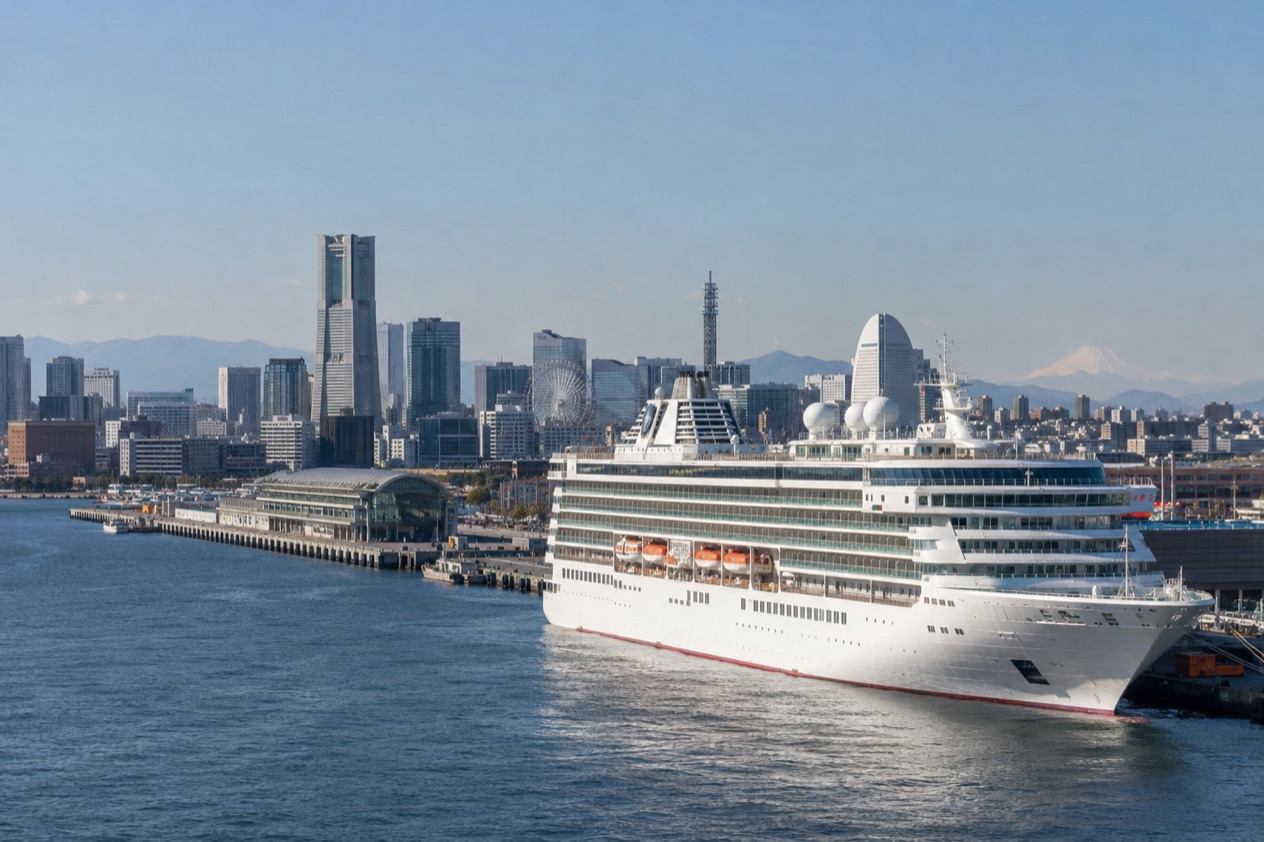
Shore excursions in Japan start at the port city itself, and three ports shape most of the conversation: Yokohama, Tokyo and Kobe. Each gives you a different kind of day, from a waterfront stroll to a city outing to a stop in a port built on artificial islands. What follows describes what each port is and what stands around it.
| Port | Terminal or area | What it offers |
|---|---|---|
| Yokohama | Osanbashi Pier, Naka Ward | Main international passenger pier of the Port of Yokohama; terminal opened in 2002 |
| Tokyo | Tokyo International Cruise Terminal, Aomi area | Opened on 10 September 2020; one berth; Yurikamome line station nearby |
| Kobe | Port of Kobe, Hyogo | Port built out on artificial islands, including Port Island and Rokko Island |
Yokohama and Osanbashi Pier
Osanbashi is the main international passenger pier at the Port of Yokohama, and it is also the oldest pier in the city, first built between 1889 and 1896. The port itself opened in 1859, when the treaties of that era brought foreign ships to a harbor that had begun with two small stone wharfs on this very spot. Standing on the pier today, you are on the ground where that story began.
The current terminal, opened in 2002, has a rooftop observation deck with gently curving lines and planted grass, open to the public. It is a natural first stop for a few unhurried minutes with the harbor spread out around you. The pier is also known as one of the places to see the Yokohama Three Towers, nicknamed the King, the Queen and the Jack.
Inside, the departure and arrival lobby, ticketing booth, customs, immigration, a large multipurpose hall, shops and a cafe all share the second floor. A parking facility occupies the first floor. Ships of the largest class, such as MS Queen Elizabeth, are often obliged to use nearby container terminals instead, so the pier you step onto depends on the size of your ship.
Tokyo International Cruise Terminal
The Tokyo terminal sits in the Aomi area and is run by the Tokyo Port Terminal Corporation on behalf of the Tokyo Metropolitan Government. It is a four-story building with a roof that rises to 35 metres (115 ft), and the quay offers a single berth. From here, excursions are about the capital itself: shrines, markets, towers, gardens, and neighborhoods where you can spend a day on foot.
The terminal’s story is recent. MS Amadea, a German ship, became the first foreign-flag cruise ship to call here on 2 March 2023. MSC Bellissima followed on 12 March 2024 and became the largest cruise ship to enter Tokyo Port at that time. Oriental Land Company has also announced that the terminal will be the home port of Disney Cruise Line, with service scheduled to begin in 2029.
Kobe and its island port
The Port of Kobe lies in Kobe, in Hyogo, within the Keihanshin area and backed by the Hanshin Industrial Region. Flat land is limited, so the city built artificial islands, among them Port Island, Rokko Island and the island that holds Kobe Airport. A call here means you are stepping into a city shaped by its harbor.
Kobe is a place to think about food. Its name is tied to Kobe beef, and cruise passengers often fold a meal of it, or a stop for bakeries and cafes, into a day ashore. Outings can also reach other cities of the Kansai region, which is why many itineraries pair a Kobe call with a longer excursion.
Ships that make the Japan calls
Diamond Princess, owned by Carnival Corporation and operated by Princess Cruises, was built by Mitsubishi Heavy Industries in Nagasaki and carries a passenger capacity of 2,670. Starting in 2014, she sailed cruises from Yokohama for Tokyo or Kobe in the northern summer. After the pandemic lay-up she officially returned to service in November 2022.
Her mid-2018 repositioning moved her around South-East Asia, varying between Japan, South Korea, Singapore, Vietnam, Taiwan and Malaysia. That pattern is common for ships that visit Japan: the country is one stop in a wider Asian itinerary, and the shore day you get is a single city rather than a whole region. Dining aboard is included in the cruise price on almost all cruise ships, so a day ashore is a choice about what else to taste.
Which are by train, which by bus?
At the Tokyo terminal, the one rail link the sources name is the Yurikamome line, with Tokyo International Cruise Terminal Station about an eight-minute walk from the building.
Tokyo: the Yurikamome line
The Yurikamome is the line that serves the cruise terminal, and the station that bears the terminal’s name is about an eight-minute walk from the building. That makes the first leg of an independent day simple to picture: you walk from the ship to the station, then ride on into the city. The walk is the part you do before any train.
The Yurikamome is a rail line, so it is a train excursion in the plainest sense. Where you go after boarding depends on what you want from Tokyo. Some travelers go for temples and gardens, others for neighborhoods of small shops, department-store food halls or a lookout over the skyline. The line is the link, and the day is yours to shape.
Yokohama and Kobe: on foot first
At Osanbashi Pier, the terminal sits in Naka Ward, in the city itself, and the observation deck on the roof is open to the public.
In Kobe, the port is in the city and on islands the city built. Port Island and Rokko Island are part of the same landscape you see from the deck, and the airport has its own island. Whether you go on by train, by coach or on foot, the first sight is a city that has remade its coastline.
Coach outings and ship-run tours
A ship’s own program is where an organized coach outing belongs on a cruise. Such tours are built around a theme, a temple and a market stop, or a city circuit, and they return to the pier on the ship’s schedule. The sources do not give routes or timetables for them, so what you pick depends on what the ship offers when you sail.
A train outing is the other shape of the day. You set your own pace, choose your own meals and walk between stops. On a cruise with a single day in port, the real choice is between a program that is arranged for you and a day you piece together, with the Tokyo walk to the Yurikamome as the one concrete rail link here.
What should you know before you book?
Before you book, know which terminal your ship will use, because the pier shapes everything that follows. Yokohama is a good example: Osanbashi takes up to four 30,000-ton class ships or two 70,000-ton class ships at once, while the biggest vessels are often sent to nearby container terminals. Tokyo has a single berth at its cruise terminal.
Know your pier
At Osanbashi, the facilities are all on the second floor: the lobby, ticketing, customs, immigration, the multipurpose hall, shops and a cafe. A ship that uses a container terminal instead will not put you at that building, and the surroundings will feel different. Ask which terminal your ship is assigned to before you pick an independent outing.
At Tokyo, the quay measured 430 metres (1,410 ft) at opening, with a water depth of 11.5 metres (38 ft) at the wharf. These numbers matter because they set what kind of ship can come alongside, and that is why a ship the size of MSC Bellissima made news when it arrived. You do not need them for your day, only to understand why the same city can be served by different terminals.
Decide between a ship tour and your own day
A ship tour hands you a fixed plan. An independent day gives you freedom, and in Tokyo it begins with the walk to the Yurikamome station. In Yokohama it can begin on the rooftop deck. In Kobe it begins in a harbor city whose islands you can see from the ship. Think about how much of the day you want planned for you.
Think also about meals. Because dining on almost all cruise ships is included in the price, you may skip lunch ashore, or you may treat the port as the chance to try something you cannot get aboard. Yokohama has a Chinatown, Kobe has its beef, and Tokyo has food of every kind. A plan that includes one meal ashore often shapes the whole day.
What the ship’s size and history tell you
A ship like Diamond Princess, with room for 2,670 passengers, brings a large crowd into a port at once, and the pier you use determines how that crowd is handled. A new terminal, such as Tokyo’s, was built for exactly this, with a four-story building and a floor area of 19,114 square metres (205,740 sq ft).
Itineraries change from one season to the next. Diamond Princess has sailed from Yokohama in the northern summer, from Singapore in a northern winter and from Sydney in other seasons, so the Japan call you read about for one cruise may not match another. Confirm the port and the date with your cruise line when you book.
Good to know before you go
Japan uses the yen, and the amounts you pay for a snack, a ticket or a train ride are set in yen at the counter or on the machine. The usual habits of travel apply in port cities: keep your ship’s departure time in mind, carry your ship card ashore and keep an eye on the weather, since the rainy season and typhoon months can change a day’s plan.
Sources
- CruiseMapper, Yokohama cruise port (https://www.cruisemapper.com/ports/yokohama-port-1), checked October 11, 2026
- Wikipedia, Diamond Princess (https://en.wikipedia.org/wiki/Diamond_Princess_(ship)), checked October 11, 2026
- Wikipedia, Osanbashi Pier (https://en.wikipedia.org/wiki/Osanbashi_Pier), checked October 11, 2026
- Wikipedia, Tokyo International Cruise Terminal (https://en.wikipedia.org/wiki/Tokyo_International_Cruise_Terminal), checked October 11, 2026
- Wikipedia, Cruise ship (https://en.wikipedia.org/wiki/Cruise_ship), checked October 11, 2026
- Wikipedia, Port of Kobe (https://en.wikipedia.org/wiki/Port_of_Kobe), checked October 11, 2026
To plan your stay
- Japan Cruise in March: Weather by Port, Cherry Blossom Timing and What You See
- Cruises from Los Angeles to Japan: Departure Port, Yokohama Arrival and Crossing Length
- How Much Does a Japan Cruise Cost?: What the Fare Covers, Drinks and Shore Excursions
- Japan Cruise in April: Cherry Blossoms, Spring Weather and What You See From Port