
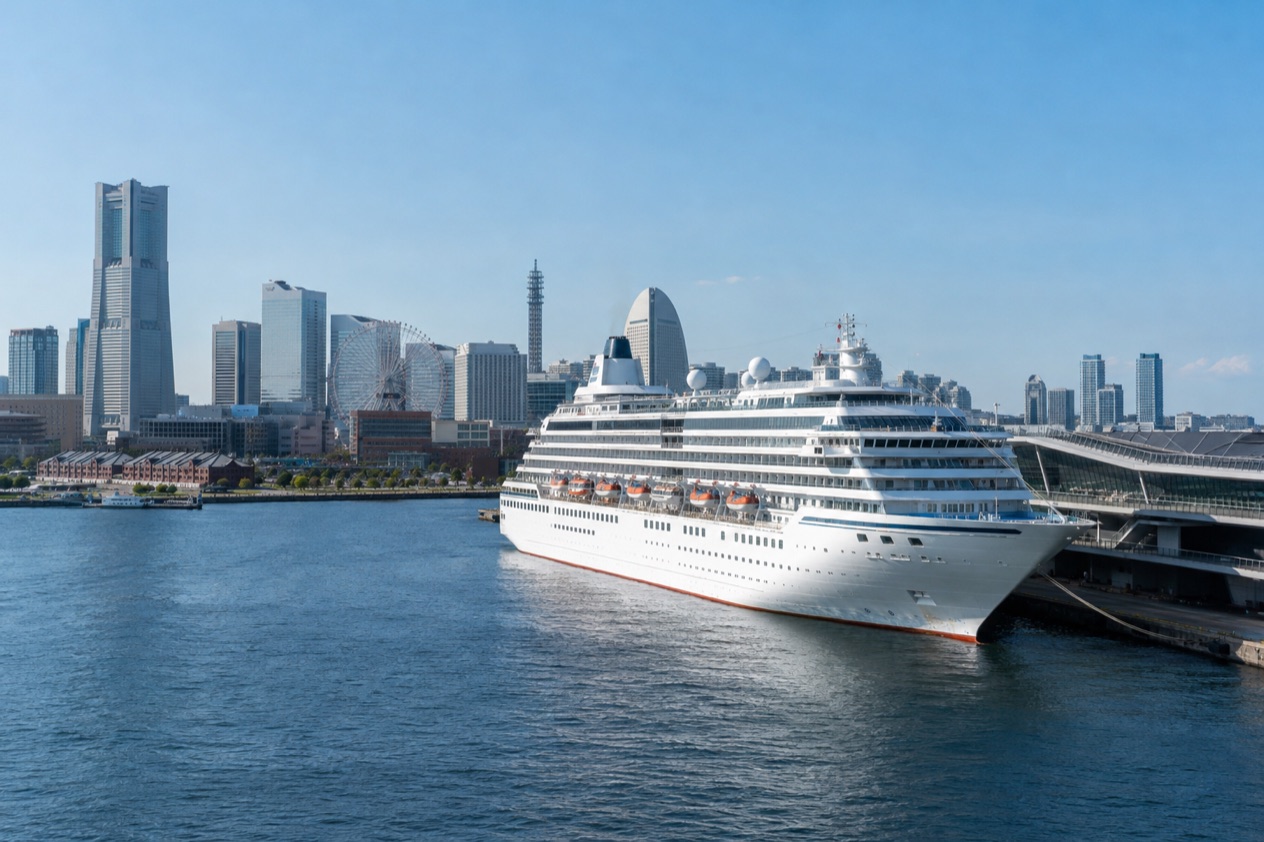
Somewhere between a brochure of tall masts and a brochure of balcony suites, people planning a Japan cruise start asking what the sticker price really includes. A ship slides into the harbor at Kobe, the port city that sits among its own artificial islands, and the real question is what was paid before boarding and what will be paid at the bar and on the quay. The short answer is that the fare is a base, and the total depends on the kind of line, the cabin and how much you add along the way.
How much does a Japan cruise cost?
A Japan cruise costs the base fare of the line and cabin you pick, plus whatever you add on board and ashore, so the choice of line shapes the total more than anything else. Cruising is built on a package.
Accommodation, meals and entertainment sit inside it, while alcohol, fine dining, spa treatments and shore excursions are where extra fees may appear. Reading a fare well means knowing which side of that line each item falls on.
The industry itself has grown a great deal. The number of cruise travelers worldwide rose from an estimated 14 million in 2005 to 34.5 million in 2024, and that growth explains why the choice of ships and styles is so wide today. For a trip to Japan, it means you can sail on very different kinds of vessels, and the fare reflects the kind of experience as much as the route.
The kind of line you choose
Lines differ in what they are built to offer, and the fare follows. The three largest cruise holding companies and operators in the world are Carnival Corporation & plc, Royal Caribbean Group and Norwegian Cruise Line Holdings, and their scale gives a sense of how large the mainstream end of the market is. At the other end sit lines that sell a particular character rather than size.
Regent Seven Seas Cruises operates medium-sized vessels designed so that virtually all of their suites are balconies. Star Clippers only operates tall ships, as did the former Windjammer Barefoot Cruises and Windstar Cruises. Saga Cruises only allows passengers over 50 years old aboard. Each of these is a different bargain, and the fare buys a different atmosphere on board, from sails overhead to a private balcony over the water.
The cabin and the style of the ship
Within one line, the cabin is the second lever. A ship where nearly every suite has a balcony is selling a different morning than a ship with a mix of inside rooms and windows. When you set fares side by side, compare like with like: the same type of cabin, the same length of sailing, the same list of what is included.
The average age of a cruise ship in 2024 is 17.5 years, and a steady stream of new vessels has joined the fleet since 2001, with nine or more newly built ships for a North American clientele added every year. A newer ship and an older one can sail the same waters under different fares, so the name of the vessel is worth reading along with the price.
Repositioning cruises
A cruise ship moving from one region to another will commonly operate a repositioning cruise while doing so. These are sailings tied to a ship changing its home waters, which gives them a different shape from a loop that returns to the same port. If a Japan sailing begins or ends a ship’s move between regions, the itinerary may look unusual, with a start and an end in different places.
It is simply a type of sailing to recognize when you scan a schedule. Look at where the cruise begins and where it finishes, because that tells you whether you are on a round trip or a one-way passage, and that shapes the flights and hotel nights you plan around it.
A port like Kobe in the plan
Where the ship calls matters for what you will spend ashore. The Port of Kobe is a Japanese maritime port in Kobe, Hyogo, in the Keihanshin area, backed by the Hanshin Industrial Region. Flat land is limited here, so artificial islands were built, Port Island and Rokko Island among them, along with the island that holds Kobe Airport.
For a cruise traveler, a port like this is a starting picture: a working harbor city on built-up land with a major urban region behind it. What you do from the quay, whether a dish of the city’s well-known beef, a stroll along the waterfront or an excursion booked with the line, is a separate cost from the fare, and the next sections sort out which is which.
What is included in the fare?
The fare includes your cabin, your meals and the entertainment on board, and on some lines it goes much further. Dining on almost all cruise ships is included in the cruise price, which is why a cruise can feel like a trip with the restaurant bill already settled. You sit down to breakfast, lunch and dinner on the ship without a check arriving at the end.
Think of the fare as a floating hotel with the main meals and the shows built in. After a day of walking temple grounds or a harbor promenade, returning to a dining room and a theater that are already paid for is a big part of why people choose to cruise. What the fare leaves out is the more variable part of the bill.
Cabin, meals and entertainment
All cruise packages include accommodation, meals and entertainment. The cabin is your room for the whole sailing, and it moves with you from port to port, so you unpack once and wake up somewhere new. Dining on almost all cruise ships is included in the cruise price.
Entertainment is the evening side of the fare: shows, music and the programs of the day on board. Ships are used mainly for vacationing, and the whole structure is meant to give you something to do between ports without a separate ticket each time. When you compare lines, this shared base is the part that looks the same, and the differences come in what sits on top.
All-inclusive fares on some lines
A few lines widen the base. On Regent Seven Seas ships, the base fare includes most alcoholic beverages on board ship and most shore excursions in ports of call, as well as all gratuities that would normally be paid to hotel staff on the ship. That changes the way you read a price, because items that are extras elsewhere are already inside.
For a Japan sailing on a line like this, an excursion ashore and a drink at the end of the day are part of what you paid for, and the staff gratuities are settled before you step aboard. When you compare such a fare with one from a line that sells drinks and tours separately, add up the extras on the second to see the real gap, rather than judging by the headline number.
A guarantee that comes with some purchases
Some things you buy through the cruise line carry a promise about the ship’s departure. If you book a shore excursion with the cruise line and the tour runs late, the ship is obliged to remain until you return. That is a feature of the excursion itself, and it turns a timing worry into something the line has to handle.
The same logic applies to the trip between the airport and the cruise terminal. Purchasing a transfer pass from the cruise line for that trip will guarantee that the ship will not leave until you are aboard.
What costs extra?
Depending on the line and fare, alcohol, specialty dining, spa treatments, and shore excursions may cost extra. The majority of cruise lines do not include alcoholic beverages in their fares, and passengers are expected to pay for drinks as they consume them. A glass of something at sunset on deck, then, shows up on your account.
Drinks
Drinks are the extra travelers notice first. On a line that does not include alcohol, you pay as you go, glass by glass, whether at the bar, with dinner or at a deck party. The meals themselves are covered, so the bill builds up from what you order to drink rather than from what you eat.
This is where the contrast with all-inclusive lines is sharpest. A line that folds most alcoholic beverages into the base fare is selling you a different way to spend an evening, with no tally running in the background. If you plan to linger over drinks at the end of each day in port, count them as part of the cost of the trip, because they are not part of the fare on most ships.
Shore excursions
Shore excursions are the other big extra. They are the organized outings ashore, and booking them with the cruise line brings the guarantee that the ship waits if the tour runs late. On lines that charge for them, they are an addition to the fare, and they add up across a sailing with several calls.
In a country where a single port can open onto temples, castles, gardens and food streets, the temptation to book several is real. Deciding which outings are worth paying for, and which stops you would rather simply wander on your own, is the most useful budgeting work you can do before the ship leaves.
Fine dining, spa treatments and the casino
Meals are included, but the extra-fee dining rooms are not. Fine dining is listed among the things for which extra fees may be charged, along with spa treatments. These are optional, so you choose whether a special dinner or a massage belongs in your plan.
The casino is a different kind of spending. Casino floors typically open when the ships enter international waters, usually 12 nautical miles from the coastline, so they close while the ship is in port and wake up once it is at sea. Whatever you play is your own choice and sits entirely outside the fare.
Good to know before you go
Think of a cruise budget in two parts, the fare you pay before sailing and the account you run on board and ashore. In port, sort the yen you will spend into the things the ship does not cover, such as a snack on the waterfront or a small souvenir, and let the on-board account handle the rest.
Sources
- Wikipedia, Cruise ship (https://en.wikipedia.org/wiki/Cruise_ship), checked October 11, 2026
- Wikipedia, Cruise line (https://en.wikipedia.org/wiki/Cruise_line), checked October 11, 2026
- Wikipedia, Port of Kobe (https://en.wikipedia.org/wiki/Port_of_Kobe), checked October 11, 2026
To plan your stay
- Japan Cruise in March: Weather by Port, Cherry Blossom Timing and What You See
- Celebrity Japan Cruises: Asia Voyages, Hiroshima and Tokyo Sights, and the Port of Kobe
- Cruises from Los Angeles to Japan: Departure Port, Yokohama Arrival and Crossing Length
- Japan Cruise in April: Cherry Blossoms, Spring Weather and What You See From Port