
Steam rises from drains, from backyards and from the hillsides, and the whole town smells faintly of minerals. Bathers walk home in yukata (light cotton robes) with towels over their shoulders, and someone is always steaming a basket of vegetables over a vent. Beppu is a hot spring city on Kyushu, and it suits travelers who want to spend their days soaking, wandering and eating food cooked by the earth.
Where is Beppu and what is it like?
Beppu is a city in Oita Prefecture on the island of Kyushu, and it is the largest hot spring resort in western Japan. Rather than a single sight, it is a whole town organized around hot water, with steam drifting up between ordinary houses, shops and bathhouses.
The resort is not one cluster of hotels but eight major hot spring zones, each with its own feel, and together they hold about 3,000 steam vents. That is why the air itself seems to move here. A walk between neighborhoods can take you past a public bathhouse with a wooden door, a vent hissing behind a fence and a small shop selling eggs and sweet potatoes cooked in steam.
Beppu is known for its onsen, the Japanese hot springs, and there are over 150 individual facilities for bathing. Some are grand hotel baths with outdoor pools, others are neighborhood bathhouses where locals stop in on the way home.
The town even runs an onsen stamp rally, in which collecting 88 stamps earns the title of onsen meijin, an onsen expert. Few people finish it on a first visit, but it shows how seriously the town takes its baths.
The pace is slow and built around soaking. Mornings start with a bath, afternoons drift between a hot spring, a coffee and a walk, and evenings end with another bath and a dinner with local flavors. Travelers who love a loose schedule, hot water and simple local food will settle in here. Those who want a checklist of monuments or a lively nightlife scene may find the days run more slowly than they wish.
One detail shapes how you move around town. Most of the famous hells sit in the Kannawa area, almost on the opposite side of the city from the train station. Beppu therefore feels like two halves, the station side with its shops and eateries and the hills of Kannawa with their clouds of steam. Planning a day around that split saves you from zigzagging.
What is there to do in Beppu?
Most of what you do in Beppu involves hot water in one form or another: looking at it, soaking in it, eating food cooked by it. That is what sets the city apart from other stops on Kyushu, where a castle, a market or a shrine usually anchors the day. Here the main attraction is the ground itself.
The Hells of Beppu
The Jigoku, or hells, are thermal pools and vents that you view rather than bathe in. The water reaches temperatures close to boiling, so a stroll along the railings is the whole point. Most of them lie in Kannawa, and each one has its own character, from steaming ponds to bubbling mud.
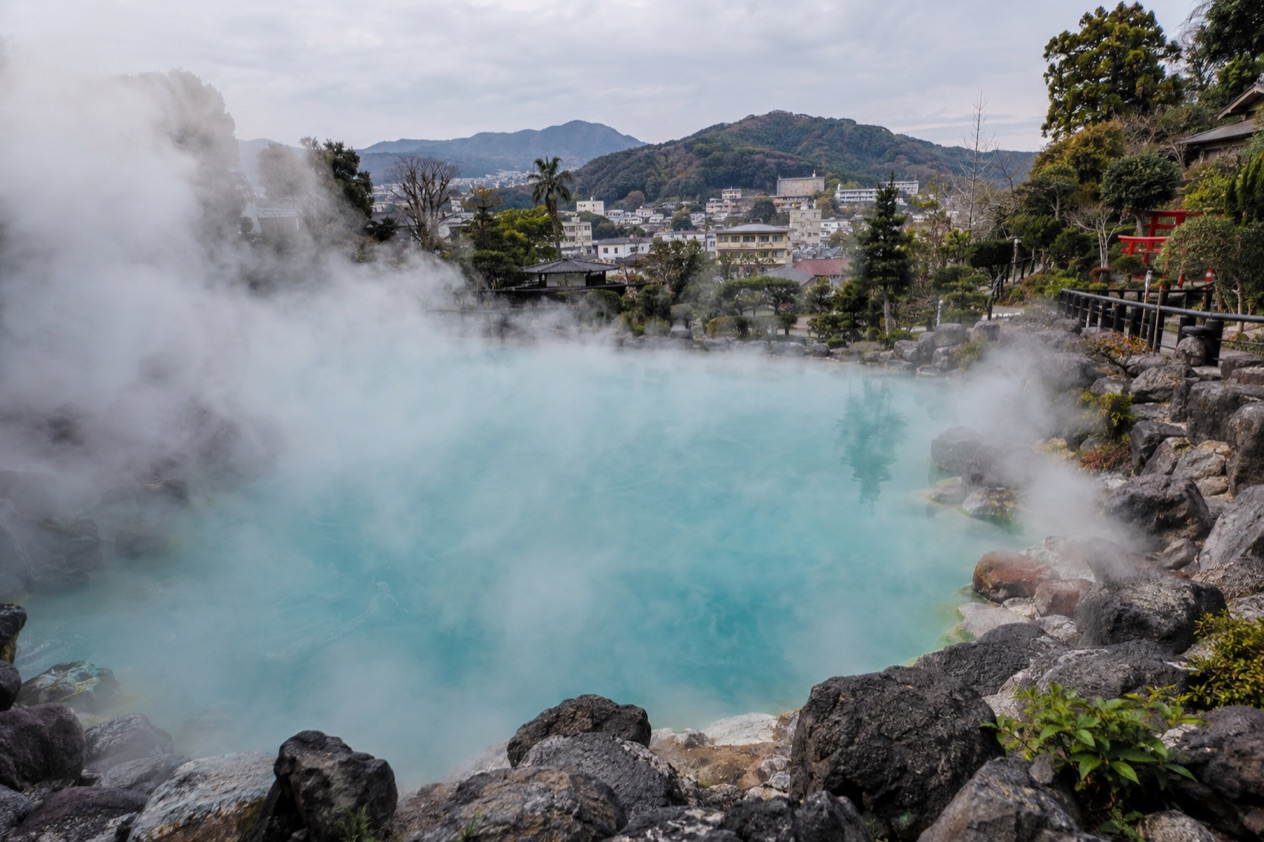
Umi Jigoku, the Sea Hell, is known for its vibrant cobalt-blue water that sends up clouds of white steam. Other hells in the group are known for a pond in red or a pond in milky white, and for gray mud that bubbles up like the shaved head of a monk.
Kamado Jigoku, the furnace hell, once cooked rice over its vents, and the name still points to that old use. The eight hells are meant for looking, so plan on strolling, taking photos and stopping for snacks.
The hells keep the same schedule, so a morning start gives you time to see several and still have the afternoon free for a bath.
| Site | Open |
|---|---|
| The eight hells (Jigoku), Kannawa | 08:00-17:00 (Tatsumaki-Jigoku may stay open a little later after its geyser’s last eruption) |
Tatsumaki-Jigoku, the tornado hell
Tatsumaki-Jigoku is one of the most active geysers in the world, and it works like clockwork. It erupts every 30 to 40 minutes, and each eruption lasts about 5 minutes. Visitors sit on benches facing the vent and wait for the water to shoot up beneath a small stone cover that keeps it from reaching too high.
The wait is part of the fun. People chat, eat an ice cream, check their phones and then gasp together when the geyser fires. You can see an eruption and still have time to visit the next hell. The geyser is a good stop for travelers with children, since the show repeats and nobody needs to hurry.
Soaking in the onsen
With more than 150 bathing facilities, the choice is wide. There are hotel baths with open-air pools, public bathhouses that serve locals, and baths tucked into ryokan, the traditional inns.
If you want something different, the stamp rally gives you a reason to try a new bathhouse every day, one stamp at a time.
Eating food cooked by steam
Beppu cooks with its vents. Jigoku-mushi, or hell-steamed food, means vegetables, seafood, eggs and sweet potatoes steamed over natural vents, which gives them a clean, slightly mineral flavor. Eggs from the vents are a favorite snack to carry as you stroll between hells.
Beyond the steam, Oita Prefecture is known for toriten, tender chicken fried in tempura batter and dipped in a tangy sauce, and for kabosu, a green citrus squeezed over fish, noodles and drinks. Dango-jiru, a warm soup with flat dumplings and root vegetables, suits a cool evening after a long bath. Small izakaya (casual pubs) near the station serve many of these dishes.
How many days do you need in Beppu?
A long weekend is the right length for Beppu: two nights give you the hells, several baths and a few meals without rushing.
With a short stay, split your time between the two halves of town. Spend one day in Kannawa among the hells, with a stop at Tatsumaki-Jigoku for the geyser, a steamed lunch and a walk up the hill between vents. Spend the other day near the station, trying a public bathhouse, wandering the shopping streets and picking an izakaya for dinner. Add a sand bath or steam bath if you want something unusual.
If you stay for three or four nights, the stamp rally becomes a fun game. You might hop between neighborhoods, trying baths in several of the eight zones and noticing how the water changes from one to the next. Some are clear, some milky, some smell strongly of sulfur.
Adding a day trip
Yufuin is a hot spring town in the same part of Oita, and it is often paired with Beppu because the two are described together as a hot spring region. It makes a change of scene, with a different style of baths and a village of small shops and cafés. Oita city, where the Sonic express terminates, is another outing if you want a city day with a different pace.
Fukuoka, where the Sonic starts at Hakata Station, can be a bigger city stop before or after your hot spring days. Fukuoka can be a bigger-city stop before or after your hot-spring days. A night in Beppu is a good way to close a Kyushu trip, with your muscles loose and your bags light.
Where to stay in Beppu
Stay near Kannawa if the hells and steam are the reason you came, and stay near the station if you want trains and restaurants within reach. Beppu has eight major hot spring zones, and each has lodging with its own baths, so the choice is really about which atmosphere suits you.
Kannawa and the hot spring hills
Kannawa is where most of the hells are, and it has the most atmosphere after dark. Steam rises from vents between houses, and old inns and bathhouses line the streets. Staying here means you can walk to the hells in the morning and return for a bath at the end of the day. It suits travelers who want to feel the geothermal world around them.
Many ryokan in a hot spring area have their own baths, and a stay often includes a multi-course dinner of local dishes and a breakfast served in your room or a dining hall. After a bath you change into a yukata and slippers, and futons are laid out on tatami floors. It is the kind of stay that makes Beppu feel like a retreat.
Around the station
The station side of town suits shorter stays and those arriving on the Sonic. You will find business hotels, shops, restaurants and public bathhouses, and the Kannawa hells lie almost on the opposite side of the city. It is a good base if you plan to use Beppu as one stop in a longer Kyushu trip, or if you want a wider range of places to eat in the evening.
The choice between hotel and ryokan comes down to how much of a hot spring ritual you want: a ryokan makes the bath, the meal and the room part of one experience, while a hotel leaves you free to explore.
How do you get to Beppu and get around?
The Sonic limited express runs twice an hour from Hakata Station in Fukuoka and from Kokura, stopping at Beppu before terminating in Oita.
Arriving by train drops you at the station side of town. From there the city opens up in two directions, toward the shops and baths close to the station, and toward Kannawa, where most of the hells sit almost on the opposite side of the city. Think of the station as the starting point for your days and let the layout guide your plan.
Getting around the city
Beppu spreads across a hillside, and its sights sit in separate pockets. The hells cluster in Kannawa, the bathhouses are scattered across different zones, and each zone has its own character. Rather than trying to see everything, pick one zone per outing and spend the day there, moving at the pace of a bath.
Most of the hells are in the Kannawa area. Wear comfortable shoes and bring a small towel for the bath you will want later. Between zones, you can mix walking with local transport depending on your plans.
Hours matter for the hells, which keep a fixed daily schedule. Tatsumaki-Jigoku follows its own rhythm with an eruption every 30 to 40 minutes. If you arrive near the end of the day, pick the geyser first and leave the other pools for another visit.
When is the best time to visit Beppu?
Beppu rewards a visit in any month that suits your own trip, because its main attraction is hot water, and the baths and hells keep going whatever the calendar says. A hot soak tends to feel especially good when the air is cool, and the clouds of steam over Kannawa are easy to see against a crisp background. In warmer weather, the pleasure shifts to the lighter food and the slow evenings after a bath.
What shapes a day here is the clock more than the season. The hells open from morning until late afternoon, and the geyser at Tatsumaki-Jigoku erupts every 30 to 40 minutes. Start with the hells in the morning, take a break for steamed food, and keep the late afternoon and evening for baths. That rhythm works whenever you come.
If you are coming for a particular event, such as a local festival, confirm the dates close to your trip, since they can shift from one year to the next. For the hot springs themselves, you can plan your visit around your other Kyushu stops, and Beppu will fit in as a calm pause between busier cities.
Good to know before you go
The hells are for looking only, since the water is close to boiling, so keep your swimsuit for the baths. Carry a small towel and a bit of patience, because the steam, the stairs and the hillside streets slow you down in a pleasant way.
Bring a few coins for steam-cooked eggs and snacks along the hells route, and keep room in your day for a second bath. The country-wide basics, from payment habits to the rainy and typhoon seasons, apply here as elsewhere in Japan, so plan around the weather as you would for any Kyushu trip.
Sources
- Japan National Tourism Organization, Beppu (https://www.japan.travel/en/destinations/kyushu/oita/beppu-and-yufuin-around/), checked October 11, 2026
- Wikipedia, Beppu, Ōita (https://en.wikipedia.org/wiki/Beppu,_%C5%8Cita), checked October 11, 2026
- Wikivoyage, Beppu (https://en.wikivoyage.org/wiki/Beppu), checked October 11, 2026
- Wikipedia, Beppu Hells (https://en.wikipedia.org/wiki/Beppu_Hells), checked October 11, 2026
All our pages
Things to do
- Beppu Hells (Jigoku Meguri): Seven Steaming Ponds, Sea Hell, Geyser and Crocodiles
- Beppu Onsen: The Hells of Beppu, the Jigoku Meguri Course and Getting Around