
The train slows, the mountain closes over the windows, and a few minutes later the carriages come out into a damp, green-walled harbor town where the clouds sit low on the peaks. That is the way travelers meet Whittier, the small port at the head of Passage Canal where Prince William Sound begins. It is a place to board a glacier cruise, and the one way in and out by road is a tunnel shared with the railroad.
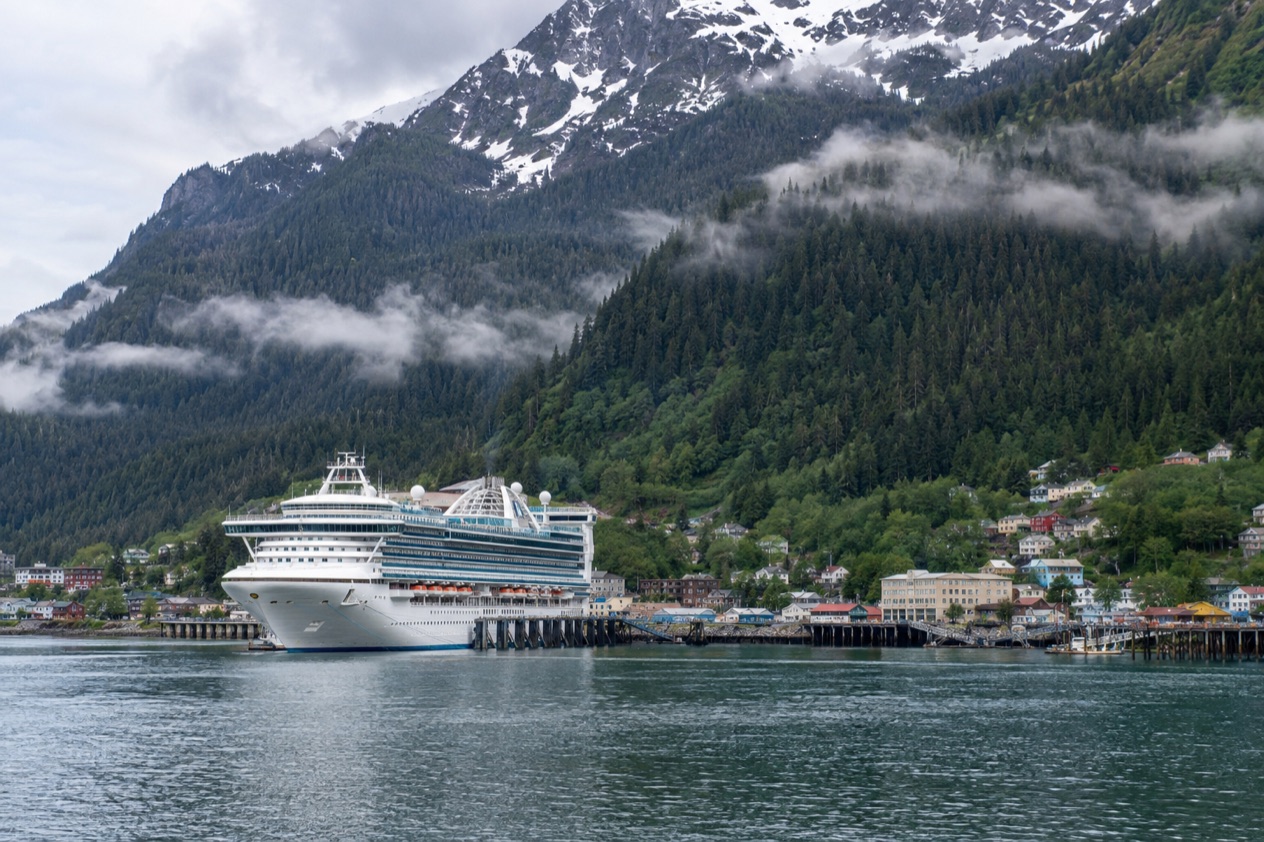
How do cruise ships use Whittier?
Whittier works as the gateway to Prince William Sound: the Alaska Railroad ends its mountain run here, and from the docks glacier and wildlife cruises head out into the sound. The Glacier Discovery Train says so plainly.
At Whittier it passes through a mountain tunnel and provides a connection for a glacier and wildlife cruise in Prince William Sound. The harbor is also a port for the Alaska Marine Highway, and the city runs a seaplane dock.
What waits beyond the harbor is the reason for the stop. Prince William Sound near Whittier holds the world’s largest concentration of tidewater glaciers, the kind that reach the water and sometimes shed ice into it.
A day on the sound is a day of steep fjord walls, waterfalls dropping from the cliffs, and glacier faces seen from the deck. Wildlife is always a chance rather than a promise, so think of any sea otter, seal or whale as a bonus.
The cruise that connects with the train
The train and the boat are built to meet. The Glacier Discovery Train runs from Anchorage through Girdwood to Whittier, and it does so on much the same rails as the Coastal Classic train, with an added turn off the main line down to the harbor.
Once in Whittier, you step from the platform toward the waterfront, where the sound-going boats tie up. The 26 Glacier Cruise is one of the outings that comes up here, and it offers a no-seasickness guarantee, a detail worth knowing if open water makes you nervous. The same train line also reaches other stops, among them Portage, Spencer and Grandview, which the train serves as its turnaround point.
The sound itself: glaciers with college names
College Fjord, in the northern part of Prince William Sound, shows what the region is about. It contains five tidewater glaciers, five large valley glaciers and dozens of smaller ones. Most are named for renowned East Coast colleges, with the women’s colleges on the northwest side and the men’s colleges on the southeast side.
The names date to the Harriman Expedition, which discovered the fjord in 1899. The party included a Harvard professor and an Amherst professor, and they handed out the college names. According to Bruce Molina, author of Alaska’s Glaciers, the expedition members took great delight in ignoring Princeton. It is a small piece of trivia, but it gives the ice a personality when you look at a chart of the sound.
Other ways onto the water
Not everyone goes out on a big boat. Sea kayaking tours launch from the docks in Whittier, and kayak drop-offs are available in more remote parts of Prince William Sound for paddlers who want quiet coves.
Jet ski tours also run on the sound, providing dry suits and expert guides to lead visitors to glaciers and scenic viewpoints. The seaplane dock rounds out the picture, a reminder that the town sees traffic by water, rail, road and air.
How do you get from Whittier to Anchorage?
You leave Whittier the way you came in, either by road through the Anton Anderson Memorial Tunnel or by the Glacier Discovery Train, and either way you pass through the same mountain. Anchorage lies about 58 miles to the southeast as the crow flies. The road link is the Portage Glacier Highway, which joins the Seward Highway at Portage to the Alaska Marine Highway ferry terminal at Whittier, covering 11.59 miles through Chugach National Forest and the tunnel.
By train
The Glacier Discovery Train links Anchorage, Girdwood, Whittier, Portage, Spencer and Grandview. Girdwood gets a brief pause on the way.
Some of the stops can be reached only by train, which makes day trips possible at stations with no road. The railroad describes these outings as suitable for all ages and energy levels. At Portage, passengers may get off to visit the Alaska Wildlife Conservation Center, home to black and brown bears, moose, caribou, wood bison and more.
By road through the tunnel
The Anton Anderson Memorial Tunnel sits on the Portage Glacier Highway and connects Whittier and the Portage Glacier area of Chugach National Forest to the Seward Highway. Speed is limited to 25 miles per hour, so the passage takes about ten minutes from one end to the other. Pedestrians and bicycles are prohibited, with one exception: the annual Walk to Whittier event in June.
| Season | Tunnel open |
|---|---|
| Summer months | 5:30 a.m. to 11:15 p.m. |
| Winter months | 7:00 a.m. to 10:45 p.m. |
A toll is collected from eastbound vehicles. Vehicles owned by the Alaska Railroad, the Alaska DOT&PF, or emergency and law enforcement agencies are exempt, while state government agency or school district vehicles pay a reduced $11.
| Vehicle | Toll |
|---|---|
| Regular vehicle or motorcycle | $13 |
| Vehicle pulling a trailer | $22 |
| Small bus or regular RV | $38 |
| Large bus | $137 |
| Oversize vehicle, 10 to 11 feet wide and 14 to 15 feet high | $330 per use |
The tunnel’s closing hour is the number that matters most for anyone planning an evening in town. The gate times in the table apply to the road, so build the day around them if you are driving out after a cruise.
What can you do before you leave?
Before you head out, you can walk a trail, paddle from the docks, or simply wander a town where nearly everyone lives under one roof. Whittier is nicknamed The Town Under One Roof because almost all of its residents live in the Begich Towers Condominium, a single building that holds the neighborhood. Seeing it gives the harbor a different feel from a typical port village, with the mountains close behind and the sound in front.
Trails above Passage Canal
Whittier has several hiking trails. The Whittier Creek Trail is a short one that follows the creek near town, a way to stretch your legs while waiting for a departure. The Portage Pass Trail is the popular one, with views of Passage Canal and Portage Glacier.
The climate is the thing to plan around. Whittier is extremely wet, receiving an average of 197.31 inches of precipitation a year, so low cloud and rain are part of the setting. Dress for damp air and expect views to come and go with the weather rather than hold steady.
On the water from the docks
Sea kayaking tours launch right from the docks, so you can be on the water without leaving the harbor area. Kayak drop-offs also reach more remote parts of Prince William Sound for those who want to be farther from the town. Jet ski tours provide dry suits and expert guides to lead visitors to glaciers and scenic viewpoints, a livelier way to meet the ice.
If you prefer a larger boat, the glacier and wildlife cruises out of the harbor cover the sound in a day. The 26 Glacier Cruise offers a no-seasickness guarantee, which suits travelers wary of choppy water. Choose by temperament: paddles for quiet, jet skis for speed, a cruise for steady views.
A stop on the way: Portage
If you ride the Glacier Discovery Train, Portage offers a break. Passengers may get off to visit the Alaska Wildlife Conservation Center, which is home to black and brown bears, moose, caribou, wood bison and more. It turns a transfer day into a chance to see animals up close rather than hoping for a distant glimpse.
The train also stops at places reachable only by rail, which opens day trips that suit all ages and energy levels. Spencer and Grandview are among those names on the route. They are worth a look at the map if you have a free day around your cruise.
Where to sleep
Whittier has two small hotels and vacation rentals in the apartment complex where most of the town resides. Visitors choose instead to stay in nearby Girdwood or in Anchorage, and use the train or the tunnel road to reach the harbor. Staying in town means a quieter evening once the day boats are in.
Good to know before you go
Keep the tunnel gate times in mind, since the road is the only way out by car and the hours shift between the summer and winter months. Rain gear belongs in the bag in a town this wet.
The seaplane dock and the ferry terminal are part of the harbor too, so the waterfront can be busier than the size of the town suggests. Whittier is small enough to cover on foot, and the mountains are close enough that every walk ends with a view of the canal.
Sources
- Wikipedia, Whittier, Alaska (https://en.wikipedia.org/wiki/Whittier,_Alaska), checked October 11, 2026
- Wikipedia, Whittier Tunnel (https://en.wikipedia.org/wiki/Whittier_Tunnel), checked October 11, 2026
- Alaska.org, dest whittier (https://www.alaska.org/destination/whittier), checked October 11, 2026
- Alaska Railroad, Glacier Discovery (https://www.alaskarailroad.com/ride-a-train/our-trains/glacier-discovery), checked October 11, 2026
- Wikipedia, Anton Anderson Memorial Tunnel (https://en.wikipedia.org/wiki/Anton_Anderson_Memorial_Tunnel), checked October 11, 2026
- Wikipedia, College Fjord (https://en.wikipedia.org/wiki/College_Fjord), checked October 11, 2026
To plan your stay
- Alaska Cruise in May: Port Weather, Whales and Glaciers, and the Cruise Lines
- Which Side of the Ship for an Alaska Cruise: Glacier Bay, Inside Passage Routes and Balcony Choices
- How Much Does an Alaska Cruise Cost?: Cruise Lengths, What's Included and Extras
- Alaska Cruise in June: Weather, Ports, Wildlife and Glaciers