
On the top deck as a ship slides into a narrow fjord, passengers start pointing at ice, at the water, at the wall of forest, and the question that follows is always the same: what exactly is this voyage going to show us? Royal Caribbean answers with roundtrip sailings from Seattle and Vancouver, stops in small Inside Passage towns, glacier days and an option to continue by land to Denali.
What do Royal Caribbean Alaska cruises offer?
Royal Caribbean offers Alaska as a week at sea built around glaciers, frontier towns and wildlife country, with the option of adding a land journey into Denali National Park. The ship is your hotel and your transport, and each morning you wake up in a different harbor or in front of a different wall of ice.
The line sells three cruise-only itineraries and a set of Cruisetours. The table gives the shape of each one, and the sections that follow describe what you do once you arrive.
| Itinerary | Length | Departs from | Months | Highlight |
|---|---|---|---|---|
| Alaska Adventure | 7 nights | Seattle | June through August | Endicott Arm & Dawes Glacier |
| Alaska Experience | 7 nights | Seattle | May and September only | Roundtrip from Seattle |
| Alaska Inside Passage | 7 nights | Vancouver | May through September | Roundtrip from Vancouver |
| Alaska Cruisetours | 7-night cruise plus 2-6 night land journey | Cruise plus land | See the cruise itinerary | Denali National Park, Hubbard Glacier from Seward |
Days at sea and in port
A cruise to Alaska has a rhythm that suits people who like to see a lot without repacking. Mornings often start with coffee on a balcony or an open deck while the coastline slides past, and afternoons are for excursions ashore or for the ship’s own entertainment. Evenings return you to dinner, shows and a ship that has moved on while you slept.
The ports are small and the scenery is big, so most of what you do is outdoors: whale watching, kayaking, forest walks, a train ride or a visit to a totem park. Between ports, the days spent cruising through fjords and past ice are the ones many passengers remember best.
What the ships bring with them
Royal Caribbean’s fleet is known for ships packed with things to do, and the classes differ. Quantum-class ships carry the North Star observation capsule, mounted on the end of a crane arm that stretches 135 feet and lifts passengers high above the deck for a wide view. Freedom-class ships have the FlowRider surfing simulator, the H2O Zone water play area for kids, a boxing ring and hot tubs cantilevered over the side of the ship.
Icon-class ships are the largest cruise ships ever built and run on liquefied natural gas. Which class is assigned to a given Alaska sailing is something to look at when you pick a date, since the onboard experience changes with the ship.
Adding Denali by land
A Cruisetour joins the week at sea to a land journey of between two and six nights, ending in or passing through Denali National Park. The park can be explored on a guided Cruisetour, so the days on land are organized rather than left to you to plan from scratch.
This suits travelers who want both the coast and the interior in one trip: ice and fjords first, then the mountain country that Denali is known for. The wildlife of the park is a chance rather than a promise, and the mountain itself depends on the weather for being seen.
Which routes does Royal Caribbean sail?
Royal Caribbean sails Alaska on roundtrip itineraries from two ports, Seattle and Vancouver, plus Cruisetours that pair a sailing with a stay in the interior. Your choice mostly comes down to where you would rather start and in which month you want to go.
Alaska Adventure from Seattle
The Alaska Adventure sails roundtrip from Seattle from June through August, a stretch that covers the heart of the summer season. Its named highlight is Endicott Arm & Dawes Glacier, a fjord that cuts into the mountains and ends at ice.
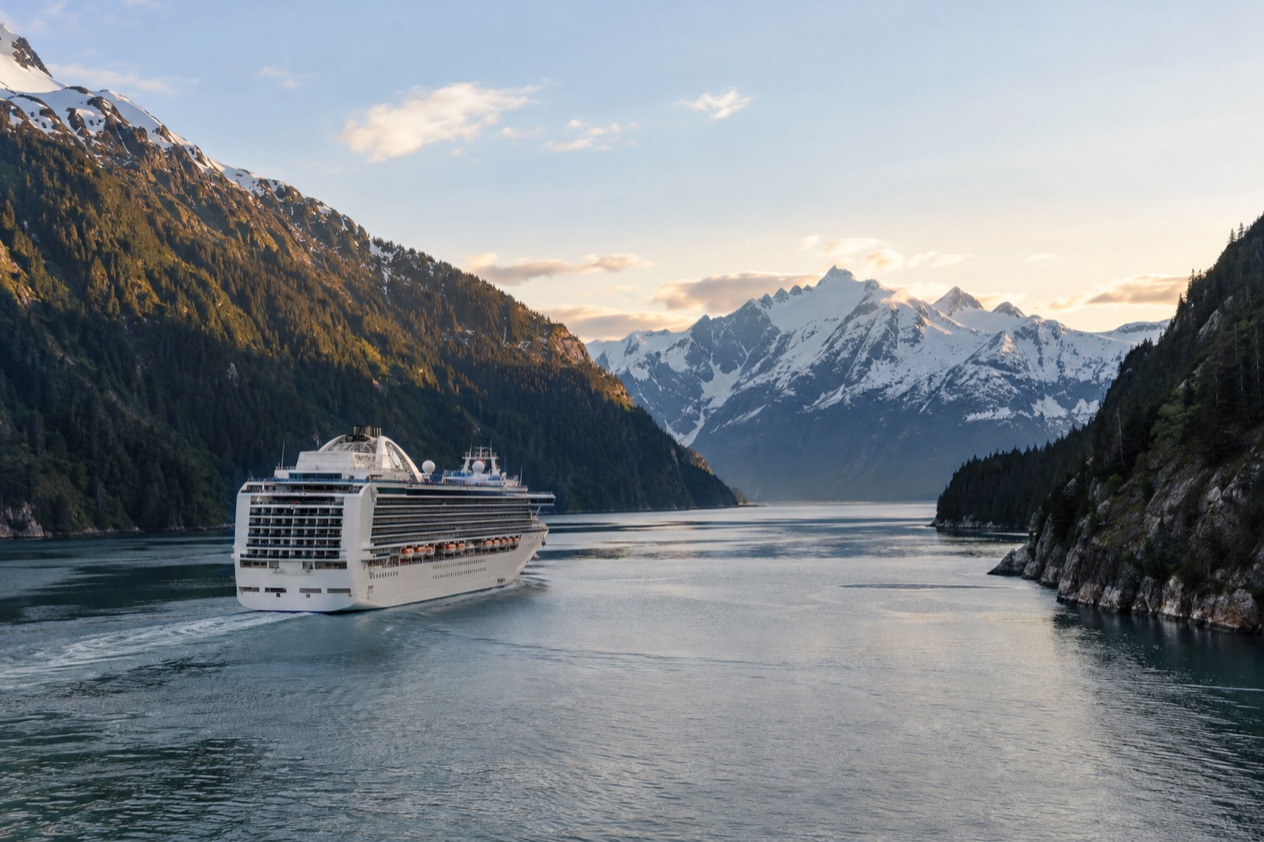
A day like this is about slowing down. The ship moves up a narrow waterway between steep walls, and passengers gather on the decks to watch for ice in the water and for the glacier at the end. Seals and birds may appear, though nothing is guaranteed. Dress for the deck rather than for the dining room, and bring a camera ready to use.
Alaska Experience from Seattle
The Alaska Experience also sails roundtrip from Seattle, but only in May and September. These are the bookend months of the season, which means the same departure city as the Adventure but a different part of the calendar.
For a traveler flexible on dates, the two Seattle itineraries together cover the span from May to September, with the Adventure taking the summer months in between. Leaving from Seattle also means that the start and end of the trip are in a U.S. city, which travelers find convenient for flights.
Alaska Inside Passage from Vancouver
The Alaska Inside Passage sails roundtrip from Vancouver from May through September, so it covers the full season rather than a part of it. The name points to the sheltered waterways that wind between islands and the mainland, where the ship stays in calmer channels and the scenery stays close.
If your dates fall in May or September, you can choose between Vancouver and Seattle. In June through August, the Seattle Adventure and the Vancouver Inside Passage run side by side, and the choice becomes a matter of which city you would like to spend time in before or after the cruise.
Cruisetours with Seward and Hubbard Glacier
From Seward, Alaska Cruisetours visit Hubbard Glacier, the largest tidewater glacier in North America. A tidewater glacier is one that flows all the way to the sea, which is why it is such a striking sight from the water, with a face of ice rising directly out of it.
The Cruisetour pairs that coastal sailing with a land journey that includes Denali National Park. It is the longest way to see Alaska with Royal Caribbean, and the one that adds the most variety: sea, ice, forest and mountains in a single trip.
Where do the ships go?
The ships call at the towns of the Inside Passage and reach the ice at Endicott Arm, Dawes Glacier and Hubbard Glacier. Each port has its own character, and what you do ashore depends on whether you prefer wildlife, history, paddling or simply walking through town.
Juneau
In Juneau, visitors can go whale watching in Auke Bay Harbor or take a tundra trek over Mendenhall Glacier. The town is tucked between mountains and water, and the glacier gives the visit a backdrop of ice just beyond the streets.
The two outings suit different moods. One keeps you on the water, watching for a whale’s blow or fluke, a chance and not a certainty. The other puts you on foot in open country with the glacier in view. Either way, Juneau is a port where the outdoors starts almost at the dock.
Ketchikan
Ketchikan is the gateway to Tongass National Forest, the largest national forest in the United States, where bears, eagles and wolves can be seen. The forest is dense and green, and the town sits right at its edge, so the wildlife talk here is real, though sightings are never promised.
The town is also home to three Indigenous tribes, and colorful hand-carved totems line its streets and parks. Walking among them is a good way to see how art and heritage show up in daily life here. Take your time in front of each pole, because the carved figures reward a closer look.
Skagway
Skagway was the starting point for gold stampeders heading to the Yukon during the Klondike Gold Rush. That history still defines the town, which feels like a place where people once arrived with big hopes and heavy loads, and set off into the unknown.
A visit here is a chance to step into that story. Wooden storefronts and the sense of a frontier past make it the port for travelers who like history more than wildlife.
Sitka and Icy Strait Point
In Sitka, you can kayak Sitka Sound alongside sea otters or fly fish for the world’s biggest halibut. The kayak option puts you low on the water in a sheltered sound, where otters may float nearby, while the fishing is aimed at anglers who want a story to take home.
Whale watching is also offered off Icy Strait Point, giving a second chance to look for whales on the itinerary. Neither port is a guarantee, but both put you in waters where watching for wildlife is the whole point of the outing.
Endicott Arm, Dawes Glacier and Hubbard Glacier
The glacier days are the ones where the ship itself is the excursion. At Endicott Arm and Dawes Glacier on the Alaska Adventure, and at Hubbard Glacier on the Seward Cruisetours, you stay aboard and the scenery comes to you.
Hubbard is notable for being the largest tidewater glacier in North America. Passengers tend to gather at the rails, quieter than usual, listening for cracks from the ice. Whether the glacier sheds pieces while you watch is up to the ice, so treat it as a possibility only.
Good to know before you go
Royal Caribbean’s Alaska sailings are tied to months: the Alaska Adventure runs June through August, the Alaska Experience runs only in May and September, and the Alaska Inside Passage runs May through September. Match your travel dates to the itinerary you want before anything else, and remember that the Cruisetours add a land journey to the cruise. Pack for outdoor days at the rail and on shore, since most of what you will do here is out in the open.
Sources
- Royal Caribbean, Alaska cruises (https://www.royalcaribbean.com/cruise-destinations/alaska-cruises), checked October 11, 2026
- Wikipedia, Royal Caribbean International (https://en.wikipedia.org/wiki/Royal_Caribbean_International), checked October 11, 2026
To plan your stay
- Alaska Cruise in May: Port Weather, Whales and Glaciers, and the Cruise Lines
- Alaska Cruise Ports: Ketchikan, Skagway, Sitka, Icy Strait Point and Where Cruises Start
- How Much Does an Alaska Cruise Cost?: Cruise Lengths, What's Included and Extras
- Alaska Cruise in June: Weather, Ports, Wildlife and Glaciers