
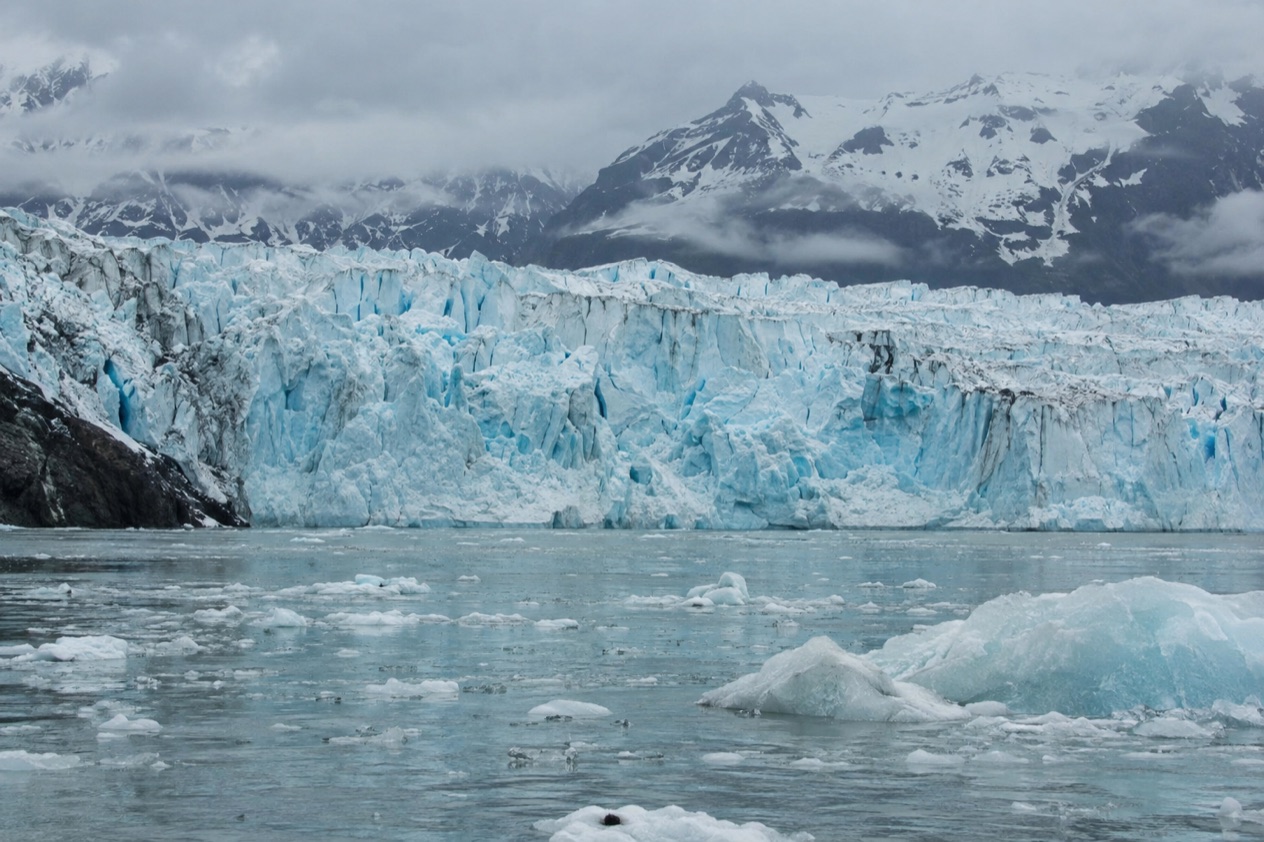
The first thing you notice is the sound, a low crack like distant thunder, and then the water around the boat is full of drifting ice in every shade from milk white to deep blue. Columbia Glacier ends in Prince William Sound as a tidewater glacier, a river of ice that meets salt water and sheds itself in pieces. The visit is a day on the water out of Valdez, a town ringed by mountains, and it is about ice, open water and the long approach as much as the glacier itself.
Is visiting Columbia Glacier worth it?
Yes, if you like your scenery big, cold and moving, and you are happy to spend most of a day on a boat in a fjord landscape rather than walking to a viewpoint. It suits travelers who already plan to be in Valdez, photographers, people who like wildlife watching as a chance rather than a promise, and anyone who wants to see what a glacier does when it reaches the sea.
What sets it apart from the other ice near town is the setting. Valdez has five nearby glaciers reachable by sea, land and air, and some can be seen from the road or from a kayak among small icebergs on Valdez Glacier Lake. A tidewater glacier is a different experience: you come to it through the sound, past forested islands and steep fjord walls, and the ice stands in front of you with its face dropping straight into the water, with bergs scattered across the bay.
It is also a trip that gives you the whole sound, not just one landmark. Sightseeing of marine life and glaciers is one of the pillars of the tourist industry in Valdez, and a day out here shows why.
You may also pass seabirds, seals or sea otters on the way, though none of that is guaranteed. If you want something that happens indoors or within an hour, look at the museum and the trails near town instead.
What to see at Columbia Glacier
The ice face
A tidewater glacier is a living wall. Seen from the water, the front is a jagged cliff of ice with towers, caves and creases, and its color shifts with the light and the cloud cover, from gray-white to an almost electric blue where the ice is densest. The surface is streaked with dark lines of rock and dust carried down from the mountains.
Watch and listen. Calving, when chunks break off and fall into the water, can be a muffled rumble or a sudden crash followed by a swell that rocks the boat. It is a chance, not something to count on, so give the face time and scan the whole front instead of staring at one spot. Binoculars and a camera with a good zoom suit this view.
Icebergs in the bay
Long before you reach the face, the water fills with ice that has already let go. Icebergs here range from pieces the size of a car to shapes as big as a house, sculpted by melting into arches, spires and smooth blue bowls. Floating ice is also where seals sometimes rest, so look carefully at the flat tops of bergs as you pass.
The ice field is why boats keep a respectful distance from the glacier. The bay can be crowded with floating ice, and the way a boat picks a path through it is part of the show. The sound of small pieces tinkling and popping against the hull is one of the quiet pleasures of the day, and the cold air that comes off the ice is noticeable on deck.
Prince William Sound on the way
The coastline of the sound is convoluted, with many islands and fjords, several holding tidewater glaciers, and most of the land around it belongs to Chugach National Forest, the second largest national forest in the country. From the boat that means dark spruce and hemlock to the shoreline, waterfalls dropping from cliffs, and snowy peaks stacked behind each other.
The sound was named in 1778 by James Cook, first as Sandwich Sound and later for Prince William Henry, the young son of George III. Spanish explorer Salvador Fidalgo followed in 1790 and gave names to many features, including Port Valdez. Keep an eye out for sea otters floating on their backs, harbor seals, eagles and seabirds. All of them are chances rather than promises.
Port Valdez, where the day begins
Valdez sits at the head of a fjord, and the boat journey begins by working out through the long arm of water that the town takes its name from. Valdez is the northernmost ice-free port in North America, and it is also the southern end of the Trans-Alaska Pipeline System, so tankers and working boats share the harbor with fishing boats and sightseeing vessels.
The town carries its history openly. The tsunami from the Good Friday earthquake in 1964 destroyed the old town, and in 1989 the oil tanker Exxon Valdez ran aground on Bligh Reef after leaving here. Both events are part of how people in Valdez talk about the sound today, and the water you cross is the same water.
Hours, tickets and rules
A glacier has no gate, and the cruise is a day on the water, so the hours that matter on land belong to the town’s own stops. The visitor center is the place to start for questions about the sound, and the museum is the natural rainy-day or before-the-boat stop.
| Site | Open |
|---|---|
| Valdez Visitors Center, May 1 to August 31 | Monday to Friday 9AM to 5PM, Saturday and Sunday 10AM to 6PM |
| Valdez Visitors Center, September 1 to April 30 | Monday to Friday 9AM to 4PM |
| Valdez Museum | Daily 9AM to 5PM |
On the practical side, Valdez has no public transport, though car and bike rental are available. There is no scheduled ferry between Whittier and Valdez, even though Valdez is a port of call in the Alaska Marine Highway system. Weather in Valdez can ground or delay flights, which is why the advice for the trip home matters. The pronunciation is local: say val-DEEZ.
How to get to Columbia Glacier
You reach the glacier by water, and the water starts in Valdez. Getting to Valdez is its own journey. The only road into town is the Richardson Highway, which crosses Thompson Pass and runs through Keystone Canyon, and both are dramatic enough to count as sightseeing.
By car from Anchorage or Tok
From Anchorage the drive takes 6 to 7 hours. You take the Glenn Highway for 4 hours to Glennallen, then the Richardson Highway for 2 hours to Valdez. From Tok, the drive is approximately 4.5 hours. Rental cars are available in town, and since Valdez has no public transport, having a vehicle or a bike is how most days on land work.
Just before town, Thompson Pass has spectacular waterfalls and glaciers next to the highway. It is known for treacherous driving conditions during the winter, so the pass is part of the scenery and also part of the planning if you travel in the cold months.
By air from Anchorage
Ravn Alaska offers near-daily flights from Anchorage to Valdez Airport, taking 45 minutes. The flight swaps hours of highway for a view of the Chugach Mountains and, on a clear day, a first look at the glaciers of the sound.
Weather in Valdez can ground or delay flights, so travelers should leave a day between returning to Anchorage and their flight home. It is the single piece of scheduling advice worth taking seriously on this trip.
By ferry
Valdez is a port of call in the Alaska Marine Highway ferry system, so the ferry is one way to reach the town by water. There is no scheduled ferry between Whittier and Valdez, so do not plan a loop from one to the other on a ferry.
When to visit Columbia Glacier
Valdez does its sightseeing of marine life and glaciers as part of a wider tourist season, and the town’s services shift with the calendar. The visitor center keeps longer hours from May 1 to August 31, with weekend hours too, and shorter weekday-only hours from September 1 to April 30. That is a reasonable sign of when the town is busiest on land.
Time of day on the water is a matter of light and mood. Early hours often bring still air and soft light on the ice, and the blue in the glacier looks deeper under cloud than in flat sun. A gray, damp day is not a loss here. Mist hanging on the fjord walls and the sound of ice cracking in quiet air are part of what people remember.
Winter in Valdez is another world. The town is the snowiest city in the United States, with more than 300 inches a year, and in the Chugach Mountains the snow is deeper still.
The winter town is about heli-skiing, Sno-Cat skiing, snowboarding, cross-country skiing and ice climbing on frozen waterfalls, not about sightseeing boats. If the glacier cruise is your reason to come, check which months a boat operator runs with the operator itself.
Tips for your visit
Think of the glacier as the centerpiece of a Valdez stay, not a stop on a schedule. The day on the boat is long enough that it is better to arrive in town the day before, and to leave a buffer at the end if you have a flight home, since weather can interrupt flights.
Around the town
The Valdez Museum is a good place to understand the earthquake, the pipeline and the gold-rush roots of the town before you set out. It is open daily, which makes it useful on a day when the weather is bad. The visitor center is the other early stop for maps and information on the sound.
On foot, the Mineral Creek Trail is an easy 1.75-mile round trip through a valley filled with mountains and waterfalls. It is a good way to stretch your legs and see the landscape from the opposite side, on land.
More ice, water and fish
If one glacier is not enough, Valdez Glacier Lake lets you kayak among icebergs that have calved from the glacier there. It is a smaller scale of the same story, and it shows ice up close in a way a large boat cannot. Thompson Pass, with its waterfalls and glaciers beside the highway, makes a scenic drive from town in the right conditions.
The waters around Valdez feature every kind of salmon and huge halibut, and the town hosts competitive fishing derbies. Deep-sea fishing is one of the town’s main visitor activities, so a day on the water does not have to be only about the ice. Three public use cabins in Shoup Bay State Marine Park near Valdez suit those who want to stay on the shore of the sound.
Good to know before you go
Valdez is a small town at the head of a fjord, and distances between services are real, so plan your fuel, meals and rental needs in town before heading out. The sound is a place of cold water and changing weather, and the land around it is shaped by earthquakes, tides and a snow load that few places match.
One more reminder: leave a spare day before a flight home from Anchorage. Barry Arm, another fjord in the sound, has had its own warning about unstable slopes, so the sound is a landscape that is still moving.
Sources
- Wikipedia, Valdez, Alaska (https://en.wikipedia.org/wiki/Valdez,_Alaska), checked October 11, 2026
- Wikivoyage, Valdez (https://en.wikivoyage.org/wiki/Valdez), checked October 11, 2026
- Alaska.org, dest valdez (https://www.alaska.org/destination/valdez), checked October 11, 2026
- Wikipedia, Prince William Sound (https://en.wikipedia.org/wiki/Prince_William_Sound), checked October 11, 2026