
You step into a large atrium where daylight pours over the floor and the quiet of a gallery sits just beyond it. The Anchorage Museum at Rasmuson Center stands in downtown Anchorage, and it makes a rainy afternoon or a cold day a good one for understanding the state before you head out to see it.
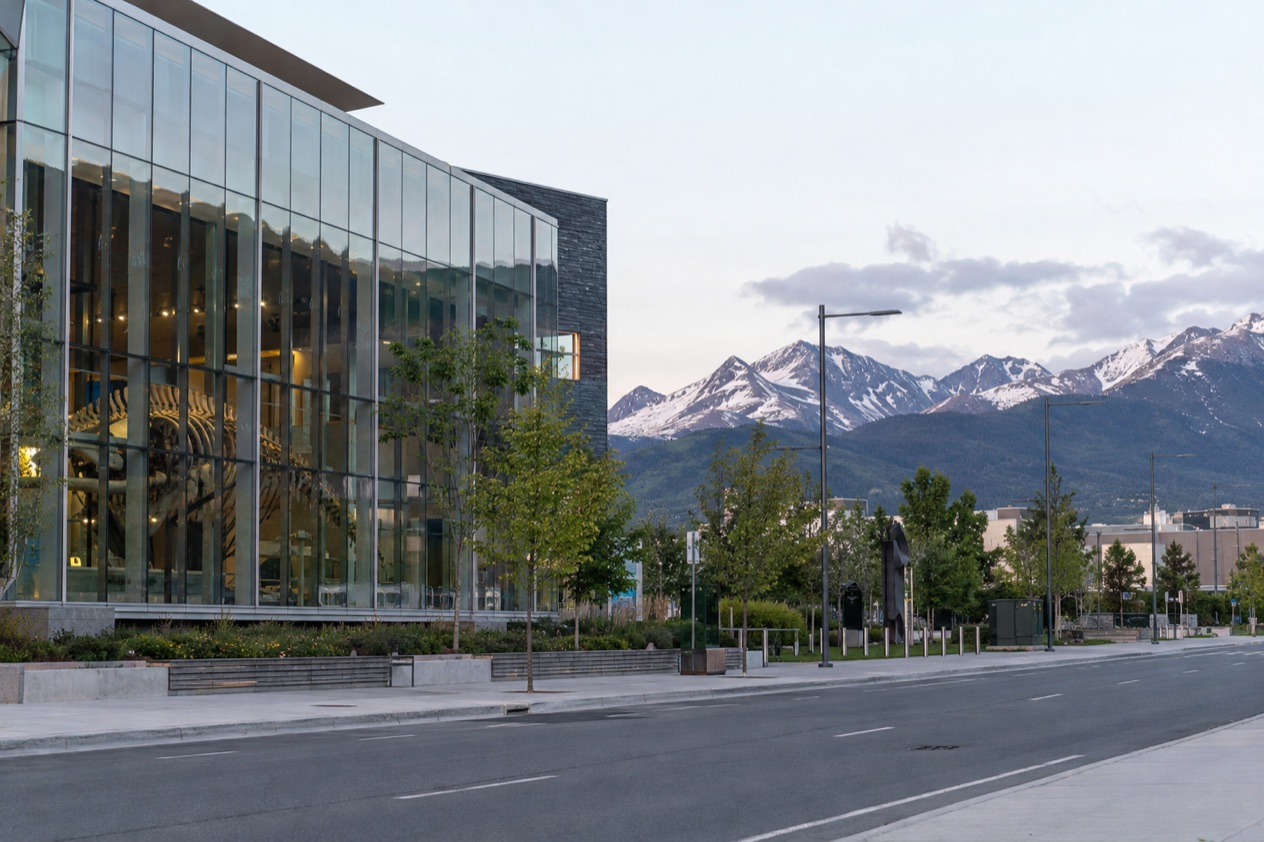
Is visiting the Anchorage Museum worth it?
Yes, especially if you want Alaska explained before or after you see it, and it suits art lovers, history readers and families alike. The museum is a large one that brings art, history, ethnography, ecology and science under a single roof, so a visit moves from a landscape painting to a parka to a hands-on experiment without feeling like three different outings. It opened in 1968 and now welcomes over 180,000 visitors a year, which tells you it is a working part of city life and not only a stop for travelers.
Anchorage has several museums and historical attractions that tell the story of Alaska’s Russian, Native, gold rush and pioneer past, and they are good companions. What sets this one apart is its range and its scale.
It is the place in town where Alaska Native objects on long-term loan from the Smithsonian share a building with a gallery of paintings, a science center and a restaurant, so you can spend a long, unhurried visit without leaving the block. Condé Nast Traveler has named it among its Top 50 Museums to Visit in the U.S., a sign that it holds its own against much bigger cities.
It also sits on the traditional homeland of the Eklutna Dena’ina, and the museum recognizes and honors the land, culture and language of the Dena’ina people. That context colors the whole visit, because you are learning about Alaska on ground that has a much longer story than the city around it.
What to see at the Anchorage Museum
The permanent exhibits fall into a few clear parts: the art galleries, the Alaska history gallery, the Smithsonian Arctic Studies Center and the Imaginarium Discovery Center. Each has a different mood, so it helps to decide which ones you most want and let the rest be a bonus.
The Art of the North galleries
Seven galleries on the ground floor are devoted to the Art of the North collection. This is where the northern landscape becomes subject matter, in paintings, prints, sculpture and contemporary work by artists who have lived with the light, the weather and the long winters. Walking through them is a way to see how Alaska has been imagined over time, from the grand and romantic to the personal and modern.
Look for how artists handle snow, water and mountains, and for the places where Alaska Native traditions and newer ideas meet in a single work. The galleries reward slow walking more than speed, and they set up everything you will see on the road afterward.
The Sydney Laurence gallery
An entire gallery holds paintings by Sydney Laurence, perhaps Alaska’s best known artist. His canvases of Denali and of misty, moody northern scenes became a kind of visual shorthand for the territory in the early days of its settlement. The mountain glows, the sky fills most of the frame, and a few small human touches remind you of scale.
Spend a little time in front of one or two paintings and then step back across the room. Seen from a distance, the brushwork settles into light, which is why his work keeps drawing people in. It is a good gallery to visit before you see the real mountains and compare what you remember.
The Alaska history gallery
The history gallery is where the Alaska timeline gets its objects and its faces. Anchorage’s museums broadly cover the city’s Dena’ina Athabascan heritage, Russian influence, gold rush years and railroad history, and this gallery gives that story a physical form. Expect tools, photographs and everyday items that show how people lived, traveled and built communities in a hard climate.
It is a useful stop if you have been wondering why Alaska has Russian Orthodox churches, why a railroad shaped a city, or how many peoples have called this region home. The gallery helps those questions click into place.
The Smithsonian Arctic Studies Center
The Smithsonian Arctic Studies Center features Alaska Native artifacts on long-term loan from the Smithsonian Institution. These are objects made for use and for meaning, from clothing and tools to ceremonial pieces, and they speak to the lifestyles, beliefs and traditions of several distinct peoples rather than one single Native culture.
Read the labels carefully, because the details matter: materials, region and purpose show how closely the objects were tied to land and animals. It is among the most thoughtful parts of the building, and one that gives context to any cultural stop you make later in the state.
The Imaginarium Discovery Center
The Discovery Center offers hands-on exploration of Alaska’s natural wonders, through the Imaginarium science galleries. It is where the museum turns from looking to touching and testing, with exhibits about the forces that shape the north, from ecosystems to the land itself.
Children tend to head here first, but adults linger too, because the science explains what you will see out the window on a drive or a flight. Pair it with the art galleries for a balanced visit, so the day does not tilt entirely toward quiet looking or entirely toward play.
Hours, tickets and rules
The museum welcomes visitors year-round, whether on a snowy winter day or in the long light of summer. That makes it a dependable plan in any weather. The museum also offers private and guided tours for those who want a more directed visit.
| Site | Open |
|---|---|
| Anchorage Museum at Rasmuson Center | Year-round |
Beyond its galleries, the building includes a 230-seat auditorium, two classrooms and a large atrium, plus the Muse restaurant and a gift shop. The library’s titles are accessible to students, scholars and the public through interlibrary loan on the web, a useful detail for anyone digging deeper into Alaska subjects after the trip.
How to get to the Anchorage Museum
The Anchorage Museum sits in walkable downtown Anchorage, so the simplest base is a downtown hotel or any stay in the city center. From there, you can treat the museum as part of an on-foot exploration of the neighborhood rather than a trip that needs its own planning.
Downtown Anchorage is compact enough that a museum visit slots in with other city stops. Many of the city’s other museums and cultural centers, which present Russian, Native, gold rush and pioneer history, belong to the same wider picture, and the arts scene adds galleries and concert venues to the mix. You can plan a day that mixes the museum with a stroll and a meal, and let the rhythm of downtown set your pace.
If you are staying outside downtown, the museum is still the city’s cultural anchor, and it is worth building into a day in the center. Fit it in as one of the main stops, then spend the rest of your time nearby.
When to visit the Anchorage Museum
Any month works, because the museum is open year-round and its galleries do not depend on weather. That is the real advantage of a museum in a state where so much else is seasonal. It is the plan to keep in your pocket for the days when low clouds hide the mountains or snow makes outdoor plans unappealing.
In winter, a visit feels cozy, a warm room full of art and stories while the city outside is cold and dark early. In summer, the same galleries offer a cool, quiet break from long days of sightseeing, and the long light outside makes the interior feel like a pause. Either way, the exhibits do the same work, which is to give you a sense of the place.
A good time to go is early in your trip, before you head into the wider state. The Art of the North galleries, the history gallery and the Arctic Studies Center give you names, images and ideas that you will recognize later in the road, on a train or at a park. If you come at the end of the trip instead, the museum becomes a way to tie everything together.
Tips for your visit
Pick two or three priorities and let them shape the day. If art is your interest, spend your time in the Art of the North galleries and the Sydney Laurence gallery. If you are traveling with children, the Discovery Center is the obvious anchor, and the rest can be a shorter look. If you care about Alaska Native cultures, give the Smithsonian Arctic Studies Center real time, and read the labels.
The Muse restaurant and the gift shop make it simple to build a break into the middle of the visit, and the large atrium is a pleasant place to sit and take stock between galleries. Families will appreciate that the museum has so many different kinds of spaces, so a restless child and a patient adult can both find something suitable.
Because the museum is downtown, you can combine it with other city stops that deepen the story, including other museums and cultural centers that cover the Dena’ina Athabascan heritage, Russian influence and railroad history. A private or guided tour is available if you would rather have the collections explained than wander alone. Pair the museum with the city’s galleries and concert venues if you want an evening of culture to follow a daytime visit.
Good to know before you go
The museum is open year-round, so a change of weather or season does not take it off your list. Its location in walkable downtown Anchorage makes it a natural part of a city day. Take a moment at the start to remember that you are on the traditional homeland of the Eklutna Dena’ina, which the museum honors, and carry that awareness through the galleries and beyond.
Sources
- Anchorage Museum (https://www.anchoragemuseum.org/visit/), checked October 11, 2026
- Visit Anchorage, museums and culture (https://www.anchorage.net/things-to-do/museums-and-culture/), checked October 11, 2026
To plan your stay
- Best Time to Visit Anchorage: Long Summer Days, Northern Lights, Weather by Month and Festivals
- Where to Stay in Anchorage: Downtown, Eagle River, Girdwood and Lodging Types
- Anchorage from the Lower 48: Flights, Roads, Ferries and Trains Once You Arrive
- Know Before You Go to Anchorage: Weather, Wildlife, Getting Around and Local Habits