
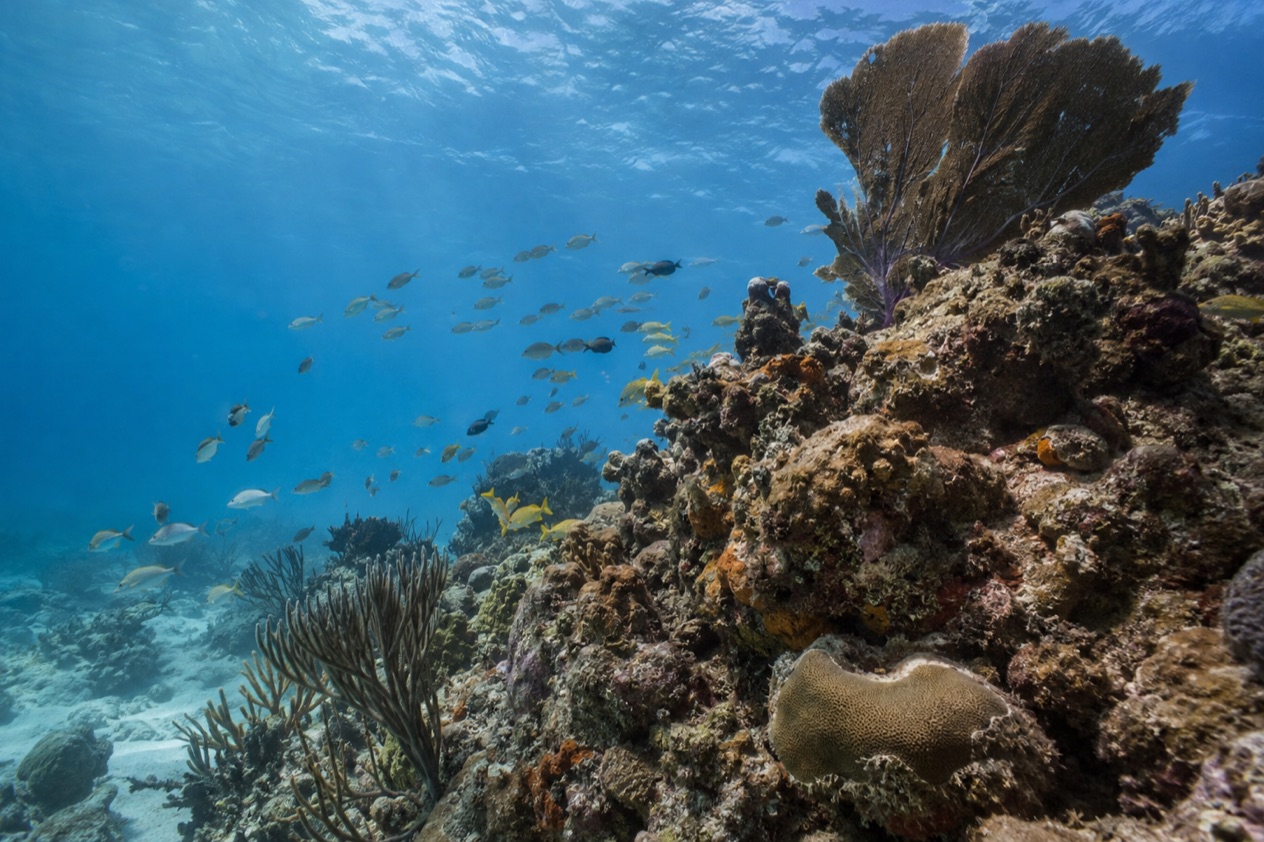
The boat slows over a gap in the reef where the water turns from pale turquoise to a deeper blue, and below you the fish come into focus: snappers hanging in loose clouds, parrotfish grazing on the coral, a nurse shark sliding beneath the hull. Hol Chan is the snorkeling and diving stop that sits just off San Pedro, a protected stretch of reef, seagrass and mangrove. It suits travelers who want to spend time in the water rather than on the sand.
Is visiting Hol Chan Marine Reserve worth it?
Yes, if you want to see a protected reef up close, whether you snorkel or dive, and it makes particular sense for anyone staying on Ambergris Caye or Caye Caulker, since the reserve lies close to both. Hol Chan was established in July 1987 as the first marine protected area in Belize, so the reef you swim over has been looked after for decades.
What sets it apart from other snorkeling spots nearby is the variety packed into one protected area. Within a single outing the habitats change from the reef edge to seagrass meadows and mangrove, and the reserve also includes Shark Ray Alley, where sharks and rays gather at a feeding point.
More than 160 species of fish have been recorded here, along with forty types of coral, three species of sea turtle and three marine mammals. The name itself is Maya for “little channel,” and the channel in the reef is the heart of the place. The reserve is a protected area with rules, so it feels organized rather than wild, and that is part of what keeps the reef healthy.
It is less suited to anyone who dislikes open-water boat trips or does not want to put their face in the sea. For them, the reserve is still pleasant to know about, but the experience is in the water.
What to see at Hol Chan Marine Reserve
The Hol Chan Cut
The cut is the reserve’s namesake, a natural break in the barrier reef in Zone A that is about 75 feet wide and 30 feet deep. Water moves through this gap between the open sea and the shallows behind the reef, and fish gather along its walls. The inside and outside of the reef are both part of this zone, so you are looking at coral formations on either side of the channel.
Look for schools of snapper and grunts, parrotfish working along the coral, and the sponges and soft corals that grow on the reef walls. Snorkeling and diving here are permitted on payment of a fee, and no fishing is allowed in this zone, which is why the reef fish stay so abundant.
Shark Ray Alley
Shark Ray Alley became part of the reserve in 1999, added to protect the sharks and rays that gather at the feeding point. It is Zone D, and it is a second charged snorkeling area alongside the cut. The draw is the animals themselves: nurse sharks and rays moving around you in shallow water, a close encounter that many visitors remember longer than the reef itself.
Because wildlife gathers here around feeding, the water can be busy with animals and swimmers at the same time. Keep to the rules of the reserve, which prohibit disturbing any fauna, and let the animals come to you.
Seagrass beds and mangroves
Behind the reef, Zone B covers the seagrass beds inside the reef, and Zone C covers the mangrove swamps of southern Ambergris Caye. These quieter habitats are the nurseries of the reserve, where young fish shelter among roots and blades of grass. They are less about the dramatic views and more about understanding how a reef system works, with the mangroves and grass feeding the reef beyond.
Zone B also holds Boca Ciega Blue Hole, a sinkhole that opens into a larger underwater cavern. It is dangerous for inexperienced divers and is not regularly visited, so treat it as a curiosity of the reserve’s geography rather than a stop on your outing.
Hours, tickets and rules
Snorkeling and diving in the reserve’s recreational zones require payment of a fee, and the two charged snorkeling areas are the cut in Zone A and Shark Ray Alley in Zone D. You register before you go in the water, and you are informed of the rules first.
| Site | Open |
|---|---|
| Hol Chan Cut (Zone A) | Snorkeling and diving on payment of a fee |
| Shark Ray Alley (Zone D) | Charged snorkeling area |
A person may dive and snorkel only in the recreational zones, only upon registering, and only after being informed of the rules of the reserve. No person may remove or disturb any flora or fauna, including rocks, dead corals, shells or sand, unless authorized by the fisheries administrator. Discharging or depositing waste, garbage or litter into the water or on land is prohibited.
Casting or dragging an anchor in a way that may damage coral or other sensitive habitat is prohibited. Spear fishing and the use of long lines, fish traps, seine nets and gill nets are prohibited, and fishing of any kind without a valid license is not allowed.
How to get to Hol Chan Marine Reserve
The reserve lies about four miles south of San Pedro on Ambergris Caye, so San Pedro is the natural base for reaching it. It is also close to Caye Caulker, off the coast of Belize, and the reserve sits among the cayes rather than on the mainland.
If you are starting from Belize City, a flight to Ambergris Caye takes about 20 minutes, which brings you to the island where the reserve is the nearest marine protected area. From San Pedro, you reach the reserve across the water. Ambergris Caye is the largest of several hundred cayes in the northernmost waters of Belize, and Hol Chan sits at its southern end, along the reef rather than inland.
The distance from San Pedro is 4 miles, and the reserve is a place you visit on the water, in keeping with how its snorkeling and diving zones are organized around the reef.
When to visit Hol Chan Marine Reserve
The reserve is a place of water, reef and wildlife, so the month matters mostly through the sea and the season. The Atlantic hurricane season runs from June 1 to November 30, and that is the part of the calendar to keep in your planning if your dates fall inside it.
The animals themselves are resident: the fish, corals, sponges and sea turtles recorded here belong to the reserve year-round, and the seagrass and mangroves are permanent features. A visit in any month still puts you over the cut and into the habitats described above. The sea is where the experience happens, so pick a day when you are comfortable on a boat and in the water.
Because snorkeling and diving are the point, the best time of day is one when you can spend unhurried time in the water. A morning outing lets you enjoy the cut and Shark Ray Alley before the rest of the day’s plans, and leaves the remainder of your day free on San Pedro or Caye Caulker.
Tips for your visit
Bring the things you would want in the water: a swimsuit, a towel and a camera suited to the sea. The reserve’s rules shape the visit, so the most useful preparation is to know them. Take nothing from the reef, not a shell or a piece of dead coral, and leave nothing behind.
Plan your visit around the reserve’s two charged snorkeling areas, the cut and Shark Ray Alley, since these are the places set aside for recreation. Because you register and hear the rules before entering the water, allow yourself to listen. Combine the outing with time in San Pedro on Ambergris Caye, or with Caye Caulker, both close to the reserve.
If anyone in your group is an inexperienced diver, skip the Boca Ciega Blue Hole, which is dangerous for them and not regularly visited. Snorkelers can enjoy the reef, the seagrass and the animals without going near it.
Good to know before you go
The U.S. State Department rates Belize Level 2, “Exercise increased caution”, because of crime, and says the south side of Belize City has historically had the highest concentration of violent crime.
Hol Chan is a protected reserve covering 102,400 acres of coral reef, seagrass meadows and mangrove swamp, and its rules exist to keep that habitat intact. It now has eight zones, up from the original four, so the area you swim in is part of a larger system. Hurricane season in the Atlantic runs from June 1 to November 30, so travelers visiting in those months should keep an eye on the forecast as they plan their days on the water.
Sources
- Belize Fisheries Department, Hol Chan Marine Reserve (https://fisheries.gov.bz/hcmr/), checked October 11, 2026
- Wikipedia, Hol Chan Marine Reserve (https://en.wikipedia.org/wiki/Hol_Chan_Marine_Reserve), checked October 11, 2026
- Wikivoyage, Ambergris Caye (https://en.wikivoyage.org/wiki/Ambergris_Caye), checked October 11, 2026
- U.S. Department of State, Belize Travel Advisory, Level 2, March 11, 2026 (https://travel.state.gov/), checked October 11, 2026
- NOAA National Hurricane Center, Climatology (https://www.nhc.noaa.gov/climo/), checked October 11, 2026