
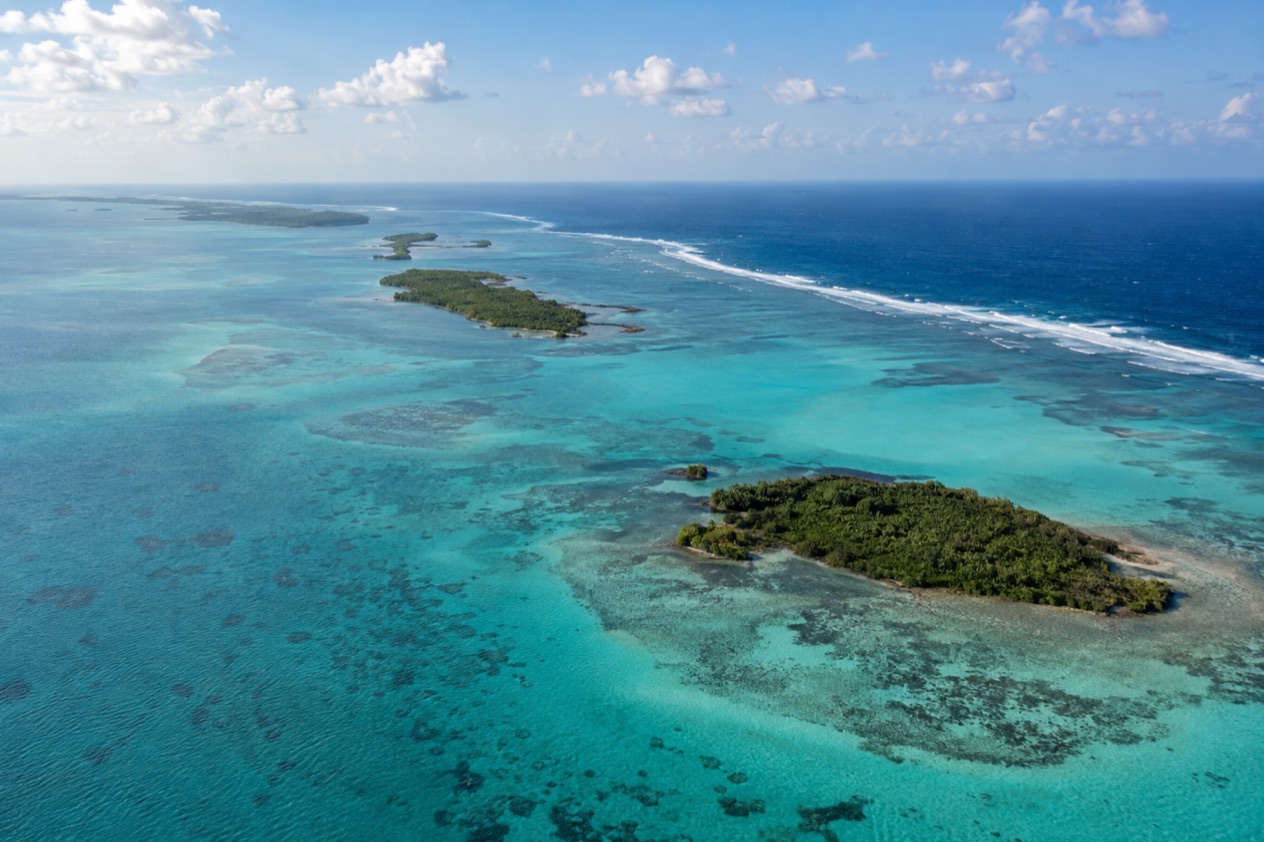
From the window of a small plane, the shallow turquoise of Lighthouse Reef suddenly gives way to a perfect circle of deep indigo, ringed by a pale band of reef. The pilot banks, and the Great Blue Hole slides past one side of the aircraft and then the other. This is the tour that leaves from San Pedro, Caye Caulker and Belize City, and it suits travelers who want to see one of the most photographed natural wonders in the Caribbean.
Is visiting the Great Blue Hole tour worth it?
For most travelers who love dramatic landscapes, big water and a bit of natural history, yes, and it is especially rewarding for anyone who wants to see a sinkhole this size without being a diver. The hole is a circle roughly 1,000 feet across, and from the air its shape and its sudden change of color make sense in a way no photograph quite delivers.
Divers come for a different reason. The primary focus at the Blue Hole Natural Monument is diving the sinkhole, and the stalactites hanging in its walls formed in the Pleistocene era, an estimated 15,000 years ago, when the cave stood above the sea. Snorkelers and divers also report green, hawksbill and loggerhead turtles, and sharks turn up now and then, from lemon and bull to blacktip, plus the endangered great hammerhead.
What sets it apart from the reef sites closer to San Pedro and Caye Caulker is the setting. The Blue Hole sits near the center of Lighthouse Reef, a small atoll far out from the mainland, and visitors generally pair it with Half Moon Caye, where red-footed boobies nest.
The monument includes no land and has no visitor facilities beyond mooring buoys for dive boats, so what you get is open water, reef and sky. The hole was ranked number one on Discovery Channel’s list of the 10 Most Amazing Places on Earth in 2012, which helps explain the fame, though the sight itself does the convincing.
What to see at the Great Blue Hole tour
The sinkhole from above and from the rim
The Great Blue Hole is a marine sinkhole of typical karst limestone, formed before sea levels rose, in at least four stages. Those stages left ledges at depths of about 69, 161 and 299 feet, and analysis of the stalactites shows they grew over many thousands of years. On the scenic flight, the plane makes two revolutions around the hole, one on each side, so both sides of the aircraft get a turn at the window.
The rim looks different from the center. The shallow reef edge reaches about 16 feet deep, slopes gradually to roughly 33 feet and then drops away as a near-vertical cliff. That pale ring of coral and tropical fish is what frames the deep blue so sharply in photographs. Groupers, squirrelfish, angelfish, butterflyfish and midnight parrotfish live around it, along with nurse, Caribbean reef and blacktip sharks.
The flight route over the reef
The scenic tour is more than the hole itself. It includes views of the barrier reef, Shark Ray Alley, Turneffe Atoll, an ocean freighter wreck and Lighthouse Reef. Seen from the air, the reef reads as a long ribbon of pale water running parallel to the coast, with dark patches of coral heads scattered through it.
Non-flash cameras are allowed on the tour, and passengers may carry only one small carry-on bag. Window views are the whole point, so it is worth having your camera ready before the plane reaches Lighthouse Reef.
Half Moon Caye and the atoll
Half Moon Caye is the usual companion stop for boat visitors. It was first set aside as a crown reserve in 1928 to protect a nesting colony of white-phase red-footed boobies and magnificent frigatebirds, and the booby colony is thought to be possibly the only viable breeding colony of its kind in the western Caribbean. The western half of the caye holds a rare surviving atoll siricote forest.
Loggerhead, green and hawksbill turtles have all been recorded nesting on the southeast-facing beach. Visitors to the monument can go birding, camping, diving, snorkeling and picnicking. Dive sites around it include the Half Moon Caye Wall, Angelfish Wall, Elkhorn Forest, Tarpon Caves and Eagle Landing, where divers may find parrotfish, eagle rays, queen conch and stingrays.
Hours, tickets and rules
The protected sites are open during the day, and fees differ for Belizean nationals and for everyone else. Half Moon Caye charges its fee per day, and the Blue Hole monument has its own separate fee.
| Site | Open | Admission |
|---|---|---|
| Blue Hole Natural Monument | 8:00am to 4:30pm | BZ$2.50 nationals, BZ$60 non-nationals |
| Half Moon Caye Natural Monument | 8:00am to 4:30pm | BZD 2.50 per day nationals, BZD 20 per day non-nationals |
Mariners must contact Half Moon Caye park rangers on VHF Channel 16 before hitching onto a mooring or anchoring within the Half Moon Caye and Blue Hole Natural Monuments. On the scenic flight, non-flash cameras are allowed and passengers may carry only one small carry-on bag. Tours with Tropic Air are weather dependent, and bad weather may mean rescheduling or cancellation with a full refund.
How to get to the Great Blue Hole tour
You reach the Great Blue Hole by tour, either in the air or on the water. The hole lies near the center of Lighthouse Reef, an atoll about 43 miles from the mainland and Belize City, and the monument itself has no facilities for independent visitors beyond mooring buoys for dive boats.
The scenic flight
The flight tour has three origin points: San Pedro, Caye Caulker and Belize City. It departs Belize City at 8:30am, Caye Caulker at 8:45am and San Pedro at 9:00am, on Sunday, Monday, Wednesday and Friday. Another scheduled tour listing gives a 1pm departure from San Pedro, Caye Caulker or Belize City Municipal.
Private flights from all stations can depart between 10am and 2pm, which is suggested for the best viewing. Private charters can also extend the time at the Blue Hole for photography. Changes to the tour require 24 hours notice and carry a change fee.
By boat
Tour operators run to the Blue Hole Natural Monument from San Pedro, Caye Caulker, Hopkins and Placencia, and from resorts within the Turneffe and Lighthouse Reef atolls. Half Moon Caye, about 55 miles east of Belize City, is most commonly reached by the same tour operators from the same departure points.
When to visit the Great Blue Hole tour
The flight tours run on set days, so the day of the week matters more than the month. Scheduled departures leave on Sunday, Monday, Wednesday and Friday, with morning flights from Belize City, Caye Caulker and San Pedro, and a separate scheduled tour listed at 1pm.
For the view itself, private flights between 10am and 2pm are suggested for the best viewing, which suits travelers who want the brightest light on the water. Flying later in the day does not change the shape of the hole, but overhead light is what brings out the contrast between the deep blue and the pale reef rim.
The Atlantic hurricane season runs from June 1 to November 30, and flights are weather dependent, so a trip in those months may be rescheduled or cancelled for bad weather, with a full refund on Tropic Air tours. Outside those dates the same weather dependence applies, since it is the conditions on the day that decide.
The monuments themselves keep the same daytime hours throughout the year. Divers and snorkelers report turtles at the Blue Hole, and turtles nest on the southeast beach of Half Moon Caye, though sightings are chances rather than promises.
Tips for your visit
Travel light. Passengers on the scenic flight may carry only one small carry-on bag, and a camera that works without flash is the right tool, since non-flash cameras are allowed. Sit by a window and keep the camera ready, because the plane circles the hole twice, once on each side.
Combine the hole with the rest of the route. The flight also passes the barrier reef, Shark Ray Alley, Turneffe Atoll and an ocean freighter wreck, so you see several landmarks in one trip. Boat visitors generally add Half Moon Caye to their day, where birding, snorkeling and picnicking are on offer.
Divers should know the dive depths. The sinkhole is about 1,000 feet across and 412 feet deep, with a layer of hydrogen sulfide at roughly 300 feet below which the water is dark and devoid of life. At Half Moon Caye, Tarpon Caves can be a shallow dive in 30 to 50 feet of water or a deeper dive along the wall from 60 to 130 feet, and Eagle Landing offers a shallow dive among reef fish, queen conch and stingrays.
If you want more time over the hole for photographs, a private charter can extend the tour. Lighthouse Reef is considered one of the best developed and healthiest reefs in the Caribbean, though it suffers from uncontrolled fishing and tourism despite its protection.
Good to know before you go
The U.S. State Department rates Belize Level 2, “Exercise increased caution”, because of crime, and says the south side of Belize City has historically had the highest concentration of violent crime.
The Blue Hole is far from the mainland and the monument has no visitor facilities, so the practical details of your tour come from the operator. The scenic flight can be changed with 24 hours notice for a change fee, and the Atlantic hurricane season, June 1 to November 30, overlaps with much of the year when weather can disrupt a flight.
The sinkhole is also a place with a serious side. Divers have gone missing in it, and a submarine expedition found the bodies of two of three believed lost. Keep that in mind and listen to your boat crew if you plan to dive.
Sources
- Belize Audubon Society, Blue Hole Natural Monument (https://belizeaudubon.org/bhnm/), checked October 11, 2026
- Belize Audubon Society, Half Moon Caye Natural Monument (https://belizeaudubon.org/hmcnm/), checked October 11, 2026
- Wikipedia, Great Blue Hole (https://en.wikipedia.org/wiki/Great_Blue_Hole), checked October 11, 2026
- Maya Island Air, Great Blue Hole tour (https://www.mayaislandair.com/the-great-blue-hole-tour/), checked October 11, 2026
- Tropic Air, Great Blue Hole tour (https://www.tropicair.com/tropic-air-tours/the-great-blue-hole-tour/), checked October 11, 2026
- Wikipedia, Lighthouse Reef (https://en.wikipedia.org/wiki/Lighthouse_Reef), checked October 11, 2026
- U.S. Department of State, Belize Travel Advisory, Level 2, March 11, 2026 (https://travel.state.gov/), checked October 11, 2026
- NOAA National Hurricane Center, Climatology (https://www.nhc.noaa.gov/climo/), checked October 11, 2026