
Out past the reef edge from Placencia, the water changes from pale green to deep blue, and somewhere over the drop a dark back dotted with pale spots slides just under the surface. That is a whale shark, feeding where the snapper gather to spawn. Gladden Spit is a marine reserve built around that meeting of fish and giants, and a visit here is a day on open water in the south of Belize, with snorkeling or diving at its heart.
Is visiting Gladden Spit and the whale sharks worth it?
Yes, if the idea of sharing the sea with the largest fish in the world appeals to you, and it suits travelers who like being on the water more than being on a beach. The reserve protects the spawning site, the congregating whale sharks and the tourism value of the Silk Cayes, so what you come for is the animals themselves, in the place where they actually gather.
What sets it apart from the other reef outings in Belize is the reason behind it. Many snorkel and dive stops show you a reef.
Here the draw is an event: thousands of grouper and snapper gather at the full moon, and the whale sharks come to feed on the spawning. It is described as one of the largest predictable whale shark congregations in Belize, which is why Placencia and other coastal communities count on it as a tourism resource.
It is also a different kind of visit from the cayes closer to the mainland. Nothing here is a resort or a sandy island to settle on.
The reserve is part of the Belize Barrier Reef, a long chain of reef that runs through the Mesoamerican Barrier Reef System, and you come to look down into it. Bring patience, because wild animals keep their own schedule, and treat the whale sharks as a possibility tied to the season rather than a promise.
Birders and reef lovers get something out of it too. The Silk Cayes hold a nesting colony of terns, and the wider area is a recognized Important Bird Area. For many travelers the whale sharks are the headline and the cayes and the reef fish are the pleasant surprise.
What to see at Gladden Spit and the whale sharks
The reserve is divided into zones, and each one gives you something different to look for. Here are the parts of the visit that stand out.
The whale shark feeding site
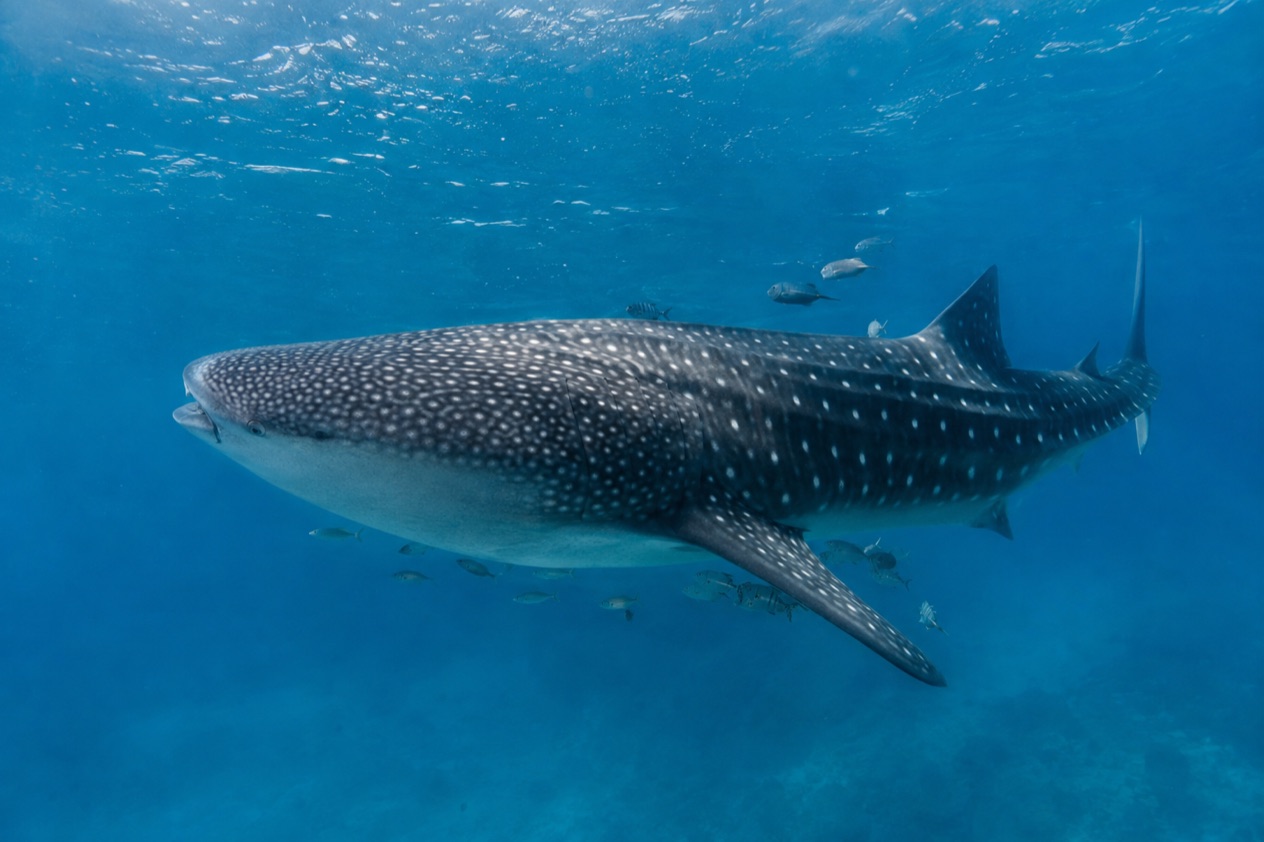
The feeding site is the reason the reserve exists. It was declared a special protected zone soon after the reserve itself, and it sits at the spot where the reef drops away and the spawning fish gather. Whale sharks are filter feeders, so they swim with their wide mouths open near the surface, moving slowly through the cloud of eggs the snapper release.
What you look for is the pattern. Each animal carries a grid of pale spots and stripes on a dark gray-blue back, and the body is much longer than you expect until it drifts alongside you. Visitors can dive or snorkel with whale sharks here, and the encounters are a matter of chance, so some days are better than others.
The Silk Cayes
North Silk, Middle Silk and South Silk are three small cayes lying south of Gladden entrance, just inside Queen Caye. They are small, low and ringed with reef, the sort of cayes you picture when you imagine a postcard of the Belize cayes. The reserve protects the tourism value of the Silk Cayes, and the water around them is a no-take zone, which means fishing is kept out and the reef is left to the fish.
Look for the birds. A nesting colony of terns has been recorded on North Silk Caye, and from the water you may see them wheeling over the sand and the low vegetation. Expect to be looking out from the water, since the cayes are part of a protected marine area.
The spawning aggregation and the reef fish
Beneath the whale sharks, the reef is busy in its own right. Gladden Spit supports more than 30 species of fish, among them grouper and snapper, and they gather in their thousands at the full moon. The spawning aggregation period lasts ten days and falls between March and June, which is the same stretch of the year when the sharks turn up.
Fishermen have been coming to this spot since the 1920s to take mutton snapper and grouper during the aggregation, so the place has been known to people on this coast for a long time. Today the reserve protects the site, and what you look for is the shimmer of fish schooling along the drop-off rather than a catch.
Birds of the wider area
The offshore area including the reserve is an Important Bird Area designated by BirdLife International. It supports significant populations of white-crowned pigeons, red-footed boobies, roseate terns, Yucatan vireos, black catbirds, and golden-winged and cerulean warblers.
You will not see all of them on a day on the water, and the pigeons and warblers are birds of the cayes and the coast rather than the open sea. Boobies and terns are the ones to keep an eye out for over the boat, so a pair of binoculars is a natural companion to the snorkel gear.
Hours, tickets and rules
Gladden Spit is a managed marine reserve rather than a site with a gate and a ticket booth. The Southern Environmental Association handles the day-to-day work, including the patrols and the collection of fees, and the reserve is guided by a management plan like every marine reserve in Belize.
| Site | Declared | Size |
|---|---|---|
| Gladden Spit and Silk Cayes Marine Reserve | May 18, 2000 | 25,980 acres (10,510 hectares) |
| Whale shark feeding site (special protected zone) | 2001 | Within the reserve |
The rules are the ones that protect the animals and the water. In Belize it is illegal to take or kill whale sharks or nurse sharks. Since 2003 the reserve has been divided into a general use zone, a no-take zone around the Silk Cayes, a conch restoration zone, and a whale shark and reef-fish spawning aggregation conservation zone.
How to get to Gladden Spit and the whale sharks
The base is Placencia, in the Stann Creek District, the nearest town to the reserve. Gladden Spit lies about 22 miles off the coast of Placencia, so this is a trip out over open water rather than a drive to a trailhead or a beach.
You reach the whale sharks by going out from the coast, and what you do when you get there is dive or snorkel at the spawning site on the reef. The reserve sits within the Southern Belize Reef Complex, which also includes South Water Caye, Laughing Bird Caye National Park and the Sapodilla Cayes Marine Reserve, so the region has several protected reef areas along this stretch of the coast.
If you are coming from elsewhere in Belize, Placencia is the town to aim for, since it is the community the reserve is tied to. Plan your stay around that peninsula and treat the outing to Gladden Spit as the reason for the trip south.
When to visit Gladden Spit and the whale sharks
April and May are the months to aim for. That is when whale sharks arrive at Gladden Spit near Placencia, and it falls inside the window of the spawning aggregation, which runs for ten days between March and June.
The moon matters. The grouper and snapper gather in their thousands at the full moon, and the whale sharks follow the feast. So the days around the full moon in the spring are the ones that line up the fish and the sharks, and planning your stay in Placencia around them gives you the best chance. As with any wild animal, a sighting is a chance and never a certainty.
The other months have their own character. March and June sit at the edges of the spawning period, so the reef fish may still gather even when the sharks are fewer. Later in the year, the Atlantic hurricane season runs from June 1 to November 30, so a trip planned for the second half of the year falls inside it.
If you are reading this in October, the whale shark season is some months away. That leaves time to plan a spring trip, and the rest of the year is for the cayes and the reef in general rather than the sharks.
Tips for your visit
Plan the trip around the moon and the season first, then fit everything else around it. Because the sharks gather at the spawning site, your timing matters more than your choice of gear or your hotel.
- Pack a mask and snorkel you trust, a camera that can go in the water, and binoculars for the terns and boobies over the cayes.
- Pair the outing with the rest of the southern reef, such as Laughing Bird Caye National Park, which belongs to the same reef complex.
- Spend a few days in Placencia rather than rushing the trip, so that a day with fewer sharks does not end the plan.
- Keep your distance from the animals in your own mind as well as in practice. Whale sharks are protected by law in Belize, and the reserve exists for them.
Families will want to think about the time on open water and whether everyone is comfortable snorkeling away from shore. This is a day for people who like the sea, so a traveler who prefers dry land might enjoy Placencia itself and leave the outing to the others.
Think of the Silk Cayes as the second half of the day. After the sharks, the small cayes and the birds over them give the trip a calmer ending than the spawning site itself.
Good to know before you go
The U.S. State Department rates Belize Level 2, “Exercise increased caution”, because of crime, and says the south side of Belize City has historically had the highest concentration of violent crime.
The reserve is run by the Southern Environmental Association, which patrols the area and collects the fees that support it. The season for whale sharks sits in the spring, well before the hurricane season that runs from June 1 to November 30, so a spring trip comes ahead of it.
A trip out to Gladden Spit is best thought of as a wildlife outing with a base in Placencia. Take the sharks as a gift of the season, enjoy the reef fish and the terns whatever the day brings, and leave the animals as you found them.
Sources
- Wikipedia, Gladden Spit and Silk Cayes Marine Reserve (https://en.wikipedia.org/wiki/Gladden_Spit_and_Silk_Cayes_Marine_Reserve), checked October 11, 2026
- Belize Fisheries Department, Gladden Spit and Silk Cayes Marine Reserve (https://fisheries.gov.bz/gsscmr/), checked October 11, 2026
- Wikipedia, Silk Cayes (https://en.wikipedia.org/wiki/Silk_Cayes), checked October 11, 2026
- Belize Fisheries Department, Regulations (https://fisheries.gov.bz/regulations/), checked October 11, 2026
- Tropic Air, Placencia (https://www.tropicair.com/placencia-plj/), checked October 11, 2026
- U.S. Department of State, Belize Travel Advisory, Level 2, March 11, 2026 (https://travel.state.gov/), checked October 11, 2026
- NOAA National Hurricane Center, Climatology (https://www.nhc.noaa.gov/climo/), checked October 11, 2026