
On a cruise deck at dawn, the low green line of the Belize coast slides into view and the first question is always the same: did we pick the right month? The dry season, from January to May, is the usual answer for a port day that stays mostly dry. The rest of the year still has its own rewards, from warmer water to a quieter pace in town.
When is the best time for a Belize cruise?
The dry season, which runs from January to May, is the best time for a Belize cruise if you want the fewest rainy afternoons on a port day. The rainy season follows from June to November, and December sits between the two, with showers still possible but fewer than in the fall.
A cruise gives you a single day in port, so the weather matters more than it does on a week-long stay. A rained-out morning cannot be traded for the next one. That is the case for aiming at the months when rain days are few, and the numbers in the weather section show how sharply they drop from January into March and April.
Winter and spring: January to May
February, March and April are the stretch with the fewest wet days in Belize City, and the sea is at its coolest and clearest-feeling edge of the year, easy on the skin when you step off a tender. Highs climb steadily through these months, so a port day in April is hotter than one in February, and the shade of a courtyard or a snack bar becomes part of the plan.
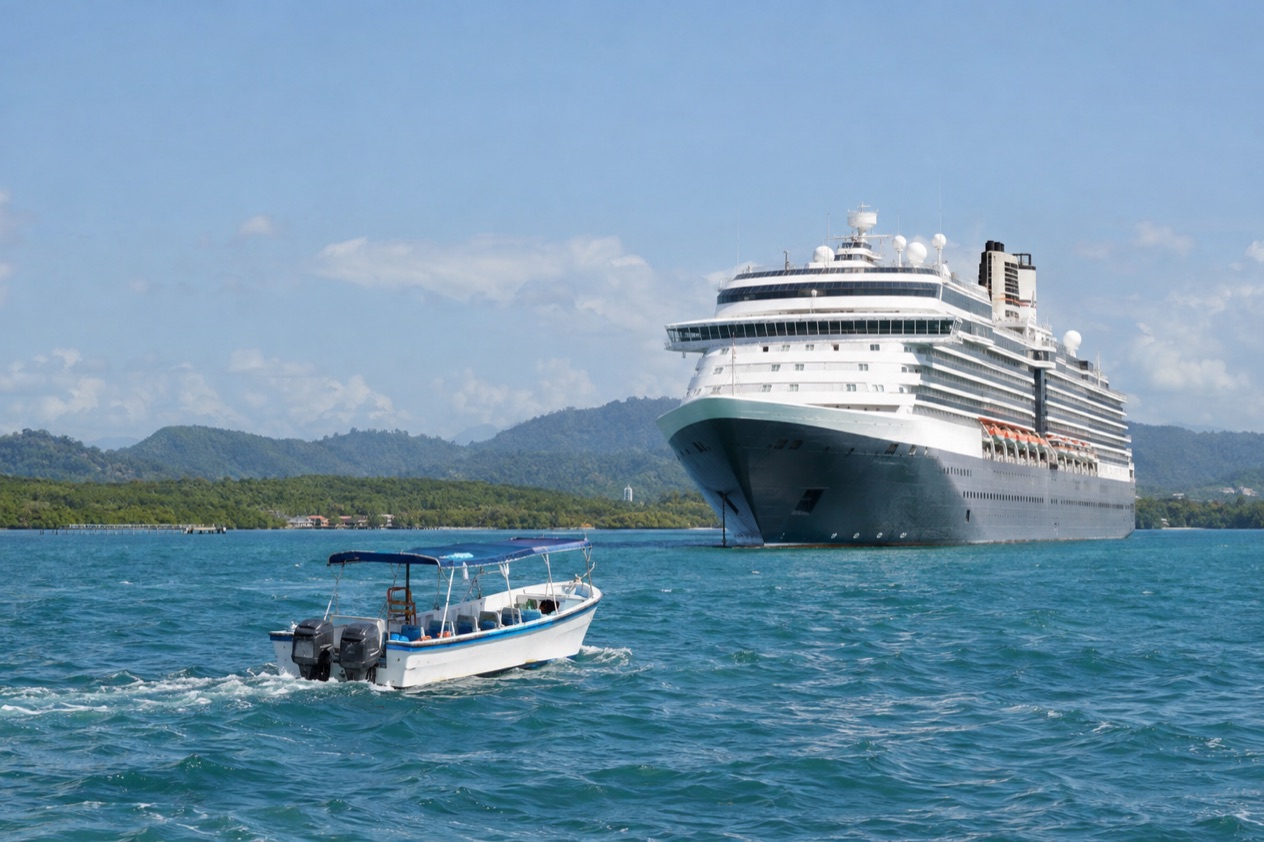
If your ship calls at Fort Street Tourism Village in Belize City, you reach shore by tender, a ride of about 15 minutes. The village has several courtyards, snack bars and local stores with duty-free shopping, plus restaurants and live local entertainment, which gives you somewhere to wait out a passing shower or simply cool off. Harvest Caye, in the southern Stann Creek District, caters only to Norwegian Cruise Line passengers.
Summer and fall: June to November
From June on, the rainy season sets in and the sea warms to bathwater levels, touching its warmest readings in late summer and early fall. The trade-off is clear in the rain-day counts: September and October bring the most wet days of the year, and October is also the wettest month by total rainfall.
A cruise in these months suits travelers who care more about warm water and a lively tropical sky than a dry itinerary. Bring a light rain layer on any port day, and keep your plans loose enough to move between the village shops, a cafe and the waterfront if clouds build.
December: the shoulder
December arrives just after the rainy season and just before the dry one. Rainfall has eased from the November totals, highs settle in the mid-80s, and the water has cooled into the low 80s. It is a reasonable middle choice for a traveler whose sailing dates are fixed by school or work calendars.
What about hurricane season?
The Atlantic hurricane season runs from June 1 to November 30, and that window covers Belize’s Caribbean coast, so a cruise in those months sails inside it. The Caribbean side is the one that matters here, since Belize is the only country in Central America without a Pacific coastline.
An average Atlantic season brings 14 named storms, 7 hurricanes and 3 major hurricanes across the whole basin, not Belize alone. Activity builds toward a peak on September 10, with most of it falling between mid-August and mid-October. Those weeks are the ones to think about hardest if you are choosing between a late-summer sailing and a winter one.
What the season means for a cruise
Cruise lines plan around tropical systems, and itineraries can change when one forms in the Caribbean. A port may be swapped, shortened or skipped, so a Belize call in the season is a plan that can shift rather than a certainty. That is the honest reason many travelers lean toward the months from December through May.
If you do sail between June and November, the first and last weeks of the season sit at the edges of the calendar, well away from the peak. November is the last month of the window, and the season ends on November 30, so December sailings fall just outside the official dates.
The Pacific season does not apply
The eastern Pacific season runs from May 15 to November 30, but it concerns the other ocean. With no Pacific coast, Belize follows the Atlantic calendar, and that is the only one to read when you compare sailing dates.
What is the weather like by month?
Belize City stays hot all year, with highs from the low 80s in winter to about 90 in September, and the real difference between months is how much rain falls and how many days it shows up. The table gives the air in Belize City and the sea near it.
| Month | Belize City high (°F) | Belize City low (°F) | Rain (inches) | Rain days | Sea (°F) |
|---|---|---|---|---|---|
| January | 83.2 | 68.0 | 4.97 | 10.3 | 80.6 |
| February | 84.9 | 70.0 | 2.62 | 5.6 | 80.2 |
| March | 86.4 | 71.7 | 1.42 | 3.9 | 82.9 |
| April | 88.6 | 74.8 | 1.81 | 3.3 | 84.0 |
| May | 89.9 | 77.0 | 3.8 | 5.3 | 86.4 |
| June | 89.4 | 77.7 | 8.1 | 10.0 | 87.8 |
| July | 89.3 | 77.0 | 5.73 | 11.8 | 86.5 |
| August | 89.8 | 76.8 | 6.27 | 11.0 | 87.8 |
| September | 90.0 | 76.3 | 6.93 | 12.5 | 88.5 |
| October | 88.1 | 74.3 | 10.15 | 13.7 | 86.4 |
| November | 85.5 | 71.0 | 8.17 | 11.4 | 83.5 |
| December | 84.2 | 69.3 | 4.73 | 10.3 | 81.1 |
The driest months
March and April are the driest, with only a few wet days each and the least rain of the year. By May the heat builds and the first real rain returns, while the sea has already warmed well into the 80s. February is a fine alternative if you prefer slightly cooler air on a day of walking.
The wettest months
October stands out, with the most rain and the most wet days of any month, and November is not far behind. These are also months when the water is still warm, so a shower is a passing nuisance rather than a chill. January looks wetter than February on paper, a reminder that winter fronts can bring gray, damp days even in the dry season.
For a snorkeling or beach day, the sea in the low-to-mid 80s from March to May and again in November feels pleasant, while the high 80s of late summer are warm enough that the water offers little relief from the heat.
Good to know before you go
The U.S. State Department rates Belize Level 2, “Exercise increased caution”, because of crime, and says the south side of Belize City has historically had the highest concentration of violent crime.
Pack sunscreen and a light rain jacket whatever the month, since the sun is strong from March onward and showers can arrive in any season. The first cruise ship dropped anchor in Belize’s waters in 1991, and the ports have grown up around that tradition, with Fort Street in Belize City as the tender port and Harvest Caye reserved for Norwegian Cruise Line guests. Because the hurricane season spans June through November, a sailing in those months deserves a flexible mindset about the itinerary.
Sources
- NOAA National Hurricane Center, Climatology (https://www.nhc.noaa.gov/climo/), checked October 11, 2026
- Wikipedia, Climate of Belize (https://en.wikipedia.org/wiki/Climate_of_Belize), checked October 11, 2026
- Wikipedia, Geography of Belize (https://en.wikipedia.org/wiki/Geography_of_Belize), checked October 11, 2026
- Belize Tourism Board, Cruise licensing (https://www.belizetourismboard.org/licensing/cruise/), checked October 11, 2026
- NOAA NCEI, GHCN-Daily station BHM00078583 (Philip S. W. Goldson International Airport, Belize City), normals 1991-2020 computed from the daily record (https://www.ncei.noaa.gov/access/services/data/v1?dataset=daily-summaries&stations=BHM00078583), checked October 11, 2026
- Open-Meteo Marine API, average 2015-2024, checked October 11, 2026
- U.S. Department of State, Belize Travel Advisory, Level 2, March 11, 2026 (https://travel.state.gov/), checked October 11, 2026
To plan your stay
- Belize Shore Excursions: Altun Ha, Lamanai, Nohoch Che'en and Flights Over the Great Blue Hole
- Fort Street Tourism Village: Belize City's Cruise Port, What Is Inside and How Passengers Reach It
- Altun Ha from the Belize City Cruise Port: the Jade Head, the Temple Pyramids and the Road North
- Harvest Caye Belize: Norwegian's Private Island, the Dock and What to Do Ashore