
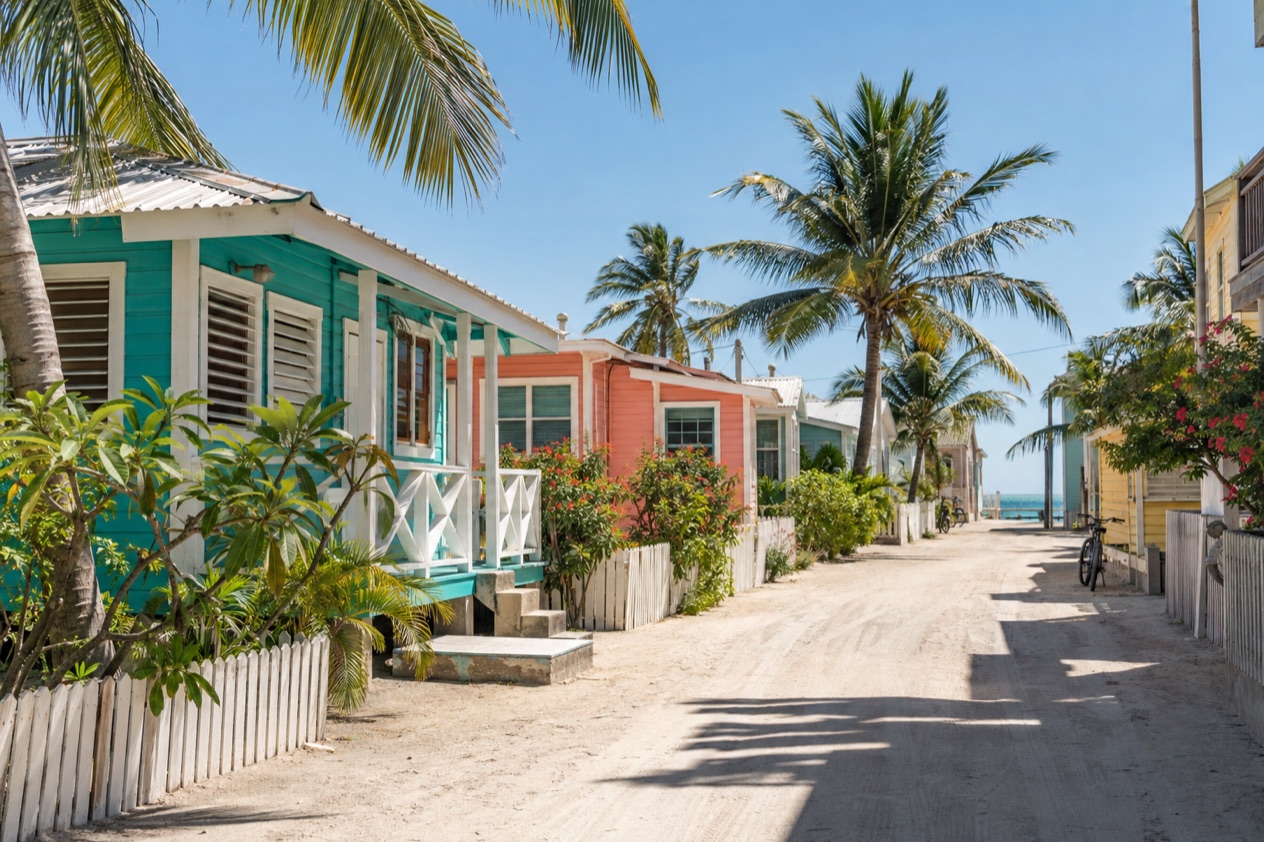
In February, Caye Caulker wakes to the scrape of rakes on sandy streets and the smell of fry jacks and coffee drifting from small kitchens. Bicycles and the odd golf cart slide past wooden houses painted in sherbet colors, and the only traffic sign on the island asks you to go slow. The sea around the island is warm, the barrier reef sits just offshore, and the whole place runs at the pace of a hammock.
What is the weather like in Caye Caulker in February?
February in Caye Caulker is warm and bright, with a sea that stays in the low 80s and days that are growing longer week by week. It is a month of sun hats, salt on the skin and evenings long enough to enjoy on a dock.
| Month | Sea at Caye Caulker (°F) | Daylight on the 15th (hours and minutes) |
|---|---|---|
| January | 81.3 | 11 h 13 min |
| February | 80.8 | 11 h 37 min |
| March | 81.9 | 12 h 05 min |
The sea is the headline here. In February it is a shade cooler than in the neighboring months, yet still warm enough that you step in without a shiver, and the water holds that comfortable temperature right through the month. Mornings on the dock and late afternoons on the beach are both good moments to notice how clear the water looks from the shore.
For the air, think of Belize City, where highs average about 85°F in February and the nights stay mild. Lightweight cotton and linen are the right fabrics, with a thin layer for the hours after dark when the breeze picks up off the water.
The light is worth planning around. With daylight stretching to nearly twelve hours by mid-month, there is time for a reef outing in the morning, a long lunch, a swim and still enough sky left for the sunset walk to the western side of the island, where the water turns copper and pink.
Can you swim in Caye Caulker in February?
The sea is warm in February, in the low 80s, which suits a long dip, a drifting snorkel or a full morning on the water. What draws people into it is the barrier reef lying just off the island, described as easily accessible, and the protected waters around Caye Caulker.
The Caye Caulker Marine and Forest Reserve was established in April 1998 and protects more than 9,000 acres of the Mesoamerican Barrier Reef System around the island. Snorkelers and divers come for its reef and its marine life.
Farther out, the reef system includes three atolls: Turneffe Atoll, Glover’s Reef and Lighthouse Reef. Lighthouse Reef is the most easterly diving area in Belize and is home to the Great Blue Hole, made famous by Jacques Cousteau in 1970.
What to do in Caye Caulker in February
February on Caye Caulker is about the water and the pace of the island. The days are bright and long enough to fit in a reef outing, a stretch of beach and an unhurried dinner, and the island’s own mood, free of hustle and bustle with sandy beaches and clear water, does most of the work of setting the tone.
There is no need to rush anything. Wander the sandy streets, stop where the music drifts from a beach bar, and let the day take shape around the sea. The few signs on the island ask you to go slow, and that advice holds for the whole visit.
The Marine and Forest Reserve
The reserve is the reason many travelers choose Caye Caulker. It covers more than 9,000 acres of the Mesoamerican Barrier Reef System around the island, with coral, seagrass and the fish that live among them. Its rules and regulations were gazetted on December 6, 2008, which tells you it is a managed, protected area rather than an open stretch of sea.
In February, with the sea in the low 80s and the days lengthening, a snorkeling or diving outing around the reserve is the natural centerpiece of a stay. You might see rays gliding over sand, schools of small silver fish, brain coral and the occasional turtle, though what turns up on any given day is a matter of luck.
Bring a respect for the place along with your mask. The reserve exists to keep the reef healthy, so touching coral or chasing animals goes against what the area is for.
The reef and the atolls beyond
The Belize Barrier Reef is a chain of coral reefs running along the coast of the country, and from Caye Caulker you can look out toward it. In the north it lies close to shore, which is part of why the island has built its reputation on reef days.
Divers dream of the three atolls beyond the main reef: Turneffe Atoll, Glover’s Reef and Lighthouse Reef. The Great Blue Hole sits on Lighthouse Reef and became world famous after Jacques Cousteau explored it in 1970. Seeing it is a major undertaking, and February’s long, bright days give that kind of outing a generous stretch of light.
Streets, food and the island’s rhythm
The streets of Caye Caulker are sand, the buildings are wood, and bicycles outnumber almost everything else. A February walk takes you past painted shopfronts, small guesthouses, murals and open-air restaurants where the grill is lit early and the smell of charred fish carries along the lane.
Eat what the Caribbean coast of Belize does well. Fry jacks and johnnycakes appear at breakfast, rice and beans with stewed chicken is the everyday plate, and fresh seafood arrives as ceviche, grilled fish, conch fritters or coconut-scented sauces. A cold Belikin or a rum punch at sunset is the island’s standard toast.
The Caye Caulker Village Council looks after the village’s public properties, and you see its work in the sandy lanes, the docks and the shared spaces. Evenings are for sitting out, listening to Creole and reggae from a beach bar and watching the stars appear over the water.
Between swims, spend a slow hour with a book in a hammock or watch fishing boats and pelicans from the dock. On Caye Caulker, doing very little is a perfectly good plan.
A two-day itinerary for Caye Caulker in February
Day 1 is for the island itself. Start with a Belizean breakfast of fry jacks, eggs and coffee at a small café, then walk the sandy streets while the light is soft and the shops are still opening. The sea is warm enough for a morning swim off the dock.
At midday, settle into a beachfront restaurant for grilled fish or ceviche, then take a long pause in the shade. In the afternoon, wander the side streets, look at the murals and pick up a souvenir. As the light turns gold, walk to the western side of the island to watch the sunset, then eat dinner at an open-air grill and finish with a drink on a dock.
Day 2 is for the reef. Spend the morning on the water around the Caye Caulker Marine and Forest Reserve, snorkeling or diving over the barrier reef while the daylight is long and the sea is warm. February’s near-twelve hours of light leave room for a full outing.
Back on land, eat a late lunch of seafood, rinse off and spend the afternoon in a hammock or on the beach. In the evening, enjoy a last dinner of rice and beans or a plate of conch fritters, and take a final stroll along the quiet sand streets. If the weather turns gray, move the day indoors: linger in a café, browse the craft shops and settle in at a restaurant with a long lunch.
Is Caye Caulker busy in February?
Caye Caulker keeps its unhurried character in February, and the island’s own personality, free of hustle and bustle, sets the tone more than any calendar does.
The island is small, so the scale of any crowd is small too. The sandy streets, the docks and the beach bars all hold a modest number of people, and the pace stays slow. The one local traffic sign asks bikers and pedestrians to go slow, which sums up how the place moves.
That character is what you find in the evenings, when diners spread along the open-air restaurants, music comes from a beach bar and people walk home barefoot on the sand. Mornings belong to the early risers heading to the dock for reef outings, and the rest of the day follows the sun.
As a habit, plan the things you care about first: the reef outing you most want to take and the table at the restaurant you have heard about. Once those are set, leave the rest open. The island rewards a loose schedule, and a long afternoon with no plan is part of what you came for.
What to pack for Caye Caulker in February
Pack light for a sandy island where you spend most of the day in swimwear and sandals. These are the pieces that earn their place:
- Swimsuits, at least two, since the sea in the low 80s invites daily swimming.
- A snorkel mask you like, for the reef outings around the reserve.
- Sandals or flip-flops, because the streets are sand.
- A wide-brimmed hat and sunglasses for the bright days on the water.
- A light layer for the evenings on the dock.
- A small dry bag for the boat.
Good to know before you go
The U.S. State Department rates Belize Level 2, “Exercise increased caution”, because of crime, and says the south side of Belize City has historically had the highest concentration of violent crime.
February falls outside the official Atlantic hurricane season, which runs from June 1 to November 30. The Caye Caulker Village Council looks after public properties in the village, and the island’s relaxed streets are best explored on foot or by bicycle at the island’s own speed.
Caye Caulker in February vs January and March
Moving the trip a month earlier puts you in January, when the sea is a touch warmer and the days are shorter, with about half an hour less light than in mid-February. January also brings noticeably more rainy days to Belize City, so a gray spell is more likely.
A month later, March offers the warmest sea of the three, the longest days and the fewest rainy days in Belize City. If you want to fit the most into the light, March gives you a little more of it.
Choose February if you like a warm sea, a lengthening day and a drier feel than January. Shift to March if you want the longest light and the warmest water, and stay with January if a slightly warmer sea matters more to you than the extra hours of daylight.
Is February a good time to visit Caye Caulker?
Yes, February suits anyone who wants a warm sea, long bright days and an island that moves at walking pace. Snorkelers, divers, readers and people who like to eat well outdoors will all be at home.
It is less suited to travelers who want a long list of attractions or nightlife on a big scale. Caye Caulker is a small island, and its pleasures are the reef, the beach and the table.
On arrival, start with the water. Take a first swim, find your bearings along the sandy streets and decide which reef outing you most want to take. What stays with you from a February on Caye Caulker is the combination of a warm sea near 81°F, a barrier reef within reach and a sign by the road that tells everyone to go slow.
Sources
- Open-Meteo Marine API, average 2015-2024, checked October 11, 2026
- sunrise-sunset.org, sunrise and sunset calculated for the 15th of the month, checked October 11, 2026
- NOAA NCEI, GHCN-Daily station BHM00078583 (Philip S. W. Goldson International Airport, Belize City), normals 1991-2020 computed from the daily record (https://www.ncei.noaa.gov/access/services/data/v1?dataset=daily-summaries&stations=BHM00078583), checked October 11, 2026
- Maya Island Air, Caye Caulker flights (https://www.mayaislandair.com/belize-flights-caye-caulker/), checked October 11, 2026
- Wikipedia, Belize Barrier Reef (https://en.wikipedia.org/wiki/Belize_Barrier_Reef), checked October 11, 2026
- Belize Fisheries Department, Caye Caulker Marine Reserve (https://fisheries.gov.bz/ccmr/), checked October 11, 2026
- Caye Caulker Village Council, Traffic (https://www.cayecaulkervillagecouncil.org/traffic), checked October 11, 2026
- Caye Caulker Village Council, About (https://www.cayecaulkervillagecouncil.org/about), checked October 11, 2026
- Wikipedia, Climate of Belize (https://en.wikipedia.org/wiki/Climate_of_Belize), checked October 11, 2026
- U.S. Department of State, Belize Travel Information, Entry and exit requirements (https://travel.state.gov/), checked October 11, 2026
- U.S. Department of State, Belize Travel Advisory, Level 2, March 11, 2026 (https://travel.state.gov/), checked October 11, 2026
- NOAA National Hurricane Center, Climatology (https://www.nhc.noaa.gov/climo/), checked October 11, 2026
To plan your stay
- Things to Do in Caye Caulker: The Split, Reef Snorkeling, Manatees and Fresh Lobster
- Where to Stay in Caye Caulker: Village Center, the Split, the North Side and the Lagoon Shore
- Caye Caulker from Belize City: Water Taxi, Small Plane and What to Do on Arrival
- Know Before You Go to Caye Caulker: Entry Rules, Money, Water Taxis and Health