
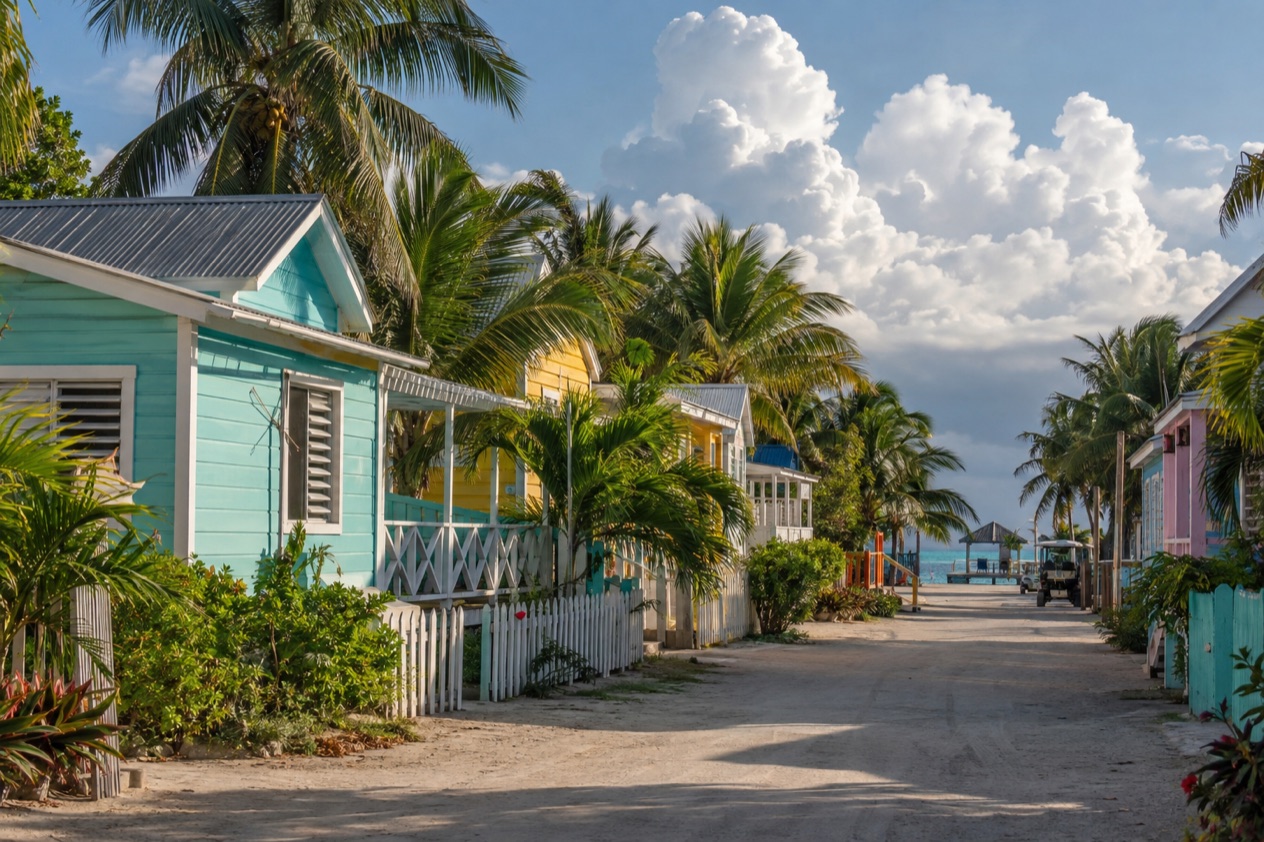
In August the sand streets of Caye Caulker steam gently after a shower, and the smell of grilled fish and coconut bread drifts out from the stands along Front Street. Bicycles lean against painted wooden storefronts, hammocks sway on docks over the turquoise shallows, and the island’s old motto, Go Slow, feels less like a slogan than a description. This is Caye Caulker in high summer: a sea at its warmest, long evenings and an island that suits anyone happy to let the day unfold.
What is the weather like in Caye Caulker in August?
August in Caye Caulker is hot, humid and bright, with a sea as warm as the air and light that lasts well into the evening. It is the wet season, so a gray sky and a passing shower belong to the picture, and so does a steady tropical sun between them.
| Month | Sea at Caye Caulker (°F) | Daylight on the 15th (hours and minutes) |
|---|---|---|
| July | 85.7 | 13 h 07 min |
| August | 86.9 | 12 h 45 min |
| September | 87.7 | 12 h 16 min |
The sea is the star of the month. It is warm from the first step off a dock, which makes a long float or a morning of snorkeling a pleasure rather than a test of nerve. Because the water holds its heat so well, there is little reason to wear more than a swimsuit and a light cover-up, and a rash guard is as much about the sun as about the cool.
In Belize City, highs average about 90°F in August, with lows in the upper 70s and rain on about eleven days. On the island itself, daylight runs from early morning to a sunset that comes at a comfortable hour, so a day can hold a late breakfast, a long swim break, an afternoon on a porch and still an unhurried evening walk along the sand.
Dress for heat: thin cotton, linen, a wide-brimmed hat and sandals you can wear on sand and on wet boards. Keep one light layer dry for the breezier moments on a boat, and plan the day so that shade, a cold drink and a hammock are never far away.
Can you swim in Caye Caulker in August?
The sea around Caye Caulker is warm enough for a long swim in August, and it sits among the warmest stretches of the whole year. The outings that make the most of it lie in the waters around the island, which belong to the Mesoamerican Barrier Reef System.
The Caye Caulker Marine and Forest Reserve was established in April 1998 and its marine reserve covers over 9,000 acres of that reef system. Snorkeling and diving outings from the island are organized around this protected water, and it is the name to look for when you arrange a day on the reef. The rules and regulations of the Marine Reserve were gazetted in December 2008, so the reserve has a long-standing framework of its own.
On land, the island’s own shoreline is shaped by docks and short stretches of sand, and swimming platforms stand beside many of the waterfront piers. Sargassum, a brown algae that floats in clumps and can smell of rotten eggs when it washes ashore, is a feature of the Caribbean and can reach the island’s beaches. Where it does arrive, the docks and the reef outings are where the clear water is found.
What to do in Caye Caulker in August
August is a month for water and for slowing down. The island has been on the backpacker circuit since the 1960s, and that easy, sandals-and-cold-drink spirit still defines it, even as more hotels now cater to a wider variety of visitors. Days follow the sun: a swim, a long lunch, a nap in a hammock and an evening on the west side of the island.
The island is a five-mile-long strip, and the heart of it is a few sandy lanes, a handful of piers and a long row of low wooden buildings painted in candy colors. You do not need a plan here, only a hat, a bicycle or your own two feet and a taste for walking in the heat in short stretches.
Front Street and the sand lanes
Front Street runs along the eastern shore, facing the reef, and it is where the island’s daily life is easiest to read. Small restaurants set tables on the sand, shops sell hand-painted signs and local hot sauces, and bikes and golf carts share the unpaved lanes with pedestrians. Walking it slowly, with stops for fresh juice, is a morning in itself.
In August the shade of the almond and coconut trees matters, so the pleasant way to cover the lanes is in short strolls punctuated by a drink, a swim or a few minutes on a pier. Evenings bring a softer scene, with string lights, music from open-air bars and neighbors on porches chatting across the street.
The Split and the west side at sunset
The Split is the channel that cuts the island in two at its northern end, and it has become the island’s informal gathering place. A dock bar, a deck over the water and a scattering of chairs make it the usual spot to watch the light change, with a cold drink in hand and the whole island drifting by in sandals.
Sunsets fall on the western side of the island, and in August the sky often carries layers of cloud that catch the color well. A walk toward the lagoon side as the day cools is one of the island’s best ways to end a hot afternoon, and the docks there are quiet places to sit.
The reef and the Marine Reserve
Boat outings from the island head out to the reef, where the Caye Caulker Marine Reserve protects a stretch of the Mesoamerican Barrier Reef System. With the sea at its warmest, a snorkeling or diving outing is the natural centerpiece of an August stay, and a day on the water pairs well with a late afternoon on land.
Pair the water with something unhurried the same day: a seafood lunch, a nap in the shade or a bike ride to the quieter end of the island. A rash guard, a hat and plenty of water make a day on the reef more comfortable in the August sun.
What to eat and drink
The island’s cooking draws on Creole, Garifuna and Maya traditions, and its menus lean on the sea. Look for grilled fish, shrimp, conch in fritters or ceviche, along with rice and beans, stewed chicken, fry jacks at breakfast and johnnycakes with eggs. Coconut shows up in drinks, in rice and in sweets.
In the heat, a cold Belikin beer, fresh-squeezed juice or a rum punch is part of the rhythm of the day. Street stands and small family restaurants set a relaxed tone, and an evening meal on a sandy terrace, with the sound of the sea close by, is a classic island end to the day.
A two-day itinerary for Caye Caulker in August
Day 1 begins with a slow breakfast on Front Street, where fry jacks or a plate of eggs with johnnycakes suit the morning. Walk the sand lanes while the light is still gentle, then settle on a pier for a first swim in the warm sea. Keep the middle of the day for a long seafood lunch in the shade and a rest in a hammock.
In the afternoon, head to the Split, the channel at the island’s northern end, and stay for the light as the day softens. Dinner can be a grilled fish or lobster-style plate at a sandy-floored restaurant, followed by a stroll under string lights. If rain turns the day gray, shift to a café, a craft shop or a gallery and keep the swim for the first break in the sky.
Day 2 belongs to the water. Spend the morning on a snorkeling or diving outing in the Caye Caulker Marine Reserve, which protects part of the Mesoamerican Barrier Reef System, then return for a late, unhurried lunch of ceviche or conch fritters.
In the afternoon, take a bike ride to the quieter southern end of the island, where the lanes thin out and the houses sit under palms. Finish with a drink on a west-side dock as the sky changes color, and a last dinner of rice and beans with stewed chicken. On a wet day, a long meal indoors and an evening of music at a local bar keep the plan intact.
Is Caye Caulker busy in August?
Caye Caulker in August has the easygoing feel it has most of the year, with a mix of backpackers, couples and families walking the sand lanes. August falls in the summer break and in the middle of the wet season, so the mood is relaxed rather than rushed, and the island’s small scale means you notice people more than crowds.
The island’s long history on the backpacker circuit, and its growing number of hotels, mean visitors of many kinds share the same few streets. Restaurants and bars sit close together, so wandering from one to the next is easy, and the same faces often turn up at the Split in the evening.
This stretch of summer also leads toward the heart of the Atlantic hurricane season, which runs from June 1 to November 30 and sees most activity from mid-August to mid-October. That is a good reason to keep plans flexible, to follow the forecast before and during a stay, and to make the most of the clear days for reef outings. Hurricane Earl made landfall about six miles south of Belize City on August 4, 2016, a reminder that August is part of the season.
What to pack for Caye Caulker in August
Pack light and plan for sun, sea and the occasional shower, with clothes that dry quickly and shoes that suit sand and wet docks.
- A wide-brimmed hat and sunglasses, for the hours on piers and boats.
- Reef-friendly sunscreen and a rash guard, because the sun is strong over warm water.
- Quick-dry clothing and a spare swimsuit, so wet things have time to dry.
- A light rain jacket, for the passing showers of the wet season.
- Sandals or water shoes, for sandy lanes and wet docks.
- Insect repellent, for the evenings on porches and docks.
Good to know before you go
The U.S. State Department rates Belize Level 2, “Exercise increased caution”, because of crime, and says the south side of Belize City has historically had the highest concentration of violent crime.
August sits inside the Atlantic hurricane season, which runs from June 1 to November 30 and peaks on September 10. An average season brings 14 named storms, so it is sensible to keep an eye on forecasts and to keep plans flexible. Among the storms that have struck Belize, Hurricane Keith formed in September 2000 and Hurricane Hattie struck in 1961.
Sargassum, the brown algae that floats in clumps across the Caribbean, can wash ashore on the island’s beaches and smells strongly when it does. The Caye Caulker Village Council is responsible for the care and maintenance of the village’s public properties, so shared spaces such as the lanes and public docks fall under its watch.
Caye Caulker in August vs July and September
Moving a trip to July brings a slightly cooler sea and longer evenings, with the daylight stretching a little further than in August. The wet season is in full swing, and it is the month to choose for a stay that is a little further from the peak of hurricane activity.
September brings the warmest sea of the three months and shorter days. It also brings the peak of the Atlantic hurricane season, and Belize City records a few more rainy days as the summer goes on. Anyone traveling then should keep plans flexible and watch the forecast closely.
August sits between the two and suits travelers who want a warm sea, long enough days for a full island routine and a trip that stays mostly ahead of the heart of the storm season. July is for those who prize the longest light, and September is for the flexible traveler who loves the warmest water and does not mind a looser schedule.
Is August a good time to visit Caye Caulker?
Yes, August is a good time for travelers who love warm water, slow days and an island that asks for little more than a hat and a sense of humor. It suits snorkelers and divers drawn to the Marine Reserve, couples who want long dockside evenings and anyone happy to let a shower pass while they wait under a roof with a cold drink.
It is less suited to travelers who need guaranteed dry weather every day or who prefer to stay far from the hurricane season, which stretches across the whole month. Those who value flexibility rather than a fixed schedule will find the island easy company.
On arrival, drop your bags, walk to the nearest pier and get into the water first. Then wander Front Street for a fry jack or a fresh juice and let the island set the pace. What makes August special here is the sea itself: a warm, glassy-looking sheet of turquoise over the reef, with a bar chair at the Split waiting at sunset.
Sources
- Open-Meteo Marine API, average 2015-2024, checked October 11, 2026
- sunrise-sunset.org, sunrise and sunset calculated for the 15th of the month, checked October 11, 2026
- NOAA NCEI, GHCN-Daily station BHM00078583 (Philip S. W. Goldson International Airport, Belize City), normals 1991-2020 computed from the daily record (https://www.ncei.noaa.gov/access/services/data/v1?dataset=daily-summaries&stations=BHM00078583), checked October 11, 2026
- NOAA National Hurricane Center, Climatology (https://www.nhc.noaa.gov/climo/), checked October 11, 2026
- Wikipedia, Hurricane Hattie (https://en.wikipedia.org/wiki/Hurricane_Hattie), checked October 11, 2026
- Wikipedia, Hurricane Keith (2000) (https://en.wikipedia.org/wiki/Hurricane_Keith_(2000)), checked October 11, 2026
- Wikipedia, Hurricane Dean (https://en.wikipedia.org/wiki/Hurricane_Dean), checked October 11, 2026
- Wikipedia, Hurricane Lisa (2022) (https://en.wikipedia.org/wiki/Hurricane_Lisa_(2022)), checked October 11, 2026
- Wikipedia, Hurricane Earl (2016) (https://en.wikipedia.org/wiki/Hurricane_Earl_(2016)), checked October 11, 2026
- Wikipedia, Hurricane Iota (https://en.wikipedia.org/wiki/Hurricane_Iota), checked October 11, 2026
- Belize Tourism Board, Sargassum resource (https://www.belizetourismboard.org/tourism-resources/sargassum-resource/), checked October 11, 2026
- Belize Fisheries Department, Caye Caulker Marine Reserve (https://fisheries.gov.bz/ccmr/), checked October 11, 2026
- Caye Caulker Village Council, Traffic (https://www.cayecaulkervillagecouncil.org/traffic), checked October 11, 2026
- Caye Caulker Village Council, About (https://www.cayecaulkervillagecouncil.org/about), checked October 11, 2026
- San Pedro Belize Express Water Taxi, Caye Caulker (https://belizewatertaxi.com/destinations/caye-caulker/), checked October 11, 2026
- Tropic Air, Caye Caulker (https://www.tropicair.com/caye-caulker-cuk/), checked October 11, 2026
- Wikipedia, Climate of Belize (https://en.wikipedia.org/wiki/Climate_of_Belize), checked October 11, 2026
- U.S. Department of State, Belize Travel Information, Entry and exit requirements (https://travel.state.gov/), checked October 11, 2026
- U.S. Department of State, Belize Travel Advisory, Level 2, March 11, 2026 (https://travel.state.gov/), checked October 11, 2026
To plan your stay
- Things to Do in Caye Caulker: The Split, Reef Snorkeling, Manatees and Fresh Lobster
- Where to Stay in Caye Caulker: Village Center, the Split, the North Side and the Lagoon Shore
- Caye Caulker from Belize City: Water Taxi, Small Plane and What to Do on Arrival
- Know Before You Go to Caye Caulker: Entry Rules, Money, Water Taxis and Health