
In May, San Pedro wakes to fishing skiffs knocking against the piers and the smell of fry jacks coming off the griddles along the sandy streets. By evening the sky over the lagoon side turns orange, and the long light lingers over the barrier reef.
The island is warm, the days stretch out, and the water is inviting. It is a month for people who want reef time, slow dinners and a town that moves at walking pace.
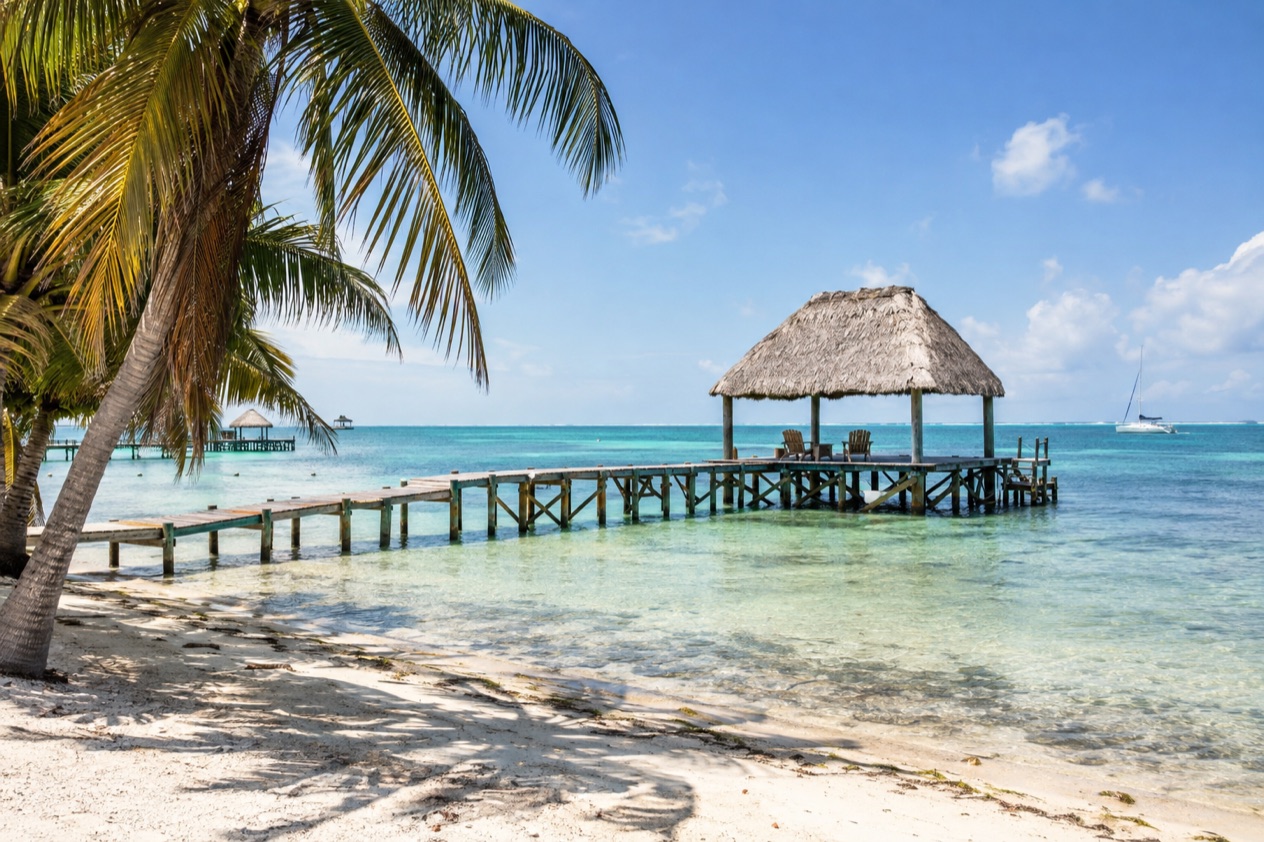
What is the weather like in Ambergris Caye and San Pedro in May?
May is hot and bright on the island, with a sea that has warmed into proper swimming temperature and days that keep getting longer.
| Month | Sea at Ambergris Caye and San Pedro (°F) | Daylight on the 15th (hours and minutes) |
|---|---|---|
| April | 82.6 | 12 h 36 min |
| May | 84.7 | 13 h 01 min |
| June | 86.6 | 13 h 14 min |
In Belize City, highs average about 90°F in May, with lows in the upper 70s. On the island you feel that heat most in the middle of the day, which is why the sea is so welcome. The water is warm enough that getting in feels like a pleasure rather than a shock, and it is the natural answer to a hot afternoon on a pier or a beach bar stool.
The light is the quiet gift of the month. Daylight stretches past thirteen hours by mid-May, so breakfast on a veranda, a long reef outing and a sunset drink fit into the same day without anyone hurrying. Evenings are warm enough for a light shirt and sandals, and dinner on a deck facing the water needs no extra layer.
Dress the way islanders do: loose cotton, a wide-brimmed hat, sunglasses and plenty of sunscreen. Shade is a habit here, under palms, awnings and the roofs of open-air restaurants, and a cover-up over a swimsuit makes the walk from beach to lunch easy.
Can you swim in Ambergris Caye and San Pedro in May?
The sea is warm, in the mid-80s, the kind of temperature that makes a long time in the water a pleasure.
It covers coral reef, seagrass beds and mangrove forest across 4,448 acres, and its name means “little channel” in Maya.
Snorkelers and divers who head there meet the three habitats that make the reef work: coral heads, the grass beds beyond them and the mangroves along the shore. Nurse sharks are part of the picture in Belizean waters, and it is illegal to take or kill them, as it is whale sharks. Sargassum, a brown algae that floats in clumps and smells like rotten eggs when it washes ashore, is something Caribbean beaches deal with, so a day on the reef is always a good alternative to a day on the sand.
What to do in Ambergris Caye and San Pedro in May
Ambergris Caye is the largest of several hundred cayes in the northernmost waters of Belize, and May on it is built around the water. Mornings belong to boats and reef, middays to shade and cold drinks, and evenings to the town. The days are long enough that all three fit easily.
Mangoes ripen in this part of the year, and you see them in fruit stands, in smoothies and sliced beside a plate of grilled fish. Beyond the reef and the table, the island offers plain pleasures: a bike or foot loop through the sand streets, a stop for a Belikin beer and a long look at the water.
Hol Chan and the reef
Hol Chan Marine Reserve is the outing that defines a stay in San Pedro. It lies close to Ambergris Caye and Caye Caulker, and boat tours depart from the town toward it. The reserve protects reef, seagrass and mangrove, so on a single trip you see all three of the habitats that shelter Belize’s marine life.
In May the warm sea and the long daylight give you generous hours for it. The reef is a place for masks, fins and patience: you float over coral heads and watch fish drift in and out of the channel the reserve is named for. Bring a hat and a rash guard, since the sun at this time of year is strong over open water.
The town, the piers and the beachfront
San Pedro Town is the island’s center, a place of low wooden buildings, painted signs and sandy lanes where bikes and golf carts share the road with pedestrians. The shoreline is lined with piers where fishing boats tie up and tour boats load, and a walk along them is a good way to feel the pulse of the place.
At the Saca Chispas Water Taxi Terminal, boats come and go through six berths, and cross-border passenger traffic between San Pedro and Chetumal also passes through. It makes the waterfront a place of constant comings and goings. Beach bars along the shore let you sit with your feet in the sand and watch it all happen.
Eating and drinking in May
San Pedro eats from the sea. Expect grilled fish, conch fritters, ceviche with a squeeze of lime, and the Belizean staples of rice and beans with stewed chicken. Breakfast means fry jacks, warm and puffed, with beans, eggs or jam on the side.
A drink in the shade is part of the day: a rum punch, a cold lager, or a fresh juice made from whatever fruit is in season. A bottle of Marie Sharp’s hot sauce sits on many tables. Beachfront deck restaurants are at their liveliest around sunset, with the town’s casual rhythm in full swing.
A two-day itinerary for Ambergris Caye and San Pedro in May
Day 1 is for the town and the beach. Start early with fry jacks and coffee at a small breakfast spot, then walk the piers while the light is soft and the boats are heading out. As the heat builds, settle into a beach bar or a shaded deck for a long lunch of grilled fish or ceviche, and spend the middle of the day in the water.
In the late afternoon, wander the sandy streets for shops and local crafts, then take a seat on the waterfront to watch the sunset. With daylight lasting past thirteen hours, evenings stay golden for a long time. Dinner can be at a deck restaurant over the water, followed by a slow walk back.
Day 2 is for the reef. Go out in the morning toward Hol Chan Marine Reserve, 4 miles south of San Pedro, and spend your time snorkeling or diving over its coral, seagrass and mangrove. Back in town, lunch can be something simple and cold, like ceviche or a fruit smoothie, eaten in the shade.
If the weather turns gray, the day moves indoors: a long breakfast, a browse through craft shops and galleries, a coffee or a rum punch under a roof and an early dinner. When the sky clears, head back to the pier for the sunset.
Is Ambergris Caye and San Pedro busy in May?
San Pedro keeps a steady pace, with the dock, the beach bars and the reef boats giving it a lively but unhurried feel.
The waterfront is where the activity shows. At the Saca Chispas Water Taxi Terminal, small water taxis, tour boats and marine tenders use six berths, and cross-border traffic connects the town with Chetumal. That gives the dock a constant bustle, though the rest of the town stays easygoing, with open-air restaurants and quiet side streets.
Where you eat and stay shapes how the island feels. Beachfront decks and central streets are the most social part of town, while spots farther along the shore have a calmer mood. The reef trips are the part of the day most worth planning ahead, since your hours on the water set the shape of everything else.
The long daylight helps. With the sun up so late, the day does not bunch into a single rush, and there is room for a morning on the water, a slow lunch and a sunset walk without feeling squeezed.
What to pack for Ambergris Caye and San Pedro in May
Pack for sun and salt water, with a light layer for the rare gray day.
- A wide-brimmed hat and sunglasses, for the strong sun over open water.
- Sunscreen and a rash guard, for long hours snorkeling at Hol Chan.
- Two swimsuits, so one can dry while you wear the other.
- Loose cotton shirts and shorts, for hot days in town.
- Sandals that go from beach to restaurant.
- A light rain jacket, for the occasional wet day.
Good to know before you go
The U.S. State Department rates Belize Level 2, “Exercise increased caution”, because of crime, and says the south side of Belize City has historically had the highest concentration of violent crime.
May falls just before the Atlantic hurricane season, which runs from June 1 to November 30, so the month sits at the edge of the stormier half of the year. Sargassum, the brown algae that floats in clumps and gives off a rotten-egg smell when it washes ashore, is a feature of Caribbean beaches in general. On the island, much of the day is spent on boats and piers, with the reef as the main reward.
Ambergris Caye and San Pedro in May vs April and June
Going four weeks earlier brings April, with a cooler sea and shorter days. The water is still pleasant but has not reached its May warmth, and evenings begin a little sooner. In Belize City, April also records fewer rainy days than May.
Going four weeks later brings June, with the warmest sea of the three months and the longest days. It is also the month the Atlantic hurricane season begins, and in Belize City, June counts more rainy days than May. The long light is a real bonus for evenings on the water.
Choose April if you prefer a slightly cooler sea and shorter days. Choose May for the balance: a warm sea, long evenings and a month that falls ahead of the hurricane season. Choose June if the warmest water matters most and you are comfortable traveling as the season opens.
Is May a good time to visit Ambergris Caye and San Pedro?
Yes, for anyone whose idea of a vacation is water, light and food.
May suits snorkelers, divers and beach people, along with travelers who like to spend the day outdoors and eat well in the evening. It is less suited to anyone who wants cool air, since the heat is a constant companion and the best answer to it is the sea.
On arrival, put the reef first. A morning at Hol Chan Marine Reserve sets the tone for everything else, and the town can fill the remaining hours: the piers, the beach bars, the fry jacks and the sunset. What is special about May here is the combination: a sea that has warmed up, daylight that stretches well into the evening, and a small island town still running at its own unhurried pace.
Sources
- Open-Meteo Marine API, average 2015-2024, checked October 11, 2026
- sunrise-sunset.org, sunrise and sunset calculated for the 15th of the month, checked October 11, 2026
- NOAA NCEI, GHCN-Daily station BHM00078583 (Philip S. W. Goldson International Airport, Belize City), normals 1991-2020 computed from the daily record (https://www.ncei.noaa.gov/access/services/data/v1?dataset=daily-summaries&stations=BHM00078583), checked October 11, 2026
- Belize Tourism Board, Sargassum resource (https://www.belizetourismboard.org/tourism-resources/sargassum-resource/), checked October 11, 2026
- Belize Fisheries Department, Gladden Spit and Silk Cayes Marine Reserve (https://fisheries.gov.bz/gsscmr/), checked October 11, 2026
- Belize Fisheries Department, Regulations (https://fisheries.gov.bz/regulations/), checked October 11, 2026
- Belize Port Authority, San Pedro terminal (https://portauthority.bz/belize-port-facilities/san-pedro-terminal/), checked October 11, 2026
- Wikipedia, Caye Chapel (https://en.wikipedia.org/wiki/Caye_Chapel), checked October 11, 2026
- Wikivoyage, Ambergris Caye (https://en.wikivoyage.org/wiki/Ambergris_Caye), checked October 11, 2026
- Wikivoyage, San Pedro (Belize) (https://en.wikivoyage.org/wiki/San_Pedro_(Belize)), checked October 11, 2026
- Wikipedia, Hol Chan Marine Reserve (https://en.wikipedia.org/wiki/Hol_Chan_Marine_Reserve), checked October 11, 2026
- Wikipedia, Climate of Belize (https://en.wikipedia.org/wiki/Climate_of_Belize), checked October 11, 2026
- U.S. Department of State, Belize Travel Information, Safety and security (https://travel.state.gov/), checked October 11, 2026
- U.S. Department of State, Belize Travel Information, Entry and exit requirements (https://travel.state.gov/), checked October 11, 2026
- U.S. Department of State, Belize Travel Advisory, Level 2, March 11, 2026 (https://travel.state.gov/), checked October 11, 2026
- NOAA National Hurricane Center, Climatology (https://www.nhc.noaa.gov/climo/), checked October 11, 2026
To plan your stay
- Things to Do in Ambergris Caye and San Pedro: Reef Snorkeling, Hol Chan, Bacalar Chico and Island Dining
- Where to Stay in Ambergris Caye and San Pedro: Beach Resorts, Town Stays and a Private Island
- Ambergris Caye and San Pedro from Belize City: Water Taxi, Flight and Getting There
- Know Before You Go to Ambergris Caye and San Pedro: Entry, Money, Getting Around and Health