
In March, the sandy streets of San Pedro Town start the morning with the smell of fry jacks and coffee drifting from open doorways, and by the time the sun is high the docks are lined with boats loading snorkel gear and coolers. The sea has been warming since winter and the days keep stretching, so the water draws you in as much as the shade does. It is a month for reef outings, long seafood lunches and evenings on a pier, on the largest caye in Belize.
What is the weather like in Ambergris Caye and San Pedro in March?
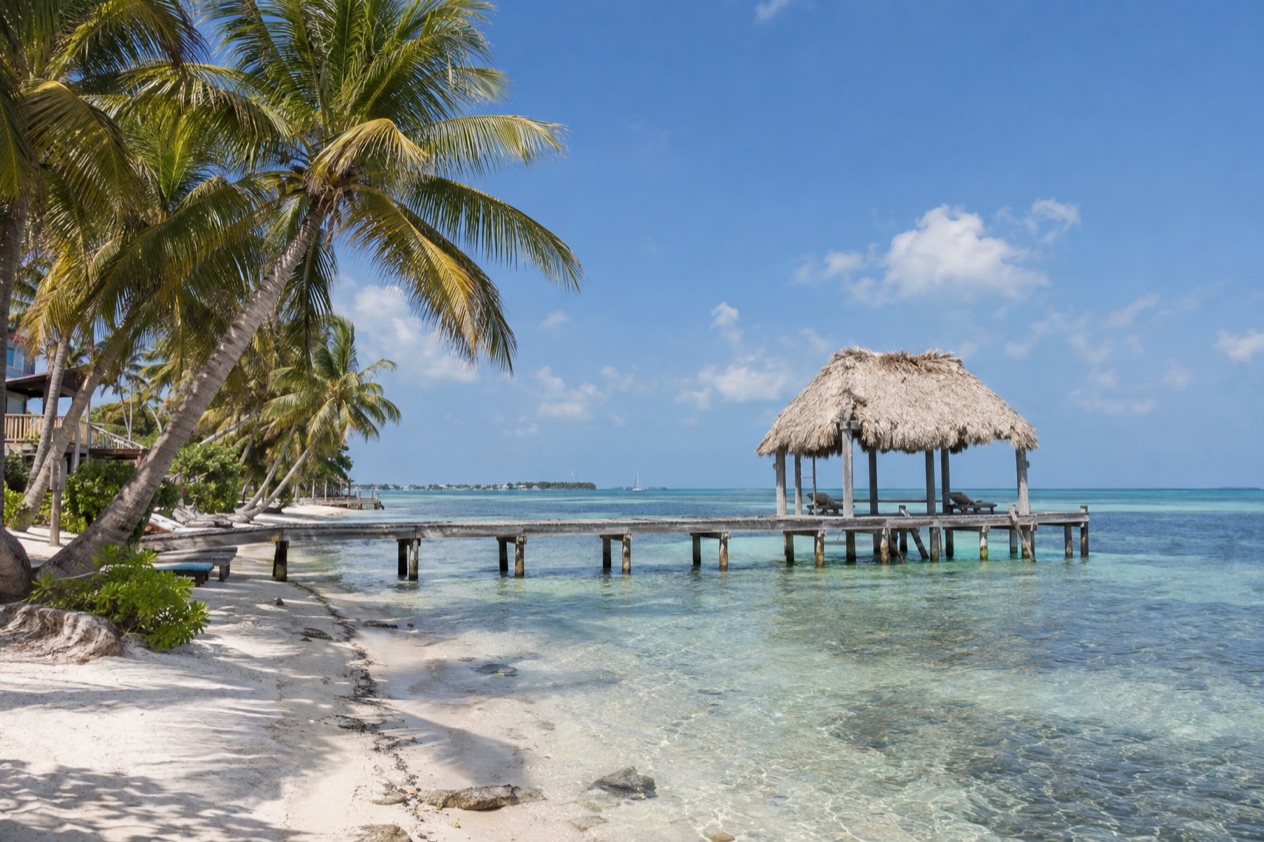
March is warm and bright on Ambergris Caye, with a sea that already invites a long swim and days that keep getting longer as spring arrives.
| Month | Sea at Ambergris Caye and San Pedro (°F) | Daylight on the 15th (hours and minutes) |
|---|---|---|
| February | 80.9 | 11 h 36 min |
| March | 81.6 | 12 h 05 min |
| April | 82.6 | 12 h 36 min |
In Belize City, March highs average in the mid-80s and lows in the low 70s, with rain on only about four days. On the caye, the main feature of the month is the water and the light. The sea sits in the low 80s, and the sun is up for about twelve hours, which gives a full day on the water with time left over for dinner.
Light clothes, sandals and a swimsuit under your shirt make up the daily uniform. The sun on the water is strong, so a hat and sunglasses matter as much as sunscreen. Evenings on the pier or a restaurant deck are comfortable in a thin layer, and many people go barefoot or in flip-flops from breakfast to bedtime.
With the days longer than in February, there is more room for a late swim and a slow sunset drink before the lights come on along the waterfront. The sea is a shade warmer than a month earlier, so the first plunge of the day is less of a shock.
Can you swim in Ambergris Caye and San Pedro in March?
The sea is warm enough for a long swim in March, in the low 80s, and the reef outings that leave from San Pedro are part of why people come.
Hol Chan Marine Reserve lies four miles south of San Pedro. It was established in July 1987 as the first marine protected area in Belize, and it protects coral reef, seagrass beds and mangrove. Its name is Maya for “little channel”, a fitting name for a reserve cut by a gap in the reef.
Shark Ray Alley belongs to the same reef outing in the minds of many travelers. It is known for nurse sharks and stingrays gliding around boats. In Belize it is illegal to take or kill nurse sharks and whale sharks, a rule that says something about how the country treats its marine life.
Along the town’s own shoreline, the sea is the backdrop of every meal and every walk. Dock edges, beach bars and the water in front of the hotels are where the day tends to begin and end.
What to do in Ambergris Caye and San Pedro in March
March has one fixed date in the Belizean calendar: National Heroes and Benefactors Day on March 9. It was originally called Baron Bliss Day, in honor of a wealthy Englishman who left his fortune to what was then British Honduras. Belizeans mark it as a national day, and a visit around it gives you a glimpse of the country beyond the resort scene.
Holy Week and Easter move every year, so in years when they fall in late March, the town takes on a holiday mood, with families out on the beaches and the bars busy. The rest of the month runs on the daily rhythm of the island: boats out in the morning, lunch on a dock, a swim, a sunset.
Hol Chan Marine Reserve and the reef
A trip to Hol Chan is the outing that defines a stay in San Pedro. The reserve sits four miles south of town and covers reef, seagrass and mangrove, three habitats that feed one another. With the water in the low 80s, the sea feels welcoming for a day of looking at coral and the fish that shelter in it.
The name Hol Chan means “little channel” in Maya, and the reserve takes its character from that break in the reef. Pair it with a stop at Shark Ray Alley, where nurse sharks and rays are the draw, and you have the classic reef day of the island. It suits anyone who likes to see marine life up close from a boat or in the water.
Bring a rash guard or a light shirt, because the March sun on the water adds up. Take your time with lunch afterward, ideally somewhere with a view of the dock you just left.
San Pedro Town on foot
The town itself is a pleasure to wander. Sand streets, wooden storefronts painted in Caribbean colors, small shops selling hammocks, hot sauce and local crafts, and dock bars where the day slows down. Walk the waterfront in the morning and you will see fishermen and tour boats preparing for the day.
This is also where you eat. Look for fry jacks at breakfast, with beans and eggs, and for rice and beans with stew chicken at a family-run kitchen. Conch fritters, ceviche and grilled fish turn up on seaside menus, and a cold Belikin beer or a rum punch goes with them. Take a seat close to the water and let the afternoon go by.
Souvenirs are a good reason for a slow stroll through the center: carved wood, woven baskets, bottles of Marie Sharp’s hot sauce and Belizean chocolate. In the evening, the streets fill with the smell of grills, and music comes from the bars along the beach.
Food and drinks of the season
March on the island is a month for eating outside. Seafood leads: fish grilled whole, shrimp, conch cooked in several ways, and ceviche with lime and habanero. Garifuna and Creole cooking appear in dishes such as coconut-based stews and johnnycakes, and fresh juices from tropical fruit cool the afternoons.
A fruity rum drink at sunset is almost a local ritual, served on piers and in beach bars where you can watch the sky change color over the water. Pair it with something salty, such as fried fish or a plate of fritters, and you have the island’s rhythm in one sitting.
Sargassum, a brown algae that floats in clumps and gives off a rotten-egg smell when it washes ashore, is a topic in the Caribbean in general. If you notice it on a beach, the reef outings and the town’s docks and restaurants are where the day goes on.
A two-day itinerary for Ambergris Caye and San Pedro in March
Day 1 starts in town, with an early walk along the waterfront while the boats are being prepared. Order fry jacks or a plate of eggs and beans at a small breakfast place, then browse the craft shops and the sandy side streets before the sun is high. March days are about twelve hours long, so there is no need to rush.
For lunch, choose a dock restaurant for ceviche or conch fritters, and spend the afternoon on the water or on a beach chair by your hotel. As the light softens, walk back into town for a rum punch on a pier and a dinner of grilled fish or stew chicken with rice and beans.
Day 2 belongs to the reef. Make Hol Chan Marine Reserve, four miles south of San Pedro, the center of the day, and add Shark Ray Alley for its nurse sharks and rays. The sea is in the low 80s, so you can stay in the water without feeling chilled, and a cover-up for the boat is enough.
Back in town, an unhurried late lunch of seafood suits the mood. If you have time, spend the evening on a pier and watch the sunset. If the weather turns gray, shift to the indoor side of the island: a long lunch, the craft shops, a cafe with a view of the street, and a slow evening in a restaurant where you can watch the rain on the water.
Is Ambergris Caye and San Pedro busy in March?
March brings a steady flow of visitors to San Pedro, drawn by the warm sea and the long days, and the town is set up to welcome them.
The calendar adds a few landmarks. National Heroes and Benefactors Day falls on March 9, and Holy Week and Easter shift from year to year, landing in March or April. Weeks that touch these dates have a different feel, with local families on the beaches and more movement in the bars and restaurants.
What stays constant is the island’s routine. Boats leave for the reef, restaurants open onto the water, and the dock bars serve their punch at sunset. The town is made for visitors, and that is part of its charm: dinner, a drink and a stroll are always within a few steps of where you are staying.
Choosing where to stay shapes your experience more than the date does. A room close to the center puts the restaurants and docks at your door, while a spot farther along the shore gives you more quiet and a beach of your own. Both put you on the Caribbean side, facing the reef.
What to pack for Ambergris Caye and San Pedro in March
Pack for the water, the sun and slow evenings on a pier. The island runs on sandals and swimsuits.
- Two swimsuits, so one can dry while you wear the other on reef days.
- A long-sleeved rash guard or light shirt, for sun on the boat and in the water.
- Reef-safe sunscreen, a hat and sunglasses, because the March sun is strong on the water.
- Sandals or flip-flops, which cover most of the day in a sand-street town.
- A thin layer for evenings on the pier or dock.
- A snorkel mask you like, if you prefer your own fit for the Hol Chan outing.
Good to know before you go
The U.S. State Department rates Belize Level 2, “Exercise increased caution”, because of crime, and says the south side of Belize City has historically had the highest concentration of violent crime.
March falls outside the official hurricane season, which in the Atlantic runs from June 1 to November 30. That makes it a month when the sea and the sky are the main considerations for a trip to the caye.
Sargassum, the brown algae that floats in clumps and can smell of rotten eggs when it reaches a beach, is a feature of the Caribbean generally. Reef outings, the town’s docks and its restaurants give you plenty to do however a given beach looks on a given day.
Ambergris Caye and San Pedro in March vs February and April
Go four weeks earlier and the sea is a shade cooler, the days are shorter, and Belize City sees more rainy days. February suits travelers who like a slightly fresher feel and are happy to spend more of the evening indoors, and it comes before the lengthening light of spring.
Go four weeks later and the sea is warmer still, the days are longer, and Belize City records fewer rainy days. April gives you more hours of light for the water and a sea that is even more inviting, with Holy Week and Easter sometimes falling in it.
March sits in the middle and is easy to recommend: a warm sea, a day long enough for a reef outing and a long dinner, and the March 9 holiday for a touch of Belizean calendar. Choose February if you want the shortest days and a slightly cooler sea, April if you want the warmest water and the longest evenings, and March if you want a balance of both.
Is March a good time to visit Ambergris Caye and San Pedro?
Yes, March is a good time for travelers who want a warm sea, long days and a trip built around the reef, the docks and the table.
It will suit snorkelers and anyone who wants to see Hol Chan Marine Reserve and Shark Ray Alley, and it suits people who like to eat well, with seafood, fry jacks and rum punch at the center of the day. It also suits those who enjoy a slow rhythm: a swim, a long lunch, a sunset on a pier.
If you prefer an itinerary with museums, big-city nightlife or a long list of sights, another place will fit better. San Pedro is a town for the water and for sitting still, and March is a month that rewards that.
On arrival, start with the waterfront. Walk the sandy streets, find a dock restaurant, and let the sea set the pace. Then plan your reef day. March brings a sea in the low 80s, days that last about twelve hours, and a calendar with a national day on March 9 and Holy Week sometimes close behind. The island is at ease, and you can be too.
Sources
- Open-Meteo Marine API, average 2015-2024, checked October 11, 2026
- sunrise-sunset.org, sunrise and sunset calculated for the 15th of the month, checked October 11, 2026
- NOAA NCEI, GHCN-Daily station BHM00078583 (Philip S. W. Goldson International Airport, Belize City), normals 1991-2020 computed from the daily record (https://www.ncei.noaa.gov/access/services/data/v1?dataset=daily-summaries&stations=BHM00078583), checked October 11, 2026
- Wikipedia, Public holidays in Belize (https://en.wikipedia.org/wiki/Public_holidays_in_Belize), checked October 11, 2026
- Belize Tourism Board, Sargassum resource (https://www.belizetourismboard.org/tourism-resources/sargassum-resource/), checked October 11, 2026
- Belize Fisheries Department, Gladden Spit and Silk Cayes Marine Reserve (https://fisheries.gov.bz/gsscmr/), checked October 11, 2026
- Belize Fisheries Department, Regulations (https://fisheries.gov.bz/regulations/), checked October 11, 2026
- Wikipedia, Caye Chapel (https://en.wikipedia.org/wiki/Caye_Chapel), checked October 11, 2026
- Wikivoyage, Ambergris Caye (https://en.wikivoyage.org/wiki/Ambergris_Caye), checked October 11, 2026
- Wikivoyage, San Pedro (Belize) (https://en.wikivoyage.org/wiki/San_Pedro_(Belize)), checked October 11, 2026
- Wikipedia, Hol Chan Marine Reserve (https://en.wikipedia.org/wiki/Hol_Chan_Marine_Reserve), checked October 11, 2026
- Belize Fisheries Department, Hol Chan Marine Reserve (https://fisheries.gov.bz/hcmr/), checked October 11, 2026
- Wikipedia, Climate of Belize (https://en.wikipedia.org/wiki/Climate_of_Belize), checked October 11, 2026
- U.S. Department of State, Belize Travel Information, Safety and security (https://travel.state.gov/), checked October 11, 2026
- U.S. Department of State, Belize Travel Information, Entry and exit requirements (https://travel.state.gov/), checked October 11, 2026
- U.S. Department of State, Belize Travel Advisory, Level 2, March 11, 2026 (https://travel.state.gov/), checked October 11, 2026
- NOAA National Hurricane Center, Climatology (https://www.nhc.noaa.gov/climo/), checked October 11, 2026
To plan your stay
- Things to Do in Ambergris Caye and San Pedro: Reef Snorkeling, Hol Chan, Bacalar Chico and Island Dining
- Where to Stay in Ambergris Caye and San Pedro: Beach Resorts, Town Stays and a Private Island
- Ambergris Caye and San Pedro from Belize City: Water Taxi, Flight and Getting There
- Know Before You Go to Ambergris Caye and San Pedro: Entry, Money, Getting Around and Health