
At Arawak Cay in Nassau, the sound of a hammer pounding conch carries over the stalls, and the smell of hot oil, lime and onions follows you down the strip. People stand at counters watching salad being chopped to order while someone calls out a number for a plate of cracked conch. It is the clearest introduction to eating in the Bahamas, and it is where most visitors start.
What is Bahamian food?
Bahamian food is island cooking built around conch, fish and starches like rice, grits and Johnny cake, seasoned with sweet peppers, onions, lime and hot pepper. It is hearty, home-style and often fried or stewed, and much of it is eaten with your hands at a casual counter.
The sea supplies the center of the plate, and conch is the star in more forms than most visitors expect. Around it sit the everyday staples: white rice under a stew, grits beside steamed fish, a dense loaf of Johnny cake next to a bowl of soup. Nothing is fussy, and that is the charm of it.
Breakfast the Bahamian way
Breakfast is where the cooking feels most like home. Steamed sardines, steamed tuna and steamed turkey are typically served with grits and a side of avocado that Bahamians call pear. White rice is also an option in place of the grits, so you can choose the softer or the more filling base.
Then there is Fire Engine, the name Bahamians give canned corned beef, and it is known by that name anywhere you go in the country. It can be cooked down with tomato paste, sweet peppers, onions, potatoes and red pepper flakes into a savory, slightly spicy hash. It is a quick, easy and very affordable meal on the mainland of the Bahamas, so it shows up on plenty of everyday tables.
Souse and Johnny cake
Souse is a soup-like dish, and chicken souse is the classic version. It is brothy, sharp with lime and best with an extra side of goat pepper, which Bahamians recommend as a hangover remedy after a night out. Treat the goat pepper with respect.
Johnny cake is the bread that goes with it. It is a dense, sometimes sweet baked bread, a staple and unique to the Bahamas, and it is often served with soup-like dishes such as souse. Tear it, dip it, and you will understand why it stays on the table.
A new generation in Nassau
Nassau, on New Providence, is the place for what people there call the culinary revolution. A new generation of chefs updates classic Bahamian dishes with modern techniques, and seafood stew and fried conch are among those being reinvented. Chef Leonardis Moss believes fine dining can be authentically Bahamian rather than only French or Italian.
The drinks have followed. Mixologists give classic cocktails a distinct Bahamian edge, and Mr. Mix adds layers to craft cocktails with tamarind, soursop and smoked pineapple. He tries to make a cocktail from every indigenous ingredient he meets, which makes a bar stop here a tasting of its own.
Beyond Nassau
On Cat Island, islanders open their doors and offer travelers a glimpse of authentic Bahamian life with a shared plate that tells a story of connection and community. On Little Exuma, three small family-owned dining businesses work together to offer unusual dining experiences. These are meals that depend on people more than on menus.
Restaurants across the islands also cover a wide range, from American, Italian, French and Indian to Mediterranean, sushi and steakhouses. Gluten free, halal, kosher, vegan and vegetarian-friendly options are listed among the dietary choices, so a mixed group can still eat together.
What should you try in the Bahamas?
Start with conch in as many forms as you can manage, then add a Bahamian breakfast, a bowl of souse and something from a local market. Conch is the thread, and each preparation tastes different.
Conch, five ways
Conch salad is the freshest. It is made with raw diced conch, onions, sweet pepper, lime and the juice of an orange, and it arrives bright, cold and sharp. People with a shellfish allergy should not eat it. At the Fish Fry the salad also includes tomatoes, salt and pepper, and the tropical version adds pineapple and mango for a sweeter finish.
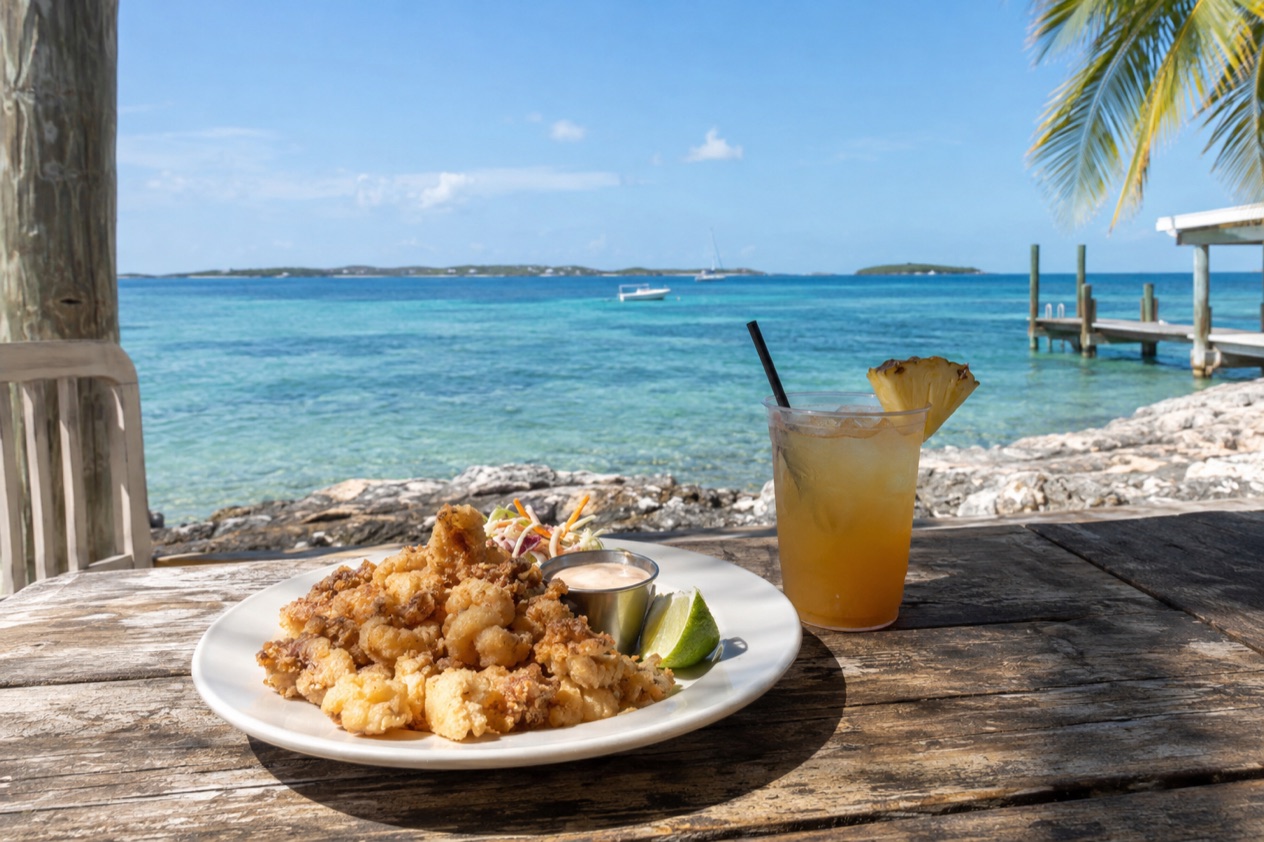
Cracked conch is the crowd-pleaser. The meat is beaten with a hammer, seasoned, bathed in flour and deep fried, then typically served with fries and a choice of ketchup, hot sauce or mayonnaise. In Nassau, Chef Leo enhances cracked conch with spicy shishito peppers and pickled radish, a good example of the newer style.
Stewed conch is the comfort version, served on a bed of white rice, and it is on the menu at almost all local eateries on the island. Conch chowder is a soup with bits of conch, carrots, potatoes and a dark broth, served with Johnny cake or grits. Fritters and steamed conch round out the list.
Markets and local flavors
On New Providence, the BAIC Farmers Market on Gladstone Road usually has fresh produce shipped from the Out Islands, along with honey, tea, jams and farming supplies. Value Added Tax is added at the register. The Doongalik Farmers Market offers food and beverages for everyone, including vegans, and Seasonal Sunshine runs at the Doongalik Art Gallery every Saturday, even when the market is closed for the season.
| Market | Open | Where |
|---|---|---|
| BAIC Farmers Market | Every Saturday, 8 a.m. to 3 p.m. | Gladstone Road, New Providence |
| Doongalik Farmers Market | Late August or early September to mid-May, depending on the farmers | Doongalik Art Gallery, New Providence |
What to drink and what to pair
Pair conch salad with something cold, and look for cocktails that use local fruit. Tamarind, soursop and smoked pineapple are all in play at Mr. Mix, and they suit the lime and pepper heat of the food. Cooking classes and culinary tours also appear among the dining experiences on the islands, a good way to learn how a dish comes together.
What is a Fish Fry?
A Fish Fry is a strip of casual seafood stalls and restaurants, and in Nassau the name belongs to Arawak Cay, which Bahamians simply call the Fish Fry. It is the place to eat conch, fried fish and island sides in one outing, and the plan-restaurants listing even includes a Fish Fry Experience among its dining types.
Arawak Cay in Nassau
Deciding what and where to eat is an all-day affair here. Stalls sit side by side, each with its own menu board and its own regulars, and you can stroll the strip comparing before you commit. Conch is served cracked, steamed, stewed, as fritters, in chowder or as tropical conch salad, so even one stall can fill a table.
Watching the salad being made is half the fun. The conch is diced raw, then tossed with onions, peppers and citrus while you wait, and the result is handed over in a bowl still cold from the prep. It is lively, informal and made for sharing.
For non-seafood eaters
Not everyone in your group needs to eat conch. Several stalls at the Fish Fry offer chicken, steak and pork chops, so a mixed table can order without compromise. Add sides of rice or fries and you have a full meal for people who would rather skip the sea.
Go with an appetite and a loose plan. Share a few plates, try one fried and one fresh, and leave room for a second round at a different stall. That is how the strip is meant to be eaten.
Good to know before you go
The U.S. State Department rates the Bahamas Level 2, “Exercise increased caution”, and says most crime occurs in Nassau on New Providence and in Freeport on Grand Bahama.
Anyone with a shellfish allergy should skip conch salad, since it is made with raw conch. The Atlantic hurricane season runs from June 1 to November 30, and market seasons like the Doongalik Farmers Market’s follow the farmers, so dates can shift. Restaurants can be searched by island, from Nassau and Paradise Island to Eleuthera, the Exumas, the Abacos and Grand Bahama, which helps when you plan meals around where you are staying.
Sources
- Bahamas Ministry of Tourism, Investments & Aviation (bahamas.com), travel blog, conch dishes (https://www.bahamas.com/blog/5-ways-to-eat-conch-in-the-bahamas), checked October 10, 2026
- Bahamas Ministry of Tourism, Investments & Aviation (bahamas.com), travel blog, Bahamian breakfast (https://www.bahamas.com/blog/the-great-bahamian-breakfast), checked October 10, 2026
- Bahamas Ministry of Tourism, Investments & Aviation (bahamas.com), travel blog, Arawak Cay fish fry (https://www.bahamas.com/blog/fish-fry), checked October 10, 2026
- Bahamas Ministry of Tourism, Investments & Aviation (bahamas.com), Culinary Revolution Nassau (https://www.bahamas.com/experiences/culinary-revolution-nassau), checked October 10, 2026
- Bahamas Ministry of Tourism, Investments & Aviation (bahamas.com), Restaurants and dining (https://www.bahamas.com/plan-your-trip/restaurants), checked October 10, 2026
- Bahamas Ministry of Tourism, Investments & Aviation (bahamas.com), travel blog, farmers markets (https://www.bahamas.com/blog/four-farmers-markets-in-nassau-you-should-check-out), checked October 10, 2026
- Bahamas Ministry of Tourism, Investments & Aviation (bahamas.com), Culture (https://www.bahamas.com/experiences/culture), checked October 10, 2026
- U.S. Department of State, The Bahamas Travel Advisory, Level 2 (https://travel.state.gov/), checked October 10, 2026
- NOAA National Hurricane Center, Climatology (https://www.nhc.noaa.gov/climo/), checked October 10, 2026
To plan your stay
- Best Time to Visit the Bahamas: Weather, Hurricane Season, Sea Temperatures and Junkanoo
- Where to Stay in the Bahamas: Best Islands, Resorts, Boutique Stays and How to Choose
- Getting Around the Bahamas: Flights, Ferries, Mailboats and Taxis in Nassau
- Know Before You Go to the Bahamas: Entry Rules, Money, Getting Around and Local Customs