
In March the flats around Andros Town turn a pale, glassy green in the morning, and a few fishing skiffs push off before the sun has cleared the pines. By noon the docks smell of lime and onions from kitchens preparing the last lobster of the season.
The island is quiet, the days are lengthening, and the sea is warming. This is a month for reefs, creeks and blue holes, for travelers who like their islands wide and empty.
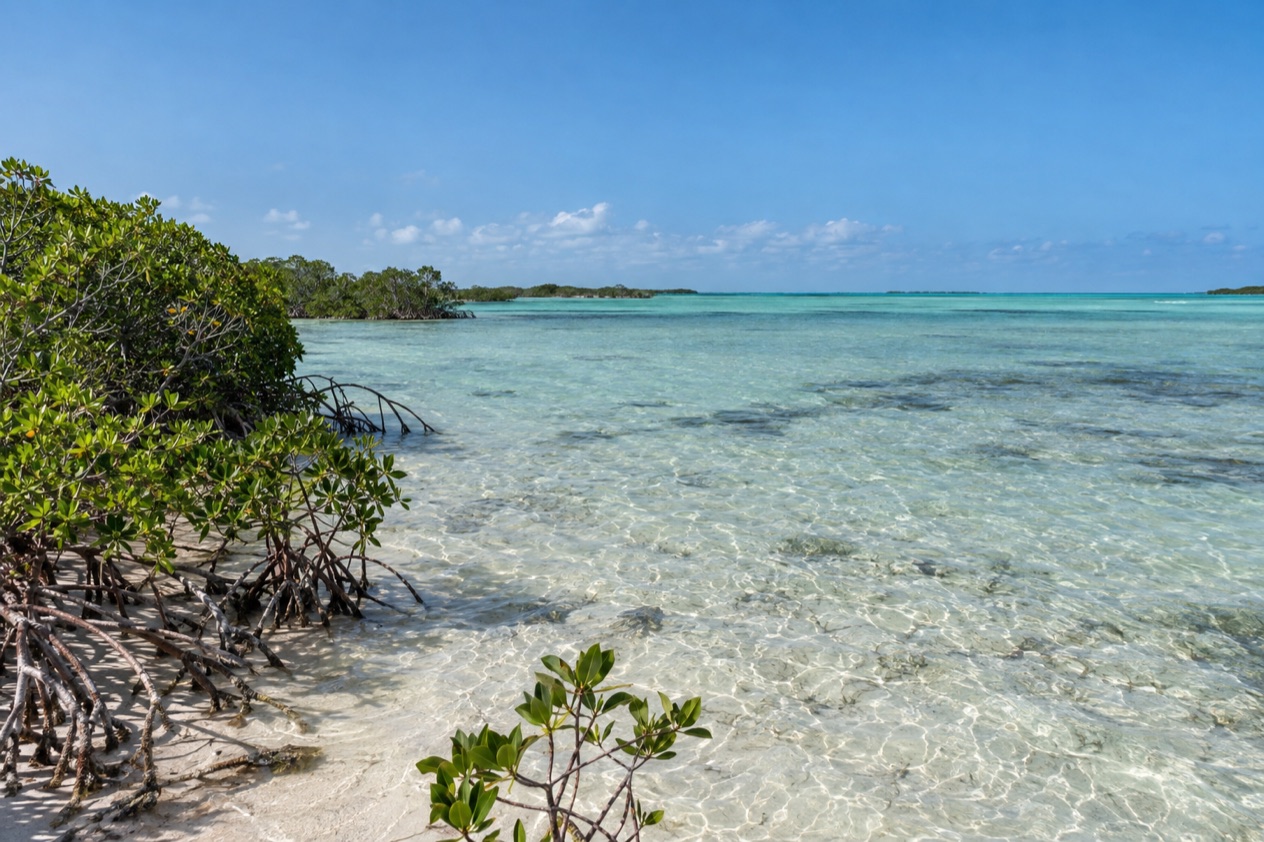
What is the weather like in Andros in March?
March is warm, bright and settled, with the sea already pleasant and the days stretching longer than they did a month ago.
| Month | Sea at Andros (°F) | Daylight on the 15th (hours and minutes) |
|---|---|---|
| February | 76.8 | 11 h 22 min |
| March | 77.6 | 12 h 03 min |
| April | 78.5 | 12 h 48 min |
For the air, Nassau gives the clearest signal: highs there average about 81°F in March, and showers are brief and scattered. Any sky that turns gray tends to clear within the hour, so a rainy morning rarely cancels a whole day. On Andros the pattern is the same kind of spring: sun on most days, with the odd squall passing over the pines and the creeks.
Daylight now lasts a little over twelve hours, which means sunrise has moved earlier and dusk lingers. Mornings are the softest time for walking the shoreline or heading out on a boat. By early afternoon the sun is strong on open water, so a hat and sunscreen matter more than a jacket.
Evenings are comfortable on a porch or a restaurant deck, usually with only a light layer needed once the sun drops. The sea sits a degree or so above its February level, which you will notice the first time you wade in.
Can you swim in Andros in March?
The sea is mild enough for most people to get in and stay a while, though a few swimmers will find the first minute brisk.
Andros is ringed by shallow flats on the island side and open ocean beyond the reef, so the water changes character from one stretch of shore to the next. Conditions also shift from day to day with wind and tide, and a beach that is glassy one morning can have a chop the next. Ask locally about the stretch of coast you plan to use.
Snorkelers have the most reason to be in the water. A long barrier reef runs offshore, with scuba diving and snorkeling the way visitors meet it. Divers see it from the ocean side, where the bottom falls away to great depth in the Tongue of the Ocean.
Bring a mask, fins and a rash guard if you tend to feel the cold, since a long session in 77°F water can chill you. The freshwater pond at the surface of the Guardian Blue Hole is a sight rather than a swimming spot.
What to do in Andros in March
March has no single big festival on Andros. What it offers is the end of crawfish season, flats that fishermen love, and a pace that feels almost private. Easter and Holy Week move from year to year and sometimes fall in March, which brings church services and family gatherings to the small settlements.
The last weeks of crawfish season
Spiny lobster, called crawfish all over the islands, may be caught through the final day of March. Menus often use crawfish and lobster as two words for the same thing, so either term will bring the same plate. That makes the month a last chance for the seasonal catch.
Crawfish salad is the classic: diced lobster tossed with onions, sweet peppers and lime, spooned over greens or tucked into bread. Stewed and grilled versions turn up at settlement restaurants and guesthouse tables. Pair a plate with a cold Kalik or a glass of fresh juice on a shaded deck at lunchtime.
Reef, flats and blue holes
Andros is where geology turns theatrical. Blue Holes National Park spreads over about 40,000 acres of pine, creek and limestone, and the Guardian Blue Hole has been explored to a depth of 436 feet beneath a freshwater surface pond. You look down into dark circles ringed by green, set in forest that feels far from any town.
Out on the water, snorkeling and diving along the reef are the main draw, and bonefishing across the flats pulls anglers who come for exactly this kind of shallow, clear water. In March, with the sea warming and the light long, mornings on a boat are the best use of the day. Afternoons suit an easier pace.
Settlements, crafts and quiet roads
Andros Town and Fresh Creek set the tone for slow wandering: low houses, boats tied at the creek mouth, a church at the center of each settlement. The island is known for Androsia batik, brightly dyed cloth made on the island, and for straw and basket work in the villages, such as Red Bays.
Spend an afternoon looking at craft, then drive on to a settlement beach and watch fishermen clean their catch. The mood is neighborly and unhurried. Food comes with plenty of rice and peas, fried fish and johnnycake, and conversation comes with it.
Across the island, West Side National Park guards 1.5 million acres of wild land, a sign of how much of Andros still belongs to nature. March, with its softer heat and lower insects than summer, is a kind month to look at it from a boat or a trail.
A two-day itinerary for Andros in March
Day 1 starts early at the water. Take the first boat trip you can find, ideally toward the reef for snorkeling while the surface is likely at its stillest and the light is gentle. Breakfast afterward is fruit, eggs and johnnycake at a settlement spot.
Midday is for shade and lunch: crawfish salad or stewed fish at a local restaurant while the season lasts. In the afternoon, once the sun softens, wander Andros Town and Fresh Creek, stopping where batik cloth is made and at the creek where boats come in. With a little over twelve hours of daylight, there is time to be back at the dock for the last warm light. Dinner is grilled fish on a deck.
If rain comes, spend the morning at a craft workshop and a long lunch, then wait for the sky to clear. Day 2 turns inland. Head for Blue Holes National Park in the morning, when the forest is cool and the pools are darkest, and look down into the Guardian Blue Hole. Spend an hour or two there, since the point is to stand and look.
After lunch, take a fishing trip across the flats or simply sit on a quiet stretch of shore with a book. As evening comes on, stop by a tiny settlement to pick up baskets and straw goods, then wrap up the day with one final crawfish meal ahead of the season’s close at month’s end. On a wet day, swap the flats for time with local cooks and craftspeople.
Is Andros busy in March?
No, Andros stays quiet in March, even when other Bahamian islands fill with spring travelers.
The island is the largest in the Bahamas and has very few places to stay for its size, so even a modest number of visitors can fill a small lodge. Anglers, divers and a few couples make up most of the crowd, and you tend to share a reef or a creek with only a handful of others.
Restaurants are small and often family-run, so tables are rarely the problem. Rooms are the thing that runs out.
As a habit, secure rooms early for the weeks around Easter, when families travel, and later for the quieter weeks of early March. A boat or guide for the reef or the flats is worth arranging before you arrive too, since small operators take only a few people each day.
What stays peaceful is the land itself. Roads are empty, settlement beaches are mostly yours, and the blue holes and creeks are not queued at. Cruise passengers do not reach Andros the way they reach Nassau, so there are no sudden waves of day visitors here.
What to pack for Andros in March
Pack for sun, salt water and light evening layers, and bring what you need for the outdoors since shops are few.
- Reef-safe sunscreen and a wide-brimmed hat, because midday sun over the flats is strong.
- Mask, snorkel and fins, if you have them, for the reef.
- A rash guard or thin shorty wetsuit, since long sessions in the water can feel cool.
- Insect repellent for the creeks and forest paths around the blue holes.
- A light layer for evenings on a deck.
- Sturdy sandals or water shoes for rocky shores and boat landings.
Good to know before you go
The U.S. State Department rates the Bahamas Level 2, “Exercise increased caution”, and says most crime occurs in Nassau on New Providence and in Freeport on Grand Bahama.
March falls outside the official Atlantic hurricane season, which runs from June 1 to November 30. When entering, U.S. citizens should carry a passport good for at least six months, a Bahamian visa is not required for a visit, and a return or onward ticket is expected. Arrivals at Andros Town are on a small scale, and many visitors reach the island from Nassau, which lies across the Tongue of the Ocean.
Plan your day around the water: reef trips and fishing depend on the weather and the wind, so keep some flexibility in your days.
Andros in March vs February and April
February is a touch cooler in the sea and shorter in daylight, and the first few days in the water can feel more bracing. It is also the quieter shoulder before the Easter weeks, with crawfish season still open. If you want the brisker air and the fewest people, February still delivers.
April brings the warmest sea of the three and daylight stretching toward thirteen hours, which makes long snorkeling days more comfortable. The catch is that crawfish season has closed, so the island’s best-known dish is no longer on the same footing, and Easter weeks can bring families to the few places to stay.
Those who come for crawfish, reef time and open space will find March a good middle ground. Divers and swimmers who feel the cold may prefer April, and anglers and hikers who like crisp mornings may prefer February.
Is March a good time to visit Andros?
Yes, for travelers who want warm days on the water, quiet roads and the last crawfish of the season.
Snorkelers, divers, anglers and anyone who likes wild country will do well here. Families who want resort amenities, nightlife or big crowds should look at another island or another month. If you arrive in March, start with the water: a reef trip or a morning on the flats sets the tone, and the blue holes and settlements fit around it.
What marks March on Andros is the overlap: a sea that has warmed just enough, days that are finally longer, and a lobster season on its last stretch, all on an island where you can still hear the pines move in the wind.
Sources
- Open-Meteo Marine API, average 2015-2024, checked October 10, 2026
- sunrise-sunset.org, sunrise and sunset calculated for the 15th of the month, checked October 10, 2026
- NOAA NCEI, GHCN-Daily station BF000078073 (Nassau Airport), normals 1991-2020 computed from the daily record (https://www.ncei.noaa.gov/access/services/data/v1?dataset=daily-summaries&stations=BF000078073), checked October 10, 2026
- Bahamas Ministry of Tourism, crawfish season (https://www.bahamas.com/blog/its-crawfish-season), checked October 10, 2026
- Bahamas Ministry of Tourism, Investments & Aviation (bahamas.com), Andros Barrier Reef (https://www.bahamas.com/natural-wonders/andros-barrier-reef), checked October 10, 2026
- Bahamas Ministry of Tourism, Investments & Aviation (bahamas.com), Blue Holes National Park (https://www.bahamas.com/natural-wonders/blue-holes-national-park), checked October 10, 2026
- Bahamas Ministry of Tourism, Investments & Aviation (bahamas.com), Guardian Blue Hole (https://www.bahamas.com/natural-wonders/guardian-blue-hole), checked October 10, 2026
- Bahamas Ministry of Tourism, Investments & Aviation (bahamas.com), Sapphire Blue Hole (https://www.bahamas.com/natural-wonders/sapphire-blue-hole), checked October 10, 2026
- Wikipedia, Andros Town Airport (https://en.wikipedia.org/wiki/Andros_Town_International_Airport), checked October 10, 2026
- Wikipedia, Andros, Bahamas (https://en.wikipedia.org/wiki/Andros,_Bahamas), checked October 10, 2026
- Wikipedia, Geography of the Bahamas (https://en.wikipedia.org/wiki/Geography_of_the_Bahamas), checked October 10, 2026
- Bahamas Ministry of Tourism, Investments & Aviation (bahamas.com), Island FAQ (https://www.bahamas.com/plan-your-trip/island-faq), checked October 10, 2026
- Bahamas Department of Immigration, Entry requirements (https://www.immigration.gov.bs/entry-requirements/), checked October 10, 2026
- Bahamas Department of Immigration, Before your arrival (https://www.immigration.gov.bs/entry-requirements/before-your-arrival/), checked October 10, 2026
- U.S. Department of State, The Bahamas Travel Advisory, Level 2 (https://travel.state.gov/), checked October 10, 2026
- NOAA National Hurricane Center, Climatology (https://www.nhc.noaa.gov/climo/), checked October 10, 2026
To plan your stay
- Things to Do in Andros: Blue Holes, Barrier Reef Diving, Bonefish Flats and Island Food
- Where to Stay in Andros: North Andros, Mangrove Cay, South Andros and How to Choose
- Andros from Nassau: Flights, Mailboats and the Fresh Creek Side of the Island
- Know Before You Go to Andros: Entry Rules, Money, Getting Around and Island Etiquette