
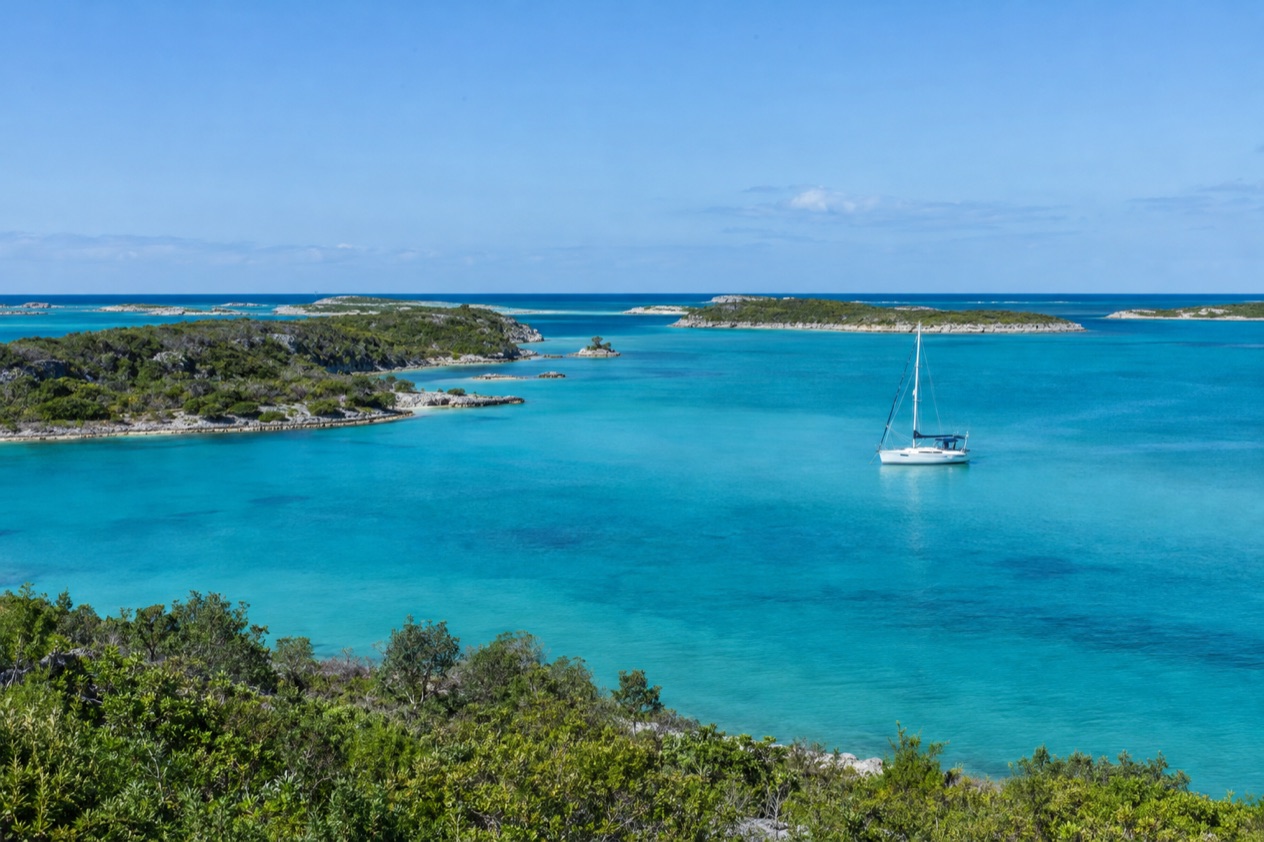
In March, the harbor at Hope Town fills with the clink of halyards and the smell of crawfish being cleaned on the docks, because the season for the Bahamas’ favorite shellfish is winding down and every kitchen wants to use it. Dinghies come and go across the water, and screen doors slap in the lanes of the cays. This is the Abacos in early spring, a month for island hopping, long lunches by the water and swims that no longer feel like a dare.
What is the weather like in the Abacos in March?
March is warm and sunny, with enough softness in the air to spend whole days outdoors and a sea that has lost its winter chill. The table follows the water and the light, the two things that most shape a day on the cays.
| Month | Sea at the Abacos (°F) | Daylight on the 15th (hours and minutes) |
|---|---|---|
| February | 76.1 | 11 h 19 min |
| March | 76.6 | 12 h 03 min |
| April | 77.2 | 12 h 51 min |
For the air, look to Nassau, where March afternoons top out around 81°F and the nights stay in the mid-60s. That is a shirt-sleeve afternoon and a light layer after dark, which suits the way the cays live in spring, with lunch on a deck and dinner on a dock.
Days are now about as long as the nights, so there is time for a morning ferry, an afternoon on a beach and a drink at sunset without hurrying. Mornings are the best hours for walking the lanes of the settlements, when the light is low and the paint on the cottages looks its brightest. Showers, when they come, tend to be passing ones that clear and leave the sky washed.
The sea is warm enough to be inviting rather than shocking, though anyone who runs cold may want a few minutes on the sand first. Pack as you would for a late-spring trip: easy cotton by day, a thin layer for boat rides, which are always breezier than the shore.
Can you swim in the Abacos in March?
Yes, the water is warm enough for a proper swim, pleasantly cool for the first minute and comfortable after that, especially in the afternoon when the sun has had hours to warm the shallows.
The Abacos lie behind a long barrier of cays, so the sheltered Sea of Abaco side and the open Atlantic side feel very different. Harbor-side beaches and coves inside the cays are often gentler, while ocean beaches can bring waves, and the surf changes from day to day and from one stretch of shore to the next. Walk down and look before you commit, and ask locals about a particular beach.
For snorkeling, there are reefs and shallow rocky patches to discover, while Walker’s Cay, which sits farthest north among the Bahamas’ islands, wears its own barrier reef along its edge. The waters there are home to sharks, barracudas, turtles and eagle rays, so you may see big animals as well as the colorful reef fish. Bring your own mask if you are particular about fit, plus reef-friendly sunscreen, since March sun is stronger than it looks.
What to do in the Abacos in March
The month’s defining flavor is crawfish, the spiny lobster the Bahamas fishes under a season that runs from August 1 to March 31. By March the season has been under way for months and menus are at their fullest.: cracked, grilled, stewed in gravy, tucked into a sandwich or chopped into a cold salad with onion, sweet pepper and lime juice.
Restaurants may list it as lobster. Order it now, because the ban begins right after the month ends.
Spring also loosens the pace of the cays. Boats come out of storage, the harbors fill with sails, and the slow routines of island life, a morning coffee on the porch, a ferry ride to a neighboring cay, a game on the dock, are in full swing. There is no need to line up a schedule: the best plan is a few places, a boat and time.
Hope Town and Elbow Cay by bike
The candy-striped lighthouse watches over Hope Town’s harbor, and the settlement around it is a tangle of narrow lanes, pastel cottages with white trim, little galleries and cafés. There are no cars to dodge, so bikes are the natural way to see it, and renting one lets you wander at your own pace past gardens and shop windows.
Go early, before the day-trip boats arrive, and finish with lunch at one of the waterfront restaurants, where fresh seafood is the draw. Late in the day the harbor turns golden and the candlelit dining rooms fill, so an unhurried dinner is the way to close out the day. This suits couples, families with older children and anyone who likes a place that can be seen on two wheels.
Tahiti Beach
Coconut palms line Tahiti Beach at Elbow Cay’s southern tip, where a ride or walk from the settlement brings you to its far end. You can get there just by walking, cycling or coming by boat, and that seclusion keeps things peaceful, while March makes a fine time to visit, when the sun feels warm and the sea stays comfortable.
Bring a picnic, a towel and a mask, and plan to stay a while. The water here runs shallow and clear, and the sandbar-like stretch makes it a favorite for beach games and long idle hours. Conditions vary with the wind, so judge the day when you arrive.
Green Turtle Cay
Green Turtle Cay is a short boat hop from the mainland of Great Abaco, and it has no airport, so a ferry ride is part of the trip. Its main settlement, New Plymouth, is a place of clapboard houses with picket fences and tidy gardens, the look carried over by Loyalist settlers. A boat repair yard, shops, restaurants and fine beaches fill out the cay.
Spend the morning in town and the afternoon on the sand, with a stop at a casual spot for a crawfish sandwich before the season closes. Its name comes from the green turtles of the surrounding waters, and with luck you may spot one, though nothing is guaranteed.
Man-O-War Cay
A small, orderly cay with a population of only a few hundred and three churches, Man-O-War is known for a boat-building tradition that still shows in the workshops by the harbor. Local families run the shops, and canvas bags and sailcloth goods are the souvenirs people carry home.
It is a place to stroll rather than to tick off sights. Walk the quiet paths, look at the boats in their cradles, and buy something handmade. The cay moves at its own steady rhythm, so go with that and leave plenty of time.
A two-day itinerary for the Abacos in March
Day 1 belongs to Elbow Cay. Start early on the water, when the ferry ride across is cool and the light is low, and arrive in Hope Town while the lanes are still empty. Take a slow walk around the harbor, then rent a bike and spend the late morning on the paths. By midday you are ready for a long seafood lunch on a waterfront deck, with crawfish if the menu offers it.
In the afternoon, ride south to Tahiti Beach for a swim and an hour of doing very little, when the sun has warmed the shallows. Head back in the late afternoon, pause for a drink by the harbor as the light turns gold, and have dinner in a candlelit dining room. If rain moves in, duck into a gallery or a café and wait it out, since showers here tend to pass.
Day 2 is for Green Turtle Cay and the pace of a bigger boat day. Take a morning ferry across and walk New Plymouth before the heat builds, taking in the clapboard houses, the shops and the harbor. Eat lunch at a casual place near the water, then spend the afternoon on one of the cay’s beaches, swimming if the surf allows.
Return to the mainland in the late afternoon, with time for an early evening in Marsh Harbour, where restaurants and shops give you a last choice of crawfish dishes before the season ends. On a rainy day, linger in town over a long meal, visit a shop or two, and save the beach for a clearer hour.
Is the Abacos busy in March?
March is moderately busy, a month when the cays welcome spring-break families and boaters arriving for the season but rarely feel crowded the way a big resort island does.
Visitors tend to arrive in waves around school breaks and Easter-linked weeks, which move from year to year with the calendar. Those stretches bring more people to the ferries, the restaurants and the small inns of the cays, while the weeks between are noticeably calmer. Sailors and boaters make up much of the crowd, and harbors like Hope Town and Marsh Harbour are livelier than in winter.
The cays have few rooms, so they fill sooner than a large town would. As a habit, plan rooms and boat time early for the holiday weeks and a little later for the quiet ones. Dinner tables in the small settlements can be tight on the busiest evenings, so a plan for lunch by the water is a good fallback.
Beaches stay uncrowded most of the time, since many are out of the way, and a morning walk through a settlement is almost always peaceful. If you want solitude, aim for early hours and the quieter midweek days.
What to pack for the Abacos in March
Pack for sun, salt water and boat decks, with one layer for the breeze.
- Swimsuits, two if you can, since March afternoons invite more than one swim.
- Reef-friendly sunscreen and a hat, because spring sun is strong on the water.
- A mask and snorkel that fit you well, for reefs and shallow coves.
- A thin windbreaker for ferry rides and dock evenings.
- Comfortable sandals and shoes for bike rides and cobbled lanes.
- A small dry bag for the phone and wallet on boat days.
Good to know before you go
The U.S. State Department rates the Bahamas Level 2, “Exercise increased caution”, and says most crime occurs in Nassau on New Providence and in Freeport on Grand Bahama.
March falls outside the official hurricane season, which runs from June 1 to November 30. For Americans flying in, a passport with at least six months of validity is required, because passport cards do not work, along with proof of a return or onward ticket, while no Bahamian visa is needed for a visit.
Visitors may also be asked to show enough funds for their stay. Beyond that, remember that getting between cays means a ferry or a boat, so build your days around the water.
The Abacos in March vs February and April
Going four weeks earlier, in February, brings a cooler sea, shorter days and a quieter feel, with the full run of crawfish season still ahead. The water is still pleasant for many but less so for those who like it warm, and the cays feel sleepier, with fewer boats in the harbors.
Four weeks later, in April, the sea warms a little more and the days grow longer, which suits swimmers and snorkelers. Crawfish season will have closed, so the signature dish disappears from menus, and the cays turn more toward the full warmth of summer.
Choose March if you want the last crawfish, a comfortable sea and a lively but not crowded feel. Shift earlier for solitude and quieter harbors, and later for the warmest swims and the longest days.
Is March a good time to visit the Abacos?
Yes, March suits travelers who like days on the water, unhurried island towns and good seafood, and who want warm sun without midsummer heat.
It will please families, couples and boaters most, along with anyone chasing a last taste of crawfish. It is less suited to people who want nightlife, big resorts or a fixed schedule, since the cays reward slow, flexible days. Those who want the warmest sea of the year should look at a later month.
On arrival, get your bearings on the water first: a ferry ride to a cay and a seafood lunch will tell you more about the islands than any plan. End the first day at a harbor with a drink as the light fades, and let the Abacos set the tempo for the rest of your stay.
Sources
- Open-Meteo Marine API, average 2015-2024, checked October 10, 2026
- sunrise-sunset.org, sunrise and sunset calculated for the 15th of the month, checked October 10, 2026
- NOAA NCEI, GHCN-Daily station BF000078073 (Nassau Airport), normals 1991-2020 computed from the daily record (https://www.ncei.noaa.gov/access/services/data/v1?dataset=daily-summaries&stations=BF000078073), checked October 10, 2026
- Bahamas Ministry of Tourism, crawfish season (https://www.bahamas.com/blog/its-crawfish-season), checked October 10, 2026
- Bahamas Ministry of Tourism, Investments & Aviation (bahamas.com), travel blog, Hope Town (https://www.bahamas.com/blog/the-top-5-most-romantic-things-to-do-in-hope-town-abaco), checked October 10, 2026
- Wikipedia, Green Turtle Cay (https://en.wikipedia.org/wiki/Green_Turtle_Cay), checked October 10, 2026
- Bahamas Ministry of Tourism, Investments & Aviation (bahamas.com), Green Turtle Cay (https://www.bahamas.com/natural-wonders/green-turtle-cay), checked October 10, 2026
- Bahamas Ministry of Tourism, Investments & Aviation (bahamas.com), Marsh Harbour (https://www.bahamas.com/natural-wonders/marsh-harbour), checked October 10, 2026
- Bahamas Ministry of Tourism, Investments & Aviation (bahamas.com), Man O War Cay (https://www.bahamas.com/natural-wonders/man-o-war-cay), checked October 10, 2026
- Bahamas Ministry of Tourism, Investments & Aviation (bahamas.com), Tahiti Beach (https://www.bahamas.com/natural-wonders/tahiti-beach), checked October 10, 2026
- Bahamas Ministry of Tourism, Investments & Aviation (bahamas.com), Walkers Cay (https://www.bahamas.com/natural-wonders/walkers-cay), checked October 10, 2026
- Wikipedia, Geography of the Bahamas (https://en.wikipedia.org/wiki/Geography_of_the_Bahamas), checked October 10, 2026
- Bahamas Ministry of Tourism, Investments & Aviation (bahamas.com), Island FAQ (https://www.bahamas.com/plan-your-trip/island-faq), checked October 10, 2026
- Bahamas Department of Immigration, Entry requirements (https://www.immigration.gov.bs/entry-requirements/), checked October 10, 2026
- Bahamas Department of Immigration, Before your arrival (https://www.immigration.gov.bs/entry-requirements/before-your-arrival/), checked October 10, 2026
- U.S. Department of State, The Bahamas Travel Advisory, Level 2 (https://travel.state.gov/), checked October 10, 2026
- NOAA National Hurricane Center, Climatology (https://www.nhc.noaa.gov/climo/), checked October 10, 2026
To plan your stay
- Things to Do in the Abacos: Hope Town Lighthouse, Tahiti Beach, Cays and Conch
- Where to Stay in the Abacos: Treasure Cay, Hope Town, Green Turtle Cay and Marsh Harbour
- The Abacos from Miami: Flights to Marsh Harbour, Island Connections and Hope Town
- Know Before You Go to the Abacos: Entry Papers, Money, Getting Around and Health