
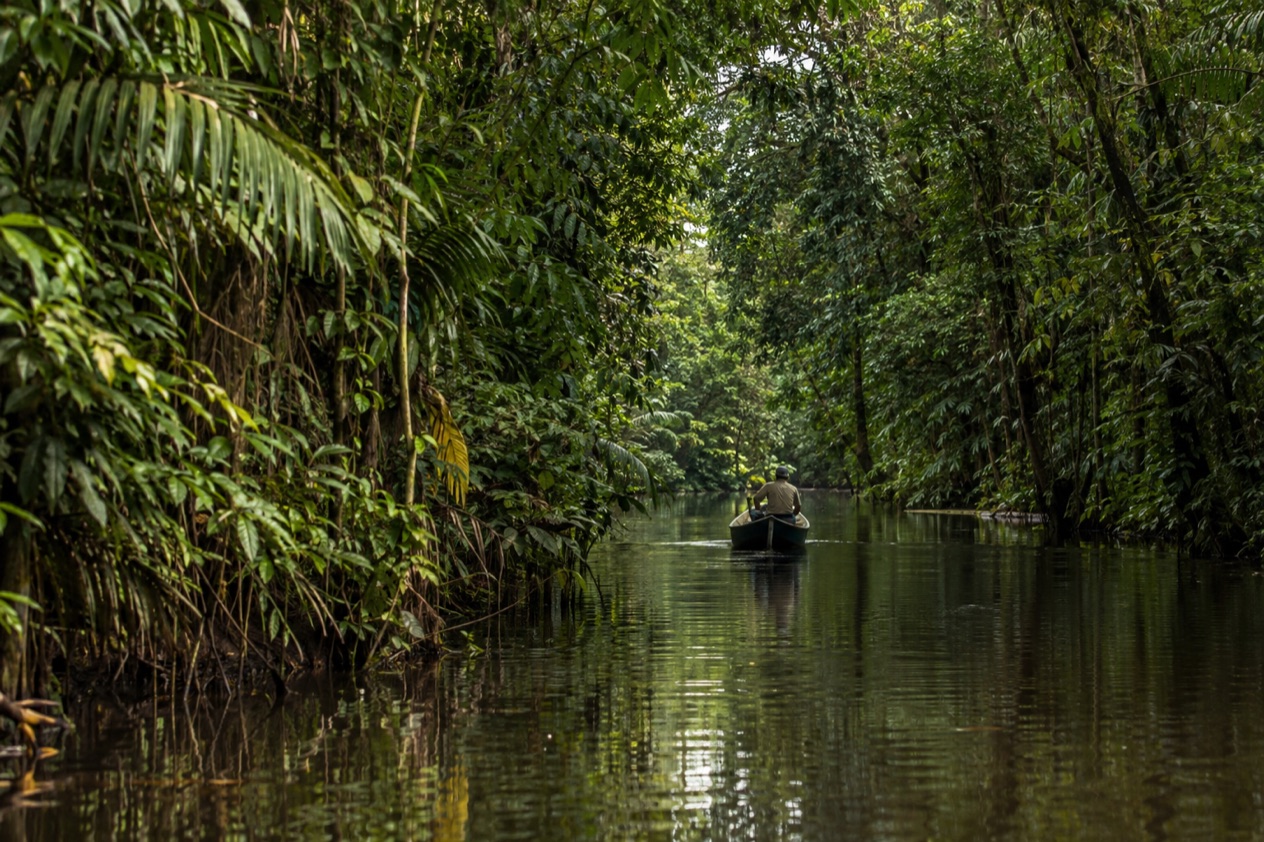
Before the sun is fully up in Tortuguero, the canal is a sheet of brown glass and the only sounds are a distant howler monkey, the knock of a paddle against a hull and a kingfisher dropping from a branch. There are no roads here, so no engines idle in the morning, only boats slipping past walls of green. This is a small Caribbean village wrapped in rainforest, built for travelers who would rather watch wildlife than shop, and it suits anyone willing to trade comfort shortcuts for one of the most memorable mornings of a Costa Rica trip.
What are the best things to do in Tortuguero?
The best things to do in Tortuguero are all built around water, wildlife and the beach, and most of them are done with a guide in a small boat or on foot after dark.
- Glide along the canals by boat at first light, when caimans, herons, kingfishers and monkeys are most active.
- Take a licensed-guide night walk on the beach to watch green sea turtles nest, a chance that is strongest from about July to October.
- Walk the village’s single main strip, where small sodas, craft stands and the church give you the feel of everyday Caribbean life.
- Visit Tortuguero National Park for its rainforest trails, lagoons and the long, wild beach where the turtles come ashore.
- Paddle a kayak down a quiet side channel, where the only sound is birds and dripping leaves.
- Eat rice and beans cooked in coconut milk, the Caribbean way, in a village kitchen.
- Follow a guide into the jungle on a short trail to spot frogs, leafcutter ants and the occasional sloth.
- Spend an evening on a lodge porch listening to the rainforest after dark.
Most of these happen at a slow pace. You will not tick off a long list in a day here, and that is the point: a canal tour in the morning, a long lunch, a village walk in the afternoon and a night on the beach in turtle season make a full and satisfying visit.
Getting to Tortuguero, which you can do only by boat or small plane, is itself part of the adventure. Plan on a full travel day from San Jose, then give yourself at least a night or two on the ground so the canals and the beach have time to work on you.
Sights and landmarks in Tortuguero
Tortuguero has no grand monuments. Its landmarks are a national park, a village laid out along a sandy strip between canal and sea, and the water itself. That makes the sightseeing here gentle, more about looking closely than moving fast.
Tortuguero National Park
A stretch of Caribbean coastline, lagoons and rainforest falls under the park’s protection, and what people know it for most of all is the green sea turtles nesting on its beach and the wildlife that boats reveal along the canals. It is the reason almost everyone comes, and the reason the village exists as a destination at all.
Inside, the forest is dense and humid, with buttressed trees, hanging vines and a constant chorus of insects and birds. Trails are best walked early, when the air is cooler and animals are moving. A guide helps enormously, because they spot a sleeping bat, a poison dart frog or a basilisk lizard that you would walk right past.
Check the park’s official page before you go. Wear lightweight long sleeves, bring a rain layer and expect to be damp at some point whatever the season.
The village and its main strip
The village is a few sandy lanes with brightly painted wooden houses, small grocery shops, simple restaurants and stands selling carved wood and handmade jewelry. The village’s main strip rewards a slow stroll. Children play football in the open spaces, music drifts from open doors and the smell of fried plantain hangs near the kitchens.
Walk to the end of the strip and you reach the beach, a wide dark-sand shore backed by palms and driftwood. It is a place for looking, not swimming, because strong currents and shifting sand make the water dangerous. The late afternoon, when the heat softens and the light turns gold on the water, is the best time for this walk.
The canals themselves
The canals are the main road and the main sight. Narrow channels thread through flooded forest, and the boat moves slowly enough that you notice the small things: a green heron frozen on a log, a spectacled caiman on the bank, a troop of monkeys crossing overhead, a bright blue morpho butterfly flickering past.
Most visitors stay at lodges that offer guided tours. Going out at dawn is the classic choice, and many people find a second, quieter outing in the afternoon just as rewarding. Bring binoculars if you have them, and keep your camera in a dry bag.
Beaches and outdoor things to do in Tortuguero
The beach at Tortuguero is for walking and for turtles, not for swimming. Rip currents are very dangerous here and cause several drownings of U.S. tourists in Costa Rica each year, and most beaches in the country have no lifeguards or warnings about unsafe conditions. Conditions change, so treat the sea as scenery, ask your lodge about the day, and keep children within arm’s reach on the sand.
Turtle nesting on the beach
Green sea turtles mostly head up onto the beach to lay their eggs from around July through October, while leatherbacks do their nesting earlier in the year. After dark, a female hauls herself up the sand, digs a deep chamber with her back flippers and lays her eggs, then covers the nest and slowly returns to the surf. Watching it is quiet and moving, and it feels more like witnessing than sightseeing.
Night walks are done only with a licensed guide, which protects both the animals and you. Nesting is a chance, never a promise, so go with patience. Expect a dark beach, soft voices and little or no light, and wear closed shoes that you do not mind getting sandy.
Kayaking and paddling the side channels
A kayak or a canoe lets you slip into narrower channels that bigger boats skip. You hear the forest more clearly from a paddle: a crack in the branches, a splash, the rattle of a bird taking off.
Morning is best, before the heat builds. Go with a guide or through your lodge, who will know which channels are productive and where to turn back. Wear a hat, pack a poncho and bring a drink of your own.
Rainforest walks
Short trails near the village and in the park take you under tall canopy where light falls in patches. Guides show you leafcutter ant columns, tiny red frogs on the leaf litter, strangler figs and sometimes a sloth curled in a fork of a tree. Trails can be muddy, so rubber boots, often lent by lodges, are the sensible choice.
Rain here is not an interruption but part of the place, and the forest often looks its best wet. In a stretch of heavy rain, plan indoor pauses for a long lunch or a hammock afternoon at the lodge.
Day trips from Tortuguero
Tortuguero is remote, so most visitors treat the whole place as the destination and spend their days around it. There are still a few excursions that make good use of a day, and some arrive at or leave from Tortuguero as part of a larger loop.
The journey from San Jose
The trip from San Jose takes most of a day: a road leg of about three to four hours to a boat dock, then a boat ride of about one to two hours along the canals. Many visitors treat the ride in as an excursion in itself, because the boat passes through quiet waterways where birds and sometimes caimans are visible from the deck.
Small planes are the other way in, which suits travelers short on time. Since there are no roads into the village, there is no driving option, and your lodge can explain how its transfers fit together. Pack light, because space in boats and planes is limited.
A full day on the canals
If you want to stretch your wildlife time, a longer guided day on the water takes you farther up the channels and into lagoons where the forest opens up. You may see herons, kingfishers and cormorants fishing, monkeys in the canopy and, with luck, a caiman sliding off a bank.
It suits anyone who likes long, quiet days outdoors and does not mind the sun and humidity. Bring water, sunscreen and a rain jacket, and keep your valuables in a dry bag.
Nearby villages and walks
Beyond the main strip, you can walk to quieter corners of the village and the park edges, where fishers mend nets and kids ride bikes down sandy tracks. It is a relaxed way to see how people live in a place with no cars, and it pairs well with a lunch stop at a small family kitchen.
Go in the late afternoon, when it is cooler, and take a guide if you want the plants and birds named. These short outings fill the gaps between bigger activities and do not require much planning.
What to eat in Tortuguero
Eating in Tortuguero means Caribbean Costa Rican cooking, built around coconut, rice, beans, fish and plantain. Lodges often serve set meals family style, while the village has small restaurants where you can taste the local style more directly.
Rice and beans, Caribbean style
The signature dish is rice and beans cooked together in coconut milk, which makes it richer and slightly sweet compared with the gallo pinto (the classic rice and bean breakfast) served elsewhere in Costa Rica. It arrives beside chicken, fish or pork, often with a little fiery sauce on the side. A plate of it after a damp morning on the canals is deeply satisfying.
Ask for it with fresh fish if the kitchen has some, and expect plantain on the side, fried until sweet and caramelized. A casado, the everyday plate of rice, beans, salad and a protein, is also common and a sensible way to eat well without fuss.
Fish, plantain and tropical fruit
Fish is a staple, often grilled, fried or simmered in a coconut sauce. Green plantains are sliced thin and fried into crisp patacones, while ripe ones turn up as sweet maduros. Breakfast may come with fresh pineapple, papaya and watermelon, cut so ripe the juice runs.
Fresh fruit juices, called refrescos, are everywhere, and so are cold drinks after a hot walk. Coffee is strong and usually good, a welcome start before a dawn boat tour.
Eating in the village and at the lodge
Lodges generally serve meals at set times, often buffet or family style, and many packages include them. In the village, small sodas and restaurants offer a more casual choice, and a few have open-air seating where you can watch people pass. Ask what was caught or picked that day.
Bring cash for small purchases and snacks, and carry a refillable bottle for water if your lodge provides it. The pleasure of eating here is simple: hot food, big flavors and the sound of rain on a tin roof.
Things to do in Tortuguero at night
Nights in Tortuguero are quiet and dark, and that is their appeal. There are no clubs and no traffic, just frogs, insects and, in nesting season, turtles on the sand. The village has a few small bars and restaurants that stay lively for a while, but most visitors turn in early to wake for dawn tours.
Night walks and turtle watching
The main evening activity, from about July to October, is the guided night walk to see green sea turtles nest. Only licensed guides lead these walks. You walk in near darkness, listening for the rustle of sand.
There is no guarantee you will see a turtle on any given night, so go prepared to enjoy the beach, the sky and the waves even if the nest remains hidden. Dress in dark clothing, skip the flash and bring a light layer for the breeze off the water.
Guided night tours in the forest
A guided walk after dark shows a different forest. Torch beams catch the glint of eyes, tree frogs call from leaves and insects glow or buzz in the undergrowth. Guides point out sleeping birds, spiders and small nocturnal creatures that are invisible by day.
It suits adventurous travelers who are comfortable in the dark and do not mind bugs. Closed shoes, long sleeves and insect repellent make it far more pleasant.
Quiet evenings
Many lodges have porches, hammocks and open-air dining areas where the evening turns slow. You can listen to the forest, read, play cards or swap stories with other guests over a cold drink. In the village, a small bar might have music playing and a few locals chatting.
After the full day on the water, most people are happy to go to bed early. The reward is waking to the dawn chorus, which at Tortuguero is among the best parts of the day.
Things to do in Tortuguero with kids
Tortuguero is a wonderful place for curious, outdoorsy children, because the wildlife is the entertainment. Boat rides with monkeys, birds and caimans keep many kids absorbed, and the sense of adventure of arriving by boat sets the tone from the start.
Boat tours and animal spotting
Children can play spotting games: who sees the first monkey, the first heron, the first butterfly. Guides tend to be good at pointing things out in ways kids enjoy, and the boats are quiet enough for little ones to hear the forest.
Bring hats, sunscreen, rain jackets and snacks. Keep children seated and hands inside the boat. Early morning is cooler and the animals are more active, so it often goes best.
Turtle nights and the beach
Seeing a turtle nest can be unforgettable for older children who can stay quiet and still. Night walks run late and in darkness, so think about your child’s stamina and patience before you commit. Rules require a licensed guide and calm behavior.
During the day, the beach is a good place to look for driftwood, shells and crab tracks, but the sea is not for swimming. Rip currents are very dangerous, most beaches have no lifeguards, and conditions change, so keep children within arm’s reach whenever you are near the water.
Heat, rain and pacing
The climate is warm and humid, and rain is frequent in many months. Dress children in light, quick-drying layers, give them plenty of water and plan rest breaks. Mud and puddles are part of the fun, and rubber boots help.
The long journey in, with a road leg and a boat ride, can tire small children, so pack snacks, a small game and a change of clothes. Slow days with one main activity each work best for families.
Good to know before you go
The U.S. State Department rates Costa Rica Level 2, ‘Exercise increased caution,’ due to crime; it says petty crime is common throughout Costa Rica and that violent crime also affects tourists, including armed robbery, homicide and sexual assault.
Getting to Tortuguero means traveling by boat or small plane, and after you arrive, you explore on foot and by boat. Most visitors stay at lodges that organize tours and meals, which simplifies planning. Bring some cash for the village, and pack light, quick-drying clothes, a rain jacket and insect repellent. The Caribbean coast follows the Atlantic hurricane season, so keep an eye on forecasts as your trip approaches.
Sources
- Open-Meteo / ECMWF ERA5, normals 1991-2020 computed for the grid cell at 10.543N 83.502W, checked October 8, 2026
- U.S. Department of State, Costa Rica Travel Information, Safety and security (https://travel.state.gov/content/travel/en/international-travel/International-Travel-Country-Information-Pages/CostaRica.html), checked October 8, 2026
- U.S. Department of State, Costa Rica Travel Advisory, issued April 1, 2026 (https://travel.state.gov/content/travel/en/traveladvisories/traveladvisories/costa-rica-travel-advisory.html), read via the State Department open data API on October 8, 2026