
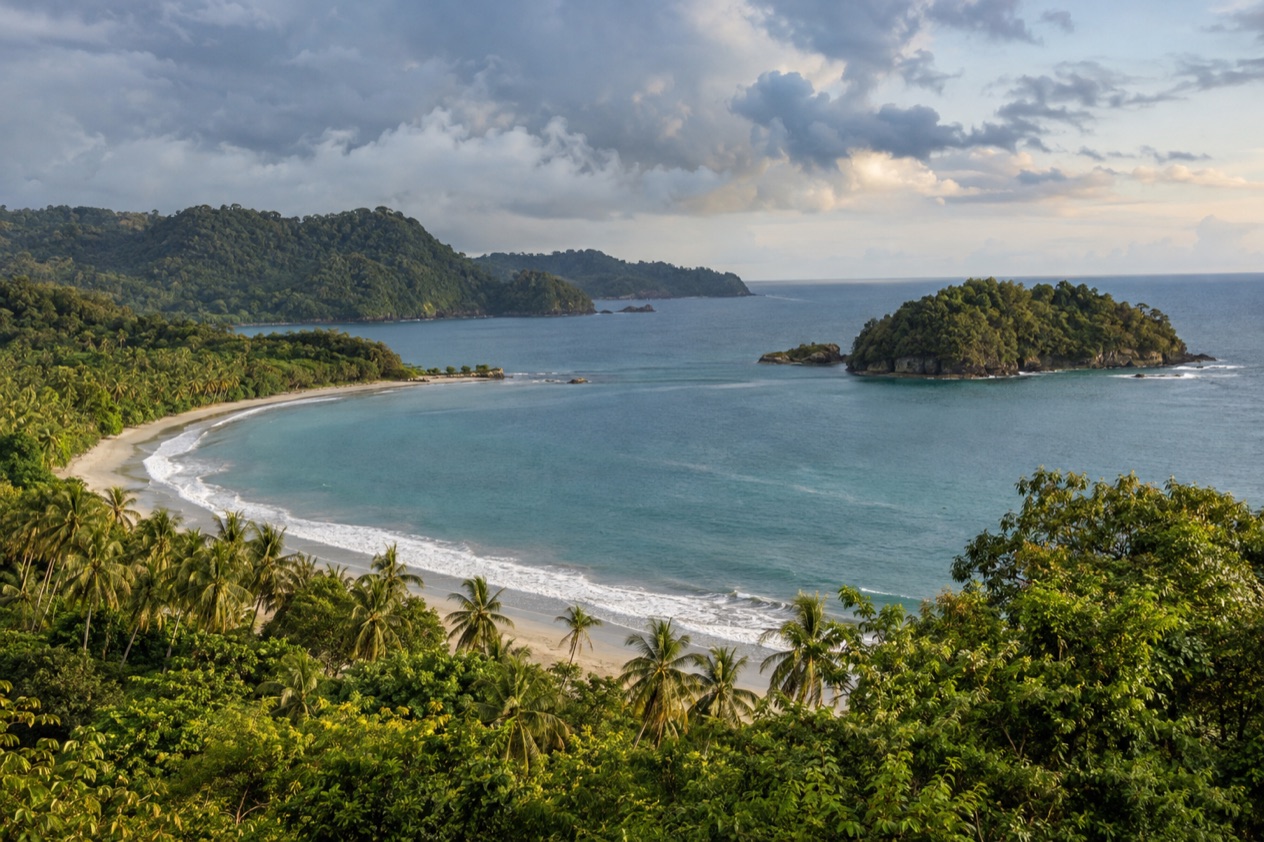
In August, the afternoon light over Samara’s bay turns soft and silvery, and the almond trees along the beach road drip after a passing shower. Fishermen still push their boats out in the morning, and by evening the sand fills with dog walkers, surf students and families carrying chairs. This is green season on the Nicoya Peninsula, a quiet, lush month for travelers who like a small beach town with room to breathe.
What is the weather like in Samara in August?
Samara in August is hot and humid and green, and it rains most days, but that rain tends to arrive as a shower or a storm instead of an all-day gray.
| Month | Average high (°F) | Average low (°F) | Rain days | Sea (°F) |
|---|---|---|---|---|
| July | 84.3 | 75.7 | 25.4 | 85.8 |
| August | 84.1 | 75.7 | 26.7 | 85.8 |
| September | 83.3 | 75.4 | 28.3 | 86.0 |
Mornings are often the best part of the day. The sun can be strong by eight o’clock, the air is warm and sticky, and this is when the beach is most inviting for a walk, a surf lesson or a swim.
Clouds tend to build through the afternoon, and showers or a loud tropical storm often arrive late in the day. They can be heavy, with streets turning to puddles and the dirt roads outside town getting muddy.
Most nights you can dine outdoors, since evenings remain warm enough for sandals and shorts, but occasionally rain sends dinner beneath a roof. Because the nights hold their warmth, a light rain jacket is more useful than a sweater. The light itself is lovely after a storm, when the sky clears and the bay glows gold and pink.
Plan the day around the weather rather than against it: outdoor things in the morning, a long lunch or a rest when the clouds thicken, and flexible plans for the evening. With daylight lasting a bit over twelve hours, there is plenty of time for that rhythm.
Can you swim in Samara in August?
Yes, the sea is very warm, so swimming is comfortable for long stretches without any shock of cold.
A broad, curving bay is where Samara lies, and thanks to an offshore island and a reef, the water by town tends to be calm and shallow. That makes it a favorite for families, first-time surfers on foam boards, paddleboarders and anyone who likes to wade in slowly. Conditions change with the tide and the weather, and after a big storm the water can turn murky or choppy, so judge it on the day.
In Costa Rica, rip currents pose a serious threat, drowning many U.S. tourists each year, but most beaches have no lifeguards and nothing posted to alert people to dangerous conditions. Ask locals or your lodging about the current spots, stay in the calmer parts of the bay, and keep a close eye on children.
Before entering the water beyond the bay, check conditions locally. Bring a rash guard and sunscreen.
What to do in Samara in August
The big date of the month is August 2, when hundreds of thousands of Costa Ricans walk on pilgrimage to the Basilica of Our Lady of the Angels in Cartago. It is far from the peninsula, but the devotion is felt across the country, and you may notice it in conversations, church services and the way locals talk about the day. August 15 is Mother’s Day and a national holiday.
Beyond the calendar, nearby Ostional can host olive ridley arribadas in August, a major nature outing from Samara. The hills around town are a deep, saturated green, rivers run full and the pace is slow.
The bay at easy hours
The beach is the center of life here, and in August it rewards early starts. A long walk along the sand before the heat builds takes you past fishing boats, almond trees and horseback riders, and the water is warm enough to wade straight in. Surf schools offer gentle lessons on the small waves of the bay, which suit beginners well.
Midday is better spent in the shade of a beach bar or a hammock. When the afternoon clouds break, the sand often empties and refills at sunset with locals playing soccer and volleyball, a good time to join in or simply watch. Bring a towel and a dry bag, because a shower can arrive quickly.
Surf, paddle and snorkel mornings
Thanks to the calm sea in Samara, it ranks among the most welcoming spots on the Pacific coast for a first try at surfing or stand-up paddleboarding. The bay is known for calm, shallow water that can suit first-time surfers when conditions allow. Kayaking toward the island offshore is a popular morning outing when the sea is calm, and you may see fish and seabirds along the way.
Snorkeling depends on visibility, which can drop after heavy rain, so ask the operator on the day. Go in the morning, wear sunscreen and a rash guard, and follow the guide’s advice about currents and where to enter.
Rainy-day pleasures
When a storm settles in, Samara is a fine town to wait it out. Cafés and bakeries in the center serve strong Costa Rican coffee, fresh bread and pastries, and a long breakfast turns into a pleasant morning. Yoga studios, small shops and craft stalls offer something to do indoors, and many restaurants have covered terraces where you can watch the rain fall on the street.
In the evening, the town’s restaurants fill with a mix of locals, surfers and long-stay travelers. Order the fish of the day, a plate of patacones (fried green plantain) or a cold local beer, and let the weather decide the rest.
A two-day itinerary for Samara in August
Day 1 starts early, with the sun already up and the sand nearly empty. Walk the bay, assess the water conditions, then swim or take a surf or paddleboard lesson if conditions are suitable. Breakfast is a gallo pinto plate (rice and beans) with eggs and coffee at a small local spot in the center.
Spend midday in the shade with lunch at a beachfront restaurant, then browse the shops and cafés as the clouds build. If the afternoon turns rainy, linger over coffee or book a massage or yoga class. When the sky clears, return to the beach for the golden light and an unhurried dinner of fresh fish.
Day 2 begins with a morning outing on the water, such as a kayak trip toward the island or a snorkeling session with a local operator. Set out early, before the afternoon storms, and let your guide read the currents and find the safest spots to get in the water. Afterward, eat at a casual soda (a small family restaurant) for a casado and a fruit juice.
In the afternoon, take a slow horseback ride or a quiet walk along the quieter end of the beach, or spend the hours in a hammock with a book. Keep the evening open, because a good storm can turn the sky dramatic. Finish with a relaxed dinner and a short walk by the bay, with a covered terrace as your backup if rain moves in.
Is Samara busy in August?
No, August is generally a quiet month in Samara, one of the calmer stretches of the year in a small, relaxed town.
The rain keeps some visitors away, so beaches, restaurants and tours are less crowded than in the dry months. Rooms are easier to find, restaurant tables rarely need much planning, and surf lessons and tours usually have space. Families and Costa Ricans on vacation add some life around the Mother’s Day holiday on August 15, when the town can feel busier than usual, especially over a long weekend.
As a habit, book ahead for that holiday stretch and for any specific lodging you have your heart set on, and keep the rest flexible. Rental cars and popular tours are easier to arrange than in the peak months, but it still helps to reserve early if you need a particular vehicle or a guided outing. For park visits, check the park’s official page for current rules and any reservation requirements before you go.
What to pack for Samara in August
Pack for heat, humidity and sudden rain, with light layers that dry fast.
- For the afternoon storms, bring a light poncho or rain jacket
- Quick-drying clothes, because nothing dries fast in humid air
- Sunscreen and a hat, since the morning sun is strong
- A rash guard and water shoes, for surfing, snorkeling and rocky patches
- Insect repellent, for the evenings after rain
- A dry bag for phone and camera on beach days
Good to know before you go
The U.S. State Department rates Costa Rica Level 2, ‘Exercise increased caution,’ due to crime; it says petty crime is common throughout Costa Rica and that violent crime also affects tourists, including armed robbery, homicide and sexual assault.
August falls within the Atlantic hurricane season, which matters mostly for the weather systems that can bring extra rain across the region, and the Pacific side has its own wet season. Flexible plans work best, with outdoor activities in the morning and indoor options ready for the afternoon.
Roads to and around the peninsula can be slow in heavy rain, so give yourself extra time on travel days.
Samara in August vs July and September
July is very close to August, with similar heat, a touch fewer rainy days and the same warm sea. The feel is almost identical, so there is little reason to shift unless dates or prices push you. Going a month earlier brings a similar quiet, green atmosphere with the same morning-sun, afternoon-shower rhythm.
September is the wetter side of the pair, with more rain days and heavier totals, and the sea stays just as warm. Many visitors stay away, so the town is at its calmest, and rooms and tables are easy to find. The trade-off is more days with gray skies and the chance that a storm interrupts a planned outing.
If you want the warm sea, green hills and a relaxed pace, August and July are nearly interchangeable. Choose July if you prefer slightly fewer rain days, and September if solitude matters more than sun. Either way, plan the best outdoor hours for the morning and keep the afternoon flexible.
Is August a good time to visit Samara?
Yes, August is a good time for travelers who enjoy lush scenery, a warm sea and a quiet beach town, and who do not mind afternoon rain.
It suits families with children who love the gentle bay, beginner surfers, yoga and wellness travelers, and anyone who likes slow days and uncrowded beaches. It is less ideal for people who want guaranteed sunshine all day, long hikes on dry trails or a lively nightlife scene. If you are set on perfect weather, another season will serve you better.
After you arrive, walk by the bay in the morning to see how the water looks, ask locals or your lodging about the currents, and plan your outdoor hours before the clouds build up. After that, let the rhythm of the day set the pace. What makes August special in Samara is the green: hills thick with leaves, rivers running, and a warm bay where the afternoon storm clears just in time for a pink sunset.
Sources
- Open-Meteo / ECMWF ERA5, normals 1991-2020 computed for the grid cell at 9.8814N 85.5262W, checked October 8, 2026
- Open-Meteo Marine API, average 2015-2024, checked October 8, 2026
- sunrise-sunset.org, sunrise and sunset calculated for the 15th of the month, checked October 8, 2026
- U.S. Department of State, Costa Rica Travel Information, Safety and security (https://travel.state.gov/content/travel/en/international-travel/International-Travel-Country-Information-Pages/CostaRica.html), checked October 8, 2026
- U.S. Department of State, Costa Rica Travel Advisory, issued April 1, 2026 (https://travel.state.gov/content/travel/en/traveladvisories/traveladvisories/costa-rica-travel-advisory.html), read via the State Department open data API on October 8, 2026
To plan your stay
- Things to Do in Samara: Beach Days, Surf Lessons, Day Trips and Gallo Pinto
- Where to Stay in Samara: Beachfront, Town Center, Quiet Ends of the Bay and How to Choose
- Best Time to Visit Samara: Dry Season, Green Season, Surf and Turtles
- Samara in July: Green Season Weather, Warm Sea, Guanacaste Day and What to Do