
Early in the morning on Playa Langosta, the tide drains out of the rocky pools, a few surfers paddle past the point, and the only sound from the houses behind the sand is a broom on a terrace. By evening the scene has moved to the main street in town, where boards lean against restaurant walls, sunburned travelers compare waves over cold drinks, and music drifts out of open doorways. Tamarindo is small enough to cover on foot, yet where you sleep decides whether you wake up to that quiet or to the bustle, and the choice is worth making with care.
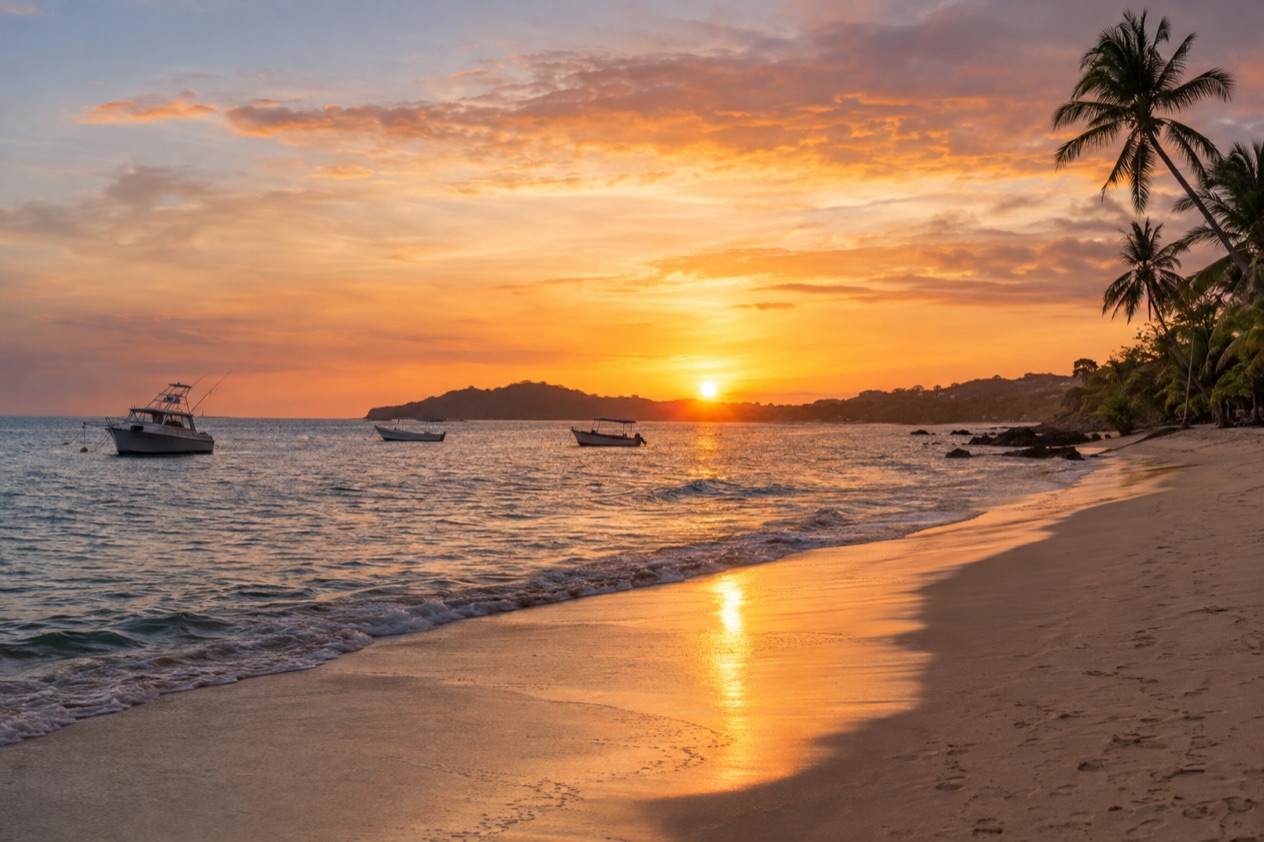
What is the best area to stay in Tamarindo?
For a first visit, the town center is the best base, because restaurants, shops, surf schools and the beach are all a short walk from your door. If you want a quieter beach with the town still close, Playa Langosta is the natural choice.
If surfing and turtle country matter more to you than dinner options, Playa Grande suits you. Families usually do best near the beach just outside the busiest blocks, and anyone who wants nightlife sleeps in the center and accepts the noise.
Budget travelers have a simple rule here: stay in town and skip the rental car. Guesthouses, hostels and simple apartments cluster around the main street, which means you can walk to meals, to lessons and to the sand, and you save the cost of a vehicle you would only park most of the day. Quieter areas tend to reward people who arrive with a car or who do not mind a short ride to dinner.
The areas differ less in distance than in mood. On Guanacaste’s Pacific coast, Tamarindo blends surf culture with beach-town life, and whatever you want to see is only a few minutes from whatever else. The town center has the restaurants, the shops and the late evenings.
Langosta, just along the coast, trades most of that for calmer streets and a long, easy walk to the same sand. Playa Grande, where leatherback turtles come to nest, comes across as a world apart, with a broader feel and a closer bond to the surf.
Think about your days before you think about your room. If you can easily walk from your room to a surf lesson, the beach and lunch, that convenience may beat any view.
If you will be out on day trips and only want a bed, a pool and a good night of sleep, a quieter address makes more sense. Couples often pick the calmer side and walk into town for dinner, while groups of friends tend to stay where the evening starts.
The season also changes the answer a little. From December to April the weather is the driest and sunniest in the country, and the town is full, so rooms close to the beach fill first.
In the green season, afternoon showers and fewer visitors make the quieter areas feel even more peaceful, and the center loses its crowds but never quite goes silent. Whatever the month, the choice of neighborhood matters more than the choice of room.
The best areas to stay in Tamarindo
Town center and the main street
This is the Tamarindo most people picture: a lively strip of restaurants, surf shops, small groceries and bars, with the beach at the end of every side street. Mornings begin with coffee and surf talk, the afternoons are for lessons and lounging, and the evenings stretch late. Its beach break suits beginners, and the schools that rent boards and give lessons are all within easy reach of the hotels.
Lodging here is the widest mix in town: apartments, guesthouses, hostels, boutique hotels and larger beach hotels, plus a few resort-style properties with pools and restaurants on site. It suits first-time visitors, solo travelers, surfers and anyone who wants to go without a car. The airport at Liberia is about an hour’s drive away, usually by shuttle or taxi, and once you arrive you can walk nearly everywhere.
The trade-off is noise. Rooms facing the main street or near a bar can hear the evening well past bedtime, so ask for a room at the back or on an upper floor. A pool courtyard away from the street is a good sign. Early risers will like how quickly the beach comes alive at dawn, when the light is soft and the surf is often at its friendliest.
Playa Langosta
Just a few minutes from town, Langosta comes across as a residential neighborhood that happens to include a gorgeous beach. The streets are calmer, many houses sit behind gardens, and the beach is a place for long walks, tide pools at low tide and quiet sunsets. You can still stroll or take a short ride into the center for dinner, which gives you the best of both worlds.
Lodging here leans toward boutique hotels, small inns, villas and vacation rentals with kitchens, which makes it a good fit for couples, families who want space and travelers staying a week or more. It is not the place for hostel life or a party night, and options for late-night food are fewer. The airport drive is the same hour as for the rest of Tamarindo, so you lose nothing on arrival day.
Langosta is close to the center, but check the route and evening transportation options with your lodging. Before you book, look at how far a property really is from the beach and from the road, since some villas sit a little uphill. Just like anywhere on this coast, before you get in the water, look at the flags and ask locals what they suggest, since rip currents are extremely hazardous and every year they kill a number of U.S. visitors.
Playa Grande
A broad, untamed sweep of sand, Playa Grande is most famous as a leatherback turtle nesting beach, and surfers chasing larger waves than the town beach delivers count it among their top spots. It lies within a few minutes of Tamarindo, but the mood is another world: fewer restaurants, more open space and a surf-first routine of early boards and early nights.
Lodging is mostly small hotels, surf lodges, guesthouses and rental houses, with a relaxed, low-key feel. It suits experienced surfers, nature lovers and couples who want quiet, and it is less convenient for anyone who plans to eat out every night or skip a car. Playa Grande is a leatherback turtle nesting beach, but sightings are never a promise.
Getting around from here takes planning, especially for dinners and the trip to the airport. If you like having a base that feels removed but not remote, this is it.
Beaches a short drive north and south
Beaches just north and south of Tamarindo, a quick drive away, offer larger waves, and a handful of travelers, particularly surfers eager to hit the break at dawn, decide to stay close to them. The lodging there is usually a small hotel, a surf camp or a rental house, and the villages are quieter and more spread out than the town.
This choice makes sense if you have a car or a plan with a driver, since restaurants and groceries are farther apart. It also suits travelers who have been to Tamarindo before and want a slower pace with the town still reachable for a night out. First-timers who want everything at hand will be happier in the center or in Langosta.
Tamarindo areas compared
| Area | Best for | Feel | Getting around |
|---|---|---|---|
| Town center | First visit, beginners, nightlife, budget | Lively, busy, late evenings | Walk to beach, restaurants and surf schools |
| Playa Langosta | Couples, families, longer stays | Calm, residential, quiet at night | Short walk or ride into town |
| Playa Grande | Surfers, nature lovers, quiet | Open, wild, early nights | Short drive or taxi to town |
| Beaches north and south | Experienced surfers, repeat visitors | Spread out, relaxed | Car or driver is the easiest way |
The main trade-off is between convenience and calm. The town center puts everything at your feet, but you pay for it with noise, street traffic and crowds in the high season. Langosta and Playa Grande give you more room and sleep, but a dinner out becomes a small outing, and the walk home after dark is not the same as in the center.
There is also a trade-off between beach and local life. Staying right on the sand means mornings by the water and sunsets from a terrace, while staying a block or two back often gives you more space for your money, a pool and a quieter courtyard. The beach is never far in Tamarindo, so a place a few minutes inland of the sand can be a smart choice for anyone who values a good night’s sleep.
Nightlife and surfing pull in opposite directions, too. The center is where the evening happens, while Playa Grande wakes before dawn and sleeps early. If your group has both a party person and an early riser, Langosta is the compromise: close enough to join the evening, quiet enough to leave it. Choose the area that matches the way your best day would start, and the rest of the trip falls into place.
How to choose your hotel in Tamarindo
The first decision is whether you want an all-inclusive stay or a room with the freedom to eat out. Tamarindo is a town built for walking from table to table, with a wide range of restaurants along the main street, so most visitors book a room only or with breakfast and spend their evenings out. All-inclusive makes sense when the plan is to stay on property, switch between pool and beach, and keep the days simple, and it can suit families with small children.
Next is the position relative to the water. Beachfront rooms give you the sound of the surf, but those in the town center can carry noise from evening beach bars.
A hotel a short walk back, with a pool and a garden, often feels calmer and offers more space for the same budget. Ask where the room faces, whether the street is close and whether music is played in the evening, since each can shape your sleep far more than the star rating.
The season shapes the booking. From December to April the weather is dry and sunny, and Tamarindo is at its fullest, so book early for the beachside rooms and for holiday weeks. The green season brings afternoon showers and fewer visitors, and rooms are easier to find. In a month like October, rain falls on most days, so look for a place with a covered terrace, a good restaurant and things to do when the sky closes.
Families should look at the practical details more than the glamour. A pool with a shallow end, a kitchen or a small fridge, rooms that connect and a short, flat walk to the sand all make days easier.
Beaches here can have strong rip currents, so a pool on site gives small children a place to splash without the waves. Travelers who need step-free access should ask directly about stairs, paths and the distance from the room to the entrance, since many small hotels are built on slopes or on several levels.
Before booking, run through a short checklist. Check noise, as a room above a bar or facing the main street will be loud on weekends. Check the transfer, since the airport is about an hour away and a shuttle or taxi is the usual way to arrive. Check air conditioning, because nights stay warm all year, and check whether the room has hot water and a reliable connection if you plan to work.
One more detail concerns the beach itself. The sand can change from month to month, and seaweed sometimes collects on one side of a bay more than another, so look at recent traveler photos of the exact stretch in front of the hotel.
It is also worth knowing how the hotel handles access to the water, whether it has a lifeguard or posts flags, and where the nearest swimming-friendly spot is. The sea is never a promise, and a good property will say so honestly.
Last, think about the length of your stay. For a few nights, the center is simple and efficient, with everything at hand.
For a week or more, a rental in Langosta or near Playa Grande with a kitchen and a pool gives you a home base, and you can move to the center for a night or two if you miss the buzz. Splitting a stay between two areas is easy here because the distances are short.
Good to know before you go
The U.S. State Department rates Costa Rica Level 2, ‘Exercise increased caution,’ due to crime; it says petty crime is common throughout Costa Rica and that violent crime also affects tourists, including armed robbery, homicide and sexual assault.
The Liberia airport is about an hour’s drive from Tamarindo. Once in town, you can walk to most places, and short taxi rides cover the rest. Ask your hotel how it prefers to be paid and whether it adds anything to the room rate, so there are no surprises at checkout.
Sources
- Open-Meteo / ECMWF ERA5, normals 1991-2020 computed for the grid cell at 10.2993N 85.8371W, checked October 8, 2026
- U.S. Department of State, Costa Rica Travel Information, Safety and security (https://travel.state.gov/content/travel/en/international-travel/International-Travel-Country-Information-Pages/CostaRica.html), checked October 8, 2026
- U.S. Department of State, Costa Rica Travel Advisory, issued April 1, 2026 (https://travel.state.gov/content/travel/en/traveladvisories/traveladvisories/costa-rica-travel-advisory.html), read via the State Department open data API on October 8, 2026
To plan your stay
- Best Time to Visit Tamarindo: Dry Season, Green Season, Surf and Turtles
- Things to Do in Tamarindo: Surf Lessons, Leatherback Turtles, Beach Days and Sunset Evenings
- Tamarindo vs Jaco: Beaches, Surf, Weather and Getting There
- Tamarindo in January: Dry-Season Weather, Surf, Santa Cruz Fiestas and a Two-Day Plan