
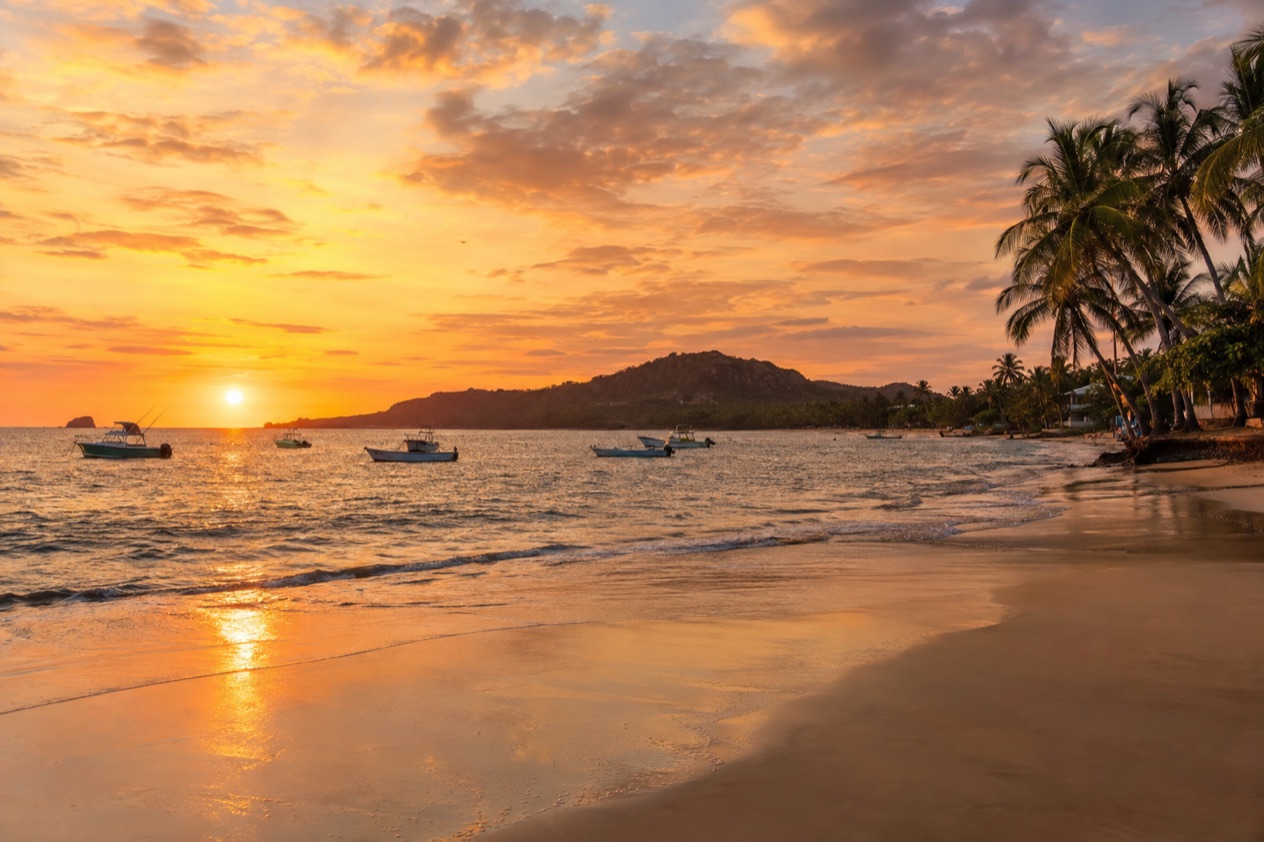
Late in the afternoon the whole town drifts toward the sand. Surfers carry their boards up from the break, vendors set out fresh fruit, dogs trot along the waterline, and the sky behind the boats turns orange while the first beach bars light their lamps. Tamarindo is a surf and beach town on the Pacific coast of Guanacaste, easy to get around, full of places to eat, and a handy base for anyone who wants waves, wildlife and sunsets in the same few days.
What are the best things to do in Tamarindo?
The best things to do in Tamarindo start with the water: learning to surf on a forgiving beach break, then drifting out to nearby beaches where the waves are bigger or the sand is quieter. Around that core you can add wildlife, long lunches and long sunsets.
Here are the essentials, each one developed further down the page.
- Take a surf lesson on Tamarindo’s own beach break, because it suits beginners and the schools rent boards by the hour or the day.
- Watch the sun go down from the sand, the daily event that pulls the whole town to the shoreline.
- Visit Playa Grande, a nesting beach for leatherback turtles, to learn about one of the great animal journeys of the Pacific coast.
- Spend a slow afternoon at Playa Langosta, a short hop from town and calmer in feel than the main beach.
- Chase bigger waves or emptier sand at the beaches a short drive north and south of town.
- Eat fresh fish, ceviche and a proper casado at a local soda, then balance it with a night of wood-fired pizza or sushi on the main street.
- Join a guided outing into the Guanacaste countryside, from river wildlife to volcano country, when you want a day away from the sea.
- Walk the main street at dusk for shops, surf wear, local crafts and live music drifting out of the bars.
Sights and landmarks in Tamarindo
Tamarindo has no cathedral or museum quarter, and that is part of its charm. The sights are a beach, a street, an estuary and a coastline of surf breaks, and you see them best on foot, in flip-flops, with no schedule.
The beachfront and the main street
Everything in town runs along the shoreline road and the lanes that cross it. Surf shops hang boards and rash guards in the doorways, small boutiques sell hand-dyed sarongs and Costa Rican coffee, and open-air restaurants set tables almost on the sand. Mornings belong to surfers and joggers, midday to the shade of the almond trees, and evenings to everybody.
Walk the length of the beach once at low tide, when the sand widens and the rocks at either end open up with small pools. It is the easiest way to understand how the town is laid out, and the light on the water is lovely in the hour before sunset. Street vendors and craft sellers set up along the main road, and a slow wander turns up wooden bowls, jewelry and carved masks.
Playa Grande and the leatherback turtles
Just a few minutes from town, Playa Grande serves as a nesting beach for leatherback turtles, which are the biggest sea turtles on Earth. The long, wide beach is backed by dunes and forest and has a wilder, emptier feel than Tamarindo, with surfers sitting far out on the peaks and few buildings in sight.
Even if your visit does not coincide with nesting, the beach is worth a morning walk for its scale and its birdlife. During nesting season, turtle watching is the kind of thing done with guides and in the dark, and sightings are a chance, never a promise. Ask your hotel or a local operator how the season is going, and keep lights and cameras off the sand.
The estuary and mangroves
At the north end of the beach, a tidal estuary winds into a mangrove forest. Herons stalk the shallows, kingfishers flash along the banks, and iguanas doze on branches above the water. You may also see howler monkeys in the trees behind the shore, usually heard before they are seen.
The best moments are early morning and late afternoon, when the birds are active and the heat is gentler.
Smaller places worth a stop
Playa Langosta, a short walk or ride south of the center, has a residential, relaxed air, with a few cafés, a handful of hotels and tide pools at the rocky ends of the sand. Inland lanes hide small art galleries, yoga studios and farmers-style stands selling tropical fruit, jams and hot sauce. Sunday-style slow browsing is the right pace for all of it.
Beaches and outdoor things to do in Tamarindo
The beaches are the reason most people come, and the choice is wide: a social main beach, a long wild beach to the north, a quiet one to the south and a string of more distant breaks for surfers who want something bigger. Whichever you choose, read the flags and ask locals about the day’s conditions before swimming. Rip currents are very dangerous and cause several drownings of U.S. tourists each year.
Playa Tamarindo
The main beach is a broad crescent with a beach break that suits beginners, which is why surf schools line the sand and rent boards and give lessons all day. Instructors usually start with a short session on the beach, then walk you out to the whitewater. Expect other learners around you and a cheerful, crowded lineup in the busiest hours.
Outside lesson time, the beach is a place to walk, ask the hotel or a surf school about the day’s conditions before you swim, play paddle ball and watch the boats at anchor. Shade comes from the trees along the back of the sand, and beach bars rent chairs and umbrellas. Sunset is the busiest hour, with drummers, hawkers and families sharing the shoreline.
Playa Grande and Playa Langosta
Playa Grande, within a few minutes of town, is for surfers who want more power and for walkers who want space. The sand is long and open, and the waves are stronger and more serious than at Tamarindo, so it is best left to experienced surfers or to those who just want to watch from the beach. Its role as a turtle nesting beach also means a calmer, more protected atmosphere than the town beach.
Playa Langosta is the gentle counterpart. It is smaller, more residential and a good place for a late afternoon walk, a swim near shore when conditions allow, and a drink without the bustle.
Beaches north and south for bigger waves
Surfers looking for larger waves head to beaches a short drive north and south of Tamarindo, and each has its own personality. Some have river mouths and rocky points, others are wide sand flats with a laid-out local scene of surf camps and beachside shacks. Playa Avellanas and Playa Negra to the south are well known among surfers, while the beaches to the north around Flamingo and Conchal have a more resort-like feel.
Non-surfers can still enjoy these beaches for the scenery, the grilled fish at beachfront restaurants and the quieter pace. Go in the morning for lighter crowds and better light, and treat any swim with the same caution you would anywhere on this coast.
On the water and in the trees
Beyond surfing, the coast offers sunset sailing trips, stand-up paddleboarding, kayaking in the estuary and snorkeling outings by boat to rocky coves. Visibility and sea conditions vary, so the day’s boat captains are the best judges of where to go. On land, horseback rides run through dry forest and along back roads, and zip-line and canopy parks operate in the hills behind the coast.
Mornings are the cooler and most comfortable time for anything active. In the green season, afternoon showers often move in, so plan outdoor excursions early and keep the late hours for a café, a massage or a hammock.
Day trips from Tamarindo
Guanacaste rewards a day away from the beach. Dry forest, rivers, volcano slopes and hot springs all lie within reach, and most are visited with a tour operator or a driver who knows the roads. The town has plenty of agencies that can arrange these outings.
Flamingo and Playa Conchal
North of Tamarindo, the coast turns into a series of calm, sandy bays. Playa Flamingo has a marina feel and hillside villas, while nearby Playa Conchal is famous for a shore made partly of crushed shells that glitter in the sun and a clear, gentle-looking bay. It is a favorite for a relaxed beach day with a change of scene.
Go early to get a spot and some quiet, and bring water and shade. The sea here can still carry currents, so ask the hotel or a surf school about the day’s conditions and watch for posted flags. It suits couples, families and anyone who wants a postcard beach after a few days of surf culture.
Palo Verde and the Tempisque River
Inland, the wetlands along the Tempisque River are among the best places in Guanacaste to see birds and crocodiles from a boat. Herons, storks, jacanas and, with some luck, monkeys and iguanas line the banks. The dry forest around the river changes dramatically with the seasons, brown and open in the dry months and lush after the rains.
This is a trip for wildlife lovers, best done with a naturalist guide who can spot what you would miss. Morning departures catch the birds at their most active. Binoculars help, and so do long sleeves and a hat against the sun on the water.
Rincon de la Vieja volcano country
In the hills inland, the slopes of Rincon de la Vieja offer a different Costa Rica: cooler air, forest trails, waterfalls, bubbling mud pots and natural hot springs. Combined outings often include a canopy tour, a horseback ride or a soak in a thermal pool.
Conditions in volcanic areas change, and access rules are set by the park authorities, so look at the park’s official page before choosing a trail or planning around a summit view. Clouds often settle on the volcano, so treat any view as a bonus rather than a promise. It suits active travelers and anyone craving a break from the coastal heat.
Smaller outings
If you prefer something shorter, there are surf-town beaches to the south such as Avellanas for a lunch of fresh fish with your toes in the sand, and farms and ranches where you can ride, taste local coffee or watch cattle and horses at work. Sailing trips along the coast fill an afternoon and often end with sunset and snacks aboard.
What to eat in Tamarindo
Eating in Tamarindo runs from simple Costa Rican plates at family-run sodas to surf-town restaurants serving fish tacos, poke bowls and wood-fired pizza. The best strategy is to mix both: a traditional lunch, an international dinner and fruit stops in between.
Start the day with gallo pinto, the national breakfast of rice and black beans stir-fried with onion, sweet pepper and cilantro, usually served with eggs, fried plantains, a slice of fresh cheese and a spoon of sour cream. Strong Costa Rican coffee, often brewed through a cloth filter, comes alongside.
Costa Rican plates to look for
A casado, meaning “married man,” is the classic lunch plate: rice, beans, a salad, fried plantain and your choice of chicken, beef, pork or fish. It is filling, homey and the best way to eat like a local. Ceviche is another coastal staple, with raw fish or shrimp cured in lime juice with onion, cilantro and chile, served with crackers or plantain chips.
Look also for patacones, twice-fried green plantain disks topped with beans or fish, and chifrijo, a bar snack of rice, beans, pork and pico de gallo. Grilled whole fish, often a snapper, arrives with rice and a squeeze of lime and is a natural choice near the sea. For dessert, try tres leches cake or a cup of fresh fruit.
Drinks, fruit and beach snacks
Fresh fruit is a daily pleasure. Pineapple, mango, papaya and watermelon are sold from roadside stands, and refrescos naturales, fruit blended with water or milk, are the standard cold drink. Coconuts hacked open with a machete turn up on the sand. Horchata and agua dulce, a hot or cold drink of unrefined cane sugar, are other local sips.
For grown-up drinks, the local lager is Imperial, and sugarcane spirit known as guaro goes into cocktails around town. Many beach bars make a good fruity margarita or a mojito, best sipped as the sun drops.
Where and how to eat
A soda is a small, casual local restaurant, and it is where you find the most traditional food. Beach restaurants lean on fresh catch, tacos and burgers, and the main street holds an international spread including Italian, Asian, vegetarian and health-food spots catering to surfers and visitors. Smoothie and juice bars do brisk business in the mornings, and bakeries sell empanadas and fresh bread.
Many restaurants sit right on the sand with their tables open to the breeze, and watching the sunset over dinner is part of the experience. Choose a seat facing west and arrive before the sky changes color.
Things to do in Tamarindo at night
Evenings in Tamarindo start with the sunset and then split in two directions: lively beach bars and restaurants on one side, quiet dinners and early nights on the other. The town has a real surf-resort nightlife, but it is informal, and flip-flops are the standard dress code.
Sunset and beachfront bars
Almost every evening begins on the sand. People gather with a drink as the sky turns pink and orange, drummers and guitarists sometimes play, and surfers wade in for the last waves. Beach bars hang lanterns, put tables at the edge of the water and fill up steadily after dark.
This is the easiest and most memorable way to spend an evening here. Come a little early to claim a table with a view, order something cold and watch the horizon. After sunset, the same places often turn into dinner spots or music venues.
Music, bars and late nights
Away from the beach, the main street and its side lanes hold sports bars, cocktail lounges, a few clubs and open-air venues with live bands or DJs. The crowd is a mix of surfers, long-stay visitors, expats and vacationers, and the mood is friendly and casual. Some nights bring reggae, rock covers or Latin dance music.
As anywhere, use common sense after dark, keep valuables out of sight and take a taxi rather than walking long, unlit stretches home. Many people find the best nights are the simple ones: a few drinks, a plate of nachos and conversation under the stars.
Quiet evenings and night wildlife
If you prefer calm, plenty of restaurants offer candlelit dinners, wine lists and fresh fish. Others hold yoga or movie nights, and some hotels host live acoustic music by the pool.
Night walks in the forest, led by a naturalist, can also turn up frogs, insects and owls.
Things to do in Tamarindo with kids
Tamarindo is an easy place for families because so much happens at the beach and so much is within walking distance. Children can spend whole days playing in the sand, watching surfers, spotting wildlife and eating ice cream, and the town’s casual atmosphere means no one minds a little noise or sand in the restaurant.
Surf lessons and beach play
A surf lesson is the big one. The beach break suits beginners, and surf schools give lessons and rent boards, so older kids and teens can try standing up on a board with an instructor beside them. Smaller children often prefer bodyboards, sandcastles and splashing in the shallows with a parent right there.
At low tide the rocks at the ends of the beach open into tide pools where kids can look for crabs, small fish and shells. Waves and currents can be strong on this coast, so keep children within arm’s reach in the water. Hotel pools are a good backup.
Animals, boats and nature outings
Kids tend to love the wildlife. Iguanas lounge on walls and branches in town, howler monkeys roar in the trees at dawn and dusk, and the estuary is a natural place to look for herons, crabs and, with luck, a crocodile from a safe distance on a boat tour. A gentle boat trip or a sunset sail is exciting without being demanding.
Horseback rides, zip-line parks and farm visits add variety for older children. Turtle outings at night can be a highlight in season, but they run late, so consider whether your children can stay up and stay quiet in the dark.
Keeping children comfortable
The sun is strong year-round, so plan beach time for the morning and late afternoon, and pack hats, rash guards, sunscreen and plenty of water. Midday is better for a long lunch in the shade, a pool break or a nap. Sandals with straps handle the hot sand and the town streets better than bare feet.
Choose restaurants with open seating and simple menus, since rice, beans, grilled chicken, fruit and pasta are easy wins with picky eaters. Distances in town are short, and a taxi covers anything farther, which keeps tired legs happy at the end of the day.
Good to know before you go
The U.S. State Department rates Costa Rica Level 2, ‘Exercise increased caution,’ due to crime; it says petty crime is common throughout Costa Rica and that violent crime also affects tourists, including armed robbery, homicide and sexual assault.
Tamarindo is about an hour’s drive from the Liberia airport, and the town center is compact enough to cover on foot, with taxis and shuttles for the beaches and day trips beyond. The dry season runs from December to April, while the green season brings afternoon showers, fewer visitors and lusher hills. Bring cash and cards, sunscreen, a hat, a light rain jacket and shoes you can walk in on sandy roads.
Sources
- Open-Meteo / ECMWF ERA5, normals 1991-2020 computed for the grid cell at 10.2993N 85.8371W, checked October 8, 2026
- U.S. Department of State, Costa Rica Travel Information, Safety and security (https://travel.state.gov/content/travel/en/international-travel/International-Travel-Country-Information-Pages/CostaRica.html), checked October 8, 2026
- U.S. Department of State, Costa Rica Travel Advisory, issued April 1, 2026 (https://travel.state.gov/content/travel/en/traveladvisories/traveladvisories/costa-rica-travel-advisory.html), read via the State Department open data API on October 8, 2026
To plan your stay
- Best Time to Visit Tamarindo: Dry Season, Green Season, Surf and Turtles
- Where to Stay in Tamarindo: Town Center, Playa Langosta, Playa Grande and How to Choose
- Tamarindo vs Jaco: Beaches, Surf, Weather and Getting There
- Tamarindo in January: Dry-Season Weather, Surf, Santa Cruz Fiestas and a Two-Day Plan