
In March, Samara wakes early. Fishermen push their boats out over the flat morning water, dogs trot along the sand, and surf students wade into the shallows with boards under their arms.
The hills behind town are golden and dry, the sky is mostly blue, and the evenings smell of grilled fish and sunscreen. This is the dry season at its steadiest on the Nicoya Peninsula, a month for people who want long beach days and an easy, barefoot pace.
What is the weather like in Samara in March?
Hot, sunny and mostly dry: March is one of the most reliably beachy months of the year in Samara, with only the occasional passing shower.
| Month | Average high (°F) | Average low (°F) | Rain days | Sea (°F) |
|---|---|---|---|---|
| February | 90.8 | 75.9 | 1.0 | 85.6 |
| March | 91.5 | 76.7 | 2.7 | 86.9 |
| April | 89.4 | 77.2 | 10.9 | 87.0 |
Early in the day, the weather is warm and sunny, and before the sun rises too high, those are the ideal hours for a beach stroll, a run or a surf lesson. Once the afternoon gets going, it is hot enough that the majority of folks head for the shade, a hammock or the water. Sunscreen and a hat are not optional here, even on days with thin cloud.
Rain is rare, and when it comes it is usually a brief, light spell rather than the heavy afternoon downpours of the green season. Most days you can plan a beach picnic or a horseback ride without a backup. Days stretch out bright and open, giving you roughly twelve hours of daylight, which means sunset arrives early in the evening and orange and pink spill across the bay’s sky.
Nights stay warm. You can eat outside in a T-shirt, and a light layer is only useful for air-conditioned restaurants or a breezy ride back from town. The sea is warm too, which makes an evening dip a pleasure instead of a shock.
Can you swim in Samara in March?
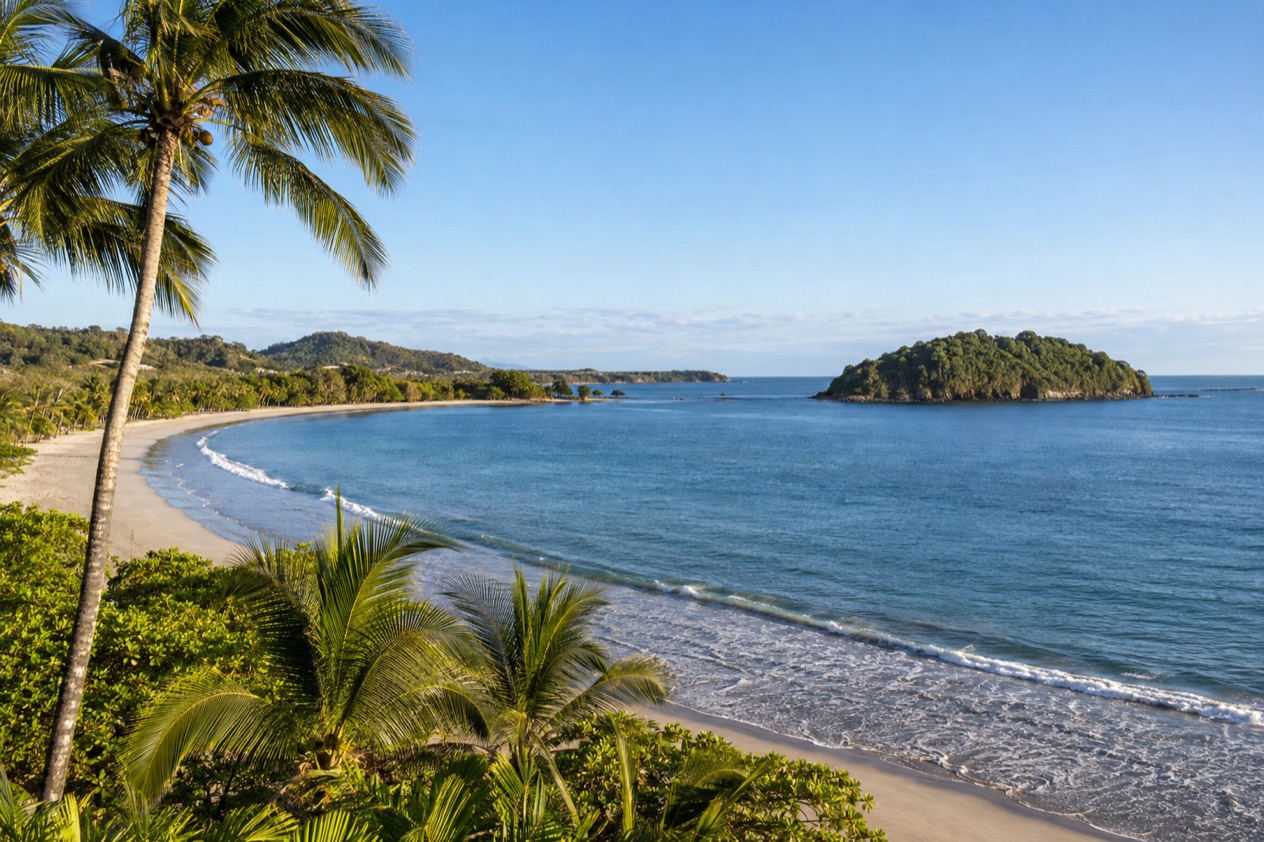
You can certainly take a long swim here since the water is warm, and for getting in, this bay ranks among the more welcoming spots on this coast. A reef and an island offshore soften much of the wave energy along the broad, curving bay where Samara is located, which means the water close to the beach tends to be shallow and quite calm.
That makes it a favorite for families, beginners on stand-up paddleboards and first-time surfers, who often learn on the small, rolling waves near the shore. Kayaks and paddleboards also head out toward the island in the mornings, when the surface tends to be smoother. Snorkelers can float over the shallows, though visibility varies with the day and the tide.
Even so, rip currents pose a serious threat and lead to multiple drownings of U.S. tourists annually, while the majority of Costa Rica’s beaches lack lifeguards and any caution about dangerous conditions. Beaches beyond the protected bay can be much rougher than the town beach.
Ask at your hotel or a surf shop about the day’s conditions, stay in the sheltered stretch if you are not a strong swimmer, and keep children within arm’s reach. Bring water shoes for rocky patches and a rash guard to keep the sun off your back.
What to do in Samara in March
March is about the beach and everything that goes with it: slow breakfasts, surf lessons, horseback rides at the edge of the surf, and sunsets that people plan their evenings around. It is also mango season in Guanacaste, so fruit stands and juice bars lean on ripe mango, along with papaya, pineapple and coconut water sold cold in the heat. Order a refresco de frutas at a small soda and you will taste the season.
Dinner is the other pleasure. Seek out the catch of the day, ceviche loaded with lime and cilantro, and the traditional casado, a plate that brings rice, beans, salad and plantains alongside your pick of fish, chicken or beef. Gallo pinto, the rice and beans cooked together, shows up at breakfast with eggs and fresh tortillas. Beachfront restaurants set tables right on the sand at sunset.
The town beach and the bay
The main beach is the center of life in Samara. A long strip of pale sand curves along the bay, backed by palms and almond trees that give welcome shade in the middle of the day. Early mornings belong to walkers and joggers, midday to people in hammocks and beach chairs, and late afternoons to volleyball games and vendors.
The bay’s generally gentle waves attract beginners, but check the day’s conditions before entering the water. Paddleboard and kayak rentals are common too, and a morning paddle toward the island offshore is one of the nicest ways to see the bay from the water. Finish with a swim, then a cold coconut, then a long lunch in the shade.
Horseback rides and the green hills
Riding along the beach and up into the hills behind town is a classic Samara outing. In March the trails are dry and firm, and the dry-season forest is more open, so you often see far across the bay. Early morning or late afternoon is more comfortable than midday, both for you and the horses.
Some outfits end with a swim in the shallows or a stop for a drink at a viewpoint. Ask the operator whether the ride suits your experience level and what clothing and footwear it requires. Expect dust on the trail and a bit of haze in the distance, since the dry months are also the season for brush fires in the region.
Neighboring beaches and wildlife
Samara is a good base for day outings along the coast. A neighboring beach just down the road, Carrillo, is known for a graceful palm-lined curve of sand and a relaxed mood, and it makes an easy half-day with a picnic. Quieter stretches farther along the peninsula reward people who like space and a long walk.
Wildlife shows up in small, pleasant ways. Howler monkeys may grumble from the trees at dawn, pelicans skim the surf in the late afternoon, and iguanas sun themselves on rocks and fences. Guided walks and mangrove trips are the way most visitors see more, and sightings are always a chance, not a promise.
When the sun is at its strongest, shift to the shade of town: a smoothie, a hammock, a browse through the small craft stands and surf shops, or a swim in a hotel pool. Evenings bring live music at a few beach bars and a calm, friendly crowd. Bring cash for small stands and plan one lazy afternoon on purpose.
A two-day itinerary for Samara in March
Day 1 is the bay itself. Start early on the sand while the air is still soft, with a walk along the water and breakfast of gallo pinto, eggs and fruit at a small café. In the morning, when the water tends to be calmest and the sun has not yet turned intense, sign up for a surf lesson or a paddleboard session.
At midday retreat to the shade for a long lunch of ceviche or the fish of the day, then rest through the hottest hours in a hammock or by a pool. Return to the beach in the late afternoon for a swim and a slow walk, and settle at a beachfront table before sunset. Dinner is simple grilled fish and a cold drink, then a stroll back through town.
Day 2 widens the circle. Go riding at first light or head to a nearby beach such as Carrillo for a picnic and a quieter swim, keeping to the shade through the middle of the day. In the afternoon, visit the craft stands in town, have a mango smoothie, and take a last swim.
If a rare shower arrives, move indoors to a café with a long coffee, a cooking class if you find one, or a massage. If a shower arrives, keep your plans flexible. Dinner can be a casado at a small local soda, with live music nearby if you feel like staying out.
Is Samara busy in March?
It is moderately busy, with a steady flow of visitors drawn by the dry weather, and some weeks are livelier than others.
Families on spring break, couples on getaways and surf students fill the beach towns, and Costa Ricans come for the long holiday weeks. When Holy Week falls in March or April, the coast gets noticeably crowded, with domestic travelers filling hotels and restaurants. Outside those weeks the pace is relaxed, with plenty of space on the sand, especially early in the morning.
Rooms near the beach fill first, so it is wise to book early for holiday weeks and a little later for ordinary weeks. Rental cars are in demand across the dry season, and popular restaurants may be full at sunset, so reserve a table if you have your heart set on one. Local tour operators and surf schools can also fill their morning slots.
Samara stays small in any case, so the busiest days feel lively rather than overwhelming. If you prefer quiet, stay a few streets back from the main beach, start days early, and swim only after checking the day’s conditions.
What to pack for Samara in March
Think light, sun-proof and beach-ready, with one layer for the evening and a few things that make days in the water easier.
- Pack sunscreen plus a wide-brimmed hat, since the sunshine beats down hard starting mid-morning.
- A rash guard or swim shirt for surf lessons and long hours in the water.
- Water shoes for rocky patches and hot sand.
- Light, breathable clothes and a thin layer for air-conditioned restaurants.
- Long pants and closed shoes for horseback riding.
- A refillable bottle and insect repellent for dusk and the trails.
Good to know before you go
The U.S. State Department rates Costa Rica Level 2, ‘Exercise increased caution,’ due to crime; it says petty crime is common throughout Costa Rica and that violent crime also affects tourists, including armed robbery, homicide and sexual assault.
March is part of the dry season, so most days run smoothly, and the main thing to plan is the sun and the sea. From January through the end of May, fires are a regular sight in Guanacaste and the north, which means charred slopes or faint smoke far off may come into view.
Book beachfront rooms and surf lessons first, since they go quickly in the dry months. Carry a little cash for small stands, bring a water bottle on every outing, and watch the weather and sea conditions daily instead of assuming they stay the same.
Samara in March vs February and April
Moving the trip four weeks earlier brings an even drier month, with slightly cooler nights and a sea just a touch less warm. February is a peak stretch of the dry season, so rooms and rental cars can be tighter, and the hills are most golden. The beach routine is nearly the same, so most travelers would not feel a big difference.
Going four weeks later changes the mood more. April is when the rains begin to return, usually as afternoon showers that cool the air and turn the hills greener. The sea is as warm as it gets, and the crowds ease once the holiday weeks pass, but you need a backup plan for afternoons more often.
Choose March if you want reliable sun and a warm sea without much weather juggling. Shift earlier if you like the driest stretch and do not mind the busiest booking window. Shift later if you prefer greener scenery, a slower pace and a bit of afternoon rain to break the heat.
Is March a good time to visit Samara?
Yes, especially for beach lovers, families, beginner surfers and anyone who wants warm water and sunny days with few weather worries. The bay is sheltered, the days are long and bright, and the town is easy to enjoy at a slow pace.
It suits less well anyone who dislikes heat, since afternoons are hot, or who wants lush green forest and waterfalls, which look their best in the rainy months. If you want total quiet, aim for weeks outside the holiday rush and stay a few streets from the main beach.
On arrival, walk down to the water first, get your bearings on the sand, and ask about the day’s sea conditions before you swim. March in Samara is the sound of the surf at dawn, the taste of a ripe mango at noon, and the bay turning orange as the last swimmers wade out.
Sources
- Open-Meteo / ECMWF ERA5, normals 1991-2020 computed for the grid cell at 9.8814N 85.5262W, checked October 8, 2026
- Open-Meteo Marine API, average 2015-2024, checked October 8, 2026
- sunrise-sunset.org, sunrise and sunset calculated for the 15th of the month, checked October 8, 2026
- U.S. Department of State, Costa Rica Travel Information, Safety and security (https://travel.state.gov/content/travel/en/international-travel/International-Travel-Country-Information-Pages/CostaRica.html), checked October 8, 2026
- U.S. Department of State, Costa Rica Travel Advisory, issued April 1, 2026 (https://travel.state.gov/content/travel/en/traveladvisories/traveladvisories/costa-rica-travel-advisory.html), read via the State Department open data API on October 8, 2026