
Early in the day in Puerto Viejo, the town is a sound of bicycle bells, a smell of coconut bread from a window, and reggae drifting from a doorway that has not quite opened yet. Farther down the coast road, the same morning can look completely different, with howler monkeys in the trees and quiet stretches of sand. Choosing where to sleep here means choosing which of those two mornings you want.
What is the best area to stay in Puerto Viejo de Talamanca?
For a first visit, the town center is the easiest base, for a beach vacation Playa Cocles or Playa Chiquita suits best, for a tight budget the center again, for families the quieter beach stretches toward Punta Uva, and for the liveliest nightlife the center is the best choice.
The reason is the shape of the place. On the southern Caribbean coast sits Puerto Viejo de Talamanca, a laid-back town, with a single road running south along the shore past beach after beach.
The closer you sleep to the town, the more you live among restaurants, bars, bike rental stalls, small shops and the Afro-Caribbean rhythm of the place. The farther down the road you go, the more the day is organized around the beach, the forest and the sound of the sea.
Think of it as a dial rather than a map. At one end is the center, where you can leave your room at any hour, walk to dinner, hear music from three directions and be back in bed in minutes. At the other end is Punta Uva, where dinner is often at your lodge or a short ride away, the night is dark and loud with frogs and insects, and a day means a swim, a walk and a nap in a hammock.
Most travelers do best somewhere in the middle. Playa Cocles and Playa Chiquita keep you close enough to town for an evening out while still giving you a beach at the door. Anyone who wants to see Cahuita National Park, with its shoreline forest trail, sloths, monkeys and coral reef, can also base in town and go for the day, since the park lies up the coast in the other direction.
Your style of travel matters as much as the beach. Guesthouses, hostels, small apartments and simple cabins cluster in and around the center. Boutique lodges and larger villas with garden grounds spread along the coast road. Big resort-style complexes are not what this stretch is known for, so if you picture a sprawling all-inclusive with a wristband and a buffet, you will be looking at a different kind of coast.
A last point is the rain. The southern Caribbean coast keeps a calendar of its own, with September and October and then February and March often drier, right when the Pacific side is soaked.
That does not make any area off limits in other months. It does mean that a room with a good covered porch, a fan or air conditioning and a dry path to the road matters more here than a pool.
Finally, consider how you want to move. If you like the idea of leaving the car behind and pedaling to breakfast, the center and the first beaches reward you. If you plan to come and go to trailheads and distant coves, the farther areas make more sense, as long as you are comfortable with the road after dark.
The best areas to stay in Puerto Viejo de Talamanca
Town center: restaurants, music and an easy first base
The center is where Puerto Viejo shows its character. Streets fill with bicycles, small restaurants set tables outside, juice stands and bakeries open early, and in the evening the bars turn up their reggae and calypso. It is the best choice for a first visit, for solo travelers, and for anyone who wants to meet other people on the road.
Lodging here is mostly guesthouses, hostels, small hotels with a courtyard, and apartments above shops or behind gardens. You will find fewer pools and less space than farther out, but you can walk to nearly everything. That famous break, Salsa Brava, curls over a shallow reef right by town and sits nearby too, but only skilled surfers should paddle out, so for most people the smart choice is to watch from the beach.
Ask your lodging which beaches are practical to reach by bike. The main drawback is sound. Rooms facing the busiest streets can hear music late, so ask for a room at the back or on an upper floor, and consider earplugs.
Playa Cocles: surf beach with a social streak
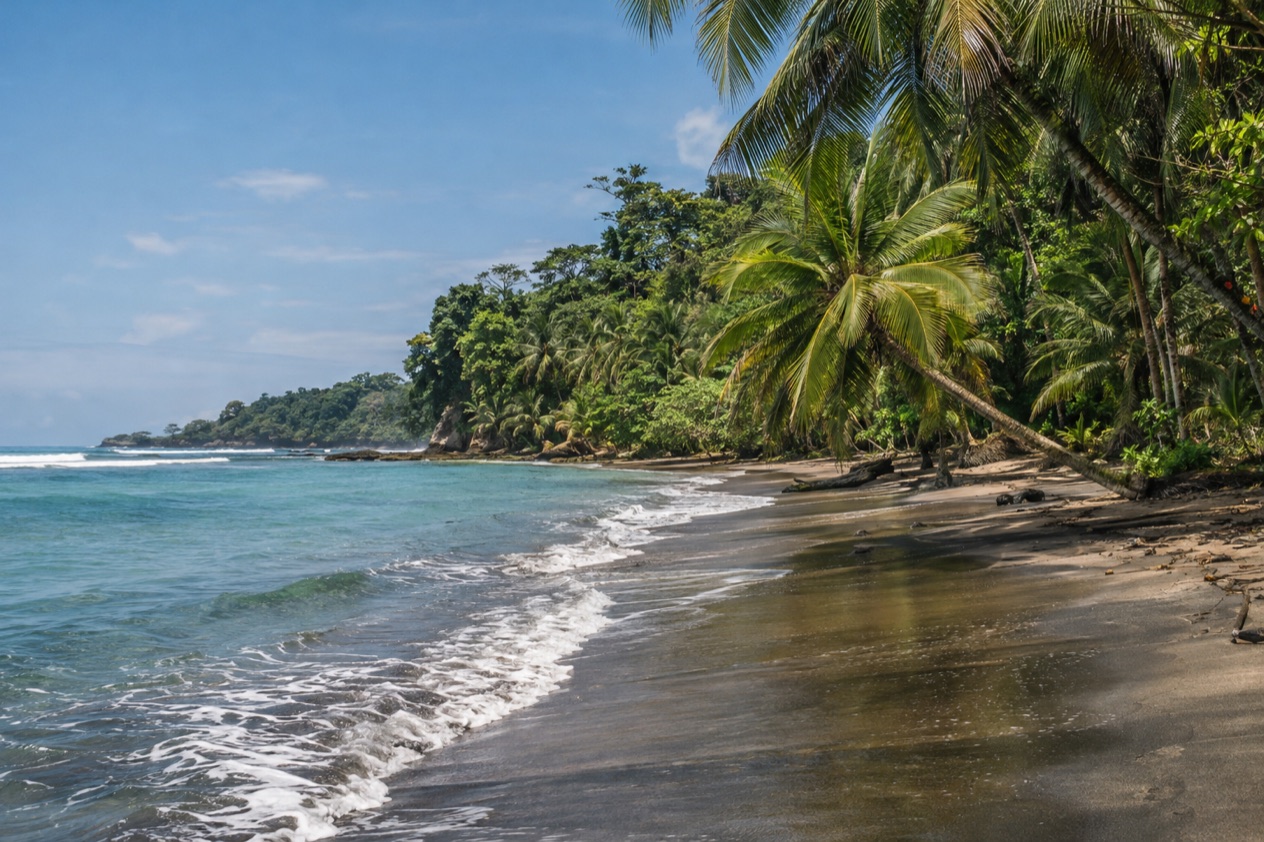
Playa Cocles is the beach most visitors picture when they think of Puerto Viejo, a long strip of sand backed by palms and sea almonds, with a restaurant or beach bar never far away. It suits travelers who want a beach morning and a town evening, without choosing between them. Couples, friends and active travelers tend to like it.
Accommodation leans toward boutique hotels, small lodges, villas and apartment-style stays, many with gardens and a short walk to the sand. Staying right on the sand is a joy, though the waves can get powerful now and then, and rip currents are a grave danger, causing several drownings of U.S. tourists each year. Treat any swim with respect and ask your hosts about current conditions before entering the water.
Before renting a bike, ask your lodging whether the route fits your plans. Evenings are lively near the beach bars, so if you want a calmer night, pick a lodge set back among the trees rather than one right at the busiest stretch.
Playa Chiquita: forest, quiet and a slower pace
Beyond Cocles the road bends through greener, quieter country, and Playa Chiquita feels more like a retreat than a town extension. Lodges sit among tall trees, birds and monkeys move through the canopy, and the evening is for a drink on a porch rather than a night out. It suits couples, honeymooners and anyone who wants to write, read and do little.
The lodging is mostly small boutique hotels, eco-style cabins and private houses, often with a pool or a garden hammock. Restaurants are fewer and more deliberate, so many guests plan a dinner out or eat where they sleep. The sea can be rougher than people expect, so again, check conditions locally before you swim.
You will want a way to get around. A bicycle works for short trips, and you should ask your lodging how to arrange the trip back from town at night. A tip is to pick a place with a good breakfast and a kitchen or snack option, because late hunger is the one thing the quiet doesn’t fix.
Punta Uva: the far end of the coast
Punta Uva, with its famous beach, is the choice for travelers who want the Caribbean in its most secluded form. Sheltered coves, forest that reaches nearly to the water and a handful of beloved restaurants make the day shape itself: a long swim, a trail walk, lunch, a nap. Families with older children and nature lovers find it especially satisfying.
Lodging is mostly small lodges, vacation houses and apartments, with space and privacy as the main appeal. Because the center is farther, it helps to arrive with a plan for groceries and dinners, or to pick a place that serves meals. Nightlife is basically absent, which is exactly the point for many guests.
Getting around usually means a rented bike for the beach strip, a taxi for the town and your own planning for anything beyond. Here more than anywhere, mornings are the best part of the day for wildlife, so rooms with a view of trees and a screened porch are worth asking about.
Puerto Viejo de Talamanca areas compared
| Area | Best for | Feel | Getting around |
|---|---|---|---|
| Town center | First visit, budget, nightlife | Busy, musical, social | On foot or by bike |
| Playa Cocles | Beach days with town evenings | Lively, easygoing | By bike, short ride to town |
| Playa Chiquita | Couples, quiet, nature | Green, peaceful | Bike for short trips, taxi at night |
| Punta Uva | Families, seclusion, wildlife | Remote, forested, calm | Bike along the beach strip, taxi to town |
The trade-off that matters most is beach against local life. Stay in the center and you get the people, the food and the music, but the sand is a short ride away rather than at your door. Stay at Punta Uva and you wake up to the sea, but your evenings belong to the lodge and the dark.
Quiet against nightlife is the second one. The center is the only area where the night is truly part of the experience, and the noise that comes with it is real. Playa Cocles gives you a middle path, with bars on the sand but also lodges set back under the trees. Playa Chiquita and Punta Uva are for people who are happy to go to bed early and rise with the birds.
Budget and space pull in opposite directions too. Hostels, guesthouses and small apartments in and near the center let you spread your money across more days, while villas and boutique lodges farther down offer room, gardens and privacy. Neither choice is better, it is just a question of what you want your days to look like.
Cahuita is the other base worth knowing. This distinct little town rests along the same shoreline, next to the national park, which brings together beaches, a coral reef, and a forest path that follows the water. Sloths and monkeys are what the park is famous for, and it also protects the best-preserved coral reef on Costa Rica’s Caribbean coast. Its management is shared between the community and the government, which gives the town a distinctive, local feel.
Staying in Cahuita makes sense if the park is the center of your trip and you want to be at its entrance at the start of the day. Staying in Puerto Viejo makes sense if you want more beaches, more restaurants and a livelier evening. Many travelers split the difference with a few nights in each, which also gives two very different textures of the same coast.
How to choose your hotel in Puerto Viejo de Talamanca
Start with the question of all-inclusive or not, because it shapes everything. This coast is built around small places and independent restaurants, so the usual model is a room with or without breakfast and meals taken out. That suits travelers who like to wander, try a different kitchen each night and chat with the owners. If you want a package with everything on one property, you will have fewer options than on other coasts.
Next, decide between beachfront and set back. Beachfront rooms give you sound and sunrise, but also salt air, humidity and the full force of the weather on a wet day. A room under trees, a few minutes from the sand, is often cooler, quieter and more private, and a walk to the beach becomes part of the day. On this coast, the second is often the better trade.
Think about rain and climate as part of the room, not as an afterthought.
Look for a covered terrace, strong fans or air conditioning, good screens and a bed that is not under a leaky-looking roof. Photos of the bathroom and the ceiling tell you more than photos of the pool.
Holidays and peak weeks deserve early planning. Christmas and New Year, Holy Week when it falls in the spring, and school vacation weeks fill the small places first, and with so few rooms on this coast the best ones go quickly. Outside those weeks you can often find rooms with more flexibility, which makes it easier to change plans if the weather turns.
Families should think about space and safety around the room. A kitchen or kitchenette makes meals easier, a pool is useful when the sea is rough, and a ground-floor room helps with strollers and small children. Rip currents pose a real threat and drown several U.S. tourists every year, so it matters greatly to keep a close eye on kids in the water, and a pool at your lodging offers another option.
Accessibility is worth asking about directly. Many small lodges have steps, sand paths, raised cabins and uneven ground, which are charming but not easy for everyone. Ask about the path from the road to the room, the bathroom setup and whether the property has any ground-level rooms, and expect honest answers from small owner-run places.
Before you book, check three practical things. The first is noise, since a room near a bar, a road or a late restaurant can wear you down, so read recent reviews for the word and ask for a quiet side. The second is the beach itself, because seaweed or debris can wash up in some weeks, so look at recent guest photos for the stretch of sand you will actually use.
The third is getting there and back. Ask your host how the transfer from the airport works, how late the front desk or gate stays open, and how people usually get to town at night if you are out on the coast road. A property that answers these questions clearly is usually run by people who know the area well, which is the best sign you can look for.
Lastly, match the bed to the trip. For a few nights of surfing, snorkeling and dinners out, a simple room in the center is enough. For a slow week with a book and a hammock, spend your budget on a quiet lodge with a garden. For a trip built around Cahuita and the forest, think of two bases and treat the change of town as part of the story.
Good to know before you go
The U.S. State Department rates Costa Rica Level 2, ‘Exercise increased caution,’ due to crime; it says petty crime is common throughout Costa Rica and that violent crime also affects tourists, including armed robbery, homicide and sexual assault.
Puerto Viejo is on the southern Caribbean coast, so the trip from the airport is a real journey rather than a short hop. Ask your lodging about the transfer when you book, especially for a late arrival, and keep some cash in small bills for bikes, snacks and the small places that prefer it. Rip currents are very dangerous on this coast, so check the beach flags and ask locals before you swim.
Sources
- Costa Rica Tourism Board (ICT), Cahuita National Park (https://visitcostarica.com/where-to-go/protected-areas/cahuita-national-park), checked October 8, 2026
- Open-Meteo / ECMWF ERA5, normals 1991-2020 computed for the grid cell at 9.6558N 82.7541W, checked October 8, 2026
- U.S. Department of State, Costa Rica Travel Information, Safety and security (https://travel.state.gov/content/travel/en/international-travel/International-Travel-Country-Information-Pages/CostaRica.html), checked October 8, 2026
- U.S. Department of State, Costa Rica Travel Advisory, issued April 1, 2026 (https://travel.state.gov/content/travel/en/traveladvisories/traveladvisories/costa-rica-travel-advisory.html), read via the State Department open data API on October 8, 2026
To plan your stay
- Best Time to Visit Puerto Viejo de Talamanca: Weather, Sea and Seasons
- Things to Do in Puerto Viejo de Talamanca: Beaches, Cahuita Day Trips, Caribbean Food and Reggae Nights
- Puerto Viejo de Talamanca in January: Weather, Beaches and What to Do
- Puerto Viejo de Talamanca in February: Weather, Caribbean Beaches and What to Do