
Chickens strut across the road in Dewey as if they owned the crosswalk, a ferry horn sounds from the harbor, and somebody’s golf cart rattles past with a surfboard and a cooler strapped on top. Culebra moves at the speed of its flip-flops. This little island has a single town, no large resorts, and a shore of light sand and transparent water, built for visitors who want to swim, snorkel, walk, and do almost nothing else.
What are the best things to do in Culebra?
The best things to do in Culebra are almost all outdoors: spend a long day on Flamenco Beach, snorkel over seagrass and coral, walk the refuge trails among nesting seabirds, and finish with a slow evening in Dewey. Beach days here can stay flexible, but ferry trips and refuge visits still need some planning. The island is small enough that you can change your mind at lunch and still reach another beach before the afternoon light turns gold.
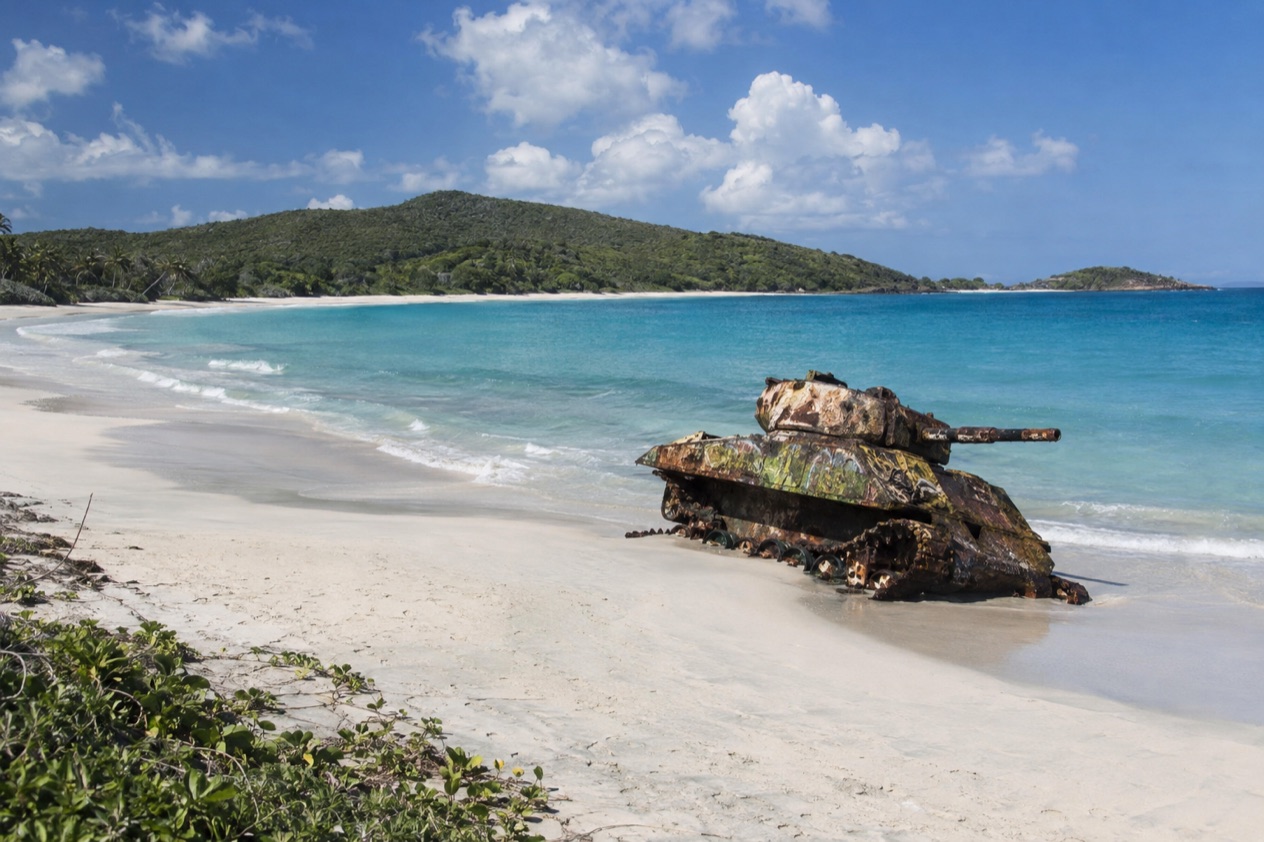
- Settle onto Flamenco Beach, a wide horseshoe of pale sand where two rusted tanks still sit near the water.
- At Tamarindo Beach, snorkelers often spot green sea turtles feeding on the seagrass.
- Swim out to the coral reef at Carlos Rosario Beach, a short walk from Flamenco.
- Walk the trails of the Culebra National Wildlife Refuge and watch the seabirds.
- Find quiet at Zoni Beach, at the far eastern end of the island, where far fewer people go.
- Take a boat to Culebrita, a small cay with its own protected beach.
- Stroll Dewey at sunset and eat fresh seafood by the water.
- Cross to Vieques for a different island on the same day.
Most visitors build their days around one beach in the morning, a long lunch in town and a second swim late in the day when the heat softens. That rhythm suits Culebra. The beaches are far apart on the map but close in time, and nothing on the island is more than a short ride from anything else.
Getting around is part of the fun. Visitors move about on rented golf carts and bikes, which means you stop whenever a view or a roadside stand catches your eye. Pack a mask and snorkel, a hat, plenty of sunscreen and a beach bag you do not mind getting sandy, and you have most of what a Culebra day requires.
The island rewards repeat visits to the same stretch of sand. Flamenco looks different at nine in the morning, when the water is glassy and the first families are unpacking, than at four in the afternoon, when shadows stretch from the hills and the crowd thins out. Give yourself time to see both.
Sights and landmarks in Culebra
Culebra has no grand monuments, and that is part of its charm. The sights here are a harbor town, a protected wildlife refuge, a pair of old tanks and the quiet cays that surround the island. Together they tell a story that runs from fishing and farming to military target practice and, finally, to conservation.
Dewey and Ensenada Honda
Dewey is the island’s only town, a few streets of painted wooden houses, small guesthouses, dive shops, open-air restaurants and bars that face a narrow waterway. Boats bob at their moorings, pelicans watch from the pilings, and the ferry from Ceiba arrives to a small crowd of locals and golf carts. You can walk the whole center in less than an hour, which leaves plenty of time for sitting on a terrace with a cold drink.
Just beside town lies Ensenada Honda, a deep, sheltered harbor that has long been considered the most hurricane-secure in the Caribbean. Sailboats anchor here for weeks, and in the late afternoon the water turns the color of brushed copper.
Each year near the middle of July, Culebra rejoices as a boat parade in Dewey’s harbor pays tribute to the Virgen del Carmen, the patron saint of fishermen. Decorated fishing boats carry the statue across the water while families watch from the waterfront.
The best time for a wander is early morning, before the heat builds and while bakeries and coffee counters are setting up, or just before sunset when the light is soft on the water. Bring cash for small stops and expect shops to keep island hours, with a long, slow midday.
The Culebra National Wildlife Refuge and the tanks
Much of Culebra’s land and shoreline belongs to the Culebra National Wildlife Refuge, set aside in 1909 by President Theodore Roosevelt. It was the first site in the Caribbean designated as a federal wildlife reserve to protect native birds. The refuge covers subtropical dry forest, mangroves, quiet lagoons, open grasslands and rugged, rock-strewn canyons, and it also takes in 21 cays scattered around the main island.
History shows up on the sand at Flamenco Beach, where two old M4 Sherman tanks used for target practice rest, rusted and covered in graffiti. The Flamenco Peninsula and some of the small islands were used for military training until 1975, and in 1976 portions of the land passed to the Commonwealth of Puerto Rico and the U.S. Fish and Wildlife Service. Today the tanks are one of the most photographed things on the island, and children climb around their edges while adults take the pictures.
Walking the refuge trails is the best way to understand the island. The paths wind through dry forest and along headlands where you can look down on turquoise coves and hear the calls of seabirds overhead. Go early, wear closed shoes and bring water, because the island has no rivers or streams and shade can be thin.
| Site | Open |
|---|---|
| Culebra National Wildlife Refuge, public areas and hiking trails | Every day, 6:00 AM to 6:00 PM |
Seabird colonies and the cays
Culebra is a serious bird island. The Sooty Tern, the refuge’s animal ambassador, nests on the Flamenco Peninsula in huge numbers, with more than 30,000 pairs. Across the sanctuaries, an estimated 50,000 seabirds return every year, so the sky above the headlands can be busy with wings, especially in the nesting season.
The offshore cays are protected, and most are best seen from a distance, from a viewpoint or from the water. Bring binoculars if you have them, because a pair turns an ordinary afternoon on a ridge into a lesson in frigatebirds, terns and boobies riding the wind. Keep your distance from nests and follow any signs you see.
The chickens, the murals and the small stuff
Feral chickens roam freely across much of Culebra, from the harbor to the beach parking areas, and they have become something of an island mascot. You will see roosters on rooftops at dawn and hens leading chicks across the street. Smaller sights fill in the rest of the day: colorful murals, a tiny church, hand-painted signs, fishing boats pulled up on the sand and the old, quiet corners of Dewey that do not appear on any map.
Beaches and outdoor things to do in Culebra
Culebra is widely known for its pristine beaches, and they are the reason most people come. The island is dry and low, with no rivers or streams to cloud the water, so the sea along its shores is often clear. Conditions change from day to day and from beach to beach, so look at the water before you swim and follow any flag, sign or lifeguard instruction you find.
Flamenco Beach
Flamenco is the island’s postcard: a wide horseshoe of pale sand with clear, shallow water, set inside the wildlife refuge and framed by low green hills. It is the beach for long walks along the curve, for building sandcastles and for watching the light change across the bay. Kiosks near the entrance sell cold drinks and simple food, and picnic tables sit in the shade of trees behind the sand.
The water inside the bay is often gentle, but waves can build on windy or swell days, and the shore can drop off quickly in places. Arrive early if you want a quiet spot under the trees. Weekends and holidays bring local families, coolers and music, which many visitors enjoy as part of the experience.
The tanks sit at one end of the beach, and the rocky point at the other is good for a short scramble and a view back across the bay. After a swim, walk to the far side to look for shells and watch pelicans dive.
Snorkeling at Tamarindo and Carlos Rosario
Tamarindo Beach, on the island’s west side, is a snorkeling beach where green sea turtles are often seen feeding over the seagrass. Float quietly above the grass and you may watch a turtle graze and rise for air. Give the animals plenty of room, and never chase or touch them. Tropical fish gather around the rocks at the edges of the cove.
A coral reef sits close to shore at Carlos Rosario Beach, which you can reach from Flamenco in a short walk. The walk takes you along a path through scrub and over rocks, and then the beach opens up in a small, sheltered cove. Colorful parrotfish, sergeant majors and sea fans are among the sights beneath the surface. Visibility changes with wind and recent swell, so conditions vary.
Both beaches are best in the morning, when the light is clear and the wind is lighter. Wear a rash guard or plenty of sunscreen, because snorkelers burn on their backs without noticing. Bring your own gear if you can, and keep a close eye on the current when you move away from shore.
Zoni Beach and the quiet east
Zoni Beach, at the eastern end of the island, is a long, quiet beach that is much less visited than Flamenco. The sand stretches along open water, and on some days the surf is livelier than you find in the sheltered bays, so look before you swim. From the sand you can see across to neighboring islands, and the whole place feels wild and unhurried.
Leatherback, green and hawksbill sea turtles use the beaches of Culebra for nesting, so you may see signs or marked areas on quieter stretches. Treat them with respect and follow any posted guidance. Pack water, shade and snacks, since beyond the beach itself there is not much here.
Beyond the sand, Culebra offers kayaking in the sheltered waters, birdwatching along the trails, diving and snorkeling trips to reefs and cays, and simple walks to viewpoints over the sea. Most days end with a swim, a sandy walk back to the cart and the feeling of having done exactly enough.
Day trips from Culebra
Day trips from Culebra are mostly sea trips, since the island sits in the middle of a scattering of cays and larger islands. Saint Thomas, in the U.S., sits roughly 12 miles east of Culebra. Virgin Islands, so the horizon is crowded with neighbors. A classic outing is Culebrita, a small cay with a protected beach.
Culebrita and its Tortuga Beach
Culebrita is a small, uninhabited cay close to Culebra, known for its pale beaches, tide pools and an old lighthouse on the hill. Tortuga Beach there is protected by the Culebra National Wildlife Refuge, and its name hints at the turtles that visit and nest on this coast. Many visitors arrive by boat from Culebra and spend the day on the sand.
The cay is best for people who like their beaches empty and their days unplanned. Bring all the water, food and sunscreen you need, because there are no shops or restaurants. Pack out your trash and give turtles and birds their space.
Vieques
Vieques is about 9 miles southwest of Culebra and is the larger of the two, with long open beaches, wild horses wandering the roads and a laid-back town of its own. Visitors take the trip for a change of scenery, a different set of beaches and a look at a sister island with a very similar history of military use. Mosquito Bay on Vieques is famous for its glowing water, though that is a night trip rather than a day one.
A day on Vieques suits travelers who want to compare islands or who have already covered Culebra’s main beaches. Start early, pick one or two places rather than trying to see everything and leave time for lunch in town. The two islands feel different, and the contrast is the point of the trip.
Icacos Cay
Icacos Cay, Cayo Icacos in Spanish, is the largest uninhabited cay in a chain of cays, reefs and skerries off the coast of Cabezas in Fajardo. It is part of La Cordillera Reef Nature Reserve, and it is a classic day-trip island: white sand, shallow water and snorkeling off the shore. It lies on the Puerto Rico side, so it fits a day on the main island more naturally than a day from Culebra.
Think of it as a place for travelers heading back to the mainland, or for those who want one more sandy cay before a flight. As with other protected islands, bring what you need and take everything away with you.
Ceiba and the northeast of Puerto Rico
The public ferry to Culebra leaves from Ceiba, so the town is the natural gateway to the northeast corner of the main island. Ceiba is about an hour’s drive from San Juan, and it was once home to the Roosevelt Roads Naval Station, which closed in 2004. Its places of interest include Charco Frío y Las Tinajas, Playa Los Machos and the mangroves at Medio Mundo y Daguao.
Cellist Pablo Casals built his home in Ceiba at the age of 80, a place known as El Pesebre. The town’s patron saint festival, in honor of San Antonio de Padua, takes place in June with parades, games, artisans, regional food and live entertainment. Ceiba suits travelers who arrive early or leave late and want a taste of the mainland coast before or after the island.
What to eat in Culebra
Eating in Culebra means fresh fish, fried snacks, rice and beans and cold drinks, served in small open-air places where the sea is never far. Everything on the island arrives by boat or plane, and the menus reflect that, with a focus on simple Puerto Rican dishes and whatever came out of the water that morning. Kitchens are small, service is relaxed and a meal can stretch over a whole afternoon.
Seafood and island plates
Fish is the island’s strength. Look for grilled or fried local catch served whole with tostones (twice-fried green plantain slices), rice and beans and a squeeze of lime. Ceviche, shrimp in garlic sauce and conch salad appear on many menus. Mofongo, a mound of mashed fried plantain flavored with garlic and often stuffed with shrimp or chicken, is a Puerto Rican staple worth trying here.
Check current opening hours before choosing where to eat. A terrace table on the water in Dewey, with a plate of fish and a cold drink, is as good a lunch as the island offers.
Fried snacks, pinchos and beach kiosks
Kiosks near the beaches sell the snacks that carry people through a long swim. Alcapurrias are fritters of grated green banana and taro stuffed with meat, and empanadillas are crisp turnovers filled with cheese, chicken or seafood. Pinchos are skewers of grilled chicken or pork, usually brushed with a sweet, smoky sauce and served with a piece of bread.
These are the foods you eat with your fingers, standing in the shade with sand on your feet. They are best in the middle of the day, hot from the fryer, with a cold drink. Pasteles, the tamale-like parcels of plantain dough and meat wrapped in leaves, show up more around the holidays than in the regular season.
Drinks, coffee and sweets
A cold local beer, a piña colada or a rum drink with fresh lime is the classic end to a beach day. Fresh coconut water, cut open on the spot, is a better choice at noon. Piraguas, shaved ice drenched in fruit syrup, are the most refreshing treat, and a coffee in the morning is almost obligatory in Puerto Rico.
For something sweet, look for tembleque, a coconut pudding dusted with cinnamon, or flan and rice pudding in small restaurants. Bakeries in Dewey sell pastries and sandwiches for beach picnics, and a coffee and a sweet roll make a good start before heading out for the day.
Things to do in Culebra at night
Nights in Culebra are quiet and mostly outdoors, built around dinner, a drink by the water and a sky full of stars. There are no clubs and no big resorts, so the evening comes down to a handful of bars and restaurants in Dewey and the dark beyond. If you like early nights and soft music, you will fit right in.
Sunset and dinner in Dewey
The evening starts with the sunset. Many visitors gather on a terrace or along the waterway as the sky turns orange and pink and the boats settle into silhouettes. Restaurants light their lanterns, the first guitar notes drift out of a bar, and golf carts begin to fill the streets with their low, steady hum.
Dinner is usually seafood or something from the grill, eaten slowly with a drink in hand. Places fill early and some stop serving fairly soon after dark, so do not leave dinner too late. The best table is the one closest to the water, where a breeze keeps the air comfortable and the waterfront provides a view.
Music, bars and the island mood
Bars in town draw a mix of locals, sailors and visitors, and the mood is casual. Some nights bring live music, from a solo guitarist to a small band playing salsa, reggaeton or classic Caribbean tunes. Other nights are just conversation, a game of dominoes and the sound of the water.
The island is at its liveliest around holidays and festival days, and the procession for the Virgen del Carmen in mid-July brings extra music and energy to the harbor. For the rest of the year, expect a relaxed evening rather than a party, and enjoy it for what it is.
Stars and quiet walks
Away from town, Culebra gets very dark. With little light pollution and no big developments, the night sky can be spectacular on clear evenings, with the Milky Way arching over the water. A walk down to a dark stretch of shore or a seat on a guesthouse porch is all you need.
Bring a flashlight if you walk away from the lights, and be careful on unlit roads, where golf carts, bikes and the occasional chicken can appear suddenly. Respect marked turtle nesting areas and keep lights low near beaches, where the animals come ashore.
Things to do in Culebra with kids
Children enjoy Culebra because it is a real-life nature playground: shallow water, rusty tanks to climb on, chickens everywhere and turtles under the surface. The pace is slow and the place is small, so families can stay close to each other and skip the long itineraries. The main challenges are sun, heat and sea conditions, and all three call for a bit of planning.
Beaches, tanks and animals
Flamenco Beach is the easiest family outing, with wide sand for digging, shallow water near the shore and the two old tanks as a built-in attraction. Kids can look at the graffiti and hear how the military once used the tanks for target practice. Picnic tables and kiosks nearby make snack breaks simple.
The feral chickens are a hit with younger children, who spend hours spotting roosters and counting chicks. Older kids enjoy snorkeling at Tamarindo, where green sea turtles are often seen over the seagrass, or at Carlos Rosario, where fish swim close to the reef. A children’s mask and a life vest make the first underwater look less intimidating.
Birds, boats and nature walks
A short walk in the wildlife refuge can turn into a mini safari, especially for children who like birds. With binoculars, they can look for terns, frigatebirds and pelicans, and the huge colonies on the peninsula make the sky feel alive. Keep the walks short, bring plenty of water and watch for slippery rocks on the edges of the trails.
The harbor in Dewey is another place children enjoy. They can watch boats come and go and see the ferry arrive. A boat trip to a nearby cay such as Culebrita can be the highlight of the visit, as long as you bring snacks, hats and patience for the sun.
What to keep in mind with children
The sun is strong and the island is dry, so shade is limited on many beaches. Bring hats, sunscreen, rash guards, a beach umbrella and more water than you think you need. Fresh water on Culebra is brought from Puerto Rico by undersea pipeline, so use it with care.
Sea conditions vary from beach to beach and day to day, so keep children within arm’s reach in the water and follow any flags, signs or lifeguard directions you see. Take breaks in the shade, plan the big outings for the morning and leave the afternoons for naps and cold treats. Stay close to your golf cart or bike when you stop, and keep an eye out for traffic.
Good to know before you go
You can get to Culebra on the public ferry from Ceiba or with a short flight, and after arrival, people explore by renting golf carts and bikes. Dollars are the currency, since this is part of the United States, and a few words of Spanish are always welcome. The Atlantic hurricane season runs from June 1 to November 30, so follow the National Hurricane Center and local official alerts if you travel in those months, and know that seaweed called sargassum can reach some shores in spring and summer.
Sources
- U.S. Fish and Wildlife Service, Culebra National Wildlife Refuge (https://www.fws.gov/refuge/culebra), checked October 8, 2026
- Wikipedia, Culebra (https://en.wikipedia.org/wiki/Culebra,_Puerto_Rico), checked October 8, 2026
- Wikipedia, Ceiba (https://en.wikipedia.org/wiki/Ceiba,_Puerto_Rico), checked October 8, 2026
- Wikipedia, Cayo Icacos (https://en.wikipedia.org/wiki/Cayo_Icacos), checked October 8, 2026
- NOAA National Hurricane Center, Climatology (https://www.nhc.noaa.gov/climo/), checked October 8, 2026
To plan your stay
- Best Time to Visit Culebra: Weather by Month, Beaches, Crowds and Festivals
- Culebra from San Juan: Road to Ceiba, Ferry or Flight, and a Day on the Island
- Know Before You Go to Culebra: Getting There, Water, Beaches and Island Customs
- Culebra in January: Weather, Flamenco Beach, Snorkeling and a Two-Day Plan