
Before the heat settles in, a troop of white-faced capuchins works its way along a branch above the path, and a sloth hangs motionless in a cecropia tree while a small crowd points upward in whispers. Down the hill the sea slides over white sand, and a fruit seller cuts open a cold green coconut. Manuel Antonio is a hillside of forest, coves and sea views just south of Quepos, built around a small national park, and it suits travelers who want wildlife, beaches and good dinners in the same day.
What are the best things to do in Manuel Antonio?
The best things to do here are the ones that put forest, animals and sea within a short walk of each other, starting with the national park and finishing with a sunset from the hillside.
- Traverse the woodland paths inside Manuel Antonio National Park, a place where monkeys and sloths frequently appear near the walkways.
- Spend a slow morning on the small coves inside the park, such as Playa Manuel Antonio, then rinse off in the shade.
- Stroll the long public beach of Playa Espadilla for people-watching, surf lessons and the end-of-day light.
- Take a boat through the mangrove channels near Quepos to see birds, monkeys and the tangle of roots at water level.
- Book a river rafting day on one of the rivers inland, for white water and green canyon walls.
- Eat a proper casado at a family-run soda, then follow it with fresh fish at a table with a sea view.
- Watch the sun drop into the Pacific from a terrace on the winding hill road.
- Add a day trip south toward Uvita for the whale-tail sandbar and the waterfalls around Dominical.
Most visitors fold two or three of these into each day. The park wants a morning, the beaches want an afternoon, and the evening belongs to the hillside restaurants. Staying a few nights lets you spread the trails, the water and the day trips out instead of rushing them.
A good rhythm is to do the animal-spotting early, when the forest is cooler and the monkeys are most active, and keep the beach for later. The rain in the green season usually arrives in the afternoon, so the morning is also the sensible time for anything you want to see clearly.
Sights and landmarks in Manuel Antonio
Manuel Antonio does not have museums or ruins. Its landmarks are a national park, a working fishing town and a road that climbs through the trees with the ocean flashing between them. Nearly everything worth seeing is a piece of landscape, and the pleasure is in how closely you can get to it.
Manuel Antonio National Park
This is a small park of forest trails and white-sand coves, and it is the reason most people come. Under the tall trees, the trails pass through areas where raccoons, iguanas, sloths, squirrel monkeys and capuchin monkeys are often spotted, frequently right along the path. Guides with spotting scopes, who are easy to find near the entrance, help you pick out the sloths that would otherwise look like a clump of leaves.
The main trail leads down to the coves, and a side path climbs to a headland with a view back over the water and the offshore rocks. Walk slowly and look up, because the best sightings happen when you stop talking. Feeding is not allowed, since these creatures live in the wild, no matter how tame a monkey or a raccoon around your picnic might appear.
Check the official park page before building your day around it. Go early, wear shoes with grip for damp paths, and carry water, since the shade does not cancel the humidity.
Quepos and its waterfront
Quepos sits at the foot of the hill and is where Manuel Antonio does its ordinary business. Fishing boats and sport-fishing charters tie up along the marina, pelicans watch from the pilings, and the streets fill with small shops, bakeries, laundries and sodas that feed locals rather than tour groups. It is the best place to feel the town behind the resort strip.
Spend an hour wandering the center before dinner. Look at the day’s catch, buy fruit from a stand, and sit with a coffee near the water while the afternoon rain clears. Quepos sits at the foot of the hill, so you pass through it more often than you might expect.
The hill road and its viewpoints
One winding road climbs from Quepos to the park entrance, and almost every hotel, rental and restaurant sits along it. That makes the road itself a landmark. Every bend opens a different angle on the bay, with forested headlands and small islands lined up toward the horizon.
The spot where you stay determines if you get to the beach on foot or by bus, which means your pick of area sets the rhythm of your trip. Terraces and open-air restaurants on the upper curves have the widest views, and they are where visitors gather in the late afternoon to watch the light turn orange and then pink over the Pacific.
Smaller stops around the hill
Along the road you will find butterfly gardens, small wildlife sanctuaries, craft stalls and roadside fruit stands. A butterfly garden is an easy hour in the shade when the sun is high or a shower is passing, and the stalls are a good place for local coffee, carved wood and hand-painted souvenirs. Sloth and rescue-centered visits suit travelers who want a closer look at the animals without a long walk, though it pays to choose operators who focus on care rather than handling.
Beaches and outdoor things to do in Manuel Antonio
The beaches of Manuel Antonio are a mix of small coves inside the park and one long public strand outside it, and each has a different mood. Here, rip currents pose a serious threat and are responsible for multiple drownings of U.S. tourists annually, so check the beach flags, find a lifeguard if one is on duty, and give every wave the respect it deserves.
Playa Espadilla
Playa Espadilla is the long public beach outside the park gate, and it is the busiest and most social stretch of sand. Palms and almond trees line the back, vendors rent chairs and umbrellas, and surf instructors work the beginner waves. The beach is wide enough to find a spot even when it is full, and the sunset here draws a crowd every evening.
Waves are usually the point, which is why it is a surf-school beach and also why the currents deserve attention. Swim near a lifeguard if one is present, stay within your depth, and keep an eye on children at the water’s edge. Mornings tend to be quieter and cooler, and the light on the headland is lovely before the heat builds.
The coves inside the park
Within the park, tucked between the forest and the sea, lie little beaches like Playa Manuel Antonio and Playa Espadilla Sur. They feel more private than the public beach, with trees close behind the sand and shade that arrives early in the afternoon. Expect monkeys and raccoons at the tree line, and keep your food zipped into a bag, because they know exactly what a backpack contains.
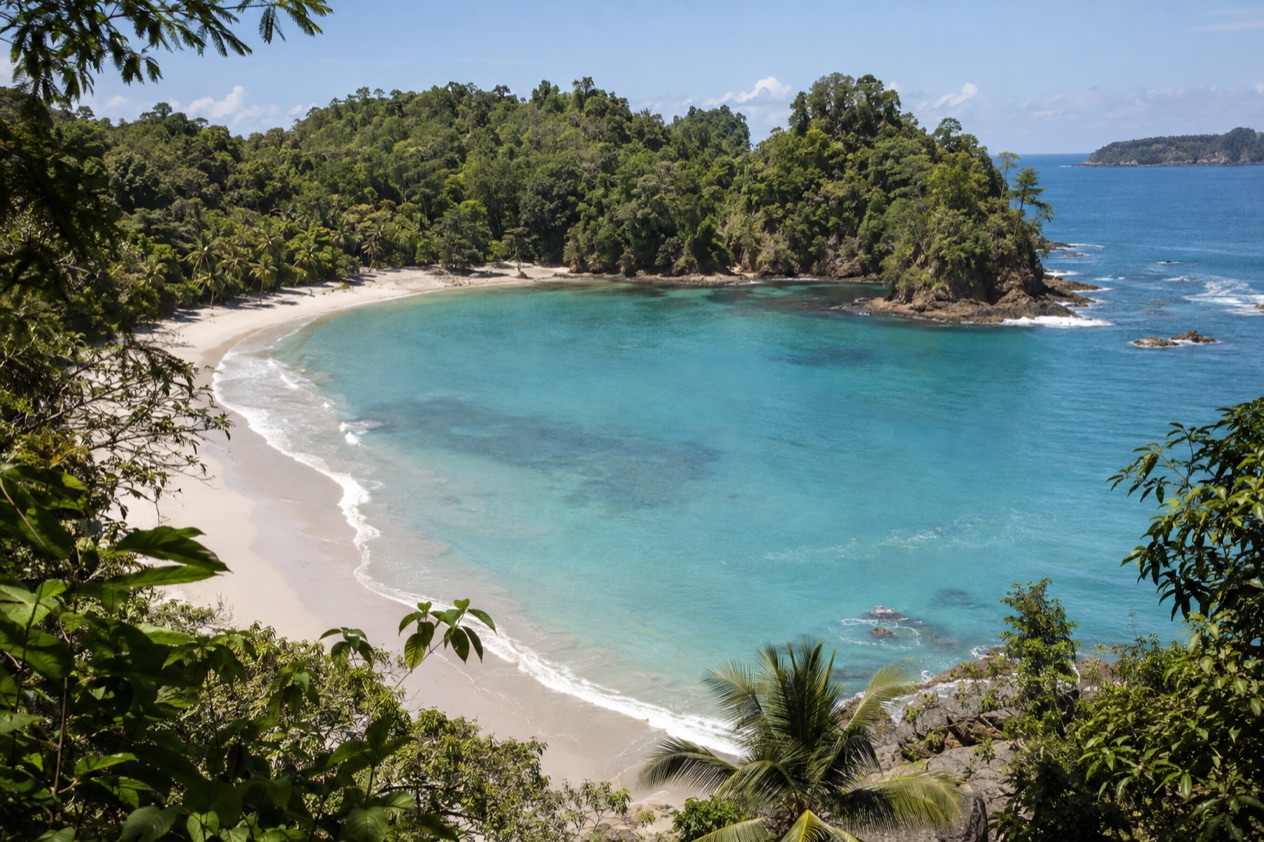
These coves are the picture-postcard scenes of Costa Rica, with white sand, green hills and rocky points. Bring a mask and snorkel if you like, but treat any swimming as dependent on the day’s conditions, and follow the posted guidance. A long lunch in the shade after a morning on the trails is the usual plan.
On the water: kayaks, paddleboards and sunset sails
Beyond the sand, the bay is a playground for guided outings. Sea kayaks slip along the coast and into small coves, paddleboard sessions suit early mornings when the water is often at its glassiest, and catamaran trips head out for a swim, a snack and an unhurried sunset with the park’s headland in silhouette. Dolphins sometimes show up beside the boats, though they are never guaranteed.
Pick the outing that matches your appetite for effort. Kayaking and paddleboarding give you the coast at eye level, and a sunset sail gives you drinks, music and a view with no navigating on your part. Whichever you choose, plan it for the cooler ends of the day.
Surfing, fishing and other ways to spend a day
Surf lessons on Espadilla suit first-timers, with soft boards and patient instructors. Sport-fishing charters leave from the Quepos marina, and the town has long been known for them. Zip lines and canopy walks in the hills above the coast add a bird’s-eye view of the forest, and horseback rides run through the countryside for a slower take on the landscape.
Day trips from Manuel Antonio
The favorite day trips from Manuel Antonio head into the mangroves, up the rivers and south along the coast toward Uvita and Dominical. Most go by road, and many are run as guided outings, which is how most visitors see animals and water in the wild.
Damas Island mangrove estuary
A short trip from Quepos puts you in a maze of mangrove channels, reached by boat. The roots arch out of brackish water like stilts, and the tunnels of green are a good place to spot herons, kingfishers, white-faced monkeys and, with luck, a crocodile resting on a bank. The pace is slow, the boats are quiet, and a guide does most of the spotting.
It suits travelers who want wildlife without hiking. Go in the morning, when the birds are active and the light is soft, and bring a hat and sunscreen because the channels can be bright. Sightings are chances, never promises.
River rafting near Quepos
Rivers that drain the mountains inland cut through green canyons on their way to the Pacific, and rafting outfits run guided trips on them. Easier stretches have gentle rapids, wide pools and waterfalls spilling off the banks, and more spirited ones suit people who want to paddle hard. The water level varies with the season, which changes how mellow or wild the day feels.
Rafting suits active travelers who want a more energetic day away from the beach. Expect to get thoroughly wet, wear sandals that stay on, and carry nothing you cannot afford to soak. After the river, a riverside lunch and a dry shirt are the reward.
Uvita and Marino Ballena National Park
South along the coast, Uvita is known for a sandbar shaped like a whale’s tail that appears at low tide and stretches into the sea. The surrounding national park has long beaches, forest at the back and, in the right season, whales that pass offshore, which boat tours go out to look for. Sightings depend on the time of year and the day.
It suits travelers who like seeing a quieter, less developed coast. Pair it with a stop at a roadside soda and a swim at a beach where the crowds thin out, and be careful with the surf, which can be strong.
Waterfalls and smaller outings
Near Dominical, a famous waterfall tumbles into a deep pool in the forest, reached by a walk or a ride through the hills. North of Manuel Antonio, the Tarcoles River is known for crocodiles seen from a bridge or a boat, and the Carara area has scarlet macaws and forest trails. Jaco, further north, offers surf and nightlife for travelers who want a livelier base for an afternoon.
Coffee farms in the highlands, small chocolate and sugarcane tours and canopy zip lines fill out the list.
What to eat in Manuel Antonio
Eating in Manuel Antonio means Costa Rican home cooking at small sodas, fresh Pacific seafood and tropical fruit, with a handful of ambitious restaurants on the hill taking advantage of the views. Rice, beans and something fresh from the sea or the garden appear in almost every meal.
The anchor of the local table is the casado, a plate that arrives with rice, black beans, a salad, fried plantain and a choice of chicken, beef or fish. The name means married, because everything shares one plate. Breakfast is gallo pinto, rice and beans fried together with onion and sweet pepper, served with eggs, fried cheese and often a spoonful of sour cream.
Seafood and the daily catch
With the Quepos fishing fleet nearby, fish is the thing to order. Ceviche arrives cold and bright, cured in lime juice with cilantro, onion and sweet pepper, and it is usually served with crackers or fried plantain chips. Grilled snapper, mahi-mahi and tuna show up on menus depending on what the boats brought in, often with garlic butter or a coconut sauce.
Shrimp, whole fried fish and seafood rice are common too. Tables with a view of the bay turn dinner into an event, and many places let you watch the sun set while the plates arrive. Ask what is freshest, since the answer changes with the day.
Sodas, snacks and street food
A soda is a small family restaurant with a short menu and a counter of daily dishes, and it is where locals eat lunch. Order the plate of the day, a fresh juice and, if offered, a bowl of soup. Patacones, flattened and fried green plantain, come with black bean dip or guacamole, and empanadas and tamales are common snacks.
Quepos has bakeries and markets where you can pick up pastries, cheese and fruit for a picnic on the trails. Roadside stands sell cold coconuts, cut open with a machete and served with a straw, which is the most refreshing way to deal with the humidity.
Fruit, coffee and what to drink
Tropical fruit is part of every morning. Pineapple, papaya, mango, watermelon and passion fruit appear on plates and in batidos, the blended fruit drinks made with water or milk. Fresh juices called refrescos come in flavors such as tamarind and blackberry, and they are sweet, cold and cheap in spirit.
Costa Rican coffee is excellent and is usually served strong, either black or with warm milk. At night, the local beer is Imperial, light and cold, and many bars mix cocktails with fresh fruit and a shot of local rum. Dessert might be tres leches cake or a simple plate of sliced fruit.
Things to do in Manuel Antonio at night
Evenings in Manuel Antonio are unhurried and revolve around dinner, a drink and the view. This is not a party town, and the soundtrack is usually frogs, insects and a little music drifting from a terrace rather than a club.
Sunset and dinner on the hill
The evening starts with the sunset. Around late afternoon, visitors drift toward restaurants and bars on the hill road, order a drink and watch the sun go down over the water. Silhouetted headlands and a sky that shifts from gold to pink are the reason tables with a view fill early.
Dinner follows without hurry, often on open-air terraces with the forest around you. Menus run from grilled fish and local plates to pasta, sushi and international cooking.
Music, bars and Quepos after dark
A few bars along the hill and in Quepos host live music, from acoustic guitar to reggae and Latin rhythms, and some hotels put on a night of music for guests. Quepos has the more local scene, with bars and small dance spots where the crowd is a mix of residents, sport fishers and travelers.
Dress is casual and the hours are early, since most people have a morning planned for the park or the water. If you want a livelier night than the hill provides, Quepos is the place to look. Wherever you go, keep your belongings close, because petty crime is common throughout Costa Rica.
Quiet evenings and night wildlife
Many travelers choose the quiet option, which is a balcony, a book and the sounds of the forest. After dark the trees come alive with frogs, insects and sometimes the calls of nocturnal animals. Guided night walks at private reserves are an organized way to see creatures that sleep through the day, and a guide with a flashlight does the finding.
Stargazing from a terrace can be lovely when the sky clears after an afternoon shower. Keep a light layer and insect repellent handy, since the evening air is warm and the mosquitoes are not shy.
Things to do in Manuel Antonio with kids
Children usually love Manuel Antonio because the animals are close and the beaches are right there. Monkeys in the trees, a sloth overhead and a raccoon investigating the picnic make the park feel like a living storybook.
Animals, trails and boats
The park can keep young walkers interested, with shaded paths and frequent wildlife sightings. Capuchin monkeys, squirrel monkeys, sloths and iguanas are commonly seen, and a guide with a scope can point out what small eyes might miss. Remind children that the animals are wild and that visitors are asked not to feed them.
A boat ride through the mangroves is another easy win. Kids enjoy the gliding pace, the birds and the chance of a crocodile on the bank. A butterfly garden on the hill suits younger children and gives everyone a cool break from the sun.
Beach time and safety
Building sandcastles, hunting shells and wading are great fun in the park’s coves and along Espadilla’s long beach, yet rip currents pose a serious hazard, killing several U.S. tourists every year. Keep children within arm’s reach at the water’s edge, read the flags and stay near a lifeguard when one is posted.
Shade is limited on open sand, so bring hats, rash guards and sunscreen, and take breaks under the trees. Cold coconuts and fruit from stands are a good way to keep everyone hydrated and happy between swims.
Heat, hills and getting around with children
The climate is hot and humid, so plan active outings for the morning and rest in the middle of the day. Since hotels rise along a curving hill road, your choice of lodging determines if you reach the beach on foot or by bus, which counts when legs are weary and strollers are in tow. Park paths and the hill itself involve slopes and steps, so a carrier is often easier than a stroller.
Pack light, quick-drying clothes, closed shoes for the trails, insect repellent and a refillable water bottle. Early dinners suit families, and most restaurants on the hill welcome children, with simple plates such as rice, chicken and fruit always available.
Good to know before you go
The U.S. State Department rates Costa Rica Level 2, ‘Exercise increased caution,’ due to crime; it says petty crime is common throughout Costa Rica and that violent crime also affects tourists, including armed robbery, homicide and sexual assault.
Getting around is simple once you know the layout. Hotels, rentals and restaurants line one winding road between Quepos and the park entrance, so buses and taxis shuttle along it, and walking works only if you sleep near your destination.
Rain is usually an afternoon event in the green season, which runs roughly from May to November, while the months from about December to April are drier. Rules and conditions at the national park change, so confirm them on the park’s official page before you set your day.
Sources
- Open-Meteo / ECMWF ERA5, normals 1991-2020 computed for the grid cell at 9.392N 84.1366W, checked October 8, 2026
- U.S. Department of State, Costa Rica Travel Information, Safety and security (https://travel.state.gov/content/travel/en/international-travel/International-Travel-Country-Information-Pages/CostaRica.html), checked October 8, 2026
- U.S. Department of State, Costa Rica Travel Advisory, issued April 1, 2026 (https://travel.state.gov/content/travel/en/traveladvisories/traveladvisories/costa-rica-travel-advisory.html), read via the State Department open data API on October 8, 2026
To plan your stay
- Best Time to Visit Manuel Antonio: Dry Season, Green Season, Sea Temperatures and Festivals
- Where to Stay in Manuel Antonio: Quepos, the Hill Road and the Beach End
- Manuel Antonio in January: Weather, Beaches, Wildlife and a Two-Day Plan
- Manuel Antonio in February: Weather, Beaches, Park Walks and a Two-Day Plan