
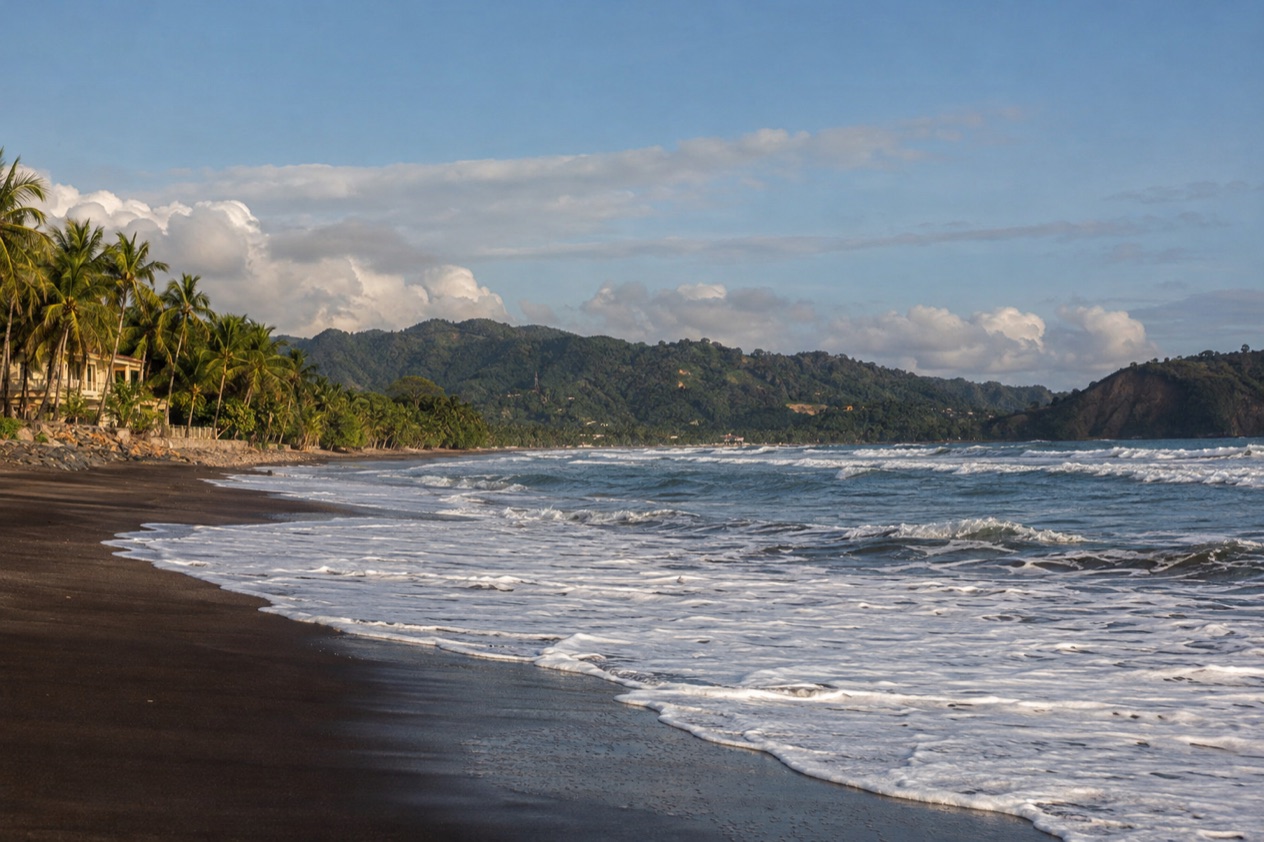
Early in the morning, the main strip of Jaco belongs to surfers carrying boards down to the dark sand and to cooks hosing down the sidewalk in front of the breakfast spots. By night the same street is all neon, music and tacos, while a few minutes north or south the only sound is the surf and the insects in the trees. Where you sleep in Jaco comes down to how close you want to be to that noise, with options from the bustling main strip to quiet pockets a few minutes north or south.
What is the best area to stay in Jaco?
For a first visit, the center of town near the main beach strip is the easiest choice, because restaurants, surf schools, shops and the sand are all within walking distance. Families and travelers who want a resort feel may prefer nearby Herradura, while experienced surfers seeking a quieter base can look south to Playa Hermosa. Budget travelers will find the most hostels, guesthouses and simple apartments in and just behind the center.
Nightlife is the clearest dividing line. If you want to step out of your room and into a bar or a late dinner, stay in the middle of town. If you would rather hear waves than a stereo at midnight, pick a spot a short taxi ride away and go into town when you feel like it.
The areas differ in how they feel more than in what they offer. The center is busy, a bit rough around the edges and full of surf-town energy, with food stands, souvenir shops and board rental racks lining the road that runs parallel to the beach.
The north is greener and more polished, with gated communities, a marina and large hotels on the hillsides. The south is a long, wide, mostly residential stretch where the sea is the main attraction and the town is a drive away.
Think also about what you plan to do beyond the beach. For most visitors, Jaco serves as a convenient home base for day trips, including the scarlet macaws and transitional forest of Carara National Park just a short drive north, plus the Tarcoles River bridge, a famous spot for looking down at crocodiles.
Those outings begin on the same road whichever neighborhood you choose, so they should not decide the question. Your daily rhythm should: late nights and walking, or early starts and a quiet porch.
Beginners and experienced surfers alike get good rides from the beach break, so you will find lessons and board rentals all over town. If surfing is the point of your trip, staying near the center saves you carrying a board far. If you only plan to swim and watch, remember that rip currents are very dangerous and cause several drownings of U.S. tourists each year.
In short, first-timers and nightlife seekers belong in the center, resort and family travelers in the north, surfers who want space in the south, and budget travelers in the simple lodgings around the center and a few blocks inland.
The best areas to stay in Jaco
Central Jaco and the beach strip
This is the Jaco most people picture: a long avenue of open-air restaurants, surf shops, small supermarkets, ice cream counters and bars, with the dark-sand beach a block or two away. Mornings are for coffee and surf lessons, afternoons for a quick swim and a nap while the rain passes through in the green season, and evenings for dinner followed by music. It is lively and a little scruffy, and it suits people who like to walk everywhere.
Lodging here is the widest range in town. You will find hostels with dorm beds, guesthouses with a shared kitchen, small boutique hotels with a pool tucked behind a wall, and apartments for longer stays.
Large all-inclusive resorts are not the norm in the center, so if that is your style, look north instead. Rooms on the main road can hear traffic and music, so ask for a room at the back or on an upper floor.
You can walk to most restaurants and surf schools, and taxis cover the rest. The drive from San Jose is about two hours by road, and the center is the first area most arriving travelers reach. A good tip is to book a spot a block or two off the main avenue, which keeps the beach and the restaurants in reach but gives you a quieter night.
Herradura and the northern end
North of the center the road bends around a green hillside and the mood changes. Herradura is calmer and more manicured, with a bay, a marina, restaurants that cater to resort guests, and hotels that look out over the water. Evenings are quiet, mornings start with birdsong, and you can see the forested hills behind the coast. It suits families, couples and anyone who wants a polished stay with pools and services on site.
This is where the larger resorts, including all-inclusive properties, and upscale condos are concentrated. Boutique hotels and vacation rentals with ocean views sit on the slopes above. Many travelers choose this side for the on-site restaurants, the kids’ pools and the feeling of staying inside a self-contained world, which is handy if you have small children.
The trade-off is distance. If your plan includes macaws at Carara National Park, this side also gets you onto the highway toward the park a little sooner. Choose it when comfort and calm matter more than wandering streets at night.
Playa Hermosa and the south
South of town, the beach stretches out wide and dark, with big surf that draws serious surfers and few buildings to interrupt the horizon. Playa Hermosa feels like a surf village rather than a resort strip: a handful of beachfront restaurants, rental houses in the trees and a long, empty sweep of sand at low tide. Sunsets here are a quiet affair, shared with a few people and some dogs.
Lodging leans toward small hotels, surf lodges, villas and apartments, usually with a pool and a kitchen. It is a good fit for surfers, couples, remote workers and groups who rent a house for a week. It is less suited to travelers without a car who want to stroll to bars and shops, because the center is a drive away.
Surf here is stronger than in the middle of Jaco and the sea is often rough, so it is better for experienced surfers than for first-timers. Check the flags and ask your host about conditions before swimming. A practical idea is to stay here for the quiet and spend your days in town, taking a taxi for dinner and a ride back.
The inland streets behind the center
It is not pretty, but it is real, and you will eat well and see how people in Jaco live. This area works for long stays and for travelers who put the budget first.
Expect simple rooms, guesthouses, hostels and apartments, often with air conditioning and a kitchen. You are within walking distance of the beach strip, so you give up little while gaining quiet at night and a different feel by day. Choose a spot with solid locks and decent lighting, then after dark travel that path with the same caution you would use in any town, because petty crime happens all over Costa Rica.
Jaco areas compared
| Area | Best for | Feel | Getting around |
|---|---|---|---|
| Central Jaco | First visit, nightlife, surf lessons | Busy, casual, surf-town energy | Mostly on foot, taxis for longer hops |
| Herradura and the north | Families, resort stays, couples | Calm, polished, green hillsides | Taxi or rental car, resort shuttles |
| Playa Hermosa and the south | Experienced surfers, quiet beach time | Wide beach, surf village, few crowds | Car or taxi into town |
| Inland streets behind the center | Budget stays, longer visits | Local, simple, everyday life | On foot to the beach strip |
The main trade-off is between the beach and the town. The closer you sleep to the sand and the long north and south sweeps of it, the more you lose of the street life, the restaurants and the late evening.
Stay in the middle and you gain all of that but give up the wide-open feeling and some peace. For most first trips the center wins because you can always take a taxi to a quieter beach for a day.
Quiet and nightlife pull in opposite directions in the same way. A room on the main avenue puts you steps from the bars, and it will sound like it. A room in Herradura or Playa Hermosa puts you far from the music but also far from a spontaneous dinner. Decide which kind of evening you want and let the rest follow.
Budget and comfort also split the map. The simplest lodgings cluster in and behind the center, the larger resort-style properties in the north, and the villas and surf lodges in the south. If you travel with a group, a rental house in the south or north can work out well, while solo travelers often enjoy the social atmosphere of a hostel in the center.
None of these choices locks you in. Jaco is small, and you can spend a day in one area while sleeping in another. Think of your hotel as the place you want to come back to at the end of the day, then let taxis and your own feet do the rest.
How to choose your hotel in Jaco
Start with the all-inclusive question. An all-inclusive resort makes sense when you want one stay with pools, meals and activities handled in one place, and it fits families with young children best.
It means you eat mostly on property, and Jaco’s best food is in the town, so some people prefer a regular hotel with breakfast and then explore restaurants in the evening. The big all-inclusive properties are on the northern side, while the center is mostly independent hotels and guesthouses.
Next, beachfront or a few blocks back. A room right on the sand gives you the sound of the waves and an easy path to a swim or a surf session, but beachfront rooms cost more and the surf can be loud at night.
A room a few blocks inland tends to be quieter, cheaper and just as close to restaurants. In Jaco the water is not a lagoon, so the real choice is the open ocean or a pool, and many travelers are happy with a pool plus a short walk.
Think about the season. October is in the green season, when rain falls nearly every day, usually in the afternoon or evening, and the hills are bright green.
In that case a pool with a covered terrace, a restaurant on site and a room with a roof over the balcony make rainy hours pleasant. The sea can be rough and cloudy in these months, so a good pool counts for more than it would in the dry months from about December to April.
Book earlier for the busy stretches. Holiday weeks, long weekends, and the dry-season months fill up first, and the better small hotels go quickly. Outside those times you can often find a room with a short lead time, and you may have more choice. If your trip falls on a Costa Rican holiday weekend, remember that many Costa Ricans also head to the beach and the town gets busier.
For families, check for a pool with a shallow end, a kitchen or kitchenette, air conditioning and a location where you can walk to a restaurant. Consider the sea honestly. Rip currents pose a serious threat, causing several drownings of U.S. tourists each year. A hotel pool is a safer place for small children to swim, and the beach is best for walking, sandcastles and watching the surfers.
For accessibility, ask directly. Jaco’s older buildings often have steps, narrow doorways and sandy paths, so ask about ground-floor rooms, ramps, elevators and the walk from the entrance to the room. Hotels on hillsides in the north can involve steep driveways, and rooms in the center may be reached by stairs. A short message before you book gives you a clear answer.
Before you confirm, run through a short checklist:
- Noise: ask which side of the building the room faces, since the main avenue and some bars carry music late.
- Beach access: find out how far the sand really is and whether you cross a busy road.
- Transfers: ask whether the hotel can arrange a ride from the airport or a shuttle into town, particularly in the north or south.
- Rain plan: look for a covered terrace, a restaurant on site and good air conditioning.
- Parking and security: if you rent a car, confirm the hotel has secure parking.
Finally, read recent guest comments for the things that matter to you, such as noise at night, water pressure, pool upkeep and how the staff handles problems. A small place with attentive hosts often beats a bigger one with a grander lobby.
Good to know before you go
The U.S. State Department rates Costa Rica Level 2, ‘Exercise increased caution,’ due to crime; it says petty crime is common throughout Costa Rica and that violent crime also affects tourists, including armed robbery, homicide and sexual assault.
Jaco lies roughly two hours from San Jose by road. Whichever area you choose, ask your hotel in advance how to get there from the airport and how to pay for rides and meals in town, so your first evening is relaxed. Pack light, quick-drying clothes for the afternoon showers, and keep valuables in the room safe when you head to the beach.
Sources
- Costa Rica Tourism Board (ICT), Carara National Park (https://visitcostarica.com/where-to-go/protected-areas/carara-national-park), checked October 8, 2026
- Open-Meteo / ECMWF ERA5, normals 1991-2020 computed for the grid cell at 9.6145N 84.6285W, checked October 8, 2026
- U.S. Department of State, Costa Rica Travel Information, Safety and security (https://travel.state.gov/content/travel/en/international-travel/International-Travel-Country-Information-Pages/CostaRica.html), checked October 8, 2026
- U.S. Department of State, Costa Rica Travel Advisory, issued April 1, 2026 (https://travel.state.gov/content/travel/en/traveladvisories/traveladvisories/costa-rica-travel-advisory.html), read via the State Department open data API on October 8, 2026