
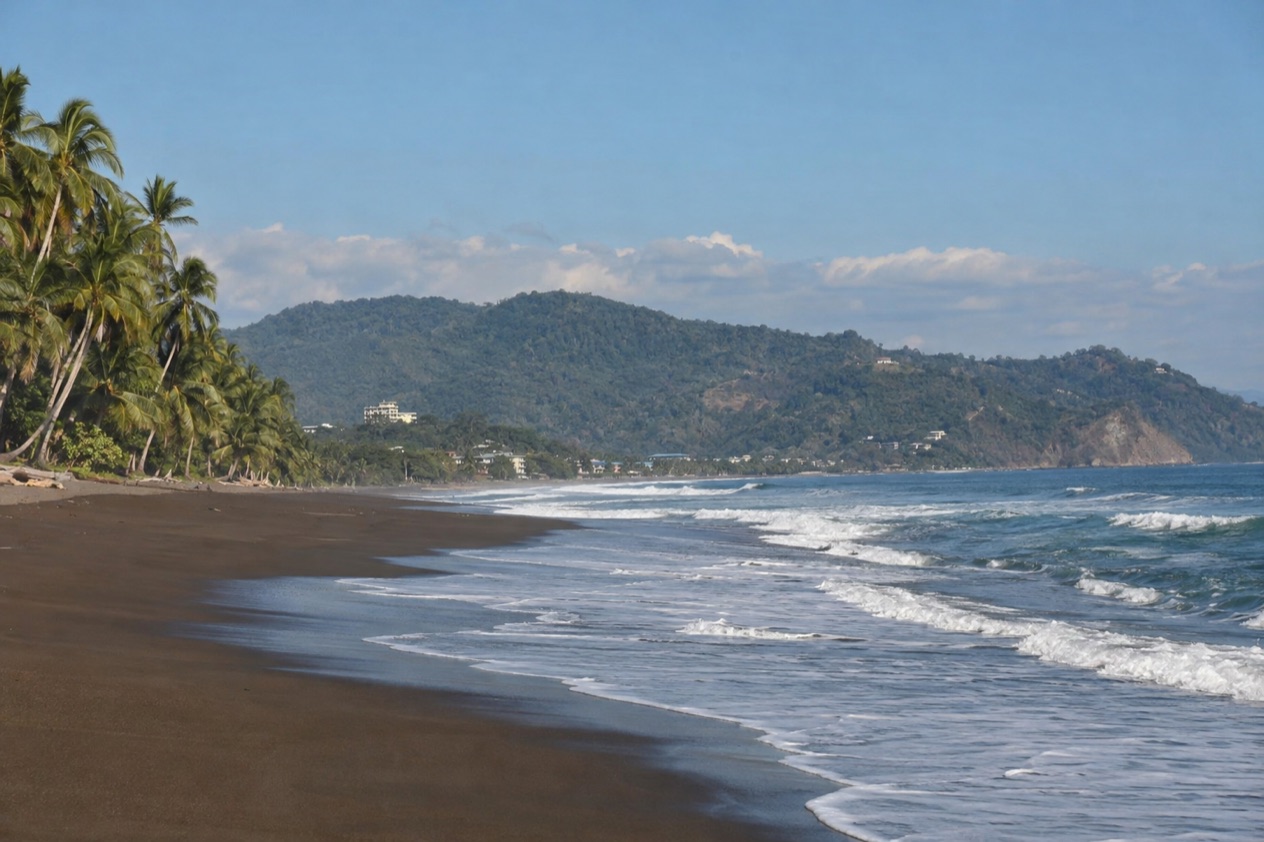
Late in the afternoon, the surfers in Jaco paddle back out for one more wave while the sky turns orange over a wide beach of dark sand, and the smell of grilled fish drifts from the open-air restaurants along the street. Scarlet macaws cross overhead in noisy pairs, music starts up in the bars, and the town settles into its evening rhythm. Jaco is a lively Pacific beach town built around surf, sunsets and easy access to rainforest, and it suits first-time surfers, groups of friends and families who want a base with plenty to choose from.
What are the best things to do in Jaco?
The best things to do in Jaco start with the waves, then branch out into wildlife, beach evenings and day trips along the coast. Here are the essentials, each developed in the sections that follow.
- Take a surf lesson on the main beach, where the beach break is forgiving enough for beginners and still interesting for experienced surfers.
- Watch the sunset from the sand, when the sky goes copper and the surfers become silhouettes.
- Walk a guided trail in Carara National Park, a short drive north, where scarlet macaws often fly at dawn and dusk.
- Stop at the Tarcoles River bridge and look down at the crocodiles lying on the banks below.
- Eat a casado or fresh-caught fish at a small family restaurant, then finish with a fruit batido.
- Spend a day at Manuel Antonio National Park, one of the most popular outings on this coast, for monkeys, sloths and sheltered beaches.
- Stroll the main street at night, from open-air bars to live music and late tacos.
- Try the outdoor activities around town, from horseback rides to canopy tours with a certified guide.
Jaco rewards a flexible schedule. Mornings tend to suit surfing, wildlife and trails, while afternoons are for the beach, a long lunch or a nap in the hammock. Evenings belong to the street. In the green season, the rainy months when downpours are common, plan outdoor excursions early and keep a covered plan, such as a cooking class or a long meal, for the afternoon.
Everything below can be done from one base, and most visitors mix a day of surfing with a day of wildlife and a lazy beach day. The town is a good place to stay put for a few nights, since the coast has so many outings within easy reach by road. Getting from San Jose and the airport takes roughly an hour and a half to two hours, which makes Jaco one of the easiest beach stops to reach on arrival.
Sights and landmarks in Jaco
Jaco is a beach town rather than a city of monuments, so its landmarks are the beach itself, the main street behind it and the bridge and forest just up the coast. The pleasure here is in walking, watching and tasting rather than ticking off museums. Even so, a few places deserve a deliberate stop.
The main beachfront and the town strip
The heart of Jaco is its long dark-sand beach and the busy street that runs parallel to it. Between them sit surf shops, juice bars, souvenir stalls, small hotels and restaurants with tables open to the breeze. Walking the strip from one end to the other, you pass board rental stands, vendors selling hammocks and carved wooden masks, and cafés where surfers refuel after a morning session.
The best time to walk it is early, when the street is quiet and the beach belongs to joggers, dog walkers and the first surfers, or at dusk, when the lights come on and the terraces fill. In between, the midday sun can be strong, so shade and water matter. The strip suits everyone, and it is where you will get your bearings in the first hour.
The Tarcoles River bridge
North of town along the coastal highway, the bridge over the Tarcoles River is one of the best-known stops in the country. From the walkway, you look straight down at the muddy banks, where large crocodiles often rest in the sun, sometimes in a tight row. Birds work the shallows around them, and the river is wide and brown below you.
It is a quick stop rather than a full outing, and it pairs naturally with a visit to Carara National Park, which sits nearby. Go in the morning, when the light is soft and the traffic is lighter, and keep a respectful distance from the edge and from passing trucks. Binoculars or a long camera lens help, and you can see the animals clearly from above without going near the water.
Carara National Park
Carara is a patch of transitional forest where the dry northern woods meet the wetter southern rainforest, and that mix is why it is so rich in birds. Scarlet macaws are the star attraction, frequently spotted on the wing at first and last light, their red, yellow and blue feathers glinting among the crowns of the trees. Trails wind beneath tall trees, and you may also hear or spot monkeys, trogons and the quiet rustle of lizards in the leaf litter.
The park lies a short drive north of Jaco on the coastal highway. A guide makes a big difference here, because they know where to look and can point out animals you would pass without noticing. Visitors can look for a guide from the Costa Rica Tourism Institute list of Certified Tour Guides. Rules, entry and trail conditions change, so check the park’s official page before you go.
Murals, lookouts and the town’s quieter corners
Away from the main strip, Jaco has a few smaller pleasures. Street art brightens some walls, with ocean scenes, birds and surf themes. Side streets hold sodas, the small family restaurants where locals eat, and little shops selling hand-painted ceramics and coffee. Hillsides above town offer sunset views over the bay for those willing to climb a little.
At the southern and northern edges of town, the feel changes. The beach grows quieter and the buildings thin out, with palms and rocky points framing the shore. A slow walk at the end of the day, with a cold coconut in hand, shows you the calmer side of Jaco that the busy strip hides.
Beaches and outdoor things to do in Jaco
The beaches here are made for waves, wide sky and long walks, with the dark sand warming under the sun and the surf rolling in steadily. Jaco is a surf town first, so most outdoor life revolves around the water and the green hills behind it.
Jaco Beach and learning to surf
Jaco is a classic first surf stop because the main beach, a long curve of dark sand, has a beach break that suits experienced surfers and beginners alike. Lessons and board rentals make Jaco a classic first surf stop.
Mornings are usually the favorite time to surf, before the wind picks up and the beach fills. Watching from the sand is entertaining too, especially at sunset, when the lineup glows.
Every year, rip currents cause several drownings of U.S. tourists in Costa Rica. Rip currents are very dangerous, so check the day’s conditions, follow any posted flags, and keep children within arm’s reach.
Playa Hermosa and the quieter beaches nearby
South of town, Playa Hermosa is another dark-sand beach with strong surf, favored by more experienced surfers who like powerful waves. Other beaches along the coast are wilder and emptier, with driftwood, tide pools and long stretches where you meet only a few walkers. Each has its own mood, from lively to nearly deserted.
These beaches suit sunrise walks, picnics and photography better than casual swimming, because the surf can be strong and lifeguards are not on every beach. Always ask locally about conditions before entering the water. Bring shade, water and sunscreen, since there is often little cover on the sand.
Adventure outings and trails
Behind Jaco, the hills offer the standard Costa Rican lineup of adventures: canopy tours that soar above the trees, horseback rides across farms and woods, and hikes to scenic overlooks. Sportfishing boats leave from the coast for offshore trips, and some operators combine fishing with time at sea to watch dolphins or birds.
Choose operators carefully. U.S. citizens have died in Costa Rica while doing adventure sports, so look for established companies and, where possible, certified guides from the Costa Rica Tourism Institute list. Ask about equipment, group size and what happens if the weather turns, and be ready to change plans on a stormy afternoon.
Day trips from Jaco
Jaco sits in the middle of one of the most visited stretches of the Pacific coast, so day trips are easy and varied. Most head north to forest and river, or south to the beaches and wildlife around Quepos. Start early, because the best light and the most animal activity come in the morning.
Carara National Park and the Tarcoles River
This is the most natural day out from Jaco, since both stops lie a short drive north on the coastal highway. Walk the forest trails with a guide, who can help you spot macaws and other birds. Wildlife is a chance, never a promise, but the odds improve with early starts and patient eyes.
Afterward, stop at the Tarcoles River bridge to look down at the crocodiles from the walkway. Many visitors then have lunch at a roadside restaurant nearby, where fresh fish and cold drinks are on offer. The outing suits nature lovers, birders and photographers, and it works in the green season if you go early and keep the afternoon free.
Manuel Antonio National Park
Heading south along the coast brings you to Manuel Antonio, a small park where rainforest meets pale beaches and rocky coves. Monkeys and sloths are often seen, along with raccoons, iguanas and colorful birds. Rainforest, pale beaches, rocky coves and wildlife are the park’s main draws.
It is a full day, so leave early and avoid rushing. A guide adds a lot, helping you find animals hidden in the canopy. Check the park’s official page before planning this day trip. Sun, humidity and crowds can be tiring, so carry water and take breaks in the shade.
Boat trips and sunset cruises
Several operators run boat outings along this stretch of coast, from sunset cruises with music and snacks to trips that look for dolphins, birds and, in some seasons, whales. Sea sightings are chances, and conditions on the water change from day to day, so treat the animals as a bonus rather than the goal.
A cruise suits couples, groups of friends and families with older children who enjoy being on the water. Choose a reputable company, listen to the safety briefing and bring a light layer, since the breeze can be cool once the sun drops. Evening departures catch the sky when it is most colorful.
Smaller outings nearby
- Playa Hermosa for strong surf and a more local feel, a short ride from town.
- Playa Herradura and the marina area, for a calmer, more resort-style stretch of coast.
- Coffee farms and fruit stands in the hills, for tastings and a look at rural life.
- Quiet beaches farther south, for long walks and empty sand.
What to eat in Jaco
Eating in Jaco means fresh seafood, hearty Costa Rican staples and fruit in every form, served from beachfront terraces and tiny family kitchens. The food is relaxed, generous and built to follow a morning in the surf.
Costa Rican staples
Start with gallo pinto, the breakfast of rice and black beans cooked together with onion, sweet pepper and cilantro, usually served with eggs, fried plantain and a spoonful of sour cream. At lunch, order a casado, a plate that pairs rice and beans with salad, plantain and your choice of chicken, beef or fish. The name means married, because everything arrives together on one plate.
Small family restaurants called sodas serve these dishes simply and honestly. Look for places with a crowd of locals and a short menu written on a board. Add a glass of fresh juice or a cold Imperial beer, and the meal is complete. Many tables are open to the street, so you eat with the sounds of the town around you.
Fish, ceviche and the Pacific catch
On the coast, seafood is the draw. Ceviche, raw fish cured in lime juice with onion, cilantro and pepper, arrives cold and sharp, often with crackers or fried plantain chips. Grilled whole fish, shrimp in garlic and fish tacos are on many menus, and the catch of the day is usually the best choice.
Patacones, thick fried green plantain discs, come with beans, cheese or fish and make a good snack with a drink. Many beachfront restaurants set tables on the sand or under palms at dusk, which turns dinner into a sunset event. Order slowly and linger, since service here follows the relaxed pace of the coast.
Fruit, coffee and sweet things
Fruit is a daily pleasure. Pineapple, mango, papaya, watermelon and passion fruit appear in batidos, thick blended drinks made with water or milk, and in simple plates at breakfast. A cold coconut, called pipa, is sold from stands and carts and is the best answer to a hot afternoon.
Costa Rican coffee is excellent, served black or with steamed milk in cafés around town. For something sweet, look for tres leches cake, fresh fruit ice cream and small pastries filled with guava or dulce de leche. Many cafés double as places to sit, charge a phone and watch the street go by.
Things to do in Jaco at night
Jaco is one of the liveliest beach towns in Costa Rica after dark, with open-air bars, restaurants and music along its main strip. The mood ranges from a quiet drink by the sea to a late night of dancing, so you can pick your pace.
Sunset, dinner and the beach after dark
The evening begins with the sunset. People gather on the sand, on bar terraces and along the sea wall to watch the light go, and the surfers paddle out for a last session. Then restaurants light their lamps and tables fill with groups of friends, couples and families.
A beach dinner is the classic choice, with grilled fish or a plate of ceviche and a cold drink. Afterward, a slow walk on the strip lets you browse the stalls and listen to the music drifting from open doors. Keep valuables close and stay aware of your surroundings, as petty crime is common throughout Costa Rica.
Bars, live music and dancing
Many bars in Jaco have live bands, DJs or open-mic nights, and the music runs from reggae and rock to Latin pop and electronic beats. Surf bars with sand floors and big screens mix easily with livelier clubs where dancing goes late. Cocktails often feature local rum, fresh lime and tropical fruit.
The crowd is a mix of travelers, surfers and locals, and the atmosphere is usually friendly and casual. Go with companions, plan your route, and keep your drink in sight. Violent crime also affects tourists in Costa Rica, so plan your route and avoid dark, empty stretches of beach after dark.
Quieter evenings
Not every night in Jaco is loud. Many visitors prefer a long dinner, a cup of coffee at a café or a stroll under the lights before an early bed, especially before a dawn trip to Carara. Hotel terraces and pools offer calm corners with hammocks and soft music.
On clear nights, the sky over the ocean is dark and full of stars once you step away from the strip. A quiet seat on a terrace with the sound of the waves makes a satisfying close to the day. In the green season, evening showers can drive everyone indoors, so keep a plan for covered cafés and restaurants.
Things to do in Jaco with kids
Children in Jaco enjoy the beach, animals and the easy rhythm of a seaside town, and most days can be built around sand, shade and snacks. The key is pacing, with active mornings and slow afternoons.
Beach time and first surf lessons
The wide beach is the main playground, with room to dig, run and collect shells. Older children and teens often love a first surf lesson, since instructors work in small groups close to the shore and the beach break suits beginners. Boards and gear can be rented along the beach, and a lesson often becomes the highlight of the trip.
Water safety needs real attention. Rip currents are very dangerous here, most beaches have no lifeguard, and conditions change through the day. Ask your hotel or the surf school about the day’s conditions, follow flags where there are any, and keep young children within arm’s reach at all times. Hats, shirts that block sun and plenty of water make the beach more comfortable.
Animals, birds and the Tarcoles bridge
Wildlife is the best kid-pleaser on this coast. At the Tarcoles River bridge, you look down from a high walkway at crocodiles lying on the banks, which many children find thrilling because the animals are so large and so far below. The stop is short, which suits small attention spans.
Carara National Park adds scarlet macaws and a chance of monkeys, best seen early with a guide who can point out animals and keep a group moving. Manuel Antonio is a longer day but full of monkeys and sloths in the trees. Hold hands near the bridge railing and on forest trails, and keep your distance from wild animals.
Keeping the day comfortable
Heat and humidity tire children quickly, so plan outdoor time for the morning and again late in the day, and rest in the shade or an air-conditioned room at midday. Carry water, snacks and sunscreen, and reapply often, since the sun is strong near the equator.
Meals are easy with kids, since rice, beans, chicken, plantain, fruit and plain grilled fish are on almost every menu. Smoothies and ice cream make good rewards after a long walk. Evenings on the strip can be busy and loud, so families often eat early and head back to the hotel before the bars fill.
Good to know before you go
The U.S. State Department rates Costa Rica Level 2, ‘Exercise increased caution,’ due to crime; it says petty crime is common throughout Costa Rica and that violent crime also affects tourists, including armed robbery, homicide and sexual assault.
Jaco is easy to reach by road from San Jose and the airport, and once you are there most of the town can be covered on foot, with taxis or rides for trips farther along the coast. The green season, when afternoon rain is common, runs roughly from May to November, so carry a light rain jacket and start outdoor plans early.
Petty crime is common throughout Costa Rica, so keep belongings close and do not leave bags unattended on the beach. For guided outings, look for operators and guides from the Costa Rica Tourism Institute list of Certified Tour Guides.
Sources
- Costa Rica Tourism Board (ICT), Carara National Park (https://visitcostarica.com/where-to-go/protected-areas/carara-national-park), checked October 8, 2026
- Open-Meteo / ECMWF ERA5, normals 1991-2020 computed for the grid cell at 9.6145N 84.6285W, checked October 8, 2026
- U.S. Department of State, Costa Rica Travel Information, Safety and security (https://travel.state.gov/content/travel/en/international-travel/International-Travel-Country-Information-Pages/CostaRica.html), checked October 8, 2026
- U.S. Department of State, Costa Rica Travel Advisory, issued April 1, 2026 (https://travel.state.gov/content/travel/en/traveladvisories/traveladvisories/costa-rica-travel-advisory.html), read via the State Department open data API on October 8, 2026