
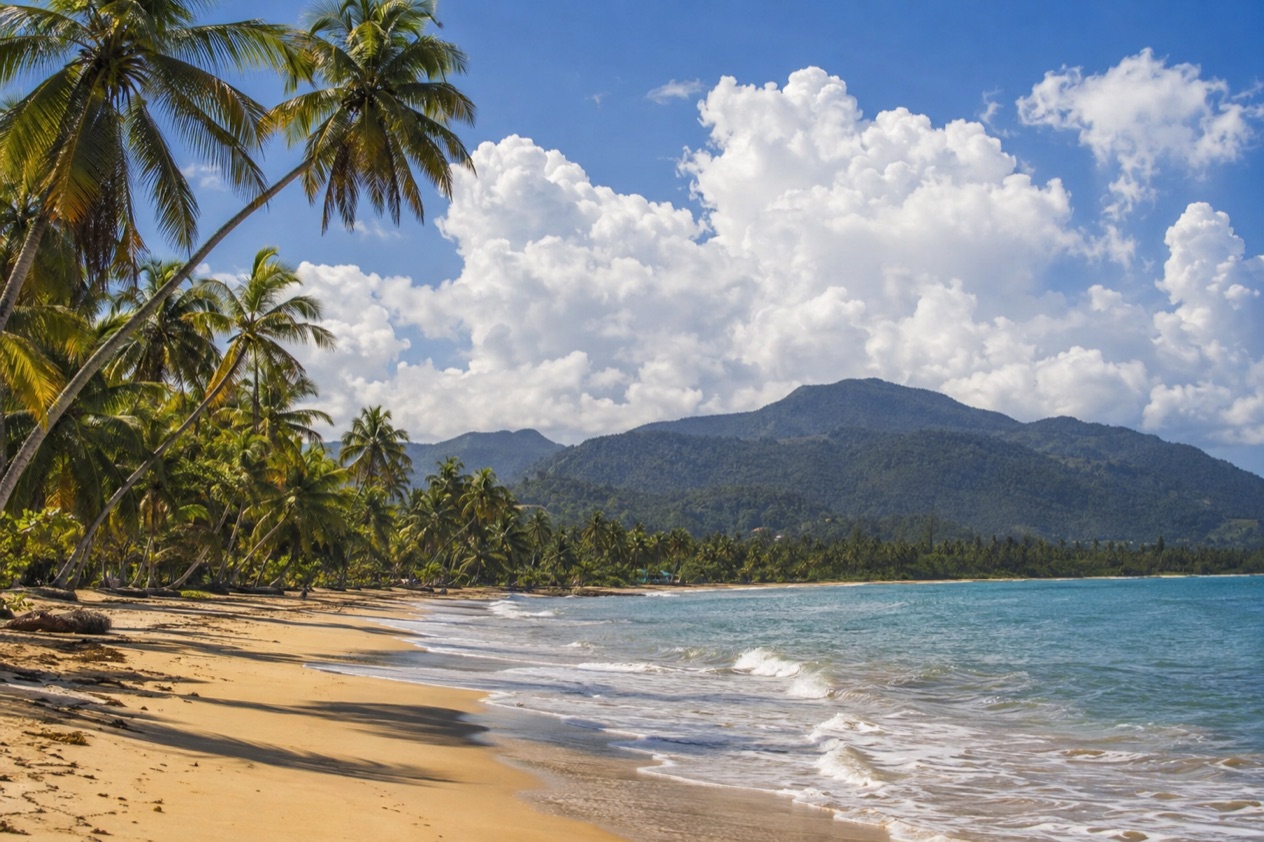
In July, once mid-morning arrives, families unloading coolers on Luquillo’s main beach lie in the long shadows cast by coconut palms, while the scent of frying dough floats in from the food kiosks next to the highway. Almost every afternoon, the green wall of El Yunque behind the town snags a cloud. This is a beach-and-rainforest month on Puerto Rico’s northeast coast, with warm water, long days and a relaxed summer mood among locals and visitors alike.
What is the weather like in Luquillo in July?
Luquillo in July brings heat, humidity and showers, and the trade winds try hard to soften the warmth. Mornings are bright, afternoons are sticky, and rain comes through on most days in quick bursts rather than all-day gray.
| Month | Average high (°F) | Average low (°F) | Rain days | Sea (°F) |
|---|---|---|---|---|
| July | 84.6 | 77.3 | 17.5 | 85.7 |
The best hours for the beach are the early ones. The sun rises a little before six and the sky is usually at its clearest then, so the sand is pleasant, the light is soft and the breeze is fresh. By early afternoon the heat builds, clouds pile up over the mountains behind town, and a downpour is common.
Luquillo sits on the Atlantic side, right at the foot of the rainforest, so the hills hold more rain than the shoreline does. If the showers look heavy over the peaks, the beach can still be sunny. You can dine outdoors in a T-shirt because evenings remain warm, and overnight temperatures barely drop. Pack thin, fast-drying clothing, and in the wind a light rain jacket beats an umbrella.
Can you swim in Luquillo in July?
Yes, the sea is warm, with no gasp when you wade in. Surface temperatures are in the mid-80s, which feels more like a tub than the ocean once you are past the first wave.
Luquillo faces the Atlantic, and its 14 beaches vary a lot from one to the next. The main public beach, with its palm grove and picnic tables, is the one most families pick, and in summer the water along it is often gentler than in winter, when big swells reach the north coast.
Because the water may shift daily and from one patch of beach to another, check it out before you step in. Should a flag, a sign, or a lifeguard on duty catch your eye, follow the guidance given. Beaches with more open exposure, such as La Pared, are where surfers go.
Snorkelers should look for the sheltered spots rather than the open stretches. Bring a mask, a rash guard for the long hours in the sun, and water shoes for rocky entries. Sargassum seaweed can reach east-facing coasts in some summers, so it is a possibility to expect rather than a certainty.
What to do in Luquillo in July
July here is built around the sea in the morning and the green hills in between showers. School is out, local families spend whole days on the sand, and the weekend mood is loud and cheerful, with music from car radios, domino games under the palms and grills smoking in the shade.
Independence Day, July 4, is one of El Yunque’s fee-free days, and it is a popular beach day too. A little later in the month, the Santiago Apostol festival in Loiza, usually in late July, draws crowds for its vejigante masks and bomba music, and it is a popular outing from this coast for anyone who wants culture alongside the beach.
Luquillo Beach and the kiosks
The main beach is a long curve of pale sand lined with coconut palms, the kind of place that looks the way a Caribbean postcard should. In July it fills up from late morning, particularly on weekends, so arrive early to claim a patch of shade. The water is warm, and children can paddle in the shallows while adults read under the trees.
Across the road along the highway, the kiosks are the town’s famous snack row. There, alcapurrias are available, fritters of green banana and taro with meat inside, plus bacalaitos, crisp fritters of salt cod, empanadillas and fresh coconut water. Eat at the counter, then walk back to the beach. Cold drinks are welcome in the humidity, and piraguas, shaved ice with fruit syrup, are the classic afternoon treat.
El Yunque rainforest
The rainforest is the other half of a Luquillo vacation. The trailhead for the La Mina trail is on PR 191 at the Palo Colorado Information Center, and the path drops through dense forest of tree ferns, giant leaves and loud coquí frogs. The trail has a 492-foot elevation change and leads to La Mina Falls, plunging more than 35 feet into a pool. Ranger walks and talks run every day.
Head out early, while the woods stay cool and the clouds have yet to roll in. July afternoons often bring rain, which makes the ground slick and the trail muddy, so wear shoes with grip. There are no trash cans, so you pack out everything you bring. After a hike, the restaurant at El Portal is the easy place to sit down and dry off.
The coastal corridor and the turtles
The Northeast Ecological Corridor Nature Reserve starts in Luquillo and traces the shoreline to Seven Seas Beach in Fajardo. It is wild shoreline, with forest, wetland and beach that feel far from the highway. The leatherback turtle can sometimes be encountered here, and nesting season runs through spring and into summer, so a July visit leaves a chance, never a promise, of seeing signs of it.
If you see a nesting site or tracks on the sand, keep your distance and stay off the area. The Leatherback Turtle Festival in April is the town’s big celebration of these animals, and in July the animals themselves are the quieter attraction. Come at dawn for the best chance of a peaceful walk and the softest light.
Rain does not have to end the day. A rainy afternoon is good for lunch at a kiosk, a slow coffee or a drive through town, with the beach saved for the next clear stretch. Visitors navigate the beach, the kiosks and the rainforest by rideshare or taxi since Luquillo lacks public transportation.
A two-day itinerary for Luquillo in July
Day 1 is for the sea and the kiosks. The sun rises around 5:54 a.m., so be on the sand early, while the air is soft. Swim, then take a long breakfast of coffee and pastries. By late morning the heat builds, so move into the shade of the palms for lunch.
Spend the early afternoon at the kiosks, with fritters, cold drinks and a piragua, which is when showers most often pass through. If rain sets in, stay under cover and wait it out. When the sky clears, return to the beach for the last warm hours. The sun sets near 7:03 p.m., a good time for a walk along the water and a dinner of grilled fish or pork.
Day 2 belongs to the rainforest. Drive up PR 191 early to reach the Palo Colorado Information Center while the forest is cool. Stop by the visitor center for the ranger talk, and keep the afternoon loose for lunch at El Portal.
If the rain is heavy, stay indoors at the El Portal restaurant and visitor center until it eases. Back in town, spend the late afternoon along the Northeast Ecological Corridor for a quiet beach walk, then finish with dinner at a local restaurant.
Is Luquillo busy in July?
Luquillo is lively in July, especially on weekends, when local families and mainland visitors arrive for the summer break. The beach and kiosks fill up the most, while the rainforest and the quieter stretches of coast spread people out.
Weekdays are calmer. Mornings are quiet nearly everywhere, and the rush starts around midday, when picnic tables fill and the kiosk lines grow. The week around July 4 is the busiest of the month, with holiday crowds from across the island and extra traffic on the roads to the beach and El Yunque.
Book rooms and rental cars early for the holiday week, and a little later for the quieter weeks around it. Since there is no public transportation, arrange your rideshare or taxi plans ahead on the busiest days.
What to pack for Luquillo in July
Pack for heat, humidity and sudden showers, with clothes that dry quickly and gear for both beach and forest.
- Sunscreen and a hat, because the tropical sun is strong from mid-morning on.
- A light rain jacket for the afternoon showers and the wet rainforest.
- Shoes with grip for the muddy El Yunque trails, plus water shoes for rocky beach entries.
- A swimsuit, mask and rash guard for long days in the warm sea.
- A refillable water bottle and a bag for your trash, since there are no bins on the trail.
- Insect repellent for evenings and forest walks.
Good to know before you go
July falls inside the Atlantic hurricane season, which runs from June 1 to November 30, and the peak comes later, in September. As your departure nears, watch the National Hurricane Center along with alerts from local officials, and stay willing to adjust your plans. With no public transportation in town, rideshares or taxis are how you get around, so build that into each day.
El Yunque’s fee-free days include Independence Day, which also makes it one of the busiest days of the month. The visitor center closes only on a few winter holidays, none of them in July.
Luquillo in July vs June and August
Moving the trip to June gets you the start of summer and the beginning of hurricane season, with the same warm sea and a similar mix of morning sun and afternoon showers. Crowds are a little lighter before the school breaks are fully underway, and rooms are easier to find. Every June 23, a midnight dip in the sea comes with the Noche de San Juan Bautista, a custom worth building your entire trip around.
August is hotter and stickier, and it moves closer to the peak of the hurricane season, so flexibility matters more. The beach stays busy early in the month and thins out as school restarts. The Coconut Festival in September is still ahead, so it falls outside both months.
Choose July if you want the full summer mood, with the Independence Day crowds, warm water and the Loiza festival nearby. Choose June for a slightly quieter start, and August if you want fewer families on the sand and are comfortable with the heat and the storm season.
Is July a good time to visit Luquillo?
Yes, for travelers who want warm water, green hills and a lively beach culture, and who accept heat, humidity and frequent showers as part of the deal. July suits families on school break, beach lovers, hikers who start early and anyone who enjoys eating fritters on the roadside.
It suits others less well. If you dislike humidity, want a quiet beach all to yourself or need firm weather plans, another season will feel easier. Anyone nervous about storms should keep an eye on forecasts and have flexible bookings.
On arrival, put the sea first, early in the morning, before the heat and the crowd arrive. Then choose a clear morning for the rainforest. What makes July in Luquillo special is the contrast of an Atlantic beach lined with palms at breakfast and a cloud-covered rainforest by afternoon, with a paper tray of hot alcapurrias in between.
Sources
- Open-Meteo / ECMWF ERA5, normals 1991-2020 calculated on the grid cell 18.3725N 65.7164W, checked September 8, 2026
- Open-Meteo Marine API, average 2015-2024, checked September 8, 2026
- sunrise-sunset.org, sunrise and sunset calculated for the 15th of the month, checked September 8, 2026
- Wikipedia, Luquillo (https://en.wikipedia.org/wiki/Luquillo,_Puerto_Rico), checked October 8, 2026
- Recreation.gov, El Yunque National Forest tickets (https://www.recreation.gov/ticket/facility/10089811), checked October 8, 2026
- USDA Forest Service, El Yunque National Forest, La Mina Trail (https://www.fs.usda.gov/r08/elyunque/recreation/trails/la-mina-trail), checked October 8, 2026
- NOAA National Hurricane Center, Climatology (https://www.nhc.noaa.gov/climo/), checked October 8, 2026
To plan your stay
- Things to Do in Luquillo: Beach Kioskos, El Yunque Trails and Day Trips
- Where to Stay in Luquillo: Beachfront, Town Center, Rainforest Edge and Festival Weekends
- Luquillo Beach: Coconut Palms, El Yunque Nearby and Festivals
- Best Time to Visit Luquillo: Weather by Month, Beach Seasons and Local Festivals