
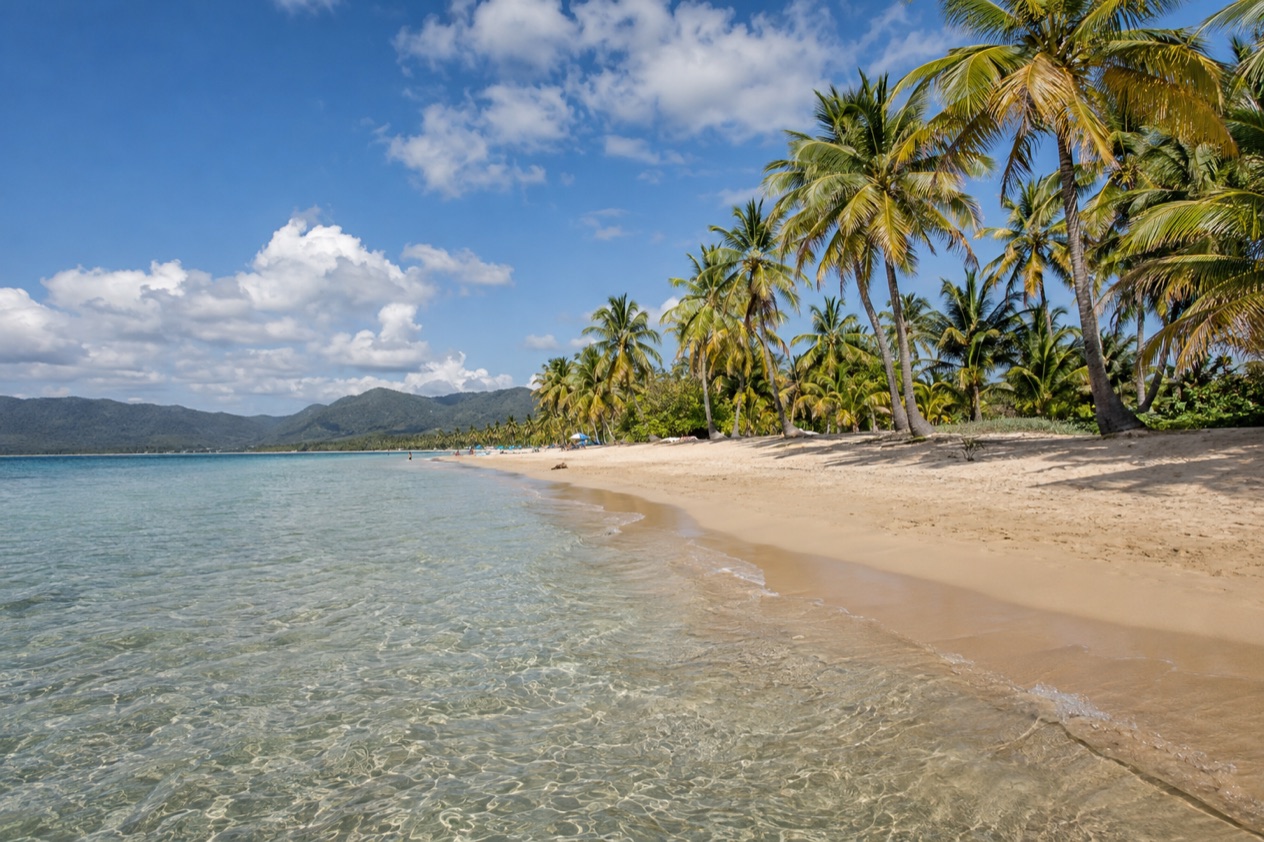
Coconut palms lean over the sand at Luquillo, and behind them the green wall of the El Yunque rainforest catches its own small clouds. The Atlantic rolls in under a bright sky that explains the town’s nickname, the Capital of the Sun. This is the classic Puerto Rican family beach on the northeast coast, a place for a long day of shade, salt water and a plate of fried snacks.
Is visiting Luquillo Beach worth it?
Yes, especially if you want an easy, sociable beach day with a rainforest on the horizon, and it suits families, groups of friends and anyone who likes eating well within walking distance of the sand. It is less suited to travelers who want a wild, empty cove, because this is a beach that locals share with you, and weekends feel like a party.
What sets it apart from other northeast beaches is the setting. The town sits between the Atlantic and El Yunque National Forest, so you can swing from palm shade to mountain mist in a single day. The beach is officially called La Monserrate, but nearly everyone says Luquillo, and it comes with the comforts that make a day easy: showers and a cafeteria, plus the open stretch of sand under the coconut palms.
Luquillo also has a character of its own. Its nicknames, La Riviera de Puerto Rico and Los Come Cocos (the coconut eaters), say a lot about the town’s relationship with its palms and its sun. Add the festivals, the turtle season and the start of a protected coastal reserve just along the shore, and you have a stop that is about more than lying on a towel.
Plenty of visitors pair it with a morning in the rainforest, then come down to the coast for lunch and a swim in the afternoon. That rhythm, mountain first and sea second, is what makes the visit feel complete.
What to see at Luquillo Beach
La Monserrate Beach, the main stretch
The main beach runs for about a mile, lined with coconut palms that give welcome shade in the middle of the day. Families spread out blankets under the trees, kids chase the edge of the surf, and groups set up coolers and music. Facilities include showers to rinse off the salt and a cafeteria for a quick bite or a cold drink.
Look for the palms first, then the view up the coast toward the mountains. In the morning the light is soft and the sand is quiet. By early afternoon the beach is full of voices and the smell of grilled food drifts in from the town. Conditions in the water change from day to day, so watch the sea before you wade in, and follow any flag, sign or lifeguard you find.
The food kiosks along the road
Just back from the beach, a row of open-air kiosks serves the food people drive here for. Expect Puerto Rican snacks such as alcapurrias (fritters of mashed green banana and taro stuffed with meat), empanadillas, fried fish and seafood plates, with cold coconut water or a beer to go with them. Menus are long, the style is casual, and you eat with your fingers.
It is a good place to order a few things and share. Come hungry after a swim, sit in the shade, and watch the road to the beach fill and empty with the day. PR-3 is the main road through town, and the kiosks sit right along the busy strip.
La Pared, the wall beach
La Pared, which means The Wall, is one of the 14 beaches in Luquillo, and it is the one to know about for a different reason. It is considered a dangerous beach, so treat it as a place to look at rather than a spot for a casual family swim. La Pared means “The Wall” and is considered a dangerous beach.
La Pared is considered a dangerous beach, so choose your swimming spot with care. Whatever beach you pick, ask local people what the sea is doing that day, because swells and currents shift quickly on the Atlantic side.
The start of the Northeast Ecological Corridor
Luquillo marks the beginning of the Northeast Ecological Corridor Nature Reserve, a protected strip of coast that runs all the way to Seven Seas Beach in Fajardo. For a traveler, that means the shoreline east of town still feels like forest meeting sea rather than a row of hotels.
The corridor is also known for wildlife. At certain times of year, rare or endangered species such as the leatherback turtle can be encountered here, which is a chance rather than a promise. The Leatherback Turtle Festival in April celebrates that link between town and sea.
Hours, tickets and rules
El Portal is the main visitor center of El Yunque National Forest.
| Site | Open | Admission |
|---|---|---|
| El Portal visitor center, El Yunque | Tickets valid 8 a.m. to 4 p.m. on the chosen date, with coming and going allowed. Closed on Thanksgiving Day, Christmas Day, New Year’s Day and Three Kings Day, and closes early on Christmas Eve | Ticket required, released 30 days ahead at 9 a.m. Eastern. Fee free days apply on certain federal holidays |
A few rules are worth knowing. La Pared is considered a dangerous beach, so choose your swimming spot with care.
La Mina Trail is currently closed for repairs. Cancellations of an El Yunque ticket are possible up to a day ahead, with a small processing fee kept from the refund.
How to get to Luquillo Beach
Luquillo sits on the northeast coast, northwest of Fajardo and east of Rio Grande, so it lies between the two on the coastal road. PR-3 is the main road through town, and the beach and kiosks are reached from it. If you are staying in Fajardo or Rio Grande, you are already close.
There is no public transportation in Luquillo. Residents and visitors rely on rideshares or taxis, and many travelers arrive in a rental car. Without a car, the practical approach is to arrange a ride out and think ahead about your ride back, since waiting for a pickup at the end of a long beach day is part of the plan.
The coast road makes it easy to link Luquillo with its neighbors. East lies Fajardo and the far end of the Northeast Ecological Corridor at Seven Seas Beach. West, toward Rio Grande, you come near the road that climbs into El Yunque.
For the rainforest, the trailhead for La Mina is on PR 191 at kilometer 12.2, starting at the Palo Colorado Information Center. Two adjacent paved lots and designated roadside areas offer parking there. Since the area gets congested, an earlier start is the sensible way to go.
When to visit Luquillo Beach
Go in the morning if you want space. The palms are quiet, the light is gentle, and the sand is easy to walk before the heat builds. Midday brings strong sun and the biggest crowds, especially on weekends and holidays, when families fill the shade and the kiosks hum. Late afternoon softens again, and the mountains turn a deeper green.
Puerto Rico is warm all year, with a drier season from about December to April and a wetter one from about May to November. The northeast side, close to El Yunque, tends to see showers in any month, so bring a light layer for the rainforest and expect clouds over the peaks even when the beach is sunny. The sea stays warm throughout the year.
Special dates add color. The patron saint festival in March brings parades, games, artisans, amusement rides, regional food and live entertainment. The Leatherback Turtle Festival in April ties into the nesting season, and the Coconut Festival in September honors the palms the town is named for in its nicknames.
The Atlantic hurricane season runs from June 1 to November 30, with the peak in September and most activity from mid-August to mid-October. In those months, follow the National Hurricane Center and local official alerts, and keep your plans flexible. Outside that window, the official season is over, though weather can still change quickly.
Tips for your visit
Bring the basics for a beach day: sunscreen, a hat, water, a towel and sandals you can walk in. The palms give shade, but the sun is strong, and the town’s nickname is earned. Pack a bag for a swim and a dry change of clothes if you plan to continue to a restaurant or the rainforest afterward.
Plan a half day for the beach and food, or a full day if you combine it with El Yunque. A good order is rainforest in the cooler morning, then lunch at the kiosks, then a swim and an easy afternoon on the sand.
At El Portal you can see live Puerto Rican parrots, watch the El Yunque film in Spanish or English, eat at the full restaurant and walk an accessible trail. Ranger walks and talks run daily, and the Jr Ranger program is always available for children.
If you plan to hike to La Mina Falls, check that the trail has reopened first. The route, when open, is only a short walk but challenging, with winding concrete stairs that make the climb back tiring, and the pool at the base is cool, in the low 60s. There are several rain shelters along the way, which is handy in a passing shower.
For families, the main Monserrate beach with its showers and cafeteria is the easiest base. Mobility is simpler at El Portal than on the trails, thanks to its accessible path. Leave nothing behind, because there are no trash cans at La Mina, and keep food out of the falls area.
Good to know before you go
U.S. citizens need no passport and no visa to visit Puerto Rico, and the currency is the U.S. dollar, so a beach day here is as simple as a domestic trip. Spanish and English are both official, and a few words of Spanish go a long way at the kiosks.
Keep valuables out of sight on the sand, watch the water before you swim, and follow any flag or lifeguard instruction. In hurricane season, keep up with official alerts and give yourself room to change plans.
Sources
- Wikipedia, Luquillo Beach (https://en.wikipedia.org/wiki/Luquillo_Beach), checked October 8, 2026
- Recreation.gov, El Yunque National Forest tickets (https://www.recreation.gov/ticket/facility/10089811), checked October 8, 2026
- USDA Forest Service, El Yunque National Forest, La Mina Trail (https://www.fs.usda.gov/r08/elyunque/recreation/trails/la-mina-trail), checked October 8, 2026
- NOAA National Hurricane Center, Climatology (https://www.nhc.noaa.gov/climo/), checked October 8, 2026
To plan your stay
- Best Time to Visit Luquillo: Weather by Month, Beach Seasons and Local Festivals
- Where to Stay in Luquillo: Beachfront, Town Center, Rainforest Edge and Festival Weekends
- Luquillo in January: Beaches, Kiosks, Three Kings Day and El Yunque
- Luquillo in February: Beach Weather, El Yunque and a Two-Day Plan