
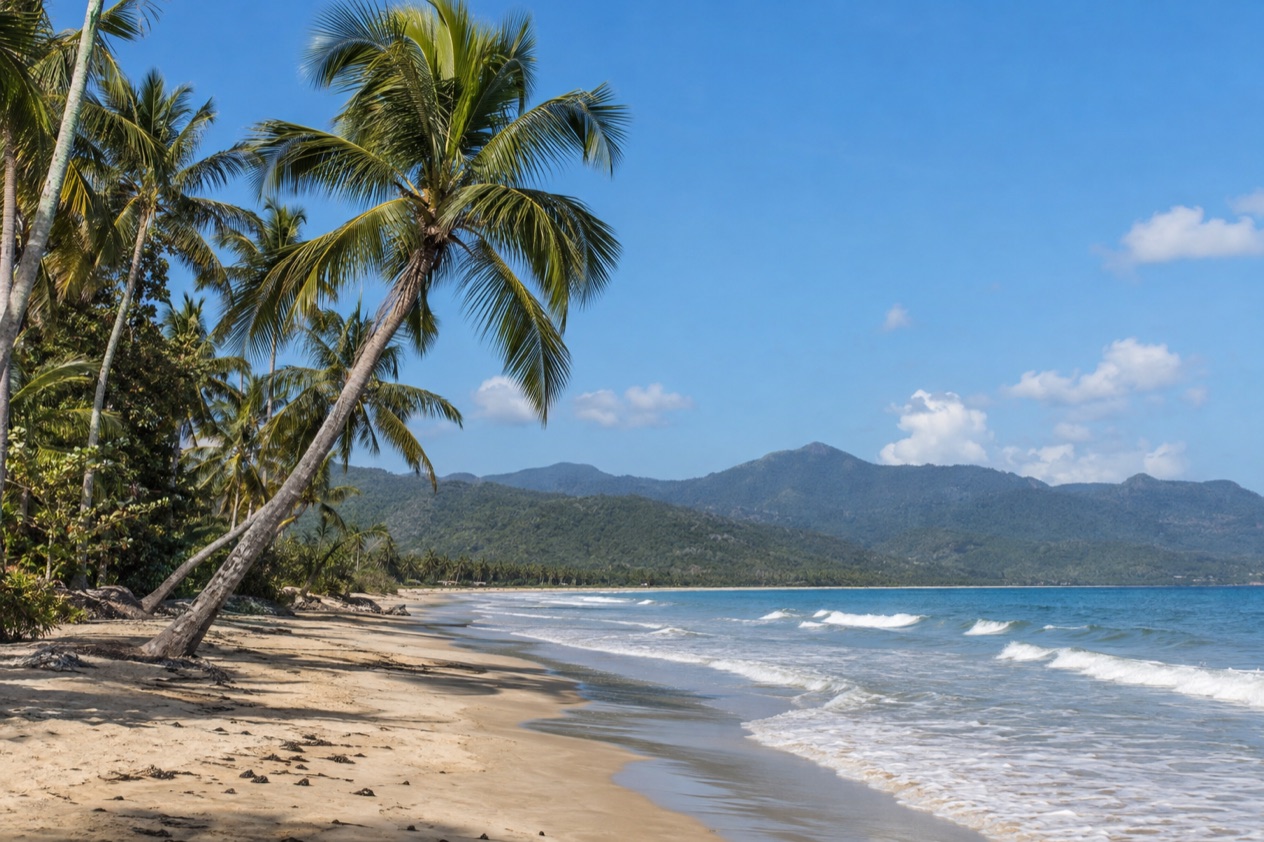
In Luquillo, a February morning finds coconut palms lining the beach casting long shadows as the earliest surfers and walkers make their way to the sand, while the scent of frying dough begins to float from the kiosks along the road. The town sits where the Atlantic meets the foothills of the rainforest, and in the drier season it makes full use of both. February is a month for beach days, a green climb into El Yunque and long lunches of fritters and grilled fish, with the town’s big patron saint festival just around the corner.
What is the weather like in Luquillo in February?
February in Luquillo is warm, sunny and pleasantly humid, with showers that pass quickly and leave the afternoon bright again.
| Month | Average high (°F) | Average low (°F) | Rain days | Sea (°F) |
|---|---|---|---|---|
| February | 79.7 | 72.5 | 8.1 | 79.7 |
Mornings start soft and a little damp, and by midday the sun is strong enough that you will want a hat and a shady spot near the palms. Afternoons are comfortable for the beach, thanks to the trade winds that blow in off the Atlantic and keep the heat from feeling heavy. Evenings stay mild enough for a table outside and a light shirt, with no jacket needed.
Rain comes as short squalls rather than all-day gray. Luquillo sits on the wetter northeast side of the island, and the mountains behind it catch passing clouds, so a shower can fall over the hills while the beach stays sunny. Heavy downpours are rare in this drier season, and the days that do get wet usually clear within the hour.
The light is a pleasure this time of year. The sun rises early enough to give you a long, golden morning, and the evening sky over the water turns orange before dark settles in. Pack for sun first and for a quick shower second, and plan the rainforest for the morning when the air is fresher.
Can you swim in Luquillo in February?
Yes, the water is warm enough for a long and comfortable swim, near bath temperature for most travelers and never the jolt of a northern beach.
A mile of sand fringed with coconut palms makes up Luquillo Beach, known officially as La Monserrate, and visitors will find showers and a cafeteria there. It faces the Atlantic, so winter swells can reach this coast and the surf changes from day to day and from one stretch of sand to the next. Some mornings the water is gentle enough for children to splash at the edge, and on others the waves are livelier and better suited to confident swimmers and bodyboarders.
Look at the water before you go in, and follow any flags, signs or lifeguards you find. Do not assume a lifeguard is on duty on every stretch of beach, and stay out of the water if the waves look strong. Bring sunscreen, a hat, a light cover-up and a mask if you like looking at fish, since visibility depends on the day and the swell.
What to do in Luquillo in February
February is the dry-season heart of the year here, so the best plan mixes the beach, the rainforest and the food. Luquillo is known as La Capital del Sol, and in these weeks it lives up to the nickname. Two other nicknames, La Riviera de Puerto Rico and Los Come Cocos (the coconut eaters), tell you what the town is proud of: sun, sand and palms.
Luquillo Beach and the kiosks
Start at La Monserrate, the long beach shaded by coconut palms that most visitors come for. Mornings are the quietest time, with a few walkers, families setting up under the trees and surfers watching the horizon. With showers and a cafeteria on hand, you can easily pass an entire day here and never step off the sand.
Just across the road from the beach, the kiosks are a Luquillo institution. In the open air, vendors fry up alcapurrias, which are fritters of mashed plantain and taro stuffed with meat, along with bacalaitos, crisp fritters made from salt cod, empanadillas, and plates of fish and seafood.
Order a cold coconut or a tropical drink, find a table under the awning and let lunch run long. This is the best place in town to eat without hurrying, and it suits families, groups and anyone who wants a simple beach meal.
El Yunque from Luquillo
With the ocean on one side and El Yunque National Forest on the other, Luquillo makes the rainforest the clear choice for a half-day trip. El Portal is the main visitor center, and inside you can see live Puerto Rican parrots and watch the El Yunque film, which plays in both Spanish and English. Your El Portal ticket lets you leave the visitor center and return during the same day.
La Mina Trail is 0.7 miles long, runs mostly over natural ground and has several rain shelters. The area gets congested, so arrive early in the day. Morning also gives you cooler air, fuller birdsong and a better chance of clear views before the clouds gather over the ridges.
Wear shoes with grip, since the ground stays damp even in the drier season. Pair the forest with a swim afterward and you have a perfect Luquillo day: green and shady in the morning, bright and salty in the afternoon.
The Northeast Ecological Corridor
Luquillo is where the Northeast Ecological Corridor Nature Reserve starts, a protected coastal stretch that reaches toward Seven Seas Beach in Fajardo. It is wild country, with forest meeting beach and open sea, and it shows you a side of the northeast that resorts rarely do.
It suits travelers who like quiet landscapes more than facilities. Go in the cooler morning hours, bring water and sun protection, and treat it as a place to look and listen rather than to spend a whole day. Sea turtles nest on Puerto Rico beaches in spring and summer, so you may hear about nesting season as the weeks go on.
The town itself rewards a slow stroll, with its plaza, its small shops and the neighbors greeting each other. As February moves on, Luquillo’s patron saint festival in March draws closer.
Evenings are for a grilled fish dinner, a stroll back along the beach as the light fades and an early night before another sunny morning. February here is easy: nothing needs to be rushed, and the best moments are usually the simplest ones.
A two-day itinerary for Luquillo in February
Day 1 is for the beach and the kiosks. The sun rises around 6:49 AM, so be on the sand early, walk the length of La Monserrate while it is quiet and take a first swim in warm water. Have a relaxed breakfast, then settle under the palms until the sun is high. Take lunch at the kiosks across the road, where the fritters and seafood plates are the local way to eat.
In the afternoon, swim again or walk to the far end of the beach, then rinse off at the showers and rest. Sunset comes around 6:24 PM, so stay on the sand for the colors and finish with a simple dinner in town. If a shower rolls in, wait it out under a kiosk awning, since most pass fast.
Day 2 is for the rainforest. Head up toward El Yunque early, before the area gets congested and while the air is fresh. Spend the morning at El Portal, watching the live parrots and the film, then walk the short trail with its rain shelters and take your time with the views.
If the weather turns, the film and exhibits at El Portal are a good indoor card, and a long meal in town is the other. Finish the evening with a quiet dinner and a last look at the sea.
Is Luquillo busy in February?
February is a lively month in Luquillo, with winter visitors and weekend crowds on the beach, but it is not overwhelming outside the weekends.
Weekends fill the sand and the kiosks, especially when the sun is out, since families from San Juan and across the island come for the day. Weekdays are calmer, and early mornings are quiet nearly every day. If you want a table at your favorite lunch spot without waiting, go before the midday rush or on a weekday.
For rooms and rental cars, book early if your dates touch a long weekend or a holiday week, and a little later if you are traveling in the quieter midweek stretches.
El Yunque is the place that needs the most thought. The area gets congested, and your ticket lets you come and go through the day, so build your plan around an early start. Check the visitor center details before you go, and keep the rainforest for a morning when you can be there at an easy hour.
What to pack for Luquillo in February
Pack for sun, warm water and a short rain shower, with one outfit that can go from the beach to the forest.
- Sunscreen and a hat, because the sun on the sand is strong even when it feels breezy.
- A light rain jacket, for the quick showers in the hills of El Yunque.
- Shoes with grip, since forest trails stay damp.
- Swimsuit and a cover-up, for beach days and kiosk lunches.
- A mask, if you like looking at fish in the clear moments.
- A reusable water bottle, for the morning walks.
Good to know before you go
February falls outside the official hurricane season, which runs from June 1 to November 30, so the weather is the drier, sunnier kind.
Day to day, the beach can shift, so wherever flags, signs and lifeguards are on hand, pay attention to them. For U.S. citizens, neither a passport nor a visa is required, and the currency used is the dollar.
Luquillo in February vs January and March
Moving the trip earlier into January gives you the same dry-season feel, with the long Christmas season fading and the island still in a festive mood. The sea stays warm all year, and the crowds are often a little heavier in the holiday weeks, so rooms can need more planning.
Right on its heels, during March, a celebration for the town’s patron saint fills the streets, bringing parades, games, artisans, amusement rides, local food and live entertainment. The streets get busier and more colorful, and the weather starts shifting toward the wetter season ahead. Beach days remain excellent, and Holy Week can fall in spring, which changes the pace on the island.
Choose February if you want sunny beach days, a quieter town and an easy rainforest morning without a festival crowd. Choose March if the patron saint festival is the reason for your trip, and January if you want the lingering holiday atmosphere. For a calm, simple visit, February sits in the middle and keeps things relaxed.
Is February a good time to visit Luquillo?
Yes, February is a very good time for Luquillo, especially for beach lovers, families and anyone who wants rainforest and ocean in the same day.
You will love it if you like warm water, long lunches at the kiosks and green mornings in El Yunque. It is less ideal if you want a big festival, since the patron saint celebration comes in March, or if you hope for flat, glassy seas every day, because winter swells can reach this coast.
On arrival, walk the length of La Monserrate beach first to see how the water looks, then decide when to go up to the rainforest. Keep a morning free for El Yunque and an afternoon for the sand, and let the kiosks be your lunch stop. What stays with you from February in Luquillo is the pairing of the two landscapes: a rainforest ridge in the morning mist and, hours later, a bright beach with coconut palms and a plate of fritters in your hands.
Sources
- Open-Meteo / ECMWF ERA5, normals 1991-2020 calculated on the grid cell 18.3725N 65.7164W, checked September 8, 2026
- Open-Meteo Marine API, average 2015-2024, checked September 8, 2026
- sunrise-sunset.org, sunrise and sunset calculated for the 15th of the month, checked September 8, 2026
- Wikipedia, Luquillo (https://en.wikipedia.org/wiki/Luquillo,_Puerto_Rico), checked October 8, 2026
- Recreation.gov, El Yunque National Forest tickets (https://www.recreation.gov/ticket/facility/10089811), checked October 8, 2026
- USDA Forest Service, El Yunque National Forest, La Mina Trail (https://www.fs.usda.gov/r08/elyunque/recreation/trails/la-mina-trail), checked October 8, 2026
- NOAA National Hurricane Center, Climatology (https://www.nhc.noaa.gov/climo/), checked October 8, 2026
To plan your stay
- Things to Do in Luquillo: Beach Kioskos, El Yunque Trails and Day Trips
- Where to Stay in Luquillo: Beachfront, Town Center, Rainforest Edge and Festival Weekends
- Luquillo Beach: Coconut Palms, El Yunque Nearby and Festivals
- Best Time to Visit Luquillo: Weather by Month, Beach Seasons and Local Festivals