
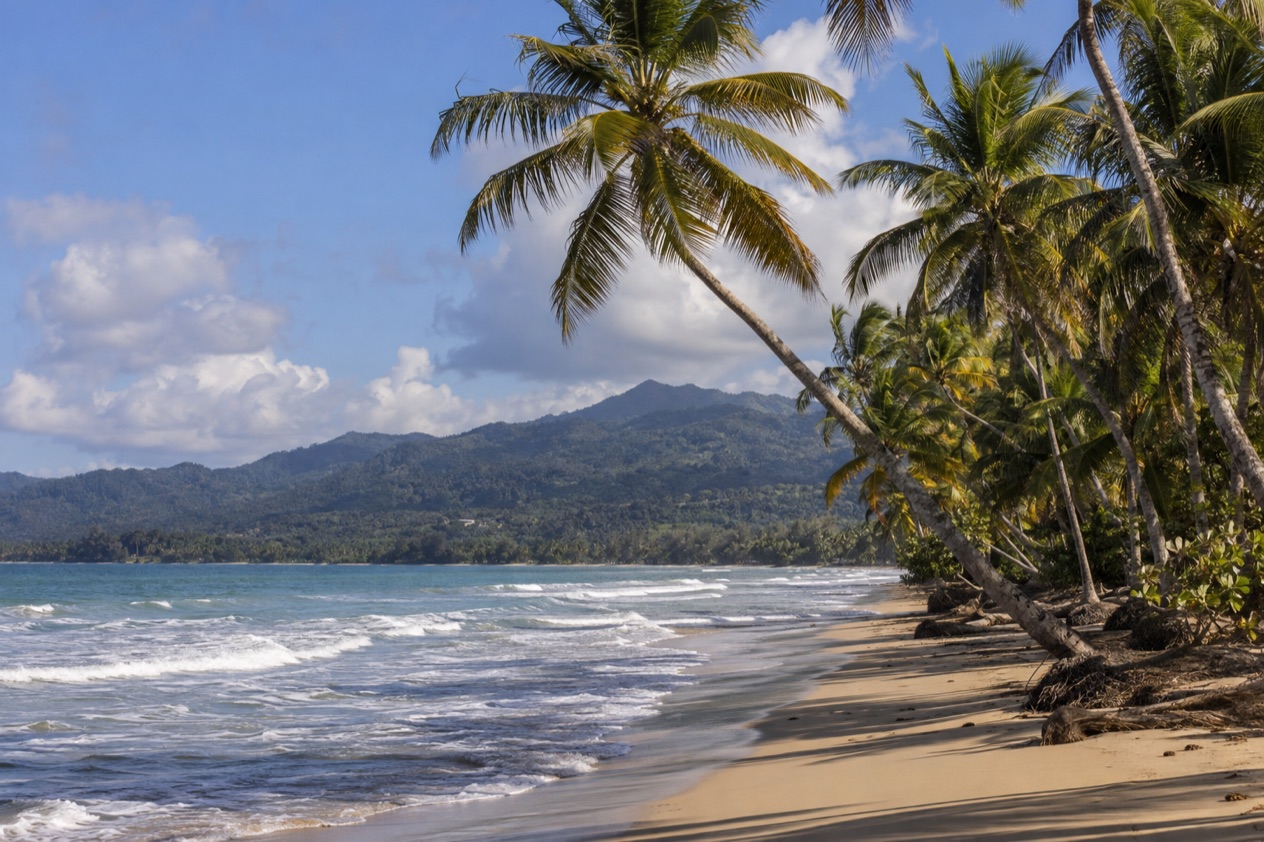
In Luquillo the day starts with the trade wind rattling the coconut palms and the first food stands along the highway frying alcapurrias for early surfers and families. The town earns its nickname, the Capital of the Sun, in the dry months of winter and spring, then turns hotter, wetter and greener from May on, with the rain forest of El Yunque piling up clouds right behind it. Each season has its own pleasures here, from the crowded beach weekends to the quiet, steamy weeks of late summer.
When is the best time to visit Luquillo?
The best time to visit Luquillo is from about December to April, when the days are sunny, the evenings are comfortable and the rain comes in brief showers rather than long afternoon downpours. February and March bring the fewest rainy days of the year, which suits almost any kind of trip.
For the beach and the sea, late winter and spring are the easy choice. Luquillo Beach, a long curve of sand under coconut palms with showers and a cafeteria, is most pleasant on a bright morning before the breeze picks up.
The Atlantic can run rough in winter, so for gentler swimming conditions many people wait until April or May, when the sea is warmer and the swells usually ease. Conditions change from day to day and beach to beach, so follow any flag or sign where one is posted.
For sightseeing, the dry months are kinder to the trails of El Yunque, though the rain forest earns its name in any season and a shower on the path is part of the experience. Go early, because the popular areas get congested later in the day. The same months suit the kiosk strip along the highway, the walks toward the Northeast Ecological Corridor and long lunches with the ocean in view.
If you want a quieter, softer-priced trip, the wet months of September through November are the ones to consider, with the caveat of storm season. Families should know that spring break in March fills the beach with music, coolers and big groups, especially on weekends.
It is a cheerful scene if you like company, and a tiring one if you want a quiet spot with toddlers. A quiet weekday in late spring often feels like the sweet spot.
Luquillo weather by month
Luquillo is warm all year, and what changes from month to month is how often it rains and how hot the afternoons feel.
| Month | Average high (°F) | Average low (°F) | Rain days | Sea (°F) |
|---|---|---|---|---|
| January | 79.4 | 72.8 | 9.7 | 80.3 |
| February | 79.7 | 72.5 | 8.1 | 79.7 |
| March | 80.6 | 72.6 | 8.4 | 80.7 |
| April | 81.9 | 73.8 | 11.4 | 82.2 |
| May | 83.0 | 75.4 | 16.9 | 84.6 |
| June | 84.3 | 77.0 | 15.1 | 85.9 |
| July | 84.6 | 77.3 | 17.5 | 85.7 |
| August | 85.0 | 77.6 | 18.5 | 86.1 |
| September | 85.0 | 77.4 | 18.7 | 87.3 |
| October | 84.0 | 76.6 | 18.4 | 87.2 |
| November | 81.9 | 75.2 | 16.0 | 84.1 |
| December | 80.2 | 74.0 | 11.1 | 81.6 |
The year falls into two halves. From December to April the air is a little cooler and the showers are short, often passing in minutes while the sun returns. From May to November the days turn sticky, clouds build over the mountains by midday and rain often arrives in the afternoon, sometimes heavy and sometimes lasting into the evening.
The nights barely cool down in late summer, so air conditioning matters more than a jacket. February and March are the easiest months for planning a full day outdoors, and September and October ask for more flexibility. Even the wetter months have plenty of sun between the clouds.
What is there to do in Luquillo in each season?
Winter and early spring: beach days and the rain forest
From December to March, Luquillo does what it does best. Mornings on Luquillo Beach are bright and breezy, and the kiosks along the road serve fritters, grilled seafood and cold coconut water. The sea can be lively, with north swells arriving from the Atlantic, so many visitors spend part of the day on the sand and walking rather than swimming.
This is also the time for El Yunque, but La Mina Trail is currently closed for repairs. The main visitor center, El Portal, has live Puerto Rican parrots, a short film in Spanish and English and a restaurant, a good rainy-day fallback. Tickets are valid for a set daytime window and can be booked ahead, so check the schedule before you go.
Late spring and summer: turtles, heat and warm water
From May on, the sea warms up and the beach becomes a place for early swims and long shady afternoons. Spring and summer are also the seasons when sea turtles come to nest on Puerto Rican beaches, and leatherbacks can sometimes be encountered near Luquillo. Treat it as a chance rather than a promise.
The heat and humidity push most activity into the early morning and late afternoon. Plan the middle of the day around shade or a lunch of mofongo (mashed fried plantain with garlic). Sargassum seaweed can reach east-facing shores in some springs and summers, so a clean beach is not guaranteed.
Autumn and the winter holidays
September and October are the wettest, stickiest months and fall in the heart of hurricane season. Visitors then are mostly flexible travelers who value the quiet and the warmest water of the year, and who keep an eye on the National Hurricane Center and local alerts.
By late November the air starts to soften, and the long Puerto Rican Christmas season begins. Luquillo gets lights, parrandas (neighbors going house to house with guitars and singing) and holiday plates of lechon asado and pasteles. As you plan your trips into the rain forest, remember that the El Yunque visitor center does not open on Christmas Day, New Year’s Day or Three Kings Day.
When is Luquillo cheapest and least crowded?
Luquillo is quietest from late August through November, apart from the long weekends, and busiest at Christmas, New Year, Holy Week and during spring break in March. Weekends are always livelier than weekdays, because the beach is a favorite of families from San Juan, who arrive with tents, coolers and speakers.
Peak weeks fill the rooms in town and in nearby Fajardo and Rio Grande, so lodging is harder to find and peak-season rates apply. Parking along the beach fills up early, and the kiosks have longer lines. Summer school vacation brings another wave of mainland families, mostly in July, though the pace is more relaxed than in March.
The calmest stretches are the weeks after the Christmas season, the weeks right after Easter and the months from September to mid-November. Rooms are easier to find then, the beach has plenty of space on weekdays, and the town goes back to its own rhythm.
In exchange you accept more rain, more heat and a storm forecast you need to follow. A quiet weekday in late spring, when the weather is good and the crowds have gone, is one of the best compromises.
Which months should you avoid in Luquillo?
Few months are truly bad, but the weeks from mid-August to mid-October ask the most of a visitor, because rain is frequent, the heat is heavy and the Atlantic hurricane season is at its busiest. The season officially runs from June 1 to November 30, with its peak around September 10. Stepping outside that stretch does not promise you calm, yet while you are in it, keep an eye on the National Hurricane Center and alerts from local officials, because forecasts shift quickly.
Heat is the other consideration. Afternoons from June to September are hot and humid, with the sun strong from late morning, so the sensible rhythm is beach and hikes early, a long break, then a late walk. Visitors who dislike sticky air will be happier in winter.
Sargassum is the beach-trip disappointment to know about. Seaweed can wash onto east and south coasts in some springs and summers, leaving brown piles and a smell on parts of the shore. It varies a lot from year to year and from beach to beach. In winter, big Atlantic swells make some beaches rougher, and La Pared, the surfers’ beach, is considered dangerous. If the water looks rough, stay on the sand.
When can you swim in Luquillo?
You can swim in Luquillo all year, because the water never gets cold, though how pleasant it is depends more on the waves than on the temperature. From December to March the sea feels cool but comfortable, while from May to November it is as warm as bathwater and only the heat of the day makes it refreshing.
Winter brings the larger swells to the Atlantic coast, and some beaches get rough, with strong currents. Late spring and summer are usually gentler, but they can also bring storm swells, so conditions change from day to day and beach to beach. Fourteen beaches share the municipality, and they differ a lot, from Luquillo Beach with its showers and cafeteria to the dangerous La Pared.
Where a lifeguard, flag or sign is present, follow it, and never assume one is there.
Festivals and events in Luquillo through the year
Winter holidays and the patron saint festival
The Christmas season in Puerto Rico begins in late November and runs into mid-January, with parrandas, lights and special food. Three Kings Day on January 6 closes the main part of it, and the octavitas, a second round of celebrations, follow afterward. Luquillo feels the season at its kiosks, in family gatherings and on the beach, where locals spend the holidays.
Each March, Luquillo puts on its patron saint festival, which brings together parades, games, artisans, amusement rides, regional food and live music. It is a good moment to see Luquillo as a town and not just a beach, and it tends to fall around the same time as spring break, so expect crowds. Come in the evening, when families are out and the food stalls are busiest.
Spring: turtles and Holy Week
In April, Luquillo holds its Leatherback Turtle Festival, a celebration of one of the giant sea turtles that sometimes nest on this coast. It is a good event for children and for anyone interested in conservation, and it fits the spring nesting season.
Holy Week moves every year, falling in March or April, and brings processions and a long weekend that sends many Puerto Ricans to the beach. Beaches fill up, rooms are scarce and traffic on PR-3 slows. If you want quiet, avoid that week. If you want to see how the island celebrates, it is a lively time.
Summer and fall: San Juan night and the Coconut Festival
On the night of June 23, the Noche de San Juan Bautista, Puerto Ricans traditionally walk into the sea at midnight and fall backward into the waves for good luck. Beaches across the island, including Luquillo’s, fill with families and friends. It is a fun evening.
In September the Coconut Festival honors the palms that line the shore and give Luquillo its nickname, Los Come Cocos. Expect coconut sweets, drinks, crafts and music. It falls in the wetter, hotter part of the year, so go prepared with a hat and an umbrella, and keep an eye on the weather during storm season.
Sources
- Open-Meteo / ECMWF ERA5, normals 1991-2020 calculated on the grid cell 18.3725N 65.7164W, checked September 8, 2026
- Open-Meteo Marine API, average 2015-2024, checked September 8, 2026
- sunrise-sunset.org, sunrise and sunset calculated for the 15th of the month, checked September 8, 2026
- Wikipedia, Luquillo (https://en.wikipedia.org/wiki/Luquillo,_Puerto_Rico), checked October 8, 2026
- Recreation.gov, El Yunque National Forest tickets (https://www.recreation.gov/ticket/facility/10089811), checked October 8, 2026
- USDA Forest Service, El Yunque National Forest, La Mina Trail (https://www.fs.usda.gov/r08/elyunque/recreation/trails/la-mina-trail), checked October 8, 2026
- NOAA National Hurricane Center, Climatology (https://www.nhc.noaa.gov/climo/), checked October 8, 2026