
On a calm morning in Dewey, fishing boats rock against the dock, roosters announce the day, and golf carts rattle down toward Flamenco Beach with towels piled on the seats. Culebra keeps the same easygoing rhythm all year, but the sea, the showers and the crowds change from one season to the next. The dry winter and spring months are the classic time to come, while the late summer and fall bring heat, rain and quiet streets.
When is the best time to visit Culebra?
The best time to visit Culebra is from December through April for most travelers, with May and early June as a pleasant step down in crowds. Those months bring the least rain, a warm sea and long, bright beach days, while the island still feels like a small fishing town rather than a resort.
For the beach and the water, the late winter and spring months are hard to beat. Flamenco is at its easiest, the snorkeling beaches such as Tamarindo and Carlos Rosario tend to offer good visibility on quiet days, and the sea is warm enough that you rarely want to leave it. Winter swells from the Atlantic can still stir things up now and then, so conditions vary from day to day and beach to beach.
For sightseeing, walking and exploring the island by golf cart, the drier months are also the most comfortable, since the afternoons are warm but not heavy and you can plan a full day without watching the sky. Travelers on a tighter budget or who want empty sand should look at May, June and the weeks after school lets out in the fall, accepting a few more showers in exchange for room to spread out.
Families should know that March is spring break season, and the island gets loud and busy on weekends, with ferries full and the most popular beaches crowded. If you want your children to have space to dig in the sand, consider early December, January, February or April instead, or go to Zoni on the quiet eastern end.
Culebra weather by month
Culebra is warm all year, with a drier stretch in winter and spring and a clearly wetter, stickier one from late summer into fall.
| Month | Average high (°F) | Average low (°F) | Rain days | Sea (°F) |
|---|---|---|---|---|
| January | 78.3 | 76.2 | 3.2 | 80.8 |
| February | 77.9 | 75.8 | 1.9 | 80.1 |
| March | 77.9 | 75.8 | 2.1 | 80.4 |
| April | 78.9 | 76.7 | 3.9 | 81.6 |
| May | 80.4 | 78.0 | 8.0 | 83.7 |
| June | 81.8 | 79.4 | 7.0 | 85.0 |
| July | 82.3 | 79.6 | 8.9 | 85.2 |
| August | 82.8 | 79.9 | 10.7 | 85.6 |
| September | 82.9 | 79.9 | 12.2 | 86.7 |
| October | 82.4 | 79.4 | 12.8 | 86.6 |
| November | 81.1 | 78.4 | 10.6 | 84.4 |
| December | 79.6 | 77.3 | 4.9 | 81.9 |
The year falls into two clear halves. From December to April the island sees only a few brief showers a month, the air is a little less sticky and the trade winds keep afternoons comfortable.
From May the rain days climb, and September and October are the wettest stretch, when showers and the occasional heavy downpour arrive on more than a third of the days. Nights never really cool off, so a fan or air conditioning matters more than a sweater. Even in the wetter months, rain often comes in bursts with sun in between, but storms can also bring whole gray days.
What is there to do in Culebra in each season?
Winter and spring: beach days and snorkeling
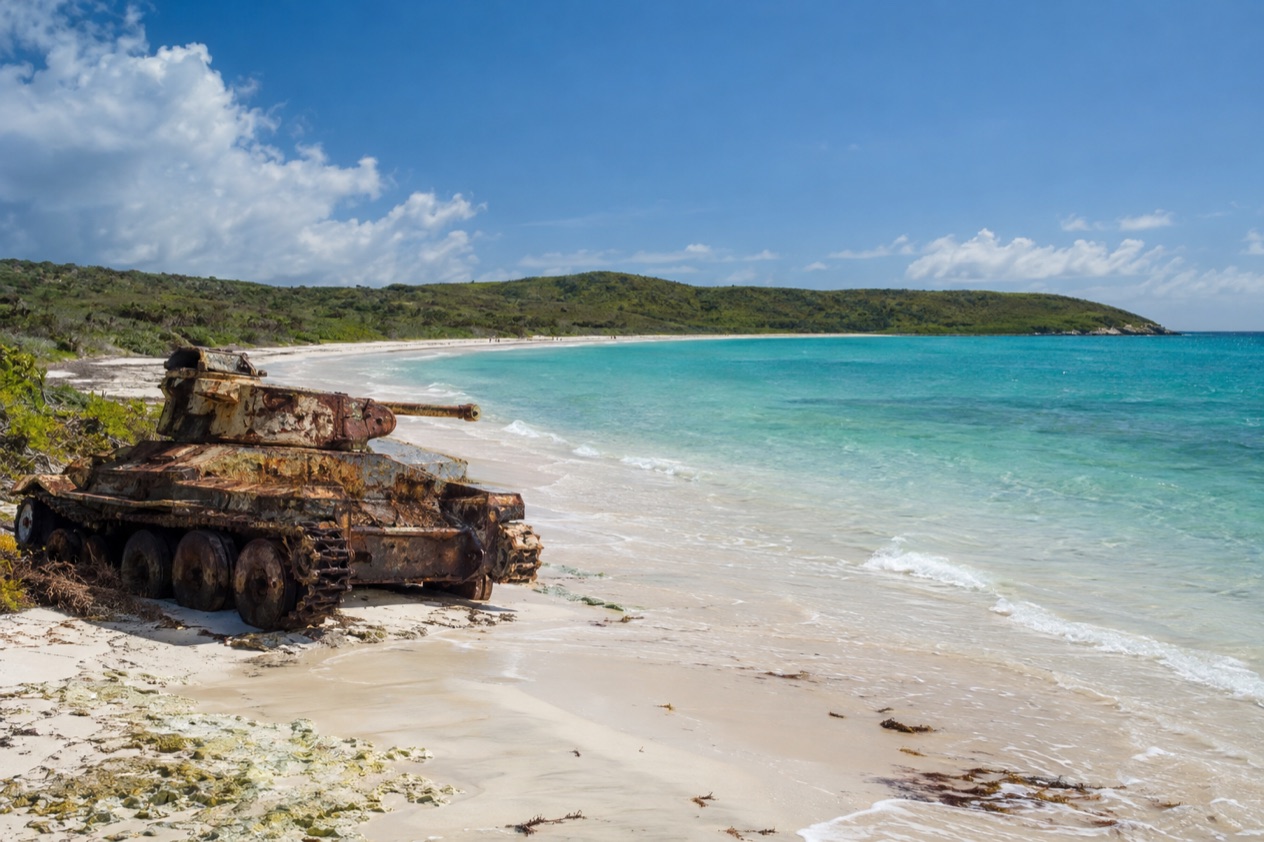
From December to April, Culebra is most reliable. Start mornings at Flamenco, where the horseshoe of pale sand is quiet before the day-trippers arrive and the rusted tanks make a good photo stop. Walk over to Carlos Rosario for snorkeling over the coral close to shore, then spend the afternoon in the shade of the sea grape trees.
On the west side, Tamarindo is where you can drift above seagrass and often watch green sea turtles feeding. Zoni, at the far eastern end, suits a slow picnic day when you want long stretches of sand without many neighbors. Winter swells can make some beaches choppy, so ask locally and follow any flags or signs you find.
Summer: warm sea and local rhythms
June through August brings the warmest water of the early year and long daylight hours. Plan snorkeling and beach time around the day’s forecast, and leave siestas for the heat of the day. This is a good season for boat outings and for sitting on a harbor-side terrace in Dewey as the light fades.
Mid-July brings the Virgen del Carmen procession of boats in the harbor, a lovely reason to be in town. Seaweed can reach some shores in spring and summer, so keep a flexible plan and try another beach if one is affected.
Fall and the holidays
September and October are the wettest and the middle of hurricane season, so this is the time for flexible travelers who do not mind a rainy day with a book. Many small businesses slow down, and the island feels very still. Leave big snorkeling plans for another time, since cloudy water often follows heavy rain.
By December the showers ease, the sea is still warm and the island picks up for the Christmas season, with lights in Dewey and gatherings that run into the new year. It is a good time for a long weekend if you book early.
When is Culebra cheapest and least crowded?
Culebra is quietest from late August through November, when the rain is at its heaviest and fewer visitors make the ferry crossing. Rooms are easier to find, the beaches are close to empty on weekdays, and restaurants have plenty of seats.
The busiest times are the ones everyone expects: Christmas and New Year, the weeks of spring break in March, Holy Week and Easter, and long U.S. holiday weekends such as Memorial Day, July Fourth and Labor Day. On those dates the ferry and the little airstrip fill up, golf carts are in short supply and Flamenco is crowded by midmorning. Book rooms and transport well ahead, including the public ferry from Ceiba or a short flight, and try to arrive on a weekday.
Late April, May and early June sit in between. The weather is still good, the spring crowds have gone and the island settles back into its normal pace. Summer weekends stay lively with Puerto Rican families on vacation, while weekdays remain calmer, especially at Zoni and the west-side beaches.
Which months should you avoid in Culebra?
September and October are the months most travelers should skip, because they combine the wettest weather with the peak of the Atlantic hurricane season, which runs from June 1 to November 30. The most activity usually falls between mid-August and mid-October, with the peak around September 10. If you choose to visit then, stay tuned to the National Hurricane Center and alerts from local officials.
The heat is the second thing to weigh. From summer into early fall the air is thick and the nights stay warm, so walking in the middle of the day is a chore and shade becomes precious. Early starts and long pauses at the beach make it easier.
Sargassum seaweed can wash up on east and south-facing shores, usually from spring into summer, and it is often the first disappointment of a beach trip. It comes and goes, and some beaches may be clear while others are piled with it, so no beach is guaranteed to be spared. In winter, cold fronts can bring a few cloudy days and rougher seas on the Atlantic side, but they pass quickly and matter far less than the late-summer storms.
When can you swim in Culebra?
Swimming is appealing in Culebra throughout the year because the sea stays warm even in winter. Conditions change from day to day and beach to beach, so where a flag, sign or lifeguard is present, follow it.
From December to April the water is at its coolest, though still comfortable, and it often feels refreshing in the afternoon sun. This is also the time of year when northern swells reach some beaches, so check conditions locally before choosing where to swim.
From May onward the sea warms steadily, reaching its hottest in September and October, when it feels more like bathwater than relief. Snorkeling can be excellent in summer, but heavy rain and storms can cloud the water for a few days, so watch the forecast and choose calmer mornings.
Festivals and events in Culebra through the year
Winter holidays and Carnival
The Christmas season in Puerto Rico begins in late November and runs into mid-January, and Culebra joins in with lights around Dewey, family gatherings and the music of parrandas, groups who go from house to house singing and playing. Three Kings Day on January 6 closes the main celebrations, and the weeks after, the octavitas, keep a little of the spirit alive.
If you come then, book early, since rooms and golf carts go fast. Carnival-style festivities in the weeks before Lent are more a mainland affair, so for a big parade you may prefer to visit a larger town such as Ponce before or after your island stay.
Spring: Holy Week and spring break
Holy Week moves every year, usually falling in March or April, and brings Puerto Rican families to the island for a long weekend of beach days, grilled fish and domino games on porches. The mood is festive but the beaches fill up, so go early to Flamenco or head to Zoni for more space.
March is spring break for many colleges, which adds a younger, louder crowd on weekends. Expect music at the beach and full ferries, and plan on staying flexible if you want a calm trip.
Summer fiestas and nature seasons
Each year near the middle of July, boats of local fishermen enter Dewey’s harbor as part of a parade that celebrates the Virgen del Carmen, their patron saint. Fishing boats are decorated and set out in a line, and people gather along the waterfront to watch. It is a simple, moving event and one of the nicest times to be in town.
Sea turtles nest on Puerto Rico beaches in spring and summer, and green turtles feed year-round over the seagrass at Tamarindo, where you may see them from the surface while snorkeling.
Sources
- Open-Meteo / ECMWF ERA5, 1991-2020 normals calculated on the grid cell 18.3N 65.28W, checked October 8, 2026
- Open-Meteo Marine API, average 2015-2024, checked October 8, 2026
- sunrise-sunset.org, sunrise and sunset calculated for the 15th of the month, checked October 8, 2026
- NOAA National Hurricane Center, Climatology (https://www.nhc.noaa.gov/climo/), checked October 8, 2026
To plan your stay
- Things to Do in Culebra: Flamenco Beach, Snorkeling with Sea Turtles, Wildlife Refuge and Island Life
- Culebra from San Juan: Road to Ceiba, Ferry or Flight, and a Day on the Island
- Know Before You Go to Culebra: Getting There, Water, Beaches and Island Customs
- 3 Days in Culebra: Flamenco Beach, Snorkeling Coves and a Slow Harbor Town