
On a February morning in Oaxaca, the stone streets are still cool when the first bakers carry trays of bread past the laurel trees of the Zócalo, and by midday the sun has turned the cathedral facade the color of honey. The sky is nearly always clear, the evenings are fresh, and the valley markets are in full swing. It is a month for walking the old center, eating well and driving out to the villages of the Tlacolula valley under reliable sunshine.
What is the weather like in Oaxaca in February?
February in Oaxaca is dry, sunny and warm by day, with chilly mornings and nights that call for a sweater. Rain is a rarity, and the month sits between a cooler January and a clearly hotter March.
| Month | Average high (°F) | Average low (°F) | Rain (in) | Rain days | Daylight on the 15th |
|---|---|---|---|---|---|
| January | 84.0 | 50.5 | 0.09 | 1.4 | 11 hours 15 minutes |
| February | 88.0 | 52.9 | 0.18 | 1.1 | 11 hours 38 minutes |
| March | 91.9 | 56.5 | 0.69 | 4.1 | 12 hours 5 minutes |
Plan on early starts that feel crisp, then shed layers by late morning. Afternoons are hot in the sun, so shaded courtyards, cathedral interiors and long lunches make good midday refuges, and the light is strong enough that sunscreen matters even on a short stroll.
Once the sun drops, the air cools quickly, and a table in a courtyard restaurant after dark calls for a light jacket. Days are a little over eleven and a half hours long, so there is time for a full day of sightseeing and still a relaxed evening.
What to do in Oaxaca in February
February’s calendar is built around Candlemas on February 2, the Día de la Candelaria, when Mexican families gather for tamales. Whoever found the small baby figurine in the Rosca de Reyes cake on Three Kings Day is the one who hosts. Around that date, the markets and kitchens of Oaxaca fill with corn husks, masa and the smell of steaming tamales in the many regional styles, from mole negro to those wrapped in banana leaf.
Beyond the holiday, the month belongs to the dry-season routine of the valley: markets, workshops, mezcal and day trips by road under clear skies. The city also keeps a lively street life, with brass bands, small fiestas and plenty of people on the benches of the Zócalo in the evening.
Candlemas tamales and the table in February
Tamales are the food of the first days of the month, and they are worth seeking out in market stalls and family-run kitchens, often paired with a cup of thick hot chocolate or atole. Oaxacan tamales come in several forms, including mole negro with chicken, chepil with herbs, and sweet versions, and each stall has its own loyal customers.
The rest of the month is a good time for the classics of the region. Think tlayudas, large crisp tortillas folded over beans and cheese, quesillo pulled into strands, and a plate of mole in one of its many colors. Dry, sunny weather also suits the street snacks of the evening, from elotes to nieves, the local ice creams in flavors like burnt milk and tuna cactus fruit.
Tlacolula Sunday market, Mitla and Yagul
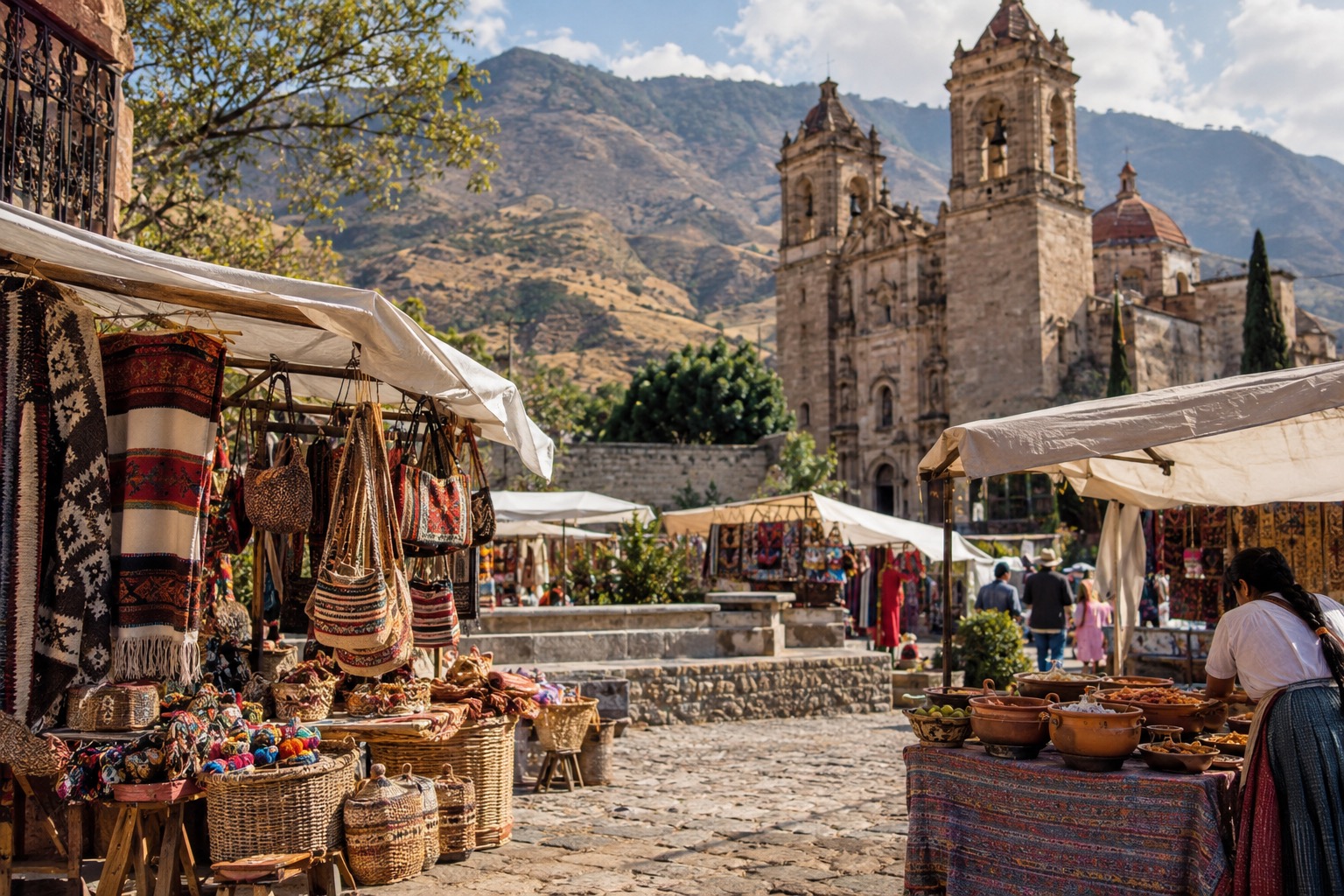
Tlacolula’s Sunday market is a weekly gathering of local food and crafts in the valley, and a morning there is a lesson in how people in the region shop and eat. You wander between stalls of produce, chiles, bread, barbacoa smoke and baskets, and the crowd is mostly local families. It is best early, before the midday heat builds, and it pairs naturally with the sites farther along the same road.
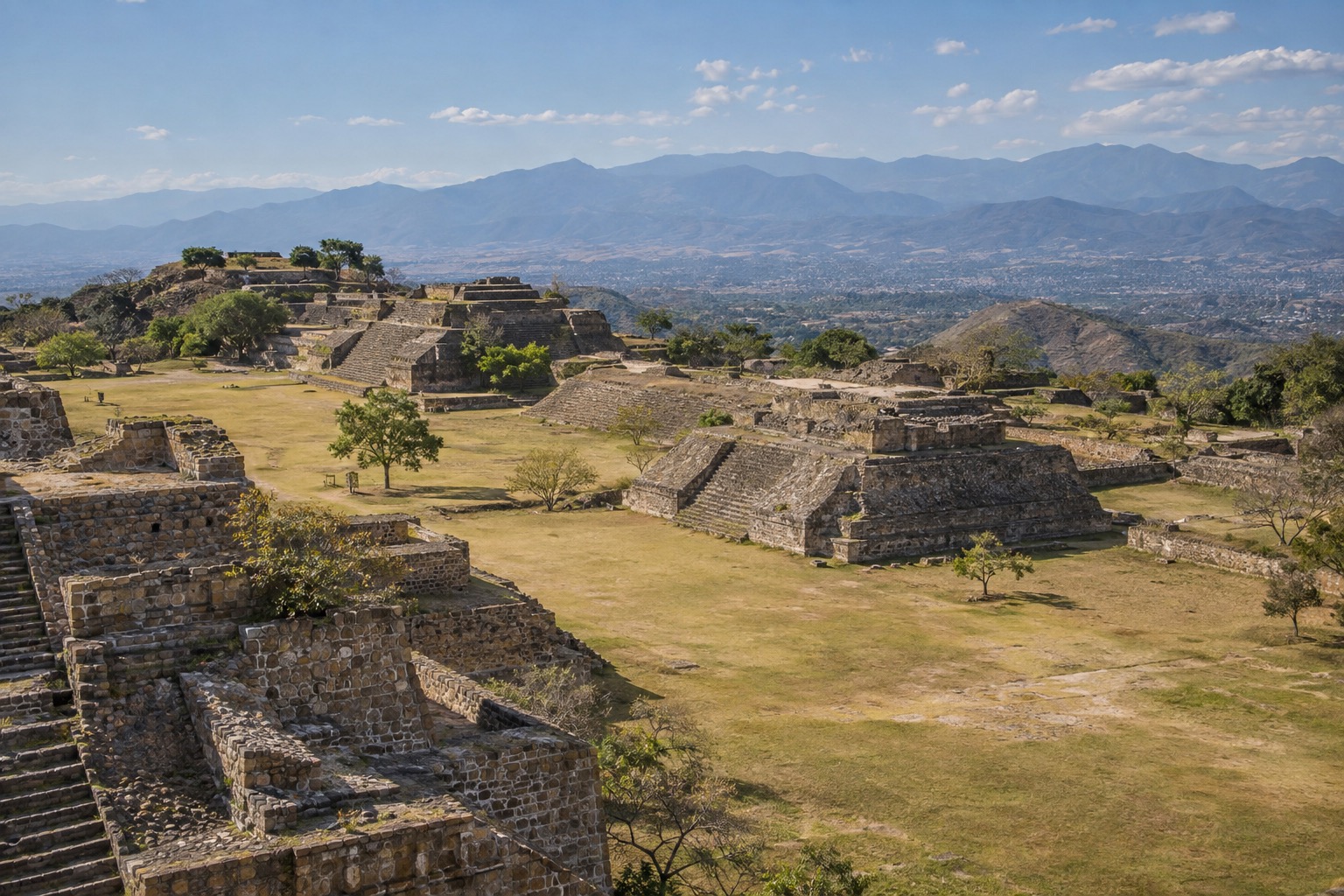
Mitla, known for its geometric stonework, and Yagul, perched on a hill just past Tlacolula on the Panamerican Highway, make an easy combination in dry, clear weather. Both are open daily, and February’s cool mornings are kinder than the heat of later months for walking exposed ruins.
| Site | Open | Admission |
|---|---|---|
| Mitla | Daily, 8 a.m. to 5 p.m. (last entry 4 p.m.) | 210 pesos; 105 pesos for Mexican nationals and foreign residents |
| Yagul | Daily, 8 a.m. to 5 p.m. (last entry 4 p.m.) | 210 pesos; 105 pesos for Mexican nationals and foreign residents |
| Museo de las Culturas de Oaxaca (Santo Domingo) | Tuesday to Sunday, 9 a.m. to 5 p.m. | 210 pesos; 105 pesos for Mexican nationals and foreign residents |
Wool rugs and mezcal in the valley
On the road to Mitla, Teotitlán del Valle is famous for wool rugs that are woven and dyed by hand. Visiting a family workshop shows how natural dyes produce deep reds and blues, and the looms click away in courtyards open to the sun. It is an easy stop on the way to or from the ruins.
The valley’s small mezcal palenques welcome visitors to their stills, where agave is roasted and distilled the customary way. Dry February days are comfortable for a tasting, which usually means small pours and a look at the roasting pits. In town, the Santo Domingo convent, home to the museum above, anchors a good afternoon in the cooler indoor galleries.
Is Oaxaca busy in February?
February is moderately busy, with a steady flow of visitors drawn by the dry, sunny weather but without the crush of the late-year holidays. Mexican families travel around Candlemas, and North American visitors escaping winter fill a good share of the rooms in the center.
Popular restaurants and the best-located guesthouses can fill on weekends, so booking ahead for those is sensible. The ruins are calmer on weekdays, while the Sunday market in Tlacolula is always lively. Outside the center, villages and workshops stay peaceful, and early mornings are quiet nearly everywhere.
What to pack for Oaxaca in February
Pack for big swings between cool mornings and hot afternoons, plus a lot of walking on uneven stone.
- A light sweater or jacket for mornings and evenings
- A sun hat, sunglasses and sunscreen for the ruins and markets
- Comfortable closed shoes for cobblestones and archaeological sites
- Breathable layers for hot afternoons
- A reusable water bottle for day trips in the valley
Good to know before you go
The U.S. State Department rates the state of Oaxaca Level 2, Exercise Increased Caution, and places no restrictions on travel to Oaxaca City, Monte Alban, Puerto Escondido or Huatulco.
February is outside the rainy season, so storms rarely disrupt plans, and the main thing to watch is the sun. Candlemas on February 2 is a family holiday in Mexico, so some small businesses may keep shorter hours that day.
Is February a good time to visit Oaxaca?
Yes, February is a very good time for travelers who want sunny days, comfortable sightseeing and a full program of markets, food and day trips. It suits first-timers, food lovers and anyone who prefers walking to lounging.
Compared with January, days are a little warmer and mornings less sharp, while March brings noticeably more heat and a few more showers. February sits in the comfortable middle, warm enough for shirtsleeves at noon and cool enough that climbing around ruins is still pleasant. What sets the month apart is its mix of small domestic traditions and open-air life: tamales shared at Candlemas, a Sunday market crowded with local shoppers, and a valley that is dry, golden and easy to explore.
Sources
- Servicio Meteorologico Nacional (CONAGUA), normales climatologicas 1991-2020, estacion 20079 (Oaxaca, Oaxaca De Juárez), checked September 29, 2026
- sunrise-sunset.org, sunrise and sunset on the 15th of the month, checked September 8, 2026
- INAH, lugares.inah.gob.mx (Mitla), via Fable re-read of 03/10/2026
- INAH, Zona Arqueologica de Yagul (inah.gob.mx/zonas/zona-arqueologica-de-yagul), checked September 29, 2026
- INAH, Museo de las Culturas de Oaxaca Santo Domingo (inah.gob.mx/museos/museo-de-las-culturas-de-oaxaca-santo-domingo), checked September 29, 2026
- U.S. Department of State, Mexico Travel Advisory, State of Oaxaca (travel.state.gov, date issued May 29, 2026), checked October 3, 2026
To plan your stay
- Things to Do in Oaxaca: Monte Albán, Mezcal, Markets and Day Trips
- Where to Stay in Oaxaca: Historic Center, Jalatlaco, Xochimilco and the Pacific Beaches
- Oaxaca Airport to City: Taxi and Car Rides to the Historic Center, Jalatlaco and Xochimilco
- Know Before You Go to Oaxaca: Fees, Cash, Getting Around and Local Customs