
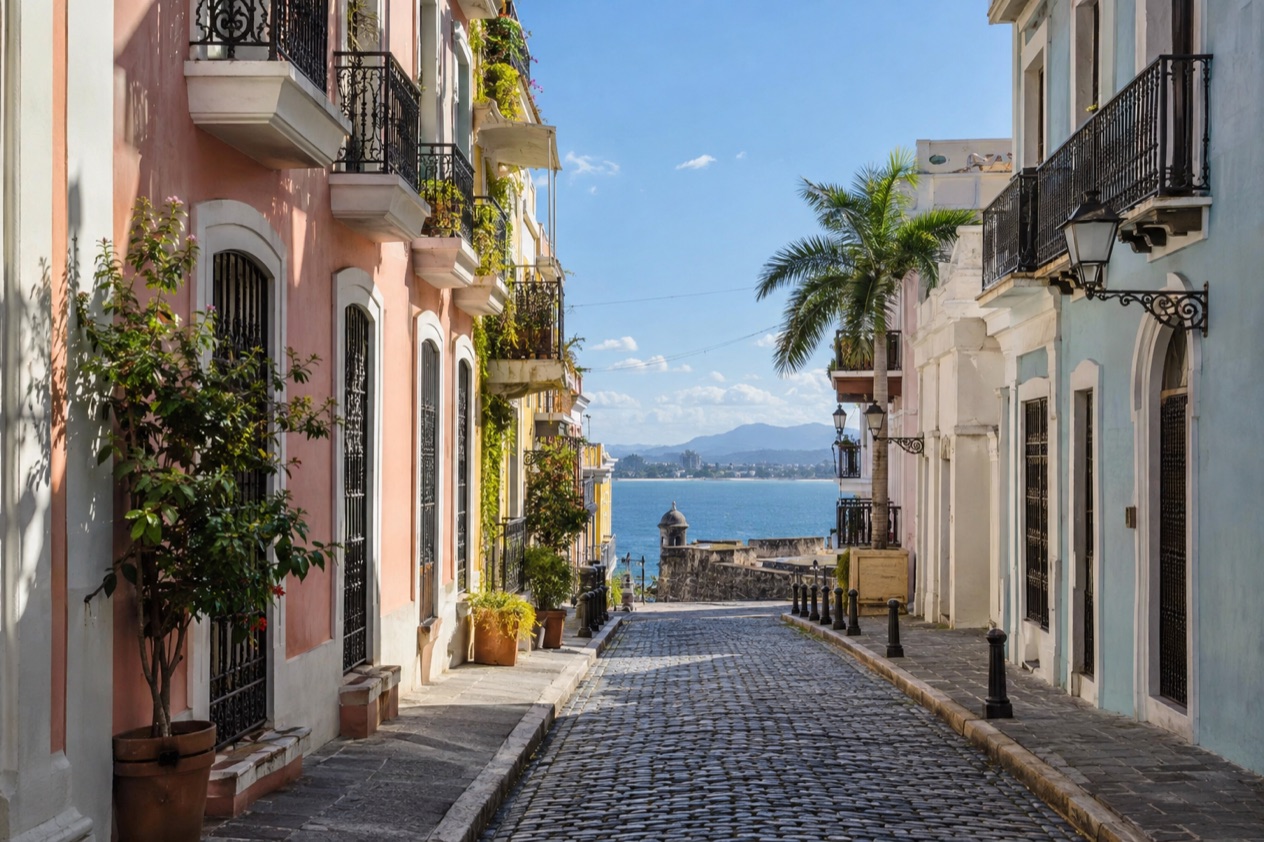
In March, the early light in Old San Juan turns the pastel townhouses pink and gold, and the smell of coffee and fried dough drifts out of corner cafes before the cruise crowds arrive. The trade winds keep the afternoons comfortable on the ramparts of El Morro, kites hang over the lawn below the fort, and the evenings invite a long dinner outdoors. It is a month for walking the old city, eating well and spending real time on the beach.
What is the weather like in San Juan in March?
March in San Juan is warm, sunny and fairly dry for the tropics, with the drier season still in charge and the trade winds taking the edge off the heat. For a traveler in the city, this feels like the San Juan you came for, with the north coast and Old San Juan just to the west.
| Month | Average high (°F) | Average low (°F) | Rain days | Sea (°F) |
|---|---|---|---|---|
| February | 83.8 | 71.8 | 6.6 | 80.0 |
| March | 84.7 | 72.4 | 5.3 | 80.1 |
| April | 86.2 | 74.0 | 7.5 | 80.8 |
Mornings start soft and bright, ideal for the forts and the blue-gray cobblestones before the sun climbs. By early afternoon the streets of the old city hold the heat, and shade, a cold drink and a breeze off the water become the plan. Evenings cool just enough that you can sit outside in a light shirt.
Rain, when it comes, falls as quick showers that pass in minutes and leave the pavement steaming. A true soaking comes along roughly once a month, and the island’s south and west get less of that than the north coast and the central mountains do.
Sunscreen, a hat and a light layer for air-conditioned restaurants cover most needs, and a small umbrella handles the rest. The light is strong, and the day lasts a little over twelve hours.
Can you swim in San Juan in March?
Absolutely, you can count on water that stays mild for an extended, easy dip, but just how nice it feels on any particular day comes down to the surf.
Because San Juan’s shores face the Atlantic and get steady waves, the scene changes every day, and each stretch of sand is its own. Just beyond Old San Juan sits Balneario de Escambron, a public beach park where a reef makes the water gentler and calmer, drawing families and anyone who would rather wade than leap through the waves.
The long beaches of Condado and Isla Verde are more open to the ocean, and in March they can bring bigger swells and currents that tug at your legs. Treat any day as a case of looking first: read the flags and signs where they exist, ask a lifeguard where one is on duty, and stay out when the water looks rough. Bring sunscreen, water shoes if you like to walk on rocky patches, and a towel for the lawn and shady palms behind the sand.
What to do in San Juan in March
March is a month for doing San Juan the classic way, on foot and with the forts, the beaches and the food all within easy reach. By then the busy Christmas stretch has ended, Ponce’s Carnaval typically finishes right before Lent, and the timing of Holy Week shifts between March and April each year. Whatever the date, the city feels settled, sunny and ready for visitors.
The dry season also makes it a good month for the places that need clear skies: the open ramparts, the long beach walks and the evening terraces. From about January to March, humpback whales swim in the waters off the west coast, which means a side trip toward that coast offers a chance to see them, never a promise.
Old San Juan and the two forts
Old San Juan, a colonial city with walls on a little islet, is joined to the mainland by causeways, and wandering with no plan fits it just right. Streets of blue-gray cobblestones climb between pastel townhouses and open onto plazas where pigeons, cafe tables and street musicians share the shade. Calle del Cristo, Plaza de Armas and the lanes behind the cathedral reward a slow morning.
The San Juan National Historic Site is made up of El Morro and San Cristobal, a pair of Spanish forts, and it belongs to a UNESCO World Heritage Site from 1983. El Morro sits at the tip of the islet with sweeping ocean views, while San Cristobal covers the land side with tunnels and outworks. Go early, since the stone holds heat by midday, and bring water.
Walk the shaded lanes in between, and pause at a cafe for coffee and a pastry. Wear shoes with grip, because the old cobbles are smooth and can be slick after a shower.
Beaches, Condado and Isla Verde
In March, Condado and Isla Verde, those two stretches of beach and hotels, turn into a lovely spot to pass the hours. Condado is the more urban of the pair, with a promenade, restaurants and a lagoon nearby, while Isla Verde is longer and more resort-like, with wide sand and a view of planes lowering toward the airport.
Beach days work best in the morning and again late in the afternoon, when the sun softens. At midday, the shade of a sea-grape or a beach bar becomes the better spot. Waves can be steady, so check the water before you go in and follow any flags or lifeguards.
Santurce, Calle Loiza and Pinones
Around Calle Loiza, Santurce serves as the district for art and dining, packed with restaurants, bars, small galleries and murals. It is the place to spend an evening, wandering from one painted wall to the next and picking a table where the music is good. Plan for dinner here rather than lunch, since the neighborhood wakes up after dark.
A quick ride from the airport heading east brings you to Pinones, where stands by the road beside the beach sell treats like alcapurrias (fried dough stuffed with meat) and bacalaitos (salt cod fritters). Eat standing up, with a cold drink, and enjoy the breeze off the ocean. It is casual, unfussy and very Puerto Rican.
Across the city, the food is the other great reason to be here. Look for mofongo (mashed fried plantain), pasteles, lechon asado (roast pork), tostones and tembleque (coconut pudding) at kiosks and cafes, plus chinchorros, the casual roadside places. A piragua, shaved ice with fruit syrup, is the right answer to a hot afternoon.
A two-day itinerary for San Juan in March
Day 1 belongs to Old San Juan. Start early at El Morro, when the light is gentle and the lawn is quiet, then walk down through the narrow streets toward San Cristobal. Stop for coffee and a pastry in a plaza, and browse the shops on Calle del Cristo before the heat builds.
At midday, eat a plate of mofongo or lechon at a casual restaurant in the old city, then take a long, slow break in the shade. In the afternoon, cool off at the Balneario de Escambron, just outside the walls, where the reef calms the water. Return to the old city for sunset on the ramparts and a dinner on a lit plaza.
Day 2 moves to the beaches and the food districts. Spend the morning on the sand at Isla Verde or Condado, with a swim only where the water looks calm and flags allow. For lunch, drive east to Pinones for alcapurrias and bacalaitos from the kiosks, and walk the shoreline afterward.
In the late afternoon, head to Santurce for the murals and a piragua, then settle on Calle Loiza for dinner and music. If rain turns up, switch to the indoor options: a long lunch at a chinchorro, the cafes and galleries of Santurce, or the covered corridors and museums of the old city.
Is San Juan busy in March?
Yes, March is a busy month, since the dry season and spring breaks bring families, couples and cruise passengers to the island.
Old San Juan is the most crowded part, especially on days when cruise ships are in port and the streets near the forts fill by late morning. Condado and Isla Verde hotels see steady demand, and the beaches get busier on weekends and during school breaks. Santurce and Pinones stay more local and easier to enjoy.
For rooms and rental cars, book early for the holiday weeks and spring-break stretches, and a bit later for the quieter weeks around them. Restaurant tables in the old city and Condado fill on weekend evenings, so reserve ahead for dinner where you have your heart set on a place. To beat the crowds, start sightseeing at opening time and save the beach for the afternoon.
What to pack for San Juan in March
Pack for warm days, a strong sun and the occasional shower. Light clothes and good walking shoes cover most of what you will do.
- Breathable clothes in cotton or linen, for hot afternoons on the cobblestones.
- Walking sandals or shoes with grip, since the old streets can be slick.
- Sunscreen and a hat, because the sun is strong even on cloudy days.
- A swimsuit and a towel, for beach stops at Escambron or Isla Verde.
- For brief downpours, pack a compact umbrella or a thin rain shell.
- A light layer, for air-conditioned restaurants in the evening.
Good to know before you go
March sits outside the official hurricane season, which runs from June 1 to November 30, so the main planning questions are crowds and getting around. For U.S. citizens, neither a passport nor a visa is required, mainland flights count as domestic, and the U.S. dollar serves as the currency.
The best way to see Old San Juan is walking, because parking is scarce and the streets are tight. Book rooms and popular dinners first, and leave the rest of the plan flexible.
San Juan in March vs February and April
Moving the trip to February brings slightly cooler air and a few more showers, and the sea is about the same. Because visitors escaping the cold keep things bustling all winter long, by that point the Calle San Sebastian Street Festival in Old San Juan, which normally takes place in January, will have ended. Humpback whales are still in season off the west coast.
Going later, to April, means hotter days, warmer nights and more rain, with the wetter season approaching. The sea is a touch warmer, and sargassum seaweed can sometimes reach east and south coasts in spring. Depending on the year, Holy Week lands in March or April, and with it come crowds of locals on holiday.
Choose March if you want the balance: sunny, warm and relatively dry, with a comfortable sea. Shift earlier if you prefer cooler air and whale-watching chances, and later if you like it hot and want to pair the trip with Easter traditions.
Is March a good time to visit San Juan?
Yes, March is a very good time to visit, especially for travelers who want sun, walking and beach time without the heat and rain of later months.
It suits couples, families and food lovers, who can eat well, swim in warm water and wander the old city in comfort. It is less ideal for anyone who wants empty streets, since the dry season draws crowds, or for surfers hoping for the biggest winter swells, which are better chased on the west coast.
On arrival, head first to the old city in the early morning and let the forts set the tone. Then give yourself a slow afternoon at Escambron. March in San Juan is a month of pink morning light on the ramparts, kites over the lawn of El Morro and fritters eaten by the sea at Pinones.
Sources
- NOAA NCEI, monthly normals 1991-2020, station RQW00011641 (San Juan L M Marin International Airport), checked October 8, 2026
- Open-Meteo Marine API, average 2015-2024, checked October 8, 2026
- sunrise-sunset.org, sunrise and sunset calculated for the 15th of the month, checked October 8, 2026
- NOAA National Hurricane Center, Climatology (https://www.nhc.noaa.gov/climo/), checked October 8, 2026
To plan your stay
- Things to Do in San Juan: Old San Juan Forts, City Beaches, Street Food and Nights Out
- Where to Stay in San Juan: Old San Juan, Condado, Isla Verde and Santurce
- San Juan Airport to City: Taxis, Buses and Getting to Condado and Old San Juan
- Know Before You Go to San Juan: Entry, Forts, Money and Getting Around