
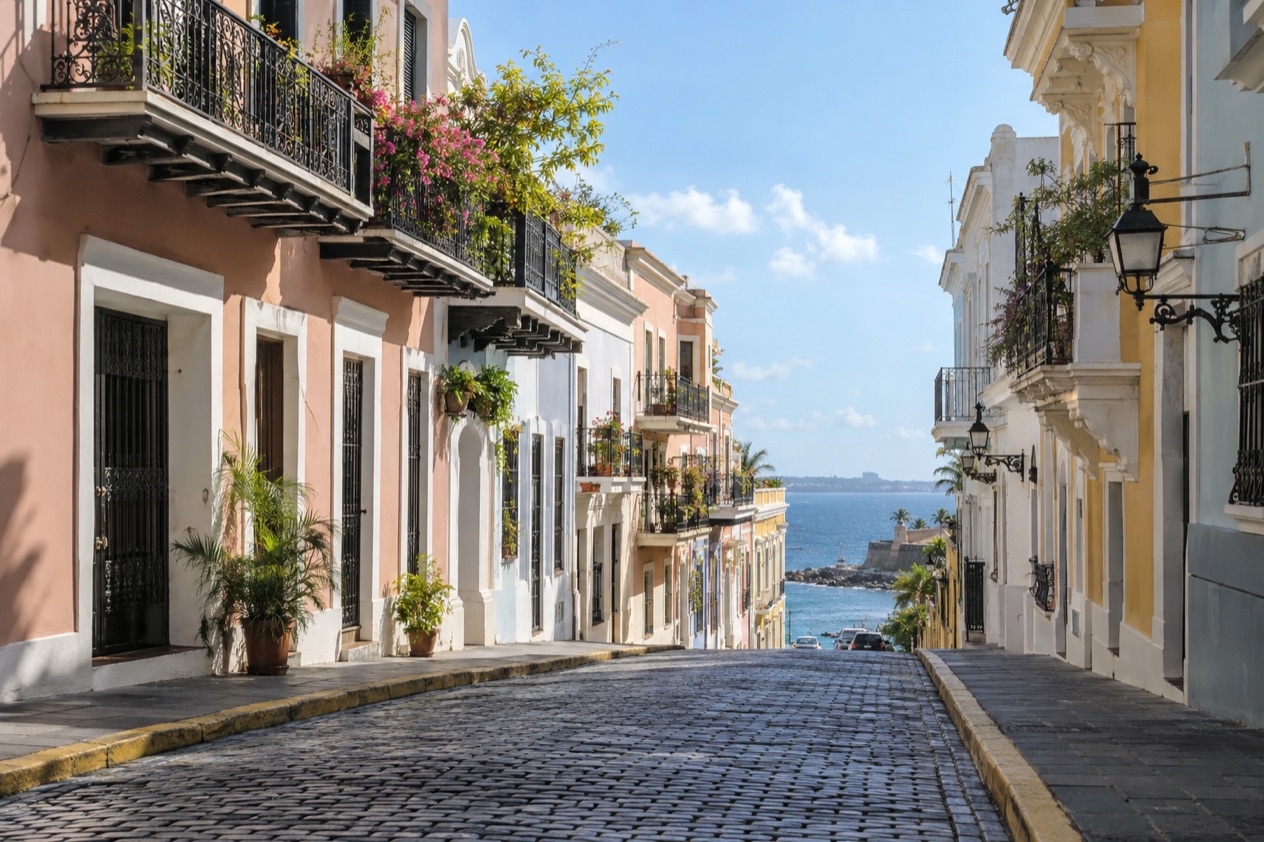
On a February morning in Old San Juan, the light slides down the pastel townhouses and the blue-gray cobblestones are still cool underfoot. Someone is already sweeping a doorway, the first coffee is being poured, and the trade winds carry a faint smell of salt over the city walls. The island sits in its drier season, the sea is warm, and San Juan is a city for walking, eating and spending long afternoons by the water.
What is the weather like in San Juan in February?
February in San Juan is warm, sunny and pleasantly breezy, with only short, scattered showers. These conditions reflect Luis Munoz Marin International Airport, on the north coast just east of Old San Juan, rather than the mountains or the south of the island.
| Month | Average high (°F) | Average low (°F) | Rain days | Sea (°F) |
|---|---|---|---|---|
| January | 83.2 | 71.9 | 9.9 | 80.8 |
| February | 83.8 | 71.8 | 6.6 | 80.0 |
| March | 84.7 | 72.4 | 5.3 | 80.1 |
Mornings are soft and bright, a good time for the forts and the cobbled lanes before the sun climbs. By midday it is properly hot, though the trade winds keep the shade comfortable, and afternoons suit a beach, a long lunch or a museum with air conditioning. Evenings stay mild enough to eat outside in short sleeves, perhaps with a light layer once the breeze picks up by the water.
Rain is less frequent in February than in January, though showers are still possible. A truly soaking day is rare this month.
The north coast and the central mountains collect more rain than the south and west of the island, so a wet spell here can look very different from the weather an hour away. Days run a little under twelve hours of light, with the sun setting in the early evening, which gives you a full day outdoors without a rush.
Can you swim in San Juan in February?
The water is plenty warm for a nice, long swim, but whether that swim goes well comes down to the waves, not the temperature. The water sits around 80°F by the marine record for recent years, which means no gasping on entry and no need for a wetsuit.
Because San Juan’s urban shores face the Atlantic, conditions shift from day to day and beach to beach. Winter swells can make the open beaches along Condado and Isla Verde lively, with stronger currents on some days.
Just beyond Old San Juan sits a public beach park named Balneario de Escambron, and since the reef keeps its water calmer, it is usually the choice of families and swimmers who lack confidence. It also has a bit of snorkeling interest near the rocks when the water is clear.
No matter where you get in the water, check for signs and flags, heed any lifeguard on duty, and never take for granted that someone is keeping an eye on each patch of beach. Bring sunscreen, a hat and a rash guard if you plan long hours in the water, since the February sun is strong even when the breeze feels cool. Surfers tend to look to the west coast at this time of year rather than the city beaches.
What to do in San Juan in February
February is a walking month. The drier season means the old city is most pleasant on foot, and the days are long enough to fit in a fort, a plaza, a market lunch and a swim without hurrying.
Old San Juan’s huge Calle San Sebastian Street Festival typically happens from mid to late January, which means the streets have grown calm by February, even if the last traces of the Christmas season still linger in the music and the mood. Carnaval de Ponce, on the south coast, often falls in the weeks before Lent and can be a day trip for those who want to see masks and parades, depending on when Lent begins.
Humpback whales pass through the waters off the west coast of the island from about January to March. That is a chance for a day away from the city, never a promise, and you should see it as a bonus if your plans reach that side of the island.
Old San Juan and its two forts
Causeways tie the mainland to the small islet where the walled colonial city stands, and its pastel townhouses, plazas and blue-gray cobblestones make it the natural starting point. The San Juan National Historic Site takes in both Spanish forts, El Morro and San Cristobal, and that site is itself a piece of a UNESCO World Heritage Site from 1983. El Morro, on the grassy headland, is the one with the wind, the sea views and the kites that often fill the lawn in front.
Go early, when the stone is cool and the light is soft on the ramparts, then wander down through the plazas to the lanes of small shops and cafes. San Cristobal is the bigger, more labyrinthine fortress, with tunnels and outworks that reward a slow visit. Wear shoes with grip, as the old stones and ramps can be slick and uneven.
Beaches, Condado and Isla Verde
Condado and Isla Verde, the pair of beach-and-hotel strips, both offer sand and palms. Condado feels more like a city promenade, with restaurants and a lagoon walk behind it, while Isla Verde is the longer, more resort-like stretch near the airport. February’s warm water and steady sun make either an easy half day.
For calmer water, the Balneario de Escambron, just outside the old city, is the favorite with families. Surf can build on the open beaches, so read the flags and ask the lifeguards before you go beyond your depth. Afternoons are the time when the beach feels liveliest, with locals arriving after work and on weekends.
Santurce and Pinones: where to eat
Around Calle Loiza lies Santurce, a district for art and eating, home to murals, tiny bars, bakeries and eateries that draw crowds after dark. It is the neighborhood for a long dinner, a drink and a stroll past street art. Try mofongo, the mashed fried plantain often topped with garlic and pork or seafood, and tostones, the twice-fried plantain slices.
Go east out of the airport, and Pinones sits just nearby, where beachside kiosks offer fried snacks such as alcapurrias (grated plantain and taro, stuffed with meat) and bacalaitos (salt cod fritters). Eat them standing or at a plastic table with the sea in view, and finish with a piragua, shaved ice with fruit syrup, or a cup of tembleque, the coconut pudding. Casual roadside restaurants called chinchorros serve roast pork, lechon asado, and pasteles, the plantain parcels, though some of these dishes are especially tied to Christmas.
February’s dry-season weather suits all of it: breakfast on a plaza, a fort in the morning, a beach after lunch and fritters at dusk. When a shower passes, step into a cafe or a covered gallery and wait it out, since it rarely lasts long.
A two-day itinerary for San Juan in February
Day 1 belongs to Old San Juan. Start early with coffee and a pastry on a plaza, then walk up to El Morro while the stone is cool and the wind is fresh. Take the lanes down toward San Cristobal by late morning, and stop for a long lunch in a cafe in the old city when the sun is at its hottest.
After lunch, drift through the small museums, galleries and shops, which are a good indoor option if a shower comes in. Late in the afternoon the light turns golden on the pastel facades, and the sun sets in the early evening, so you have time for a slow walk along the walls before dinner on a quiet side street.
Day 2 moves to the water and the neighborhoods. Spend the morning at the Balneario de Escambron, where the reef-sheltered water is usually calm, though conditions change from day to day and beach to beach, then walk or ride along Condado for lunch near the lagoon. Take the afternoon for Isla Verde’s wider sand or simply for shade and a nap, since the midday heat is real.
As evening comes, head to Santurce and Calle Loiza for dinner and a wander past the murals. If the weather turns, a long meal in a covered restaurant or a gallery in Santurce keeps the plan intact. If you have energy and a car, the beachside kiosks of Pinones make a good casual finish, with fritters eaten as the light fades.
Is San Juan busy in February?
Yes, February is part of the busy winter season, when many visitors escape colder weather on the mainland. The drier weather and warm sea draw crowds to the beaches, the forts and the restaurants of the old city, especially on weekends.
Rooms in Condado, Isla Verde and Old San Juan fill up early for the holiday weeks and long weekends, so book those first and leave the quieter stretches for later. Restaurant tables at popular places in Santurce and the old city are worth reserving on weekend evenings.
Cruise ships can add crowds to Old San Juan on some days, with the lanes and the forts feeling fuller in the middle of the day. Going early or late keeps the old city calmer. Queues at San Juan National Historic Site’s forts may grow during peak times, and morning trips also match the cool early daylight.
What to pack for San Juan in February
Pack for heat, sun and the odd shower, with something light for breezy evenings by the water.
- Light, breathable clothes, because afternoons are hot even in the dry season.
- Sunscreen and a hat, since the sun is strong on the beach and the forts.
- Comfortable walking shoes with grip, for the old cobblestones and fort ramps.
- A swimsuit and a rash guard, for the warm sea and long hours in the water.
- A light rain jacket or small umbrella, for short passing showers.
- A light layer for evenings, when the breeze comes off the water.
Good to know before you go
February is outside the official hurricane season, which runs from June 1 to November 30, so the main questions are crowds and timing rather than storms. U.S. citizens arriving from the States need no passport or visa, all costs appear in U.S. dollars, and flights from the mainland are treated as domestic.
Spanish and English both hold official status, and even a small amount of Spanish goes a long way. Book rooms and rental cars first, since they fill up before tables do, and plan fort visits for the cooler hours.
San Juan in February vs January and March
If you shift to January instead, you get somewhat lower temperatures and more rainfall, as the Christmas festivities run through the middle of the month and the Calle San Sebastian Street Festival packs Old San Juan with crowds, music and street stalls. It is the livelier, noisier choice, and the better one for anyone who wants festival energy over quiet streets.
Moving later, to March, brings the warmest air of the three and the fewest rainy days, with the sea about the same as in February. Humpback whales are still possible off the west coast early in the season, though they thin out as the weeks go on. Holy Week can fall in March or April, depending on the year, and brings its own processions and busier travel days.
If you want a calm, sunny trip without the festival crowds, February is a sweet spot. If you want the street party, shift earlier, and if you want the driest days and the warmest afternoons, shift later.
Is February a good time to visit San Juan?
Yes, February is a very good time for travelers who want sun, a warm sea and a city made for walking, and who do not mind sharing it with other winter visitors. It suits couples, families who like easy beach days, and anyone who wants to eat their way through the old city and Santurce without worrying about the weather.
It is less ideal for those who want empty streets or the wildest festival energy, or who are set on big surf, which belongs more to the west coast. On arrival, head first to the old city’s forts in the cool morning while your energy is high, then let the afternoons belong to the beach. What stays in the memory is the combination: a cobbled lane in soft morning light, a paper cone of hot alcapurrias at a kiosk by the sea, and a warm evening where you can eat outside in short sleeves.
Sources
- NOAA NCEI, monthly normals 1991-2020, station RQW00011641 (San Juan L M Marin International Airport), checked October 8, 2026
- Open-Meteo Marine API, average 2015-2024, checked October 8, 2026
- sunrise-sunset.org, sunrise and sunset calculated for the 15th of the month, checked October 8, 2026
- NOAA National Hurricane Center, Climatology (https://www.nhc.noaa.gov/climo/), checked October 8, 2026
To plan your stay
- Things to Do in San Juan: Old San Juan Forts, City Beaches, Street Food and Nights Out
- Where to Stay in San Juan: Old San Juan, Condado, Isla Verde and Santurce
- San Juan Airport to City: Taxis, Buses and Getting to Condado and Old San Juan
- Know Before You Go to San Juan: Entry, Forts, Money and Getting Around