
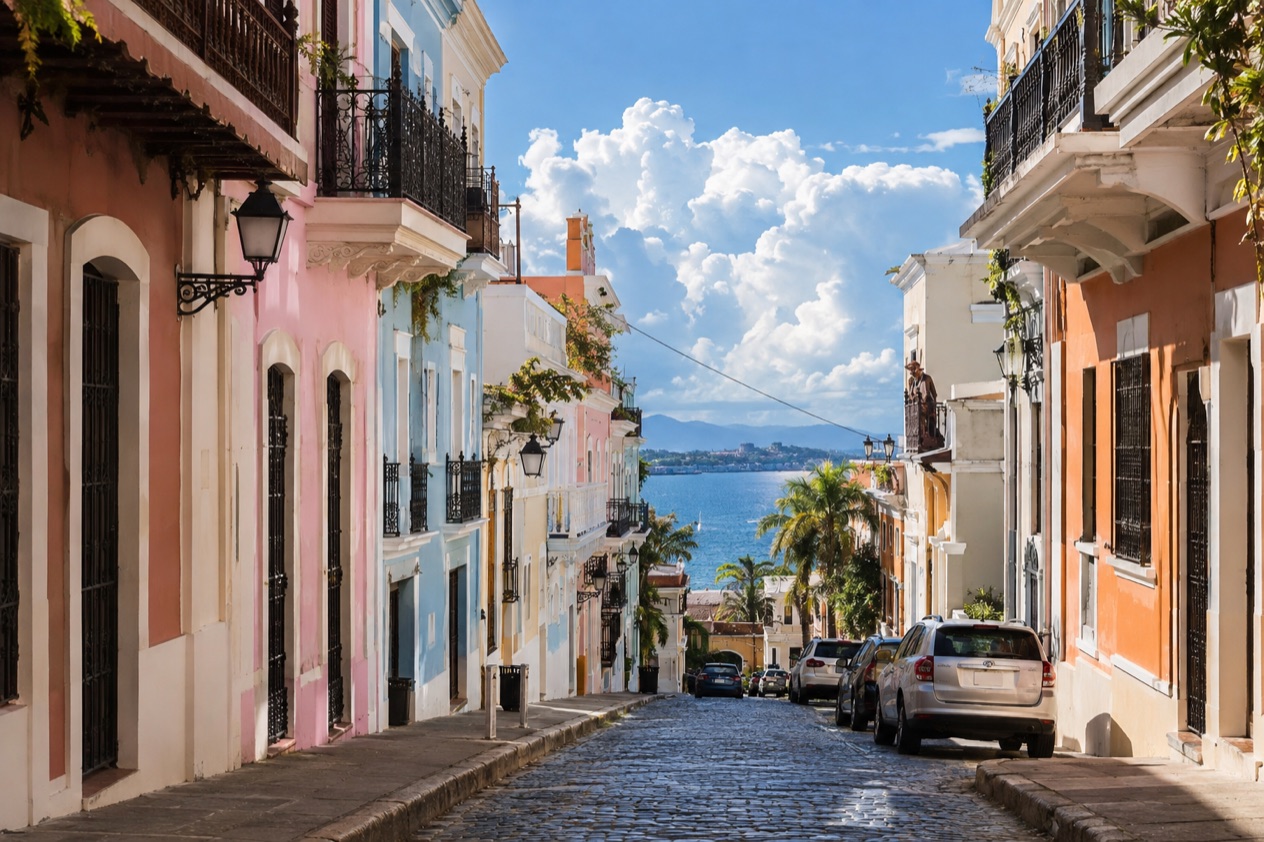
On a July morning in Old San Juan, the sun is already bouncing off the pastel townhouses, and the smell of fresh coffee and fried dough drifts out of the cafes before the tour groups wake up. By afternoon the trade winds push in from the Atlantic, the plazas fill with shade-hunting pigeons and the beaches fill with families. July is a hot, bright, unhurried month in the capital, built for early walks, long lunches and long swims.
What is the weather like in San Juan in July?
July in San Juan brings heat and heavy air, bright starts to the day, scattered brief rain, and evenings that stay warm throughout. Here you get the island’s urban side rather than the mountains or the south, along with the warm, breezy atmosphere of the north coast right east of Old San Juan.
| Month | Average high (°F) | Average low (°F) | Rain days | Sea (°F) |
|---|---|---|---|---|
| June | 89.0 | 77.2 | 8.0 | 84.8 |
| July | 88.7 | 77.6 | 10.7 | 84.9 |
| August | 89.1 | 77.8 | 11.0 | 85.6 |
Mornings are the best hours of the day. The light comes through clean, and although the warmth is there, the air has not turned thick, so you can stroll the old city’s cobblestones in comfort until the morning grows late. By early afternoon the heat builds, the humidity settles in and shade becomes the main thing you plan around. The trade winds help, especially on a waterfront wall or a beach.
Rain usually arrives as a short, heavy shower, often in the afternoon, and it can pass in half an hour and leave the streets steaming. Some days bring a longer gray spell, and a real downpour is the exception rather than the rule.
The north coast gets its share of these showers, so keep your plans flexible in the afternoon. The July total is a little higher than June, and the rain falls on more days.
Dinner outside in just a short-sleeved shirt is usually possible, since nights stay mild, and air conditioning rarely calls for a light extra layer. Light, breathable fabrics, a hat and a small umbrella cover most of what the weather asks for. The days are long, with daylight lasting a little over thirteen hours in mid-July.
Can you swim in San Juan in July?
Granted, the water stays warm enough that you can swim for a long stretch with no jolt at all, and during the midday heat it comes across as refreshing instead of cool. Looking at the Sea column above, the water is nearly as warm as a bath on most days, which suits snorkelers and anyone who likes to float for an hour.
Because the Atlantic runs up against San Juan’s city beaches and keeps sending in waves, conditions change from day to day and from one patch of sand to another. A public beach park right next to Old San Juan, Balneario de Escambron often draws families and nervous swimmers, since the reef surrounding it keeps the water calm. The Condado and Isla Verde strips are lively and good for walking, sunbathing and people-watching, but waves and currents can be stronger there, so watch the water before you go in.
If you see a flag, a sign or a lifeguard, do what they tell you, and don’t think the water is safe today only because it seemed that way yesterday. Bring sunscreen, a hat and plenty of water, since the sun is strong from mid-morning. A snorkel mask is useful at the sheltered spots, and a rash guard saves you from reapplying lotion all day.
What to do in San Juan in July
July in San Juan is less about one big event and more about the rhythm of a summer month. The Santiago Apostol festival in Loiza, a short trip along the coast, usually takes place in late July, with vejigante masks, drums and bomba music in the streets.
It is one of the island’s most distinctive traditions, and it draws people from across the metro area. Beach days, school-break crowds and long evenings in the plazas set the mood in the city itself.
Old San Juan and its forts
A small islet holds the walled colonial city, connected to the mainland by causeways, and walking it early, ahead of the heat, is best. The blue-gray cobblestones, pastel townhouses and shady plazas reward slow wandering, and the sea breeze along the city walls is welcome at any hour. The San Juan National Historic Site is formed by two Spanish forts, El Morro and San Cristobal, and it has been part of a UNESCO World Heritage Site since 1983.
El Morro sits on the point with wide lawns that are popular for kite flying on breezy afternoons, and San Cristobal spreads over the land side with tunnels and lookouts. Both have little shade on the open ramparts, so go in the morning, bring water and treat the cool interior rooms as a break from the sun. If a shower rolls in, the stone passages are a dry place to wait it out.
Condado, Isla Verde and Santurce
Beyond the old city, Condado and Isla Verde make up the two beach-and-hotel strips, where you’ll find sand, palm-lined promenades and plenty of places for a cold drink. Condado is good for an evening stroll along the lagoon and the shore, while Isla Verde feels more like a long beach day, with the airport planes crossing the sky now and then.
Around Calle Loiza lies Santurce, a district celebrated for its art and food, where murals, tiny galleries, bars and eateries draw crowds once night falls. It is a good place to be when the afternoon heat fades, and the street life picks up as the sky turns orange. Dinner here can be a long, relaxed affair, and the dishes range from traditional to inventive.
Eating through the heat
At the core of Puerto Rican food, you will find delights that include mofongo (mashed fried plantain), pasteles, lechon asado (roast pork), tostones, alcapurrias, piraguas (shaved ice with syrup), and tembleque (coconut pudding). In San Juan and the area nearby, you can find them at kiosks, cafes, and casual roadside places called chinchorros. Come July, when the afternoon turns hot, nothing beats a piragua bought from a cart, in flavors such as coconut, tamarind or passion fruit.
Along the coast east of the airport, Pinones offers a stretch of beachside kiosks where you can buy fritters like alcapurrias and bacalaitos. Eat them hot, with a cold drink, and let the breeze do the rest. It is an easy half-day outing that combines a drive along the shore with a casual meal.
For a quiet afternoon, slip into a cafe in Old San Juan for coffee and a pastry while the sun is highest. Museums, galleries and covered markets also make good indoor stops when a shower arrives, and the city rewards a flexible plan.
A two-day itinerary for San Juan in July
Day 1 begins in Old San Juan at first light, when the streets are quiet and the cobblestones are still cool. Walk the plazas and the narrow lanes, then head to El Morro and San Cristobal before the sun is high, with a break for coffee between the two. By midday, when the heat is at its peak, settle into a lunch of mofongo or a plate of tostones in a shaded dining room, then stay out of the sun for an hour or two.
In the late afternoon, walk the city walls as the light softens and the breeze picks up. Dinner can be a casual meal in one of the old city’s courtyard restaurants. If rain arrives, duck into a museum, a gallery or a cafe and wait for the sky to clear, since showers tend to be short.
Day 2 is for beaches and neighborhoods. Start at the Balneario de Escambron in the morning, when the water inside the reef is usually as inviting as it gets and the sun is not yet punishing, then spend a couple of hours swimming or snorkeling. Move on to Condado for lunch and a slow stroll along the shore.
In the afternoon, head to Pinones for fritters from the beachside kiosks, or go to Isla Verde for more beach time. Finish in Santurce along Calle Loiza, where the evening comes alive with music, murals and dinner. With daylight lasting past dinnertime, you can take your time. On a rainy day, swap the beach for galleries and food halls in Santurce.
Is San Juan busy in July?
San Juan is moderately busy in July, with summer vacation traffic from local families and visitors from the mainland, though it does not feel as packed as the winter high season. Beaches are livelier on weekends and holiday weeks, and the old city sees steady crowds when cruise ships are in port.
The stretch surrounding the Fourth of July tends to get booked soonest, as residents make their way to the shore and travelers come in for the extended weekend. Restaurants in Old San Juan, Condado and Santurce can have waits on weekend evenings, so a reservation helps at popular places. Outside the holiday weeks, you can often walk into a table at lunchtime.
Book rooms and rental cars early for the holiday weeks and for any trip that includes a weekend, and a little later for quieter stretches of the month. Mornings at El Morro and San Cristobal are usually calmer than the middle of the day, and the beaches are less crowded on weekdays. Cruise days bring more people into the old city, so start early and let the crowds arrive after you.
What to pack for San Juan in July
Pack for heat, humidity and the occasional shower, with light layers and sturdy sandals for cobblestones.
- Lightweight, breathable clothes, since the days are hot and sticky.
- Pack a hat and sunglasses too, since sunshine beats down hard at the forts and on the beaches.
- Sunscreen, which you will reapply often by the water.
- A compact umbrella or light rain jacket for the afternoon showers.
- For the cobblestones, bring shoes with traction or sandals made for walking comfortably.
- A swimsuit and a snorkel mask for the sheltered beach spots.
Good to know before you go
July falls inside the Atlantic hurricane season, which runs from June 1 to November 30, with the peak in early September. As your departure gets closer, keep an eye on both local official alerts and the National Hurricane Center, because the outlook can shift fast. United States travelers can skip a passport and visa, mainland flights count as domestic ones, and U.S. dollars cover every price.
Old San Juan is easiest on foot, and the cobblestones are best handled in comfortable shoes. Both Spanish and English hold official status here, and locals always welcome even a small attempt at Spanish. Reserve your room and any sought-after eatery ahead of time, then keep the remaining schedule open in case of afternoon rain.
San Juan in July vs June and August
Moving the trip to June gives you slightly fewer rain days and a little less rain overall, with the same warm sea and the same long days. More and more summer travelers are showing up, but they have not peaked yet, and the June 23 Noche de San Juan Bautista keeps alive the tradition of a midnight dip, a lively event for anyone wanting a local celebration.
August is a touch wetter and the sea is a shade warmer, with showers on more days and the heat sitting heavy. It is also closer to the peak of the hurricane season, which runs through mid-August to mid-October, so keep a closer eye on the forecast. Crowds ease once the summer vacation wind down, and the beaches can feel more relaxed late in the month.
Choose June if you want the Noche de San Juan Bautista and slightly drier days, and July if the Loiza festival and the full summer atmosphere appeal. August suits travelers who do not mind the humidity and want a quieter feel toward the end of the month.
Is July a good time to visit San Juan?
Yes, July is a good time for beach lovers, families and food lovers who do not mind heat and humidity. The sea is warm, the days are long, and the city has a relaxed summer pace that makes long lunches and slow evenings easy.
It suits travelers who like to start early, rest in the afternoon and come back out at dusk. For people who dislike muggy conditions, or who hope for chilly breezes to stroll in at noon, it works less well. On arrival, drop your bags, walk to the nearest plaza or waterfront and get a piragua or a coffee, then plan your first morning around the forts.
What makes July in San Juan memorable is the combination of drums in the streets of Loiza, warm Atlantic water, fritters eaten at a kiosk by the shore and a long golden evening over the old city walls.
Sources
- NOAA NCEI, monthly normals 1991-2020, station RQW00011641 (San Juan L M Marin International Airport), checked October 8, 2026
- Open-Meteo Marine API, average 2015-2024, checked October 8, 2026
- sunrise-sunset.org, sunrise and sunset calculated for the 15th of the month, checked October 8, 2026
- NOAA National Hurricane Center, Climatology (https://www.nhc.noaa.gov/climo/), checked October 8, 2026
To plan your stay
- Things to Do in San Juan: Old San Juan Forts, City Beaches, Street Food and Nights Out
- Where to Stay in San Juan: Old San Juan, Condado, Isla Verde and Santurce
- San Juan Airport to City: Taxis, Buses and Getting to Condado and Old San Juan
- Know Before You Go to San Juan: Entry, Forts, Money and Getting Around