
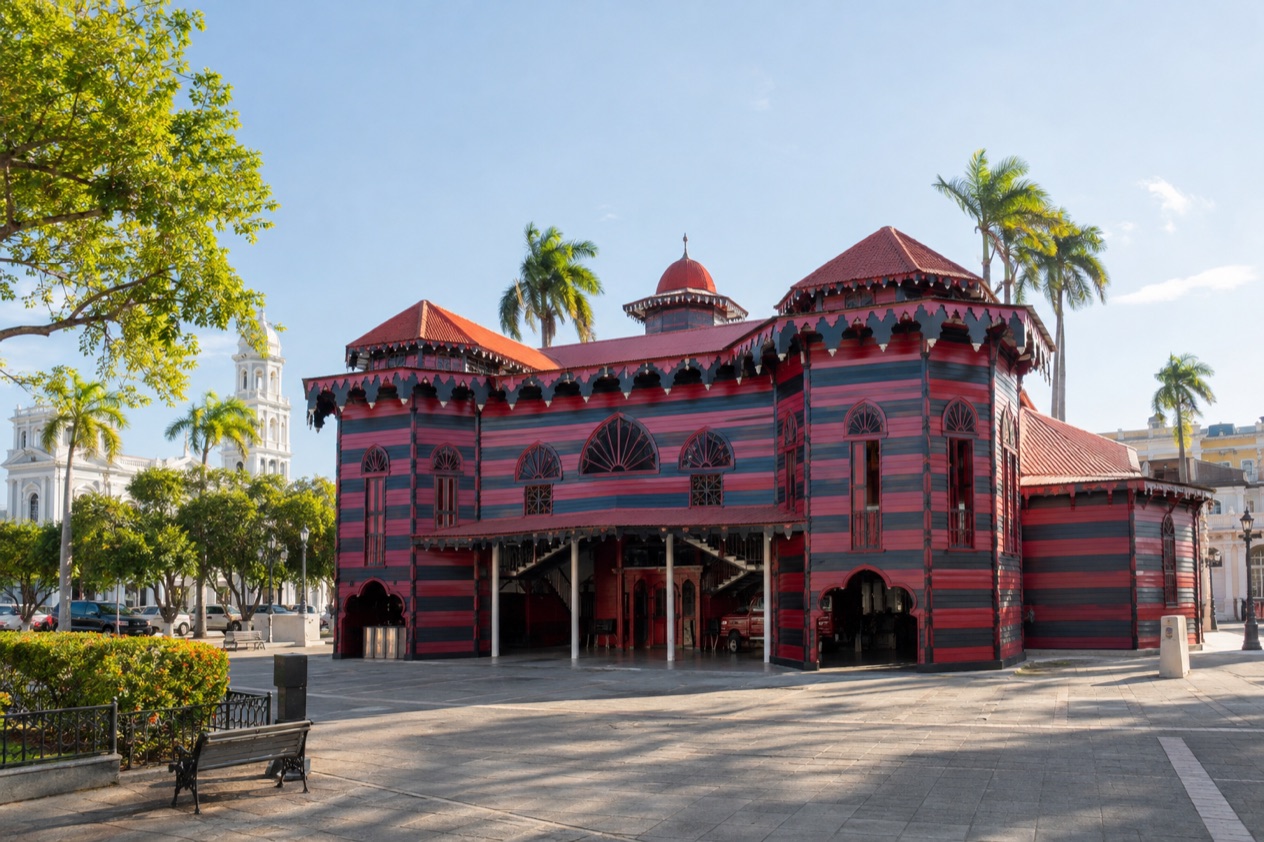
In Old San Juan at daybreak, a brief rain has left the blue-gray cobblestones wet, a cafe sends up steam from its first cups of coffee, and sea wind presses against the walls of El Morro. Down on the south coast in Ponce, a plaza fills with the sound of church bells and street vendors, and the red and black striped firehouse glows against a bright sky.
San Juan is the island’s capital, a walled city with beach strips beside it. Ponce is a slower, prouder Caribbean town of museums, plazas and mountain roads. The decision hinges on the sort of getaway you are after.
Which is better, San Juan or Ponce?
San Juan is better for most first-time visitors, especially those who want beaches, hotels, restaurants and nightlife in the same urban area, while Ponce is better for travelers who prefer a quieter stay built around architecture, art and a slower rhythm. San Juan gives you a lot of variety in a compact area. Ponce gives you a more focused experience, and it works best when you already have a car or a plan to explore the south and the mountains.
Think of San Juan as a base that does everything at once: forts in the morning, a beach in the afternoon, a long dinner and a drink in the evening. Ponce is a town you settle into. You spend a morning in its museums, eat a long lunch, walk the plaza when the light turns golden, and use the town as a springboard for the hills and the Caribbean shore.
| Category | San Juan | Ponce |
|---|---|---|
| Beaches | Atlantic-facing city beaches with steady surf, plus a reef-protected park beach near the old city | Caribbean coast with quieter shores and boat trips to an offshore island |
| Vibe | Busy capital, walled colonial streets, resort strips and an arts district | Slower provincial city, grand plazas, neoclassical and Creole facades |
| Things to do | Forts, Old San Juan walks, Condado and Isla Verde beaches, food in Santurce | Museums, plaza life, a hilltop castle, coffee country, Carnaval season |
| Nightlife | The island’s liveliest, from Old San Juan bars to hotel casinos and Santurce | Relaxed evenings around the plaza and boardwalk, livelier on weekends |
| Weather | Hot and humid, with showers more frequent on the north coast | Hot and humid, generally drier than the north coast |
| Getting there | Main airport of the island, in Isla Verde, close to the hotels | Reached by road across the island, usually after landing in San Juan |
| Best for | First visits, beach-and-city trips, food and nightlife | Culture, art, architecture, a second stop or a quiet base |
For a first visit of any length, many travelers pick San Juan and add a day or two in Ponce when they have time. If you already know the capital, Ponce is the more rewarding change of scene.
Beaches and the sea
San Juan’s beaches line the Atlantic, and that shapes the experience. In Condado and Isla Verde, two strips that pair beach with hotels, broad sands stretch out, edged by high-rises, beach bars and restaurants, and your room sits just a few minutes from a towel. Because the city faces the open ocean, surf is steady and conditions change from day to day and from beach to beach.
For gentler water, your simplest bet is Balneario de Escambron, a public beach park located just beyond Old San Juan and known for calmer conditions within a reef. Even so, check the water’s condition that day, and follow any instructions from a flag, a sign or a lifeguard. Out toward Pinones, the beach is more about the kiosks than the swimming, with fritters frying by the roadside and people eating with the sea in view.
Ponce looks onto the Caribbean, a different sea from the Atlantic swell that rolls onto San Juan’s shore. The coast here tends to feel quieter and less developed, with fishing boats, small seafood restaurants and a boardwalk area where families gather in the evening. Nothing about the water is guaranteed, though, so look at the sea before you get in and ask locally about the day’s conditions.
Before planning a boat day from Ponce, confirm that transportation to the offshore island is operating. Some years, as spring turns into summer, sargassum seaweed can show up on certain Puerto Rico beaches, so no matter where you travel around the island, treat a clean beach as a maybe, not a guarantee.
If your idea of a beach vacation is a resort strip, a hotel pool and a choice of restaurants within walking distance, San Juan wins easily. If you would rather explore art, architecture and the south coast at a slower pace, Ponce has the better setting. For most travelers who want both sand and everything else, San Juan is the more convenient pick.
Things to do
San Juan is the island’s history lesson and its party. Pastel townhouses and plazas pack every corner of Old San Juan, a walled colonial city on a tiny islet, while its Spanish forts, El Morro and San Cristobal, form the San Juan National Historic Site and also rank as part of a UNESCO World Heritage Site. You can spend a full day just walking the narrow streets, stopping at the plazas and following the old wall.
With views across San Juan Bay, the Paseo de la Princesa follows the southern wall, while the Puerta de San Juan remains the sole city gate left intact. After years of renovation, San Jose Church, a significant architectural landmark, opened its doors again in 2021 for visitors and services.
Past the old city, the area around Calle Loiza known as Santurce serves as the arts and dining district, featuring murals, galleries and bustling restaurants. This is where you eat mofongo (mashed fried plantain), tostones, lechon asado (roast pork) and tembleque (coconut pudding), often in chinchorros, which are casual roadside restaurants. Bring a card because the forts are cashless, and anyone older than 16 must have an entrance pass.
Ponce is quieter, and its pleasures are more concentrated. Its main plaza, Plaza Las Delicias, is the heart of town, with the red and black firehouse known as the Parque de Bombas and the cathedral facing each other across the trees. Streets around it hold colorful Creole and neoclassical buildings, and people sit on the benches under the shade as they have for generations.
The Museo de Arte de Ponce is the town’s cultural anchor, with a collection that surprises many first-time visitors. Up on a hill, Castillo Serralles is a Spanish Revival mansion with views over the city and the sea, and a lookout tower nearby. Check the current status of La Guancha boardwalk before making the trip to the shore.
Day trips from Ponce point north into the mountains, to coffee country and old plantation houses, and to the indigenous ceremonial park at Tibes. Ponce also hosts one of the island’s best-known Carnavals in the weeks before Lent, with the horned, brightly painted vejigante masks as its signature image. If you are in the area at that time, it is a lively reason to choose Ponce.
San Juan has the bigger list, and it is the better pick for nightlife, shopping and variety. Ponce is better for art, architecture and an easy pace. Neither one asks you to choose only one kind of day, since both mix sightseeing, food and time outdoors.
Weather and the best time to go
Both cities are hot and humid all year, and the seasons are shaped less by temperature than by rain. The dry months stretch from about December through April, while the wet ones go from about May to November. The sea stays warm throughout, and the trade winds make shady plazas and breezy waterfronts more comfortable than the heat might suggest.
The north coast and the central mountains tend to be among the wetter parts of the island, so San Juan can see showers at any time of year, usually short and followed by sun. Compared with the capital, Ponce usually feels less rainy, and the south and west coasts tend to be drier. In the wetter months, expect afternoon downpours, and plan outdoor sights for the morning when you can.
Winter is the most comfortable and popular time for both. It is the drier season, the Atlantic swells make San Juan’s shore lively for surfers, and holiday decorations and the long Christmas season fill the plazas with lights and music. Ponce is a pleasant winter stop, and in the weeks before Lent it fills with Carnaval energy.
The Atlantic hurricane season runs from June 1 to November 30, with the peak in early to mid September and most activity between mid-August and mid-October. Even so, some spots keep their appeal and draw fewer people, yet it helps to follow the National Hurricane Center and messages from local officials, since things can change fast. Months outside the official season, from December to May, avoid that question altogether.
For walking the forts and Old San Juan, choose a morning start in any season, since the stone streets hold the heat by midday. In Ponce, walk the plaza in the morning or early evening, and check museum hours before you go.
Getting there and getting around
Most visitors arrive at Luis Munoz Marin International Airport, the island’s main airport, which sits in Isla Verde. Because it is also a beach-and-hotel district, you can be at your hotel and on the sand within a short ride of landing. For San Juan stays, that makes arrival easy, and flights from the mainland are domestic.
Condado is a few miles from Old San Juan and the airport, and Isla Verde is a few miles east of Condado and the old city. The distances are short, but traffic can slow things down. Condado is served by two Metropolitan Bus Authority routes, and many visitors move between the beach strips and the old city by car or ride, since the old free trolley is no longer running.
Once inside Old San Juan, you walk. The streets are narrow, steep in places and paved with cobblestones, so comfortable shoes matter more than anything else you pack. The district is on a small islet linked to the mainland by bridges, which makes driving and parking an effort. Many people leave the car at the hotel and use the old city as a day on foot.
Getting to Ponce means crossing the island, usually by road from San Juan, through the central mountains and down to the Caribbean side. The journey is part of the experience, with green hills, roadside food and small towns along the way, and a rental car gives you the most freedom. Many travelers stop for roast pork in the hills that line the route.
Once in Ponce, the central plaza area is compact and best explored on foot, while the castle on the hill, the boardwalk and the mountain sights are easier with a car. Parking and driving rules are best checked locally. Because the town is calm and the pace is easy, you rarely need to rush from place to place.
Who should choose which
Choose San Juan if this is your first trip to Puerto Rico, if you want a beach and a city in the same stay, or if you like to wander between forts, restaurants and bars without needing a car. It suits couples, groups of friends, cruise travelers on a longer stop and families who want a hotel pool, a beach and plenty of places to eat. History lovers get the forts and the walled city, and food lovers get Santurce and the kiosks of Pinones.
Choose Ponce if you are returning to the island, if museums and architecture matter more to you than nightlife, or if you want a base for the south coast and the mountains. It suits travelers who like small cities, photographers drawn to colorful facades, and anyone happy to rent a car and take their time. It is also a strong choice in the weeks before Lent for Carnaval.
The good news is that the two work well together. Spend the first part of the trip in San Juan for the forts, the beaches and the food, then cross the island for a couple of nights in Ponce for art, plazas and a slower pace. If you only have time for one, let your priorities decide: beaches and variety point to San Juan, culture and calm point to Ponce.
Good to know before you go
Puerto Rico uses the U.S. dollar, U.S. citizens need no passport or visa to visit, and Spanish and English are both official, but a few words of Spanish still help a lot. Puerto Rico observes Atlantic Standard Time all year long, so its clocks never change. If you plan to visit the forts often, a pass can save money, and the park does not accept cash.
| Fee | Amount | Who pays |
|---|---|---|
| America the Beautiful Annual Pass | $80 | U.S. citizens and residents |
| Senior Pass (annual or lifetime) | $20 annual, $80 lifetime | U.S. citizens and residents aged 62 and over |
| San Juan National Historic Site annual pass | $35 | Up to four adults, children 15 or under free |
Sources
- National Park Service, San Juan National Historic Site, Fees & Passes (https://www.nps.gov/saju/planyourvisit/fees.htm), checked October 8, 2026
- National Park Service, San Juan National Historic Site, Hours & Operating Seasons (https://www.nps.gov/saju/planyourvisit/hours.htm), checked October 8, 2026
- Wikipedia, Old San Juan (https://en.wikipedia.org/wiki/Old_San_Juan), checked October 8, 2026
- Wikipedia, Condado (https://en.wikipedia.org/wiki/Condado,_Puerto_Rico), checked October 8, 2026
- Wikipedia, Isla Verde (https://en.wikipedia.org/wiki/Isla_Verde,_Puerto_Rico), checked October 8, 2026
- NOAA National Hurricane Center, Climatology (https://www.nhc.noaa.gov/climo/), checked October 8, 2026
To plan your stay
- Best Time to Visit San Juan: Weather, Beaches, Festivals and Hurricane Season
- Things to Do in San Juan: Old San Juan Forts, City Beaches, Street Food and Nights Out
- Where to Stay in San Juan: Old San Juan, Condado, Isla Verde and Santurce
- San Juan Airport to City: Taxis, Buses and Getting to Condado and Old San Juan